Syllable identification Grammar Worksheets for Ages 7-8
5 filtered results
-
From - To
Enhance your child’s reading and writing skills with our engaging Syllable Identification Grammar Worksheets designed specifically for ages 7-8. These age-appropriate activities help young learners grasp the concept of syllables, improving their phonemic awareness and vocabulary. Each worksheet features fun exercises such as grouping words, syllable counting, and recognizing syllable patterns in a variety of contexts. With vibrant illustrations and interactive tasks, your child will enjoy mastering the basics of syllable identification while developing crucial literacy skills. Perfect for use in the classroom or at home, our worksheets make learning grammar enjoyable and effective! Get started today!
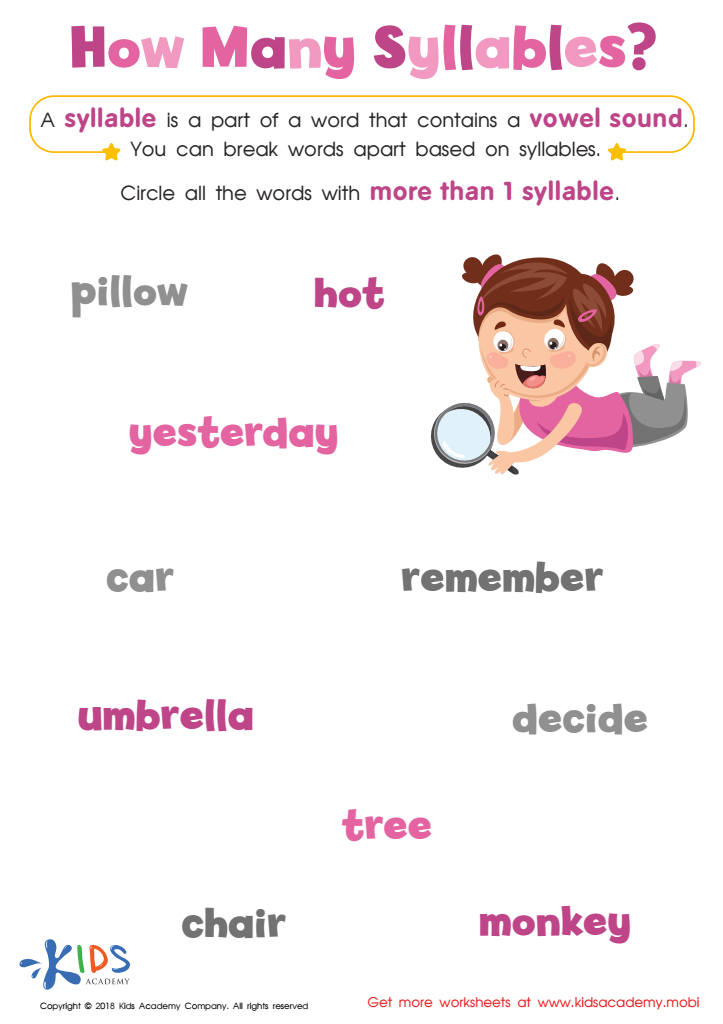
Reading: How Many Syllables Worksheet
 Assign to My Students
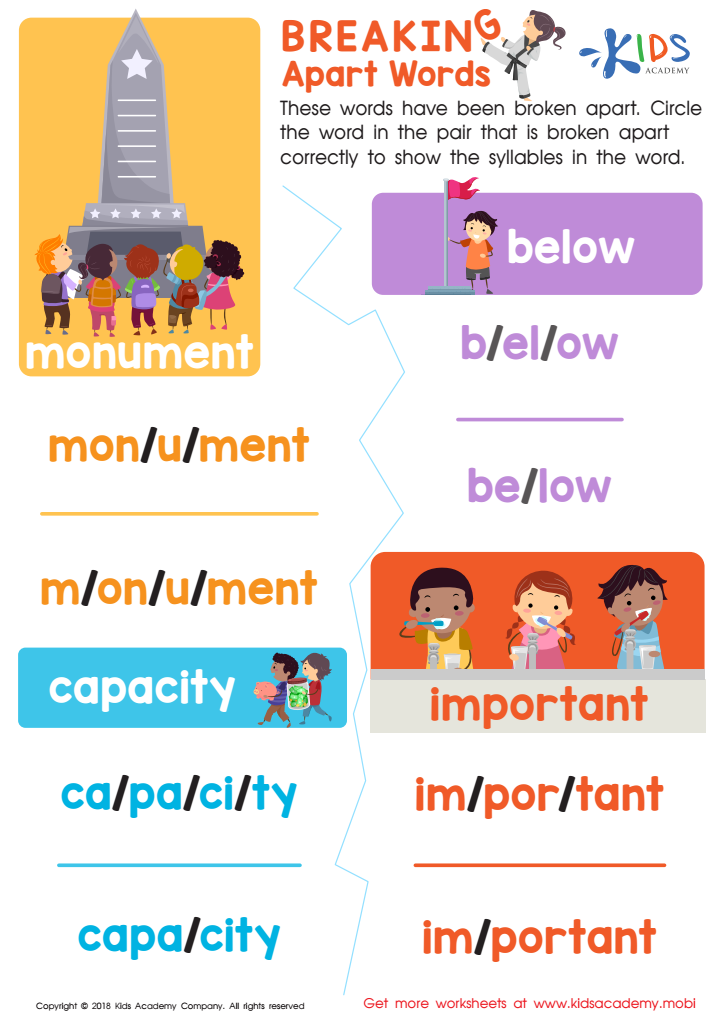
Breaking Apart Words Worksheet
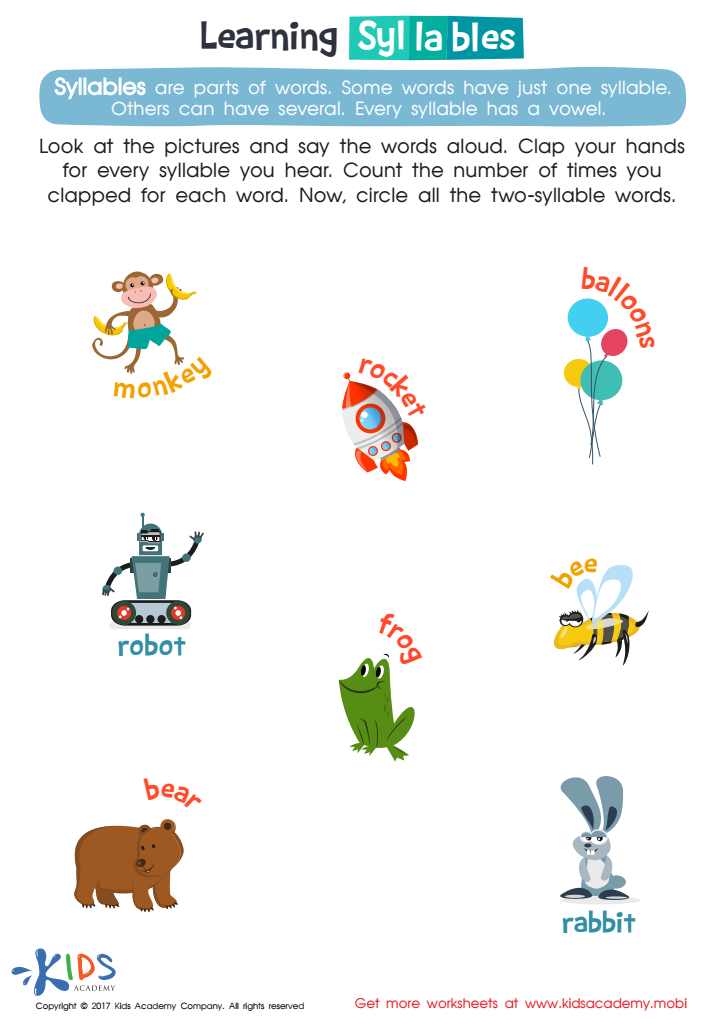
Learning Syllables Word Structure Worksheet
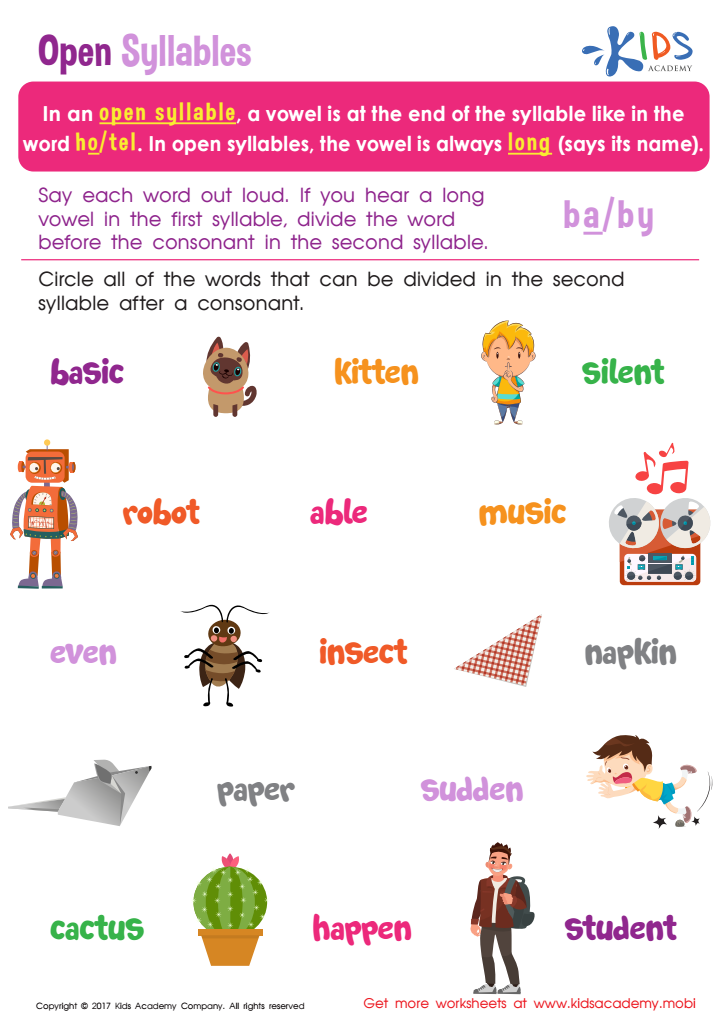
Open Syllable Printable Worksheet
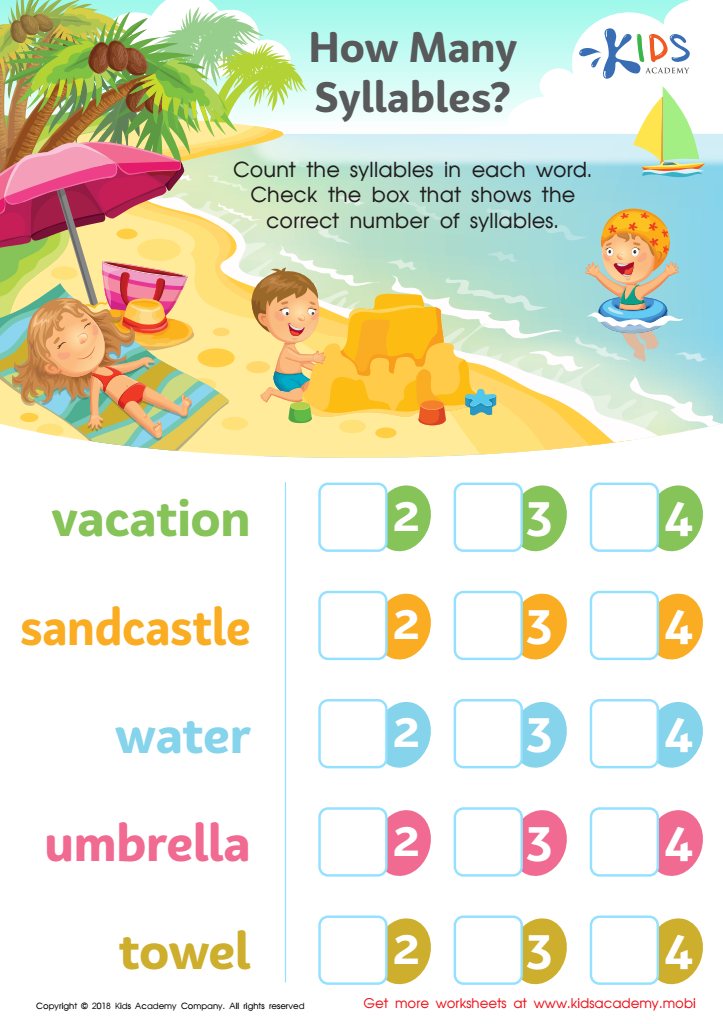
How Many Syllables Worksheet






Syllable identification is a crucial aspect of early literacy for children aged 7-8, as it lays the foundation for reading, writing, and overall language development. At this age, children are refining their phonemic awareness, and understanding how syllables work helps them decode words more effectively. Recognizing and breaking down syllables can improve their ability to read unfamiliar words, enhancing their fluency and confidence.
Additionally, mastery of syllable identification supports spelling. Children who can recognize syllable patterns often find it easier to apply phonetic rules, ultimately boosting their writing skills. This capability encourages them to be more engaged and effective communicators.
For parents and teachers, fostering syllable identification can directly influence a child's academic success. When children grasp the concept, they are more likely to participate actively in reading and language activities, fostering a love for literature and an eagerness to learn. Engaging in syllable identification exercises creates a fun and interactive environment, reinforcing positive learning habits.
In summary, parents and teachers should prioritize syllable identification because it enhances reading, writing, and overall linguistic skills, paving the way for a child’s educational journey and lifelong learning.








