
Vocabulary development Grammar Worksheets for Ages 7-8
6 filtered results
Difficulty Level
Grade
Age
-
From - To
Subject
Activity
Standards
Boost your child's vocabulary and grammar skills with our engaging worksheets designed for ages 7-8! Our Vocabulary Development Grammar Worksheets offer fun and interactive activities that enhance word knowledge and usage, promote language fluency, and reinforce grammatical concepts. From fill-in-the-blank exercises to matching games, these worksheets cater to diverse learning styles while addressing common challenges for young learners. Ideal for home or classroom use, our resources are perfect for reinforcing vocabulary through reading and writing. Give your child the tools they need for effective communication and academic success while making learning enjoyable! Start exploring today and watch them thrive!
Favorites
With answer key
Interactive
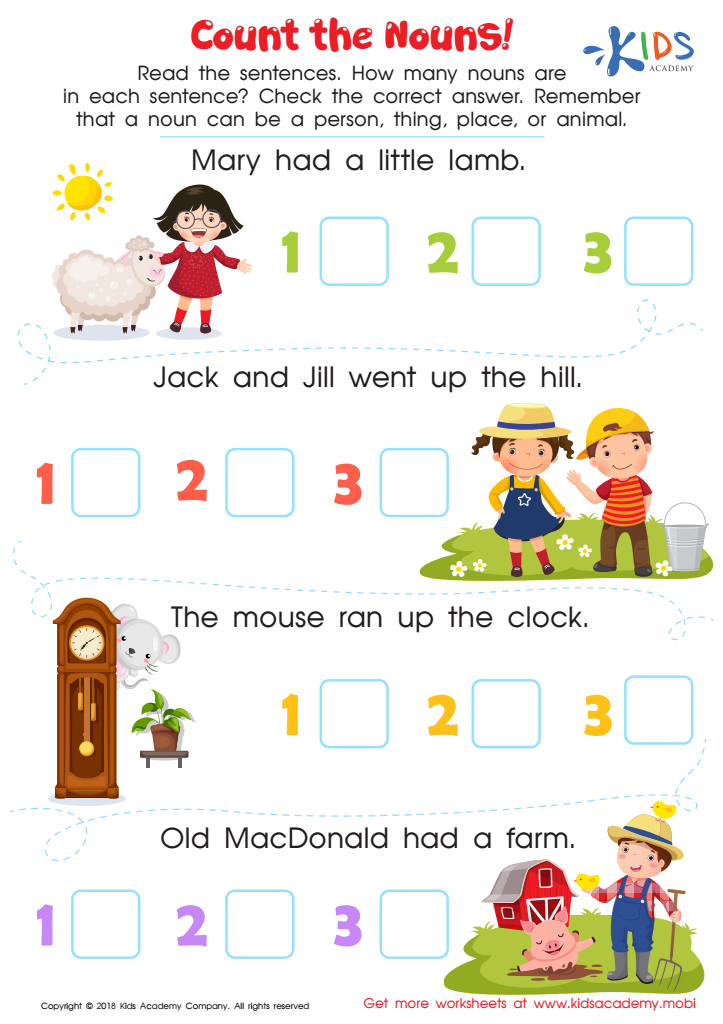
Count the Nouns Worksheet
Read the sentences with your children and ask them to find the nouns. Explain that nouns are names of people, animals, places or things. Point out the boxes with the answers to check.
 Assign to My Students
Count the Nouns Worksheet
Worksheet
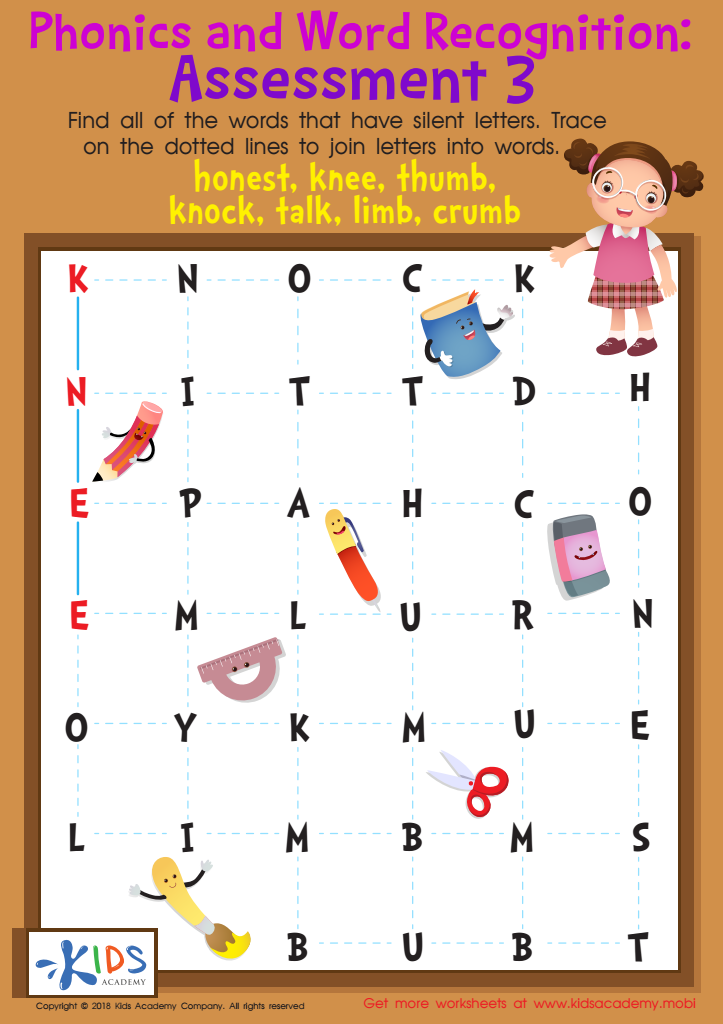
Phonics and Word Recognition: Assessment 3 Worksheet
Silent letters can be tricky for kids learning to read and write. Show them how they work with words like 'knee' and 'dumb'. Then, challenge them to come up with their own. Give them a worksheet with silent letters and trace the lines to join the letters into words.
Phonics and Word Recognition: Assessment 3 Worksheet
Worksheet
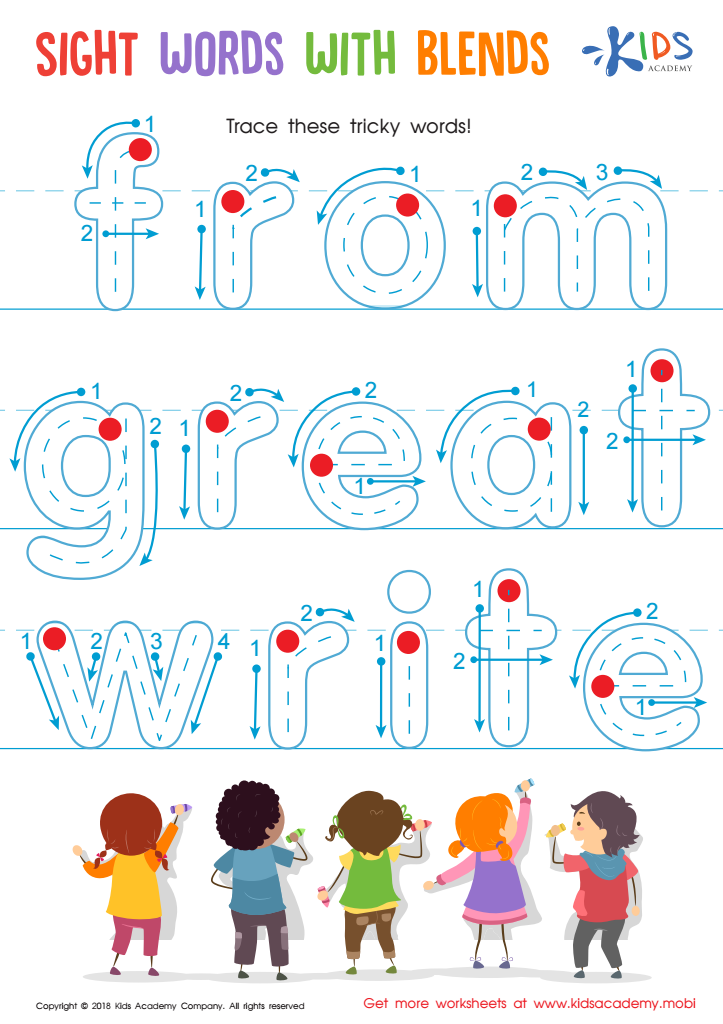
Sight Words with Blends Worksheet
This free PDF lets your children trace and write sight words with tricky blends. The guide numbers help them start from the top, building fine motor skills and enhancing sight word vocab. It's a great way to give your kids a solid foundation for reading!
Sight Words with Blends Worksheet
Worksheet
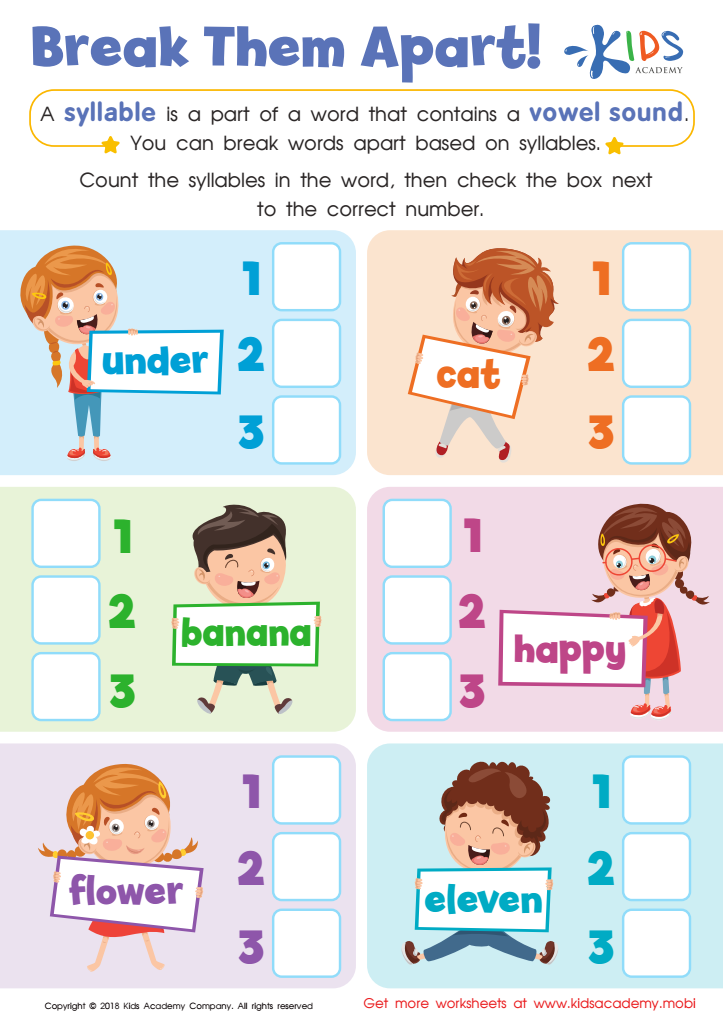
Reading: Break Them Apart Worksheet
See if students understand syllables with this fun worksheet. It teaches them that a syllable is a word part with a vowel sound. Kids read each word and choose how many parts it has. Doing this often helps them decode new words and gain confidence.
Reading: Break Them Apart Worksheet
Worksheet
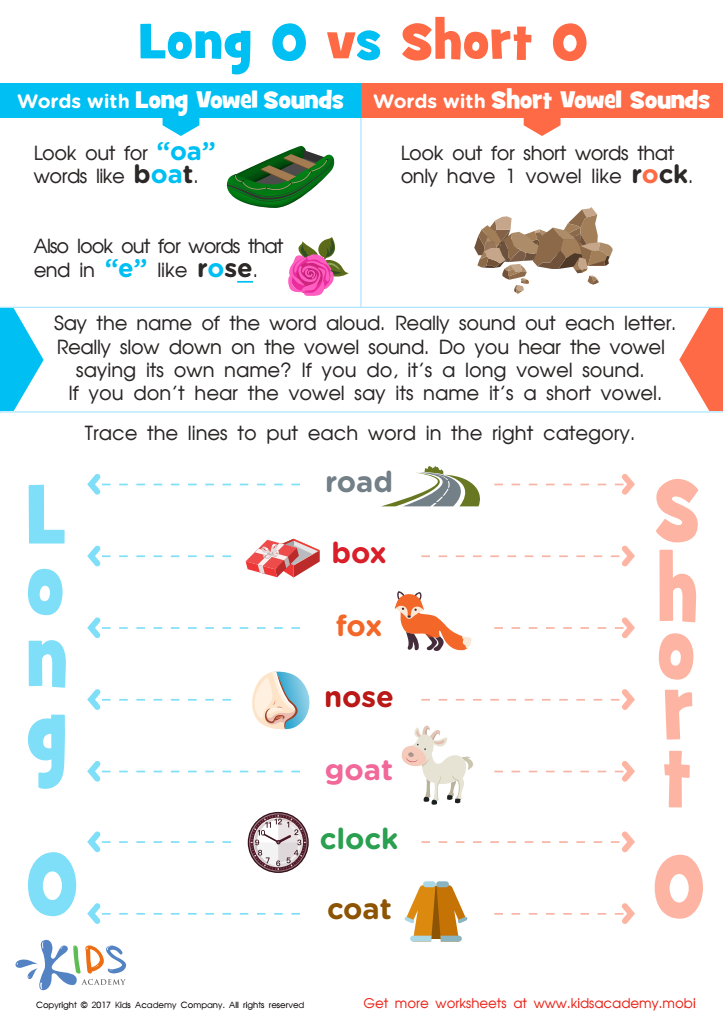
Long and Short Vowel O Spelling Worksheet
This colorful worksheet teaches kids to distinguish tricky "O" words. It's easy to spot the long "O" sound by looking for an extra vowel. Kids practice by viewing examples and sounding out each word. Help your child master long and short vowel "O" sounds!
Long and Short Vowel O Spelling Worksheet
Worksheet
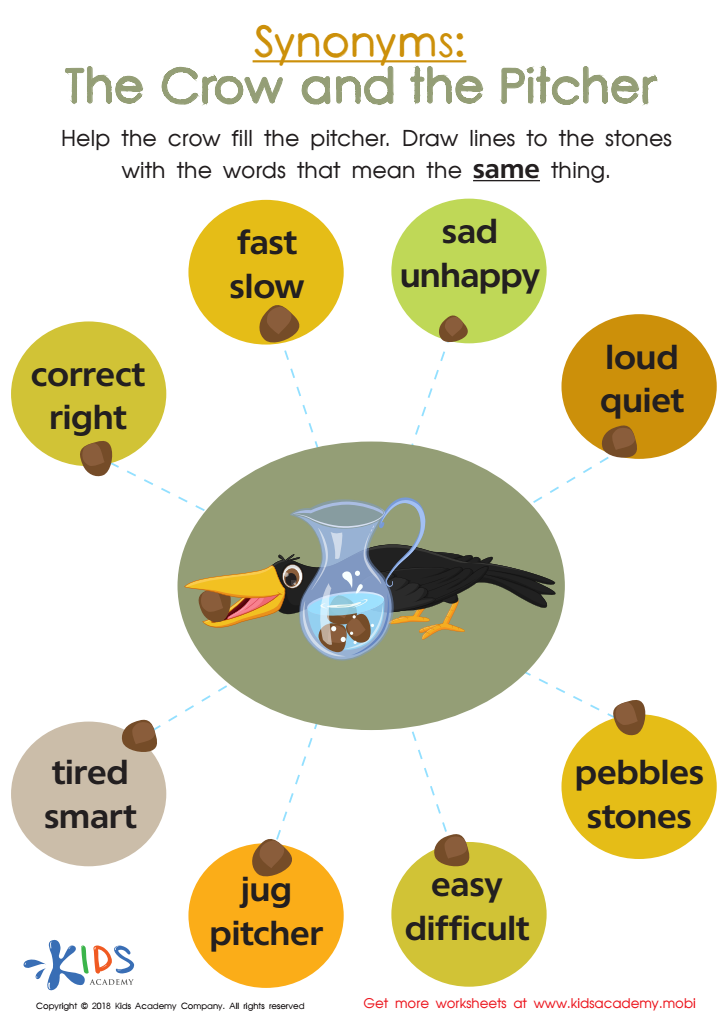
The Crow and the Pitcher Synonyms Worksheet
Give your child the building blocks for effective communication with an ELA lesson! Help the crow in this Kids Academy worksheet find the correct stones to fill the pitcher - only those next to synonym pairs! This is a fun way for kids to learn and expand their vocabulary and language skills.
The Crow and the Pitcher Synonyms Worksheet
Worksheet
Join Kids Academy for Free
Who is primarily going to use this learning content?








Vocabulary development and grammar are foundational to a child's literacy skills, particularly for ages 7-8 when children transition from learning to read to reading to learn. At this stage, a rich vocabulary enhances comprehension, allowing children to grasp more complex texts and concepts.
When parents and teachers focus on vocabulary development, they enable children to express themselves clearly and build confidence in communication. A varied vocabulary helps children engage meaningfully in discussions, fostering social interactions and critical thinking. Additionally, strong vocabulary supports academic success across all subjects, as understanding instructional language is essential for learning.
Similarly, grammar provides the structure needed for effective communication. Understanding grammatical rules allows children to construct sentences properly, improving both their writing and speaking abilities. This foundational knowledge nurtures future writing skills, which are crucial for academic assessments and later career opportunities.
In summary, investing in vocabulary and grammar development at this age supports holistic education, boosts academic performance, promotes effective communication, and prepares children for real-world interactions. By prioritizing these skills, parents and teachers can significantly influence a child’s confidence and success in both school and life.








