Alphabet Recognition Writing Worksheets for Ages 7-8
7 filtered results
-
From - To
Enhance your child's literacy skills with our Alphabet Recognition Writing Worksheets designed for ages 7-8! These engaging, printable worksheets help young learners master the alphabet through fun exercises that promote recognition and writing practice. Children will enjoy tracing letters, identifying uppercase and lowercase forms, and completing interactive activities that reinforce sound-letter associations. Perfect for at-home learning or classroom use, these worksheets foster a strong foundation in early writing and reading skills. Encourage your child's confidence as they embark on their alphabet adventure. Explore our collection today to make learning letters an enjoyable experience!
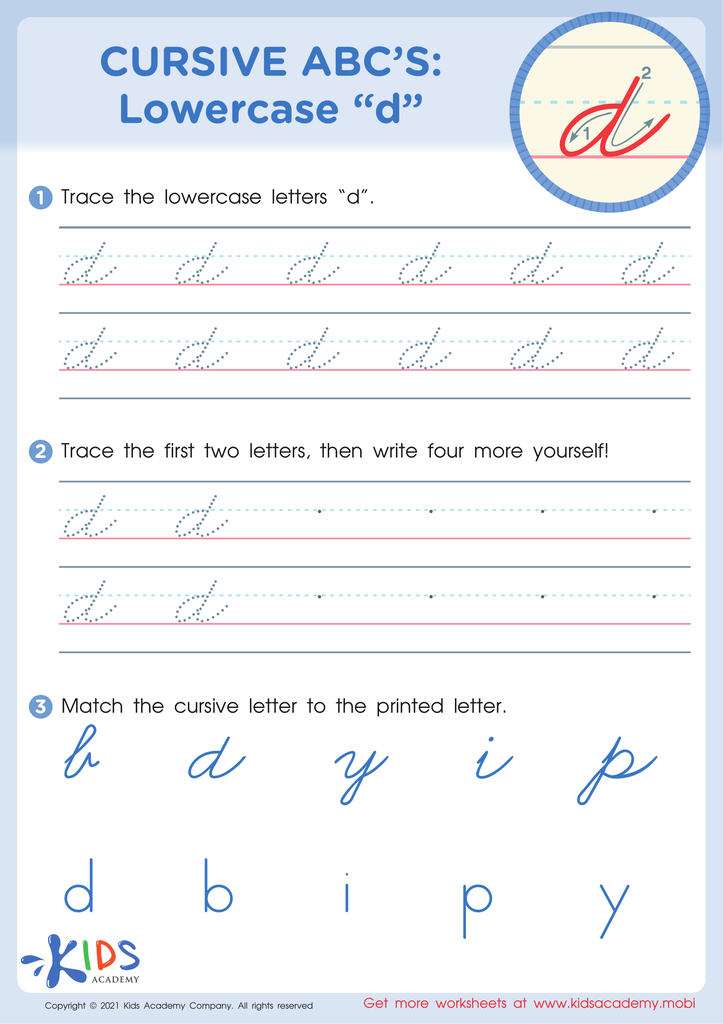
Cursive ABCs: Lowercase d
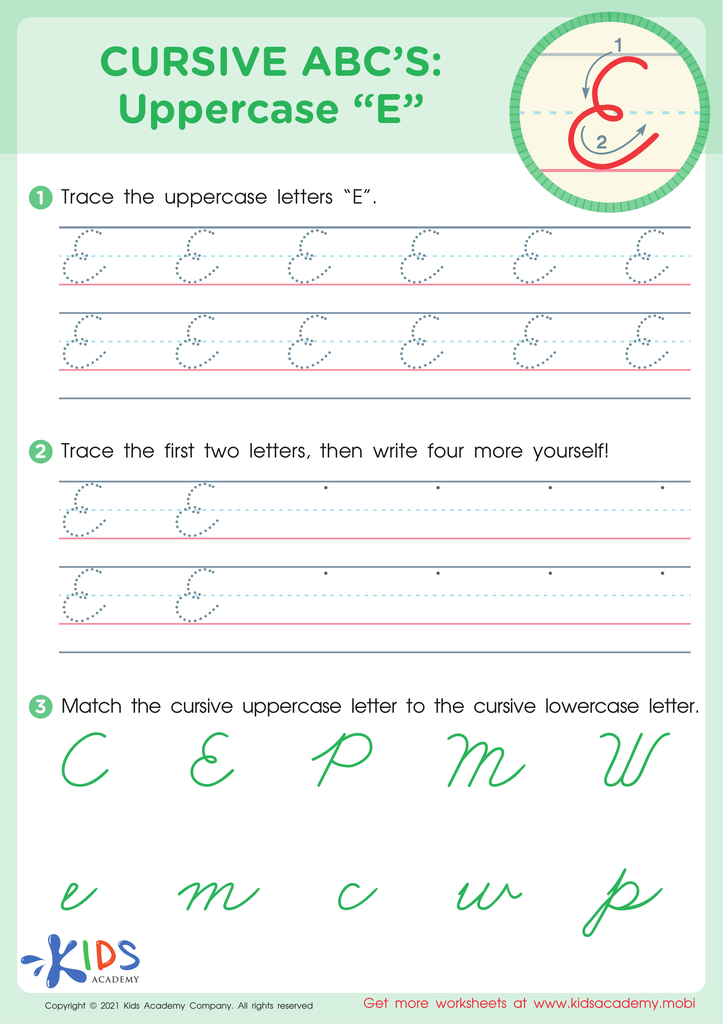
Cursive ABCs: Uppercase E
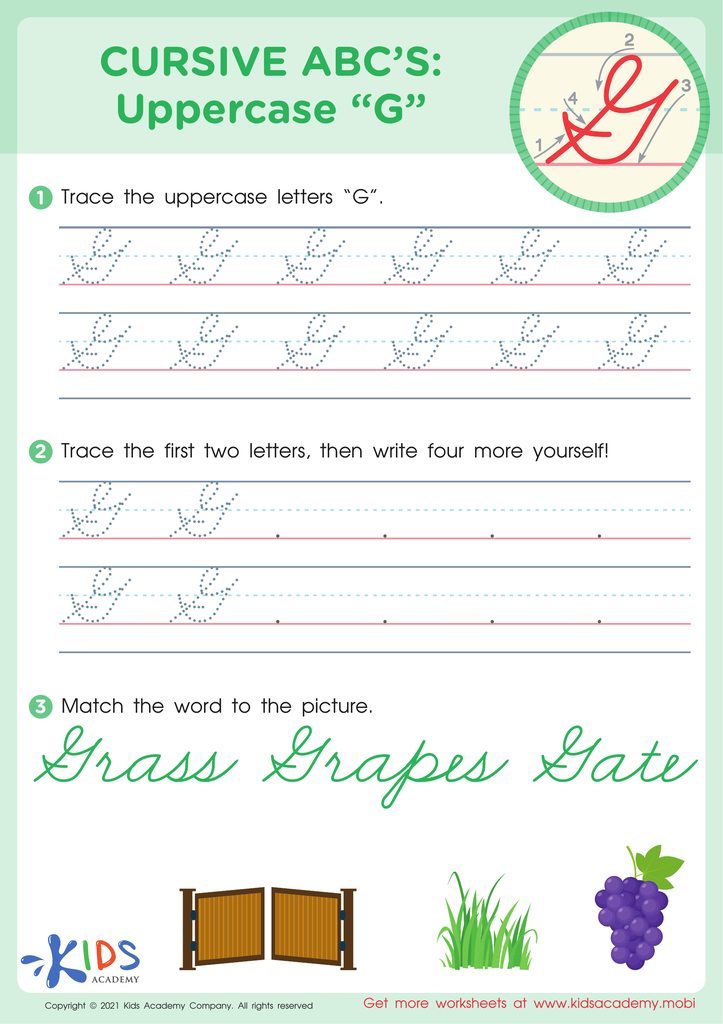
Cursive ABCs: Uppercase G
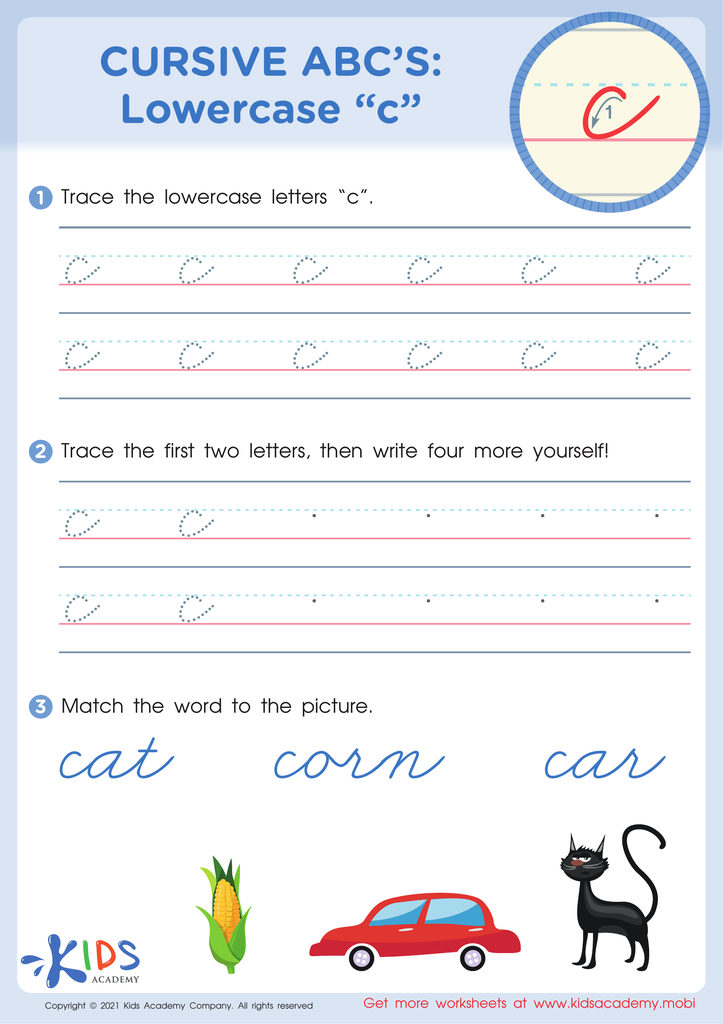
Cursive ABCs: Lowercase c
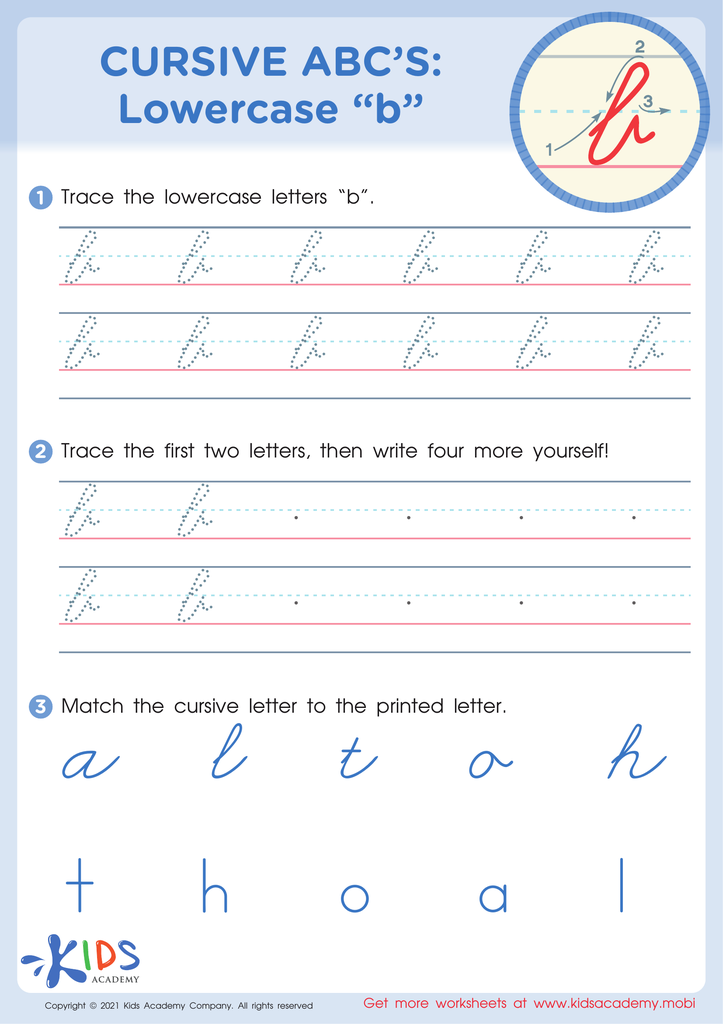
Cursive ABCs: Lowercase b
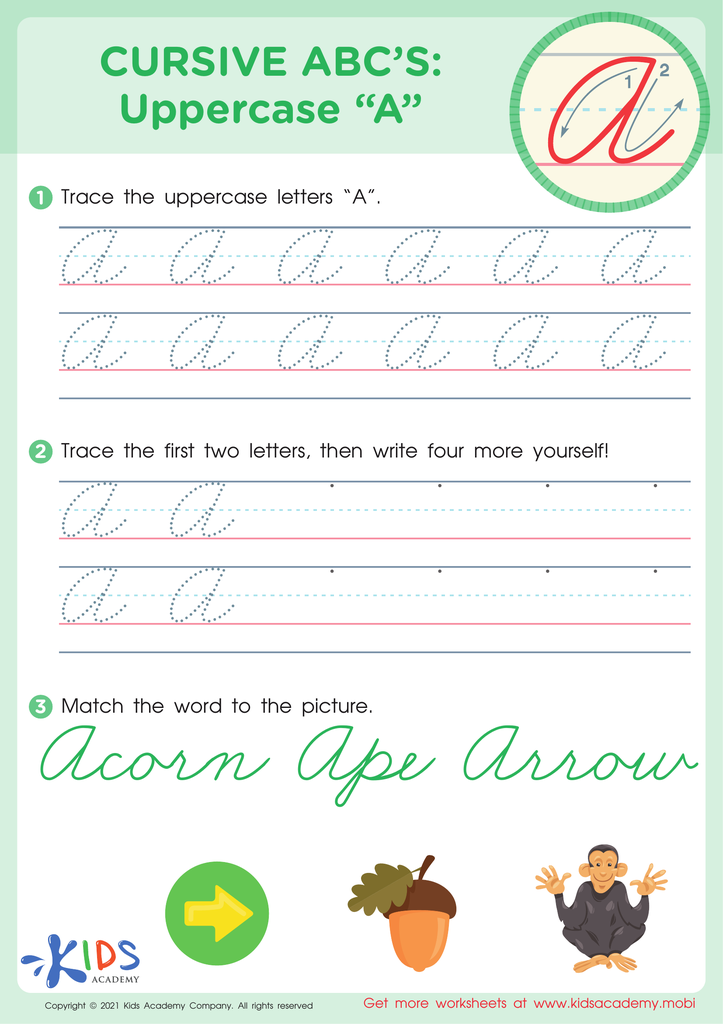
Cursive ABCs: Uppercase A
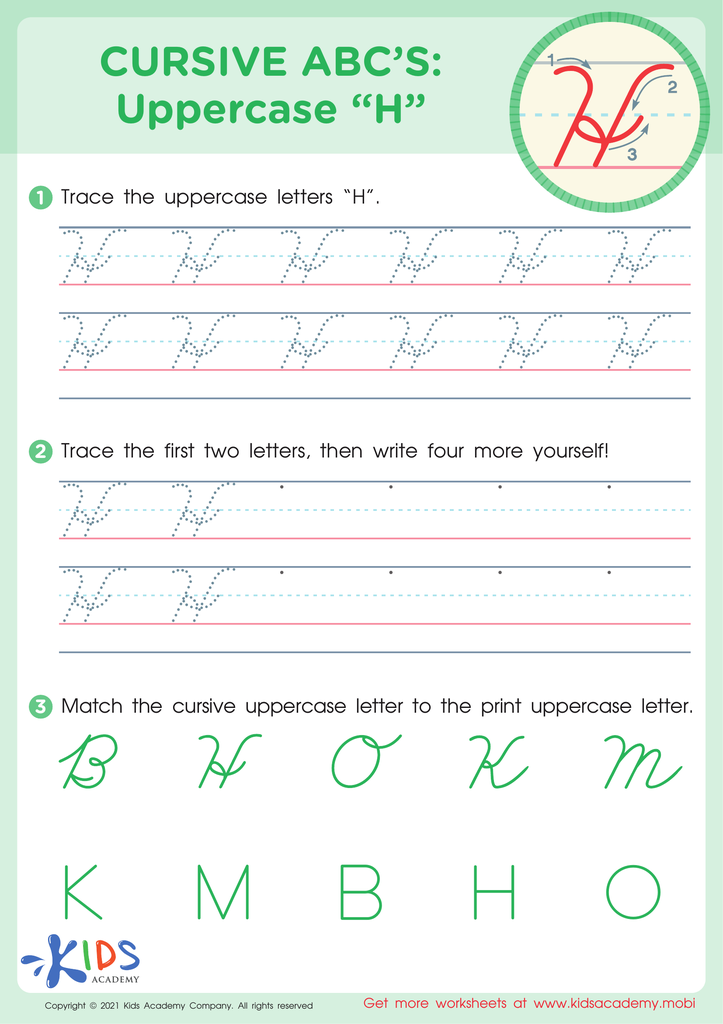
Cursive ABCs: Uppercase H








Alphabet recognition and writing are crucial skills for children aged 7-8, laying the foundation for literacy development and effective communication. During this stage, children are expected to transition from learning individual letter sounds to reading and writing simple words and sentences. Mastery of alphabet recognition enables them to recognize familiar words easily, which boosts their confidence and interest in reading.
For parents and teachers, fostering these skills is essential for promoting academic success. Children proficient in alphabet recognition can better participate in classroom activities, leading to increased engagement and motivation. This foundational skill also supports their ability to spell, write, and ultimately express their thoughts coherently.
Additionally, strong alphabet recognition and writing skills can enhance cognitive development. Children learn to categorize and differentiate sounds and letters, critical thinking abilities essential for problem-solving. When adults support these skills at home or in the classroom, they help create a strong, loving environment that fosters a lifelong love for learning. Encouraging children to recognize and write alphabet letters also cultivates fine motor skills and hand-eye coordination, further aiding in their overall development. Thus, active involvement in promoting alphabet recognition writing in this critical age group is essential for future literacy achievements.








