
Spelling practice Elementary Phonics Worksheets for Ages 7-9
3 filtered results
Difficulty Level
Grade
Age
-
From - To
Subject
Activity
Standards
Discover our engaging Spelling Practice Elementary Phonics Worksheets designed specifically for children ages 7-9! These worksheets provide a fun and effective way to enhance phonics skills and improve spelling. Each activity focuses on reinforcing letter recognition, sound exploration, and word formation through interactive exercises. With a variety of themes and levels of difficulty, learners will gain confidence as they master key concepts at their own pace. Ideal for classroom use or at-home learning, our phonics worksheets promote an enjoyable learning experience while laying the foundation for strong reading and writing abilities. Start your child’s spelling journey today!
Favorites
With answer key
Interactive
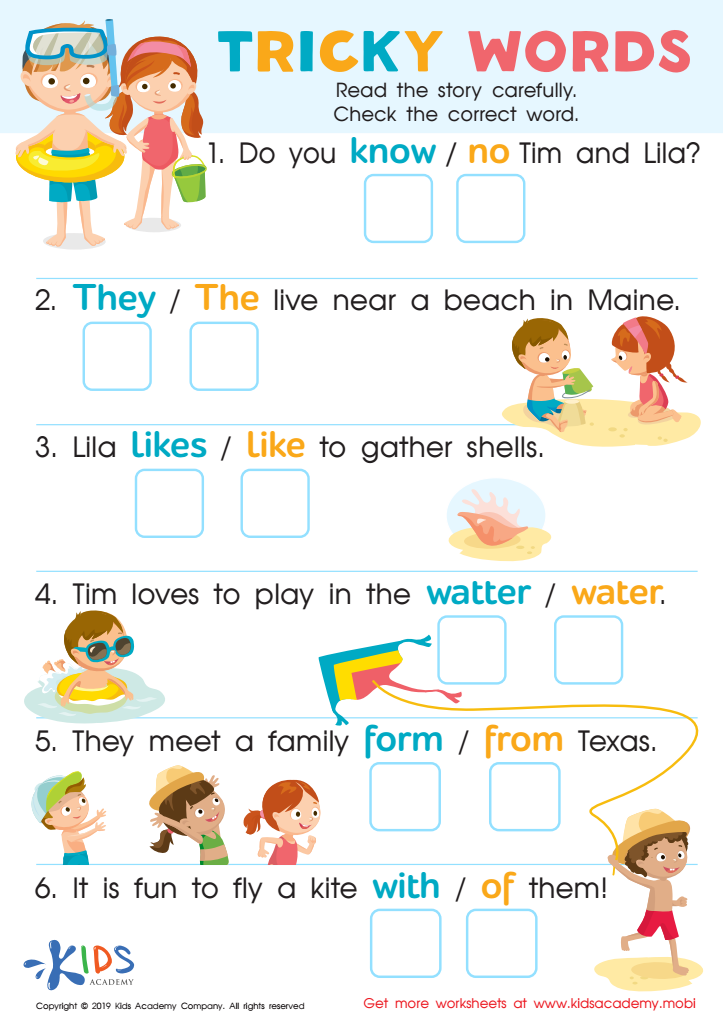
Tricky Words Worksheet
Reading can be tricky to start with, but this worksheet helps kids learn the basics of editing and strengthens their attention to detail. They'll select the right word from tricky choices, improving their reading and grammar skills.
Tricky Words Worksheet
Worksheet
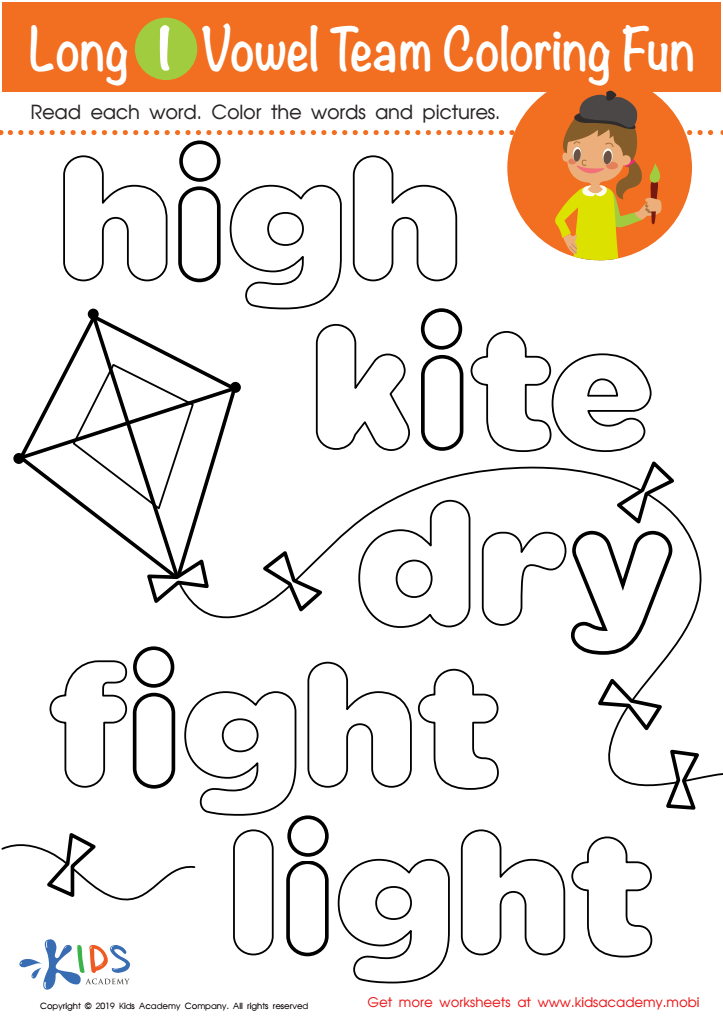
Long I Vowel Team Coloring Worksheet
This worksheet provides practice with letter combinations that make the long "i" sound while enhancing creativity and motor skills with a fun coloring activity. Unknowingly, new readers learn key phonics skills while having fun!
Download (PDF)
 Assign to My Students
Assign to My Students
Long I Vowel Team Coloring Worksheet
Worksheet
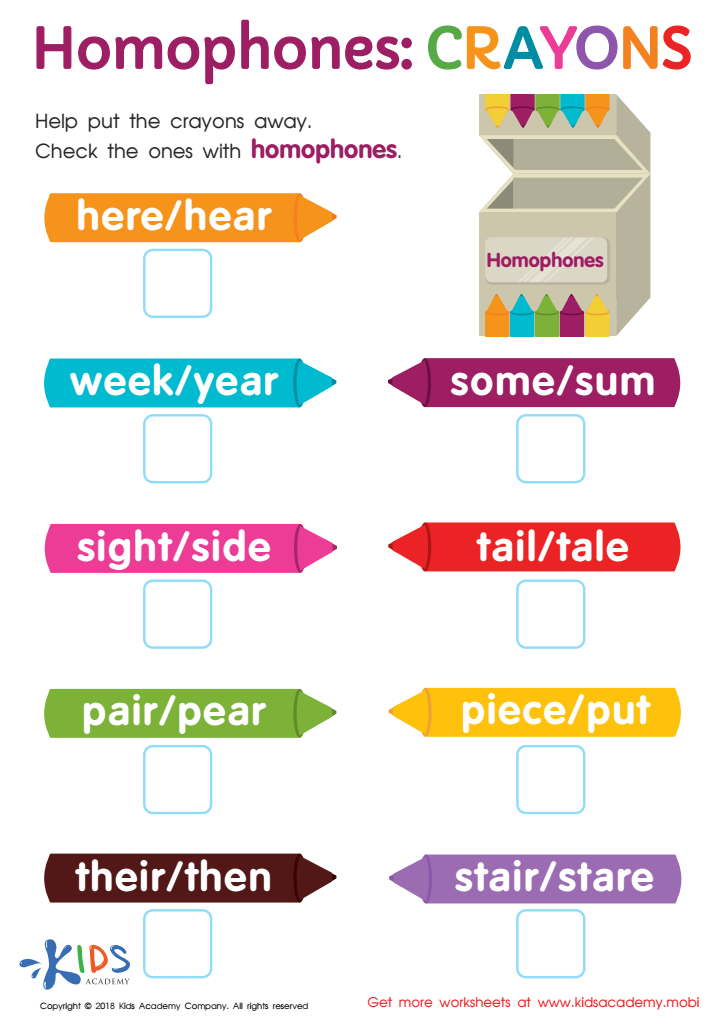
Homophones: Crayons Worksheet
Ask your kids: "What are homophones?" Explain that homophones are words that sound alike but have different meanings, like 'dare' and 'deer'. Ask them to identify homophones by putting the crayons in this printout away according to the words.
Homophones: Crayons Worksheet
Worksheet
Join Kids Academy for Free
Who is primarily going to use this learning content?




Spelling practice through elementary phonics is essential for children ages 7-9 as it lays the foundation for literacy and effective communication. At this developmental stage, children begin to encounter more complex vocabulary and reading materials. Mastering phonics—understanding the connection between sounds and their corresponding letters—helps them decode words, improving reading fluency and comprehension.
Parents and teachers should emphasize spelling practice because it directly correlates with reading skills; as children spell words, they become more adept at recognizing them while reading. This skill enhances their confidence and enjoyment in literacy activities. Furthermore, strong spelling proficiency aids in written expression, allowing children to articulate their thoughts more clearly in essays and creative writing.
Moreover, consistent spelling practice nurtures a love for learning. Engaging, phonics-based activities can make connecting sounds to letters fun and interactive, fostering a positive association with reading and writing. Additionally, spelling difficulties can lead to frustration and reluctance to engage in schoolwork. By prioritizing spelling practice, adults can help children overcome challenges early on, fostering a lifelong passion for reading and learning. Investing time in phonics not only contributes to their academic success but also equips them with essential tools for future communication.







