Letter recognition Letter Q Worksheets for Ages 7-9
3 filtered results
-
From - To
Enhance your child's learning experience with our engaging Letter Q recognition worksheets designed for ages 7-9. These worksheets provide a fun and interactive way to help children identify and understand the letter Q, its sound, and its usage in words. With a variety of activities, including tracing, coloring, and matching games, kids will develop essential literacy skills while enjoying hands-on practice. Our Letter Q worksheets simplify the learning process, making it enjoyable for young learners. Support your child's education and boost their confidence in reading and writing by exploring our thoughtfully crafted resources today! Perfect for home or classroom use!
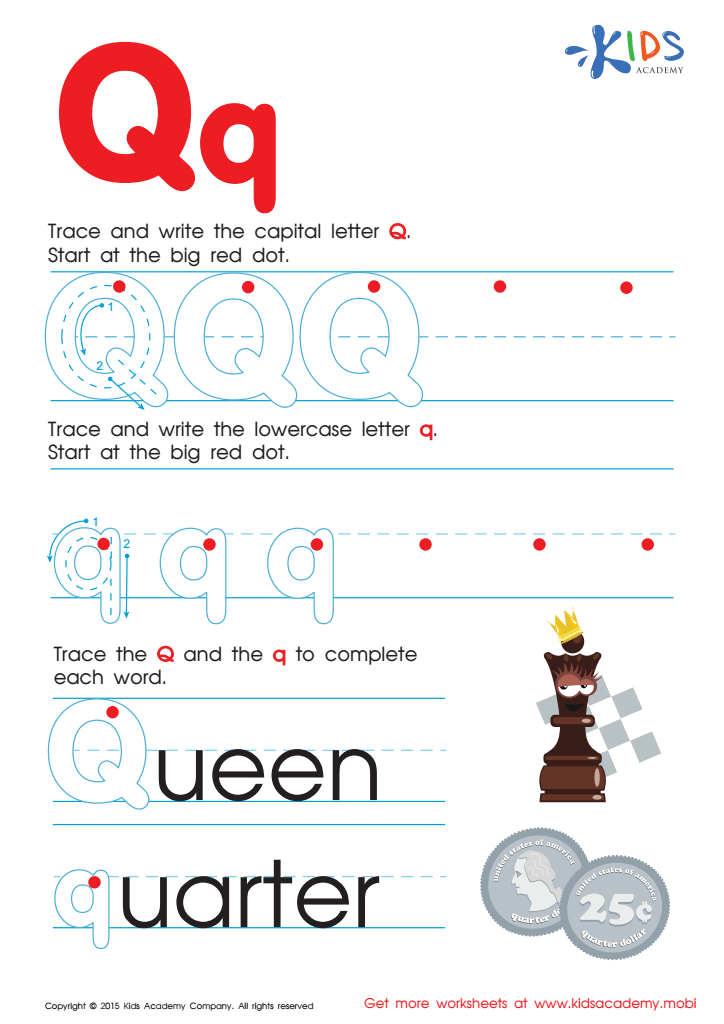
Letter Q Tracing Page
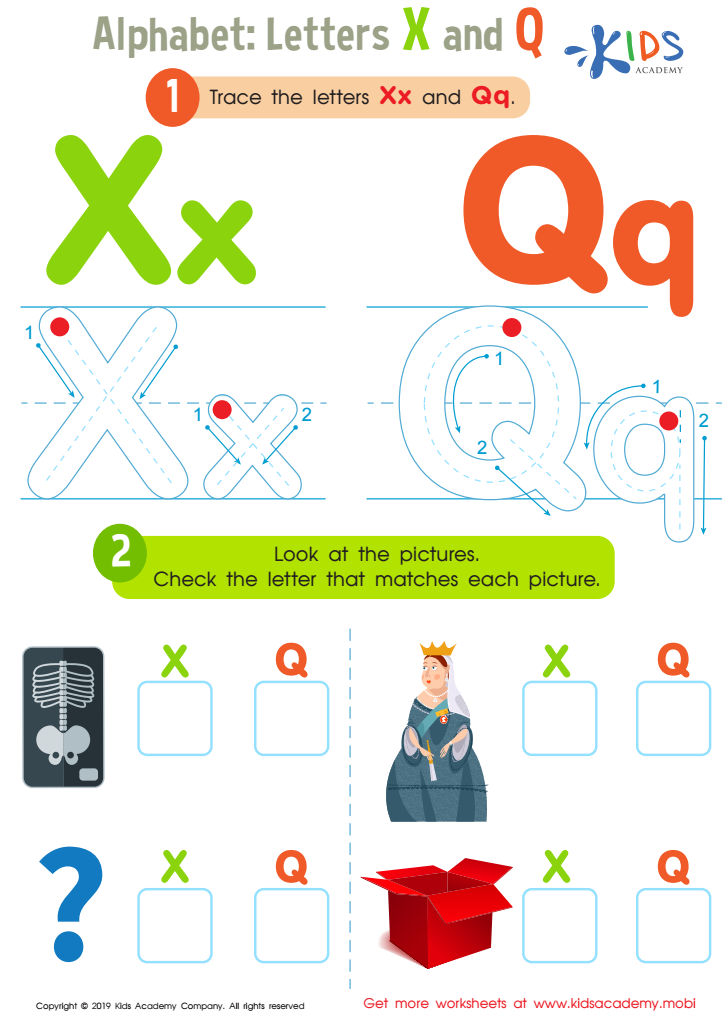
Letters X and Q Tracing Worksheet
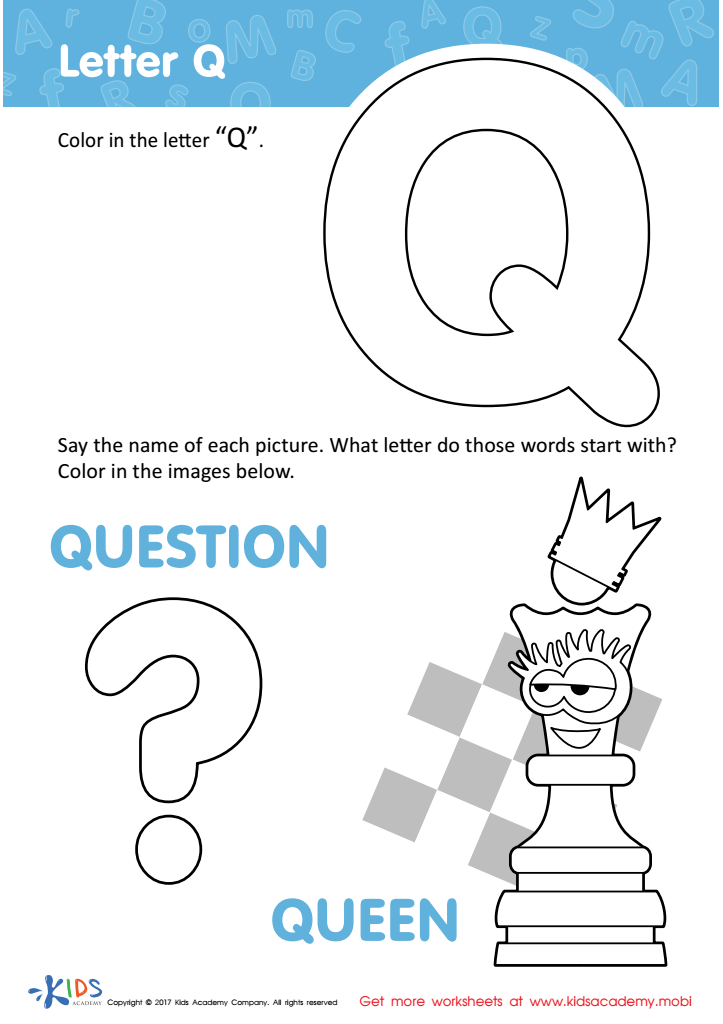
Letter Q Coloring Sheet
 Assign to My Students





Letter recognition is a crucial component of literacy development for children ages 7-9, and understanding the letter Q specifically can have multiple benefits. At this age, children are transitioning from learning to read to reading to learn, making letter recognition increasingly important. The letter Q, although less frequently used than other letters, introduces important phonetic concepts, as it is usually accompanied by the letter U and often signals specific sounds found in various words, enriching vocabulary.
Recognizing the letter Q can help children differentiate between similar sounds and letters, reinforcing their decoding skills—a key component of effective reading. For teachers and parents, encouraging recognition and usage of the letter Q can also be a fun and engaging experience.
Incorporating activities such as word games or storytelling that highlight the Q sound can cultivate awareness and retention, making learning interactive. Moreover, as children progress to more complex texts, familiarity with less common letters like Q paves the way for greater confidence and comprehension in reading. Ultimately, understanding letter shapes, sounds, and their associated vocabulary can lay a strong foundation for literacy, ensuring children become proficient readers as they advance in their education.