
Alphabet Learning Letter Recognition Worksheets for Ages 7-9
3 filtered results
Difficulty Level
Grade
Age
-
From - To
Subject
Activity
Standards
Enhance your child's letter recognition skills with our engaging Alphabet Learning Letter Recognition Worksheets designed for ages 7-9! These interactive worksheets provide fun and educational activities that help children identify, read, and write letters while building essential literacy skills. Our thoughtfully crafted exercises include matching, tracing, and fill-in-the-blank challenges that cater to various learning styles. Perfect for classroom settings or at-home practice, these worksheets promote confidence and mastery in letter recognition. Foster a love for learning in your child and watch them thrive as they explore the fascinating world of letters! Get started today and unlock their potential!
Favorites
With answer key
Interactive
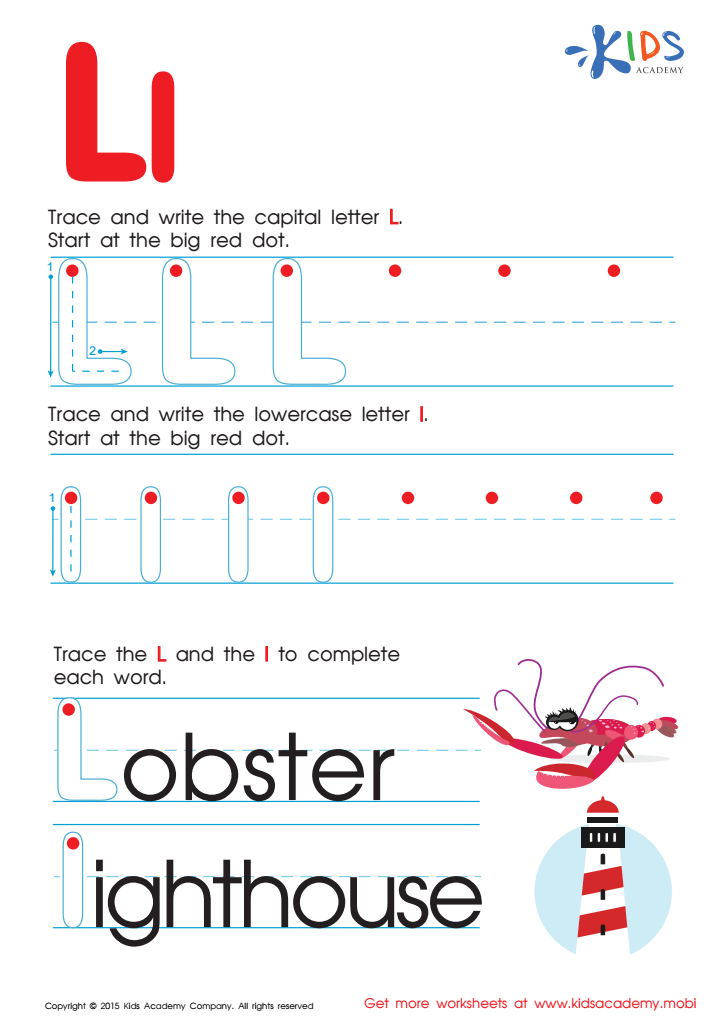
Letter L Tracing Page
Trace uppercase and lowercase letters to practice writing. Pay attention to the lowercase letters, like the "L", that are not as tall as an uppercase "I" or as short as a lowercase "i". Words like "lobster" and "lighthouse" are waiting to be completed. Enjoy!
Letter L Tracing Page
Worksheet
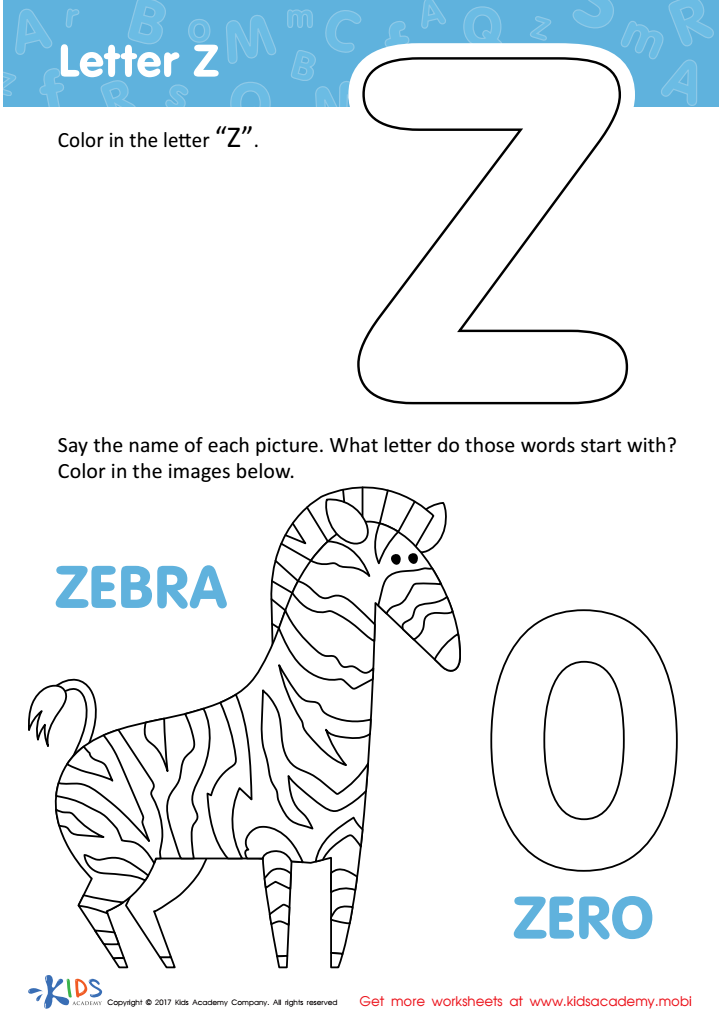
Letter Z Coloring Sheet
This coloring page featuring the letter "Z" is perfect for your child to practice letter recognition! Help them learn the unique sound it makes as they color. It'll be a fun and easy activity they won't have trouble with!
Download (PDF)
 Assign to My Students
Assign to My Students
Letter Z Coloring Sheet
Worksheet
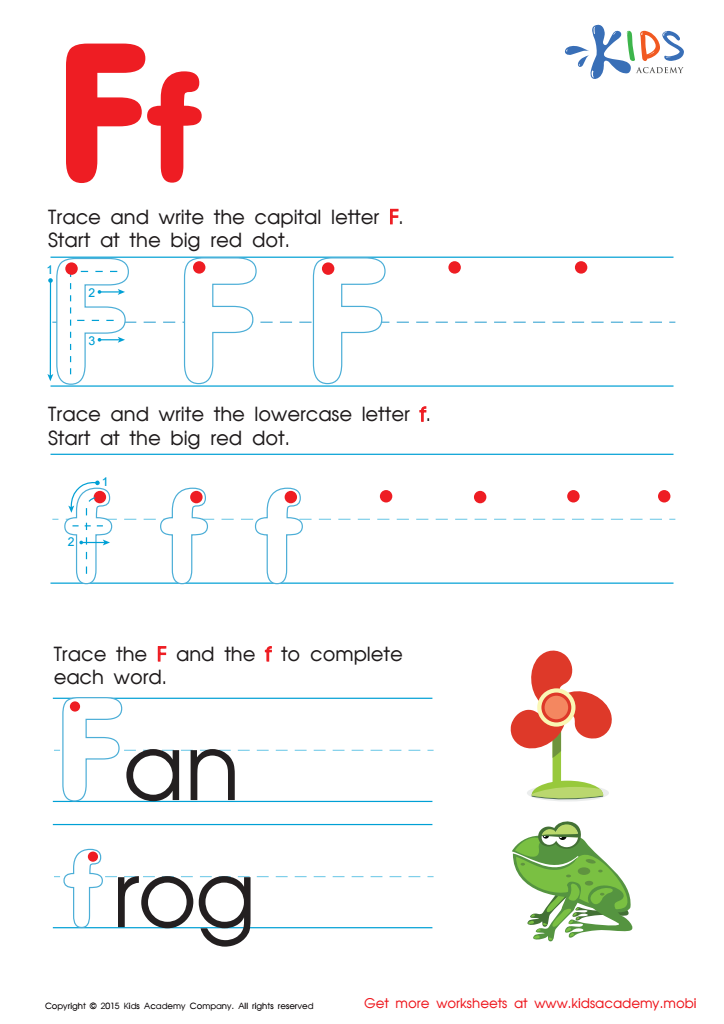
Letter F Tracing Page
Trace "F" with your pencil! Start at the red dot and draw lines — it's fun! Check it out — it looks great! Keep practicing to make it even better. Then, try completing words. Help out the broken fan and funny frog! Get free alphabet worksheets and activities for your kids. Come see our new tracing pages!
Letter F Tracing Page
Worksheet
Join Kids Academy for Free
Who is primarily going to use this learning content?








Alphabet learning and letter recognition are crucial skills for children ages 7-9, as they serve as foundational elements for literacy development. During this developmental stage, children begin to transition from learning letters and sounds to developing reading fluency and comprehension skills necessary for academic success. When parents and teachers prioritize alphabet learning, they help to build confidence in young learners, encouraging a lifelong love for reading and learning.
Letter recognition enables children to decode words, which is essential for understanding various texts, assignments, and even instructions in everyday life. It also impacts their ability to engage in writing, as recognizing letters aids in spelling and forming coherent thoughts on paper. Without these essential skills, children may struggle as they progress into more complex subjects in school, potentially leading to frustration and disengagement.
Moreover, active parental and teacher involvement can enhance motivation and retention. Fun and engaging activities, such as games and thematic storytelling, can make learning enjoyable and effective. Supporting letter recognition not only sets the foundation for academic achievement but also helps foster other cognitive skills, such as critical thinking and problem-solving, setting children on an accelerated path to success in their educational journey.







