
Letter tracing skills Letter Recognition Worksheets for Ages 7-9
3 filtered results
Difficulty Level
Grade
Age
-
From - To
Subject
Activity
Standards
Enhance your child's literacy journey with our Letter Tracing Skills and Letter Recognition Worksheets designed specifically for ages 7-9. These engaging, printable resources help children master letter formation and strengthen their understanding of the alphabet. Each worksheet features fun exercises that encourage kids to trace letters, fostering both fine motor skills and confidence in writing. Our thoughtfully crafted materials promote letter recognition, enabling your child to identify letters seamlessly in various contexts. Embrace a playful learning experience that prepares your young learner for future reading success. Download our worksheets today and watch your child’s writing abilities flourish!
Favorites
With answer key
Interactive
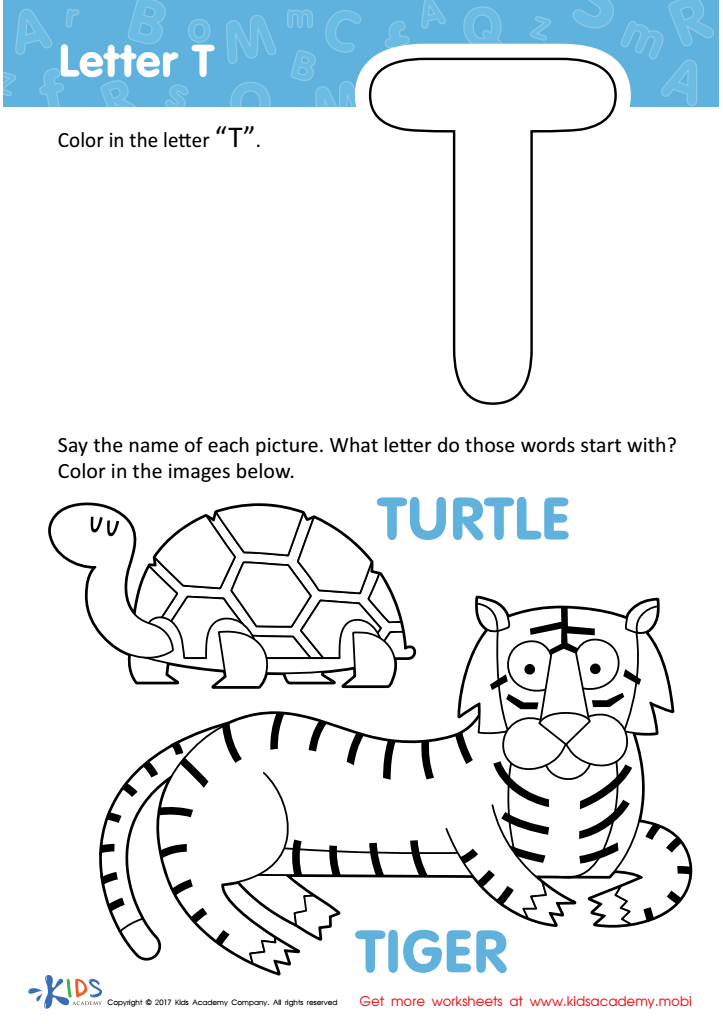
Letter T Coloring Sheet
Introduce your child to the letter "T" and its animals – turtles and tigers! With this coloring page, you can stimulate your child's imagination and creativity, while helping them recognize the letter "T". Have fun with your child and get coloring!
Download (PDF)
 Assign to My Students
Assign to My Students
Letter T Coloring Sheet
Worksheet
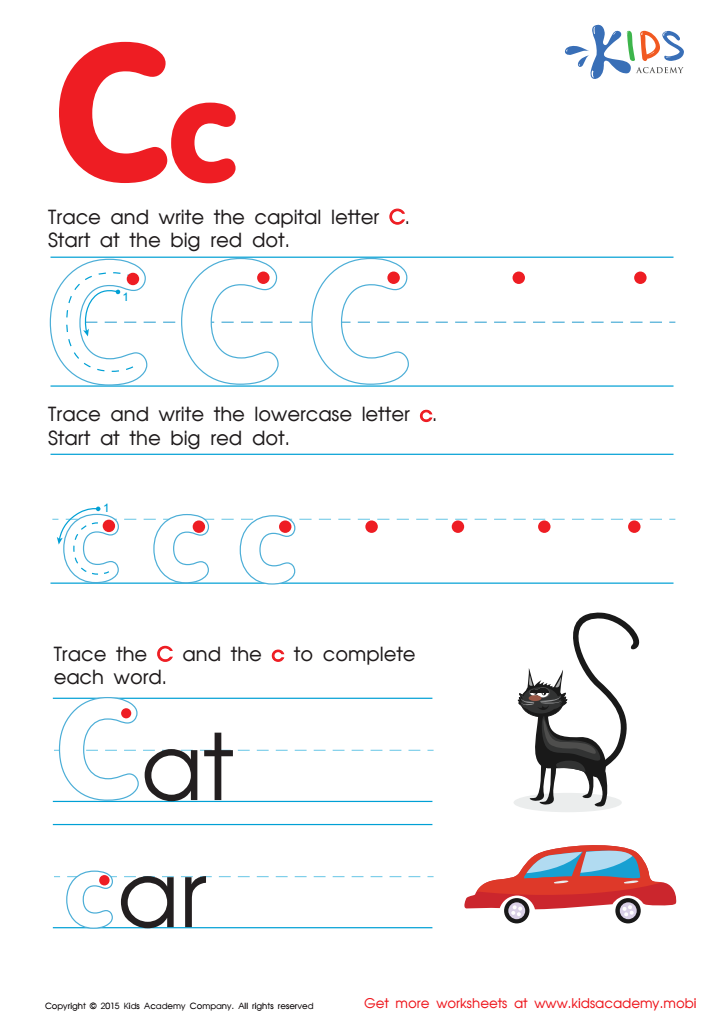
Letter C Tracing Page
Trace and write the letter 'C'! Put the pencil at the red dot then follow the lines – the capital letter first then the lowercase one. Cats love it and so will you! Get more free printables to practice tracing and writing.
Letter C Tracing Page
Worksheet
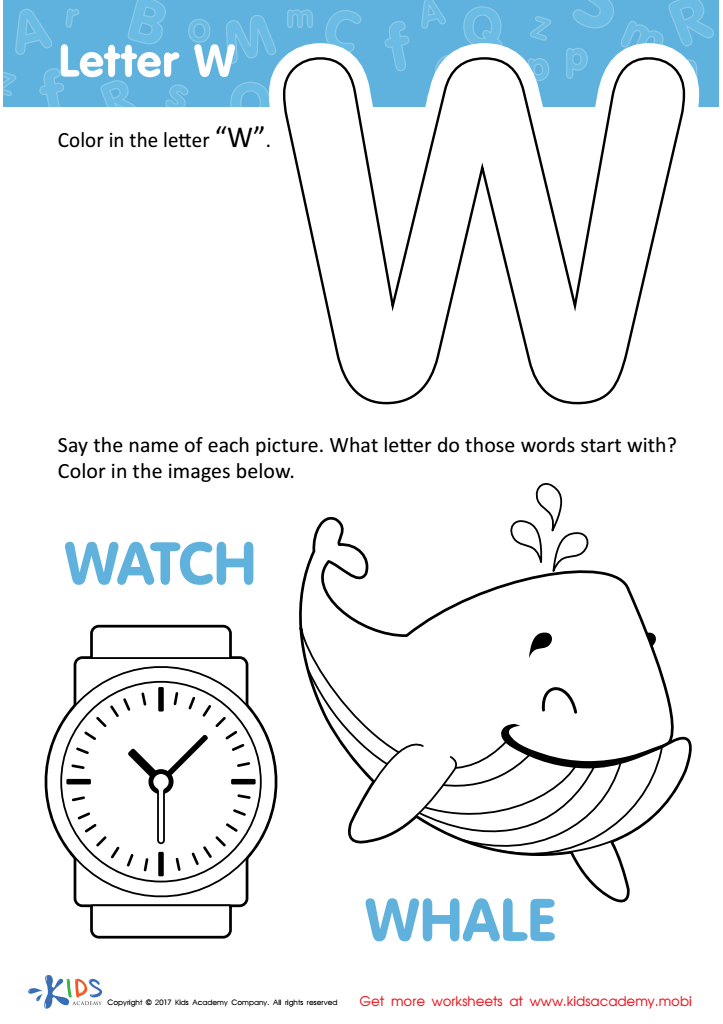
Letter W Coloring Sheet
Let your child have fun with this letter "W" coloring page! They can use their imagination to color the whale and discover the letter and its sound. Give them a helping hand to make it a whale of a time!
Download (PDF)
Assign to My Students
Assign to My Students
Letter W Coloring Sheet
Worksheet
Join Kids Academy for Free
Who is primarily going to use this learning content?








Letter tracing and letter recognition are fundamental skills for children aged 7-9, as they serve as critical building blocks for literacy and overall academic success. During this developmental stage, children solidify their understanding of letters and their corresponding sounds, which are essential for reading and writing. Letter tracing, specifically, enhances fine motor skills, allowing children to develop the necessary hand-eye coordination and dexterity required for handwriting. This activity also reinforces memory and recall, helping children recognize and distinguish between different letters more easily.
Furthermore, mastery of letter recognition supports vocabulary development and reading comprehension, as children can more readily identify words and their meanings. As they navigate texts, strong letter recognition leads to improved phonemic awareness and fluid reading.
For parents and teachers, nurturing these skills is paramount because they lay the groundwork for lifelong learning. Engaging children in fun, interactive activities that include letter tracing not only enhances their literacy abilities but also fosters a positive attitude toward learning. Ultimately, prioritizing letter tracing and recognition ensures that children build confidence in their reading and writing abilities, empowering them to succeed academically and beyond. Thus, it is essential for educators and caregivers to invest time and resources in developing these key skills.







