Spelling practice Long And Short Vowel Worksheets for Ages 7-9
5 filtered results
-
From - To
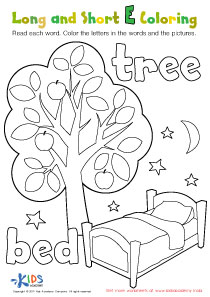
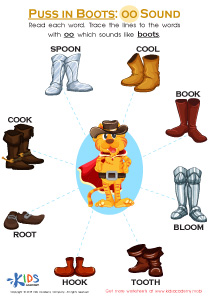
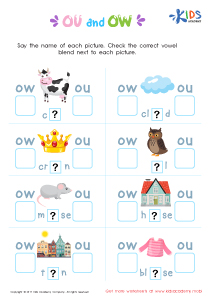
Enhance your child's spelling skills with our Long and Short Vowel Worksheets designed for ages 7-9! Our engaging, interactive exercises help young learners master vowel sounds while developing their spelling abilities. Each worksheet focuses on distinguishing between long and short vowels through fun, age-appropriate activities tailored for early learners. With clear instructions and colorful visuals, these resources make learning enjoyable and effective. Perfect for home or classroom use, our worksheets promote independent learning and reinforce essential phonics concepts. Watch your child's confidence soar as they become proficient spellers, empowering them for future academic success. Explore our collection today!
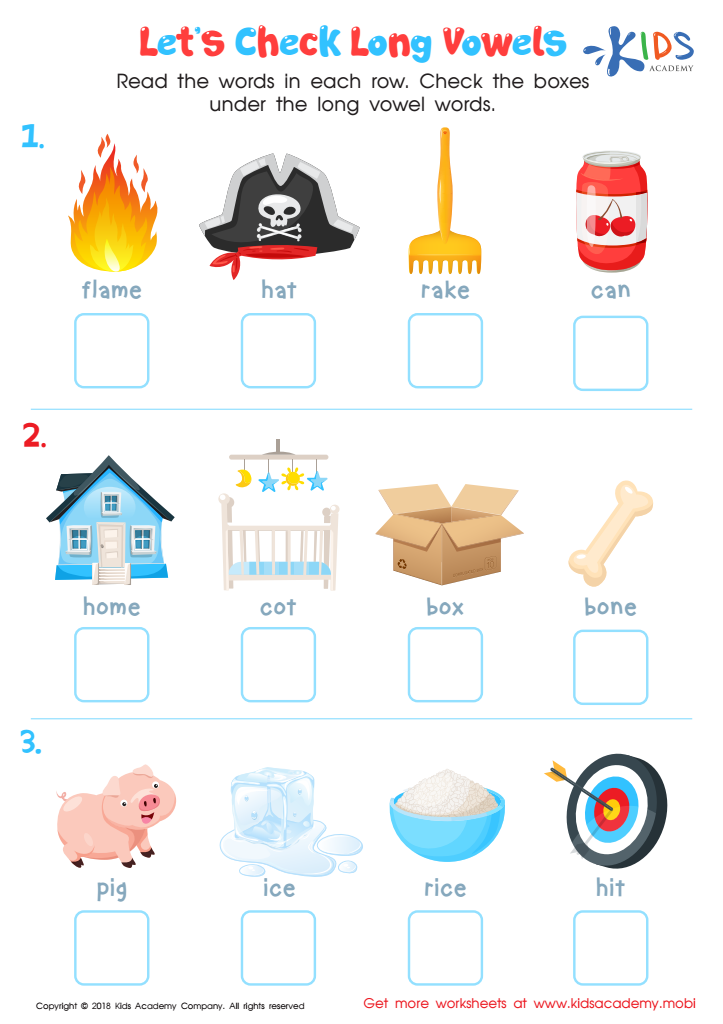
Let's Check Long Vowels: Assessment Worksheet
 Assign to My Students
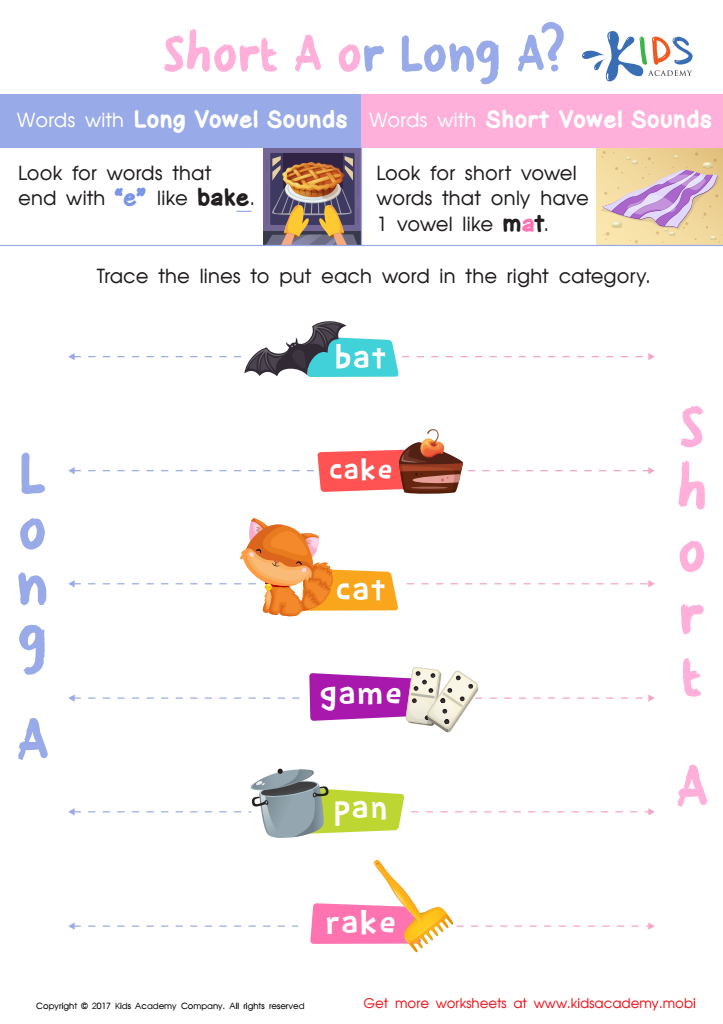
Short /a/ or Long /a/? Worksheet
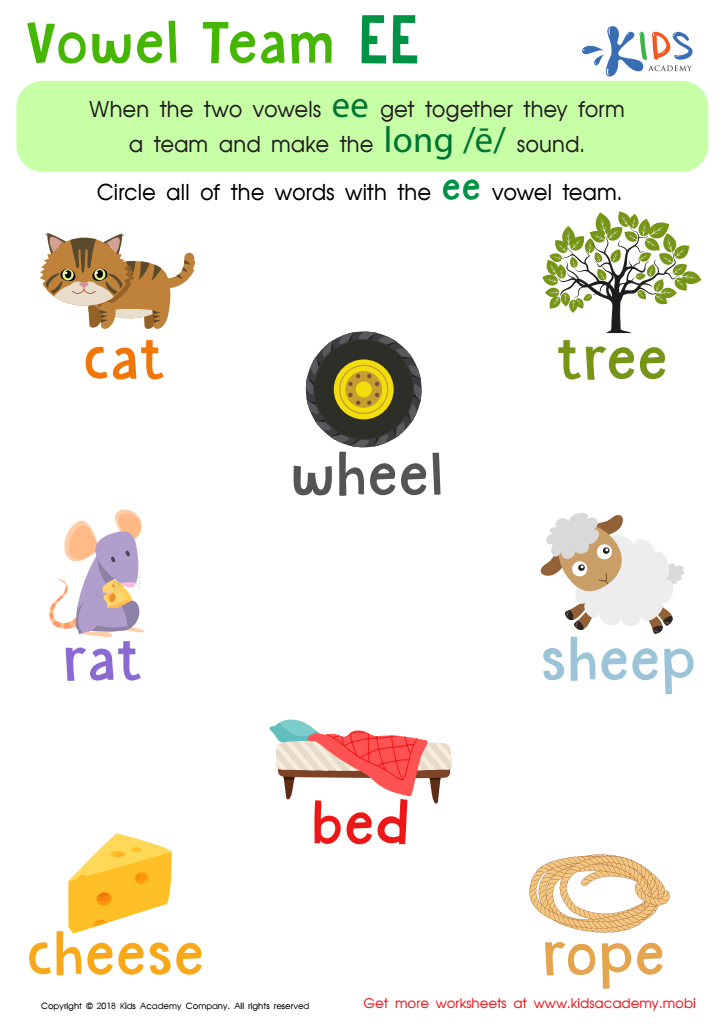
Reading: Vowel Team EE Worksheet
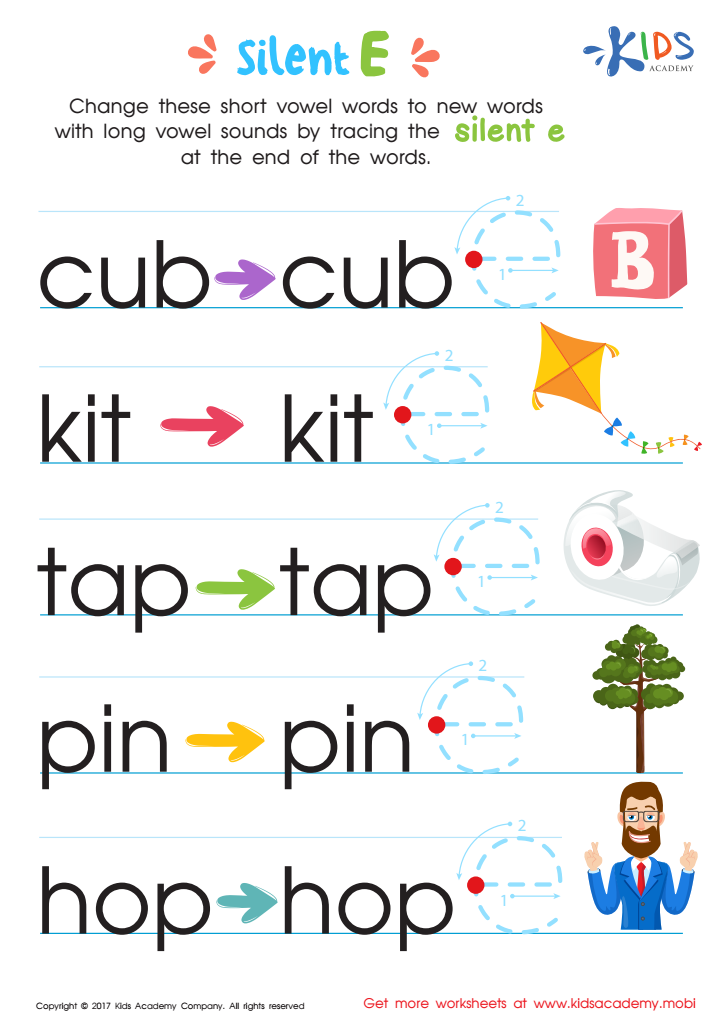
Silent E Words Worksheet
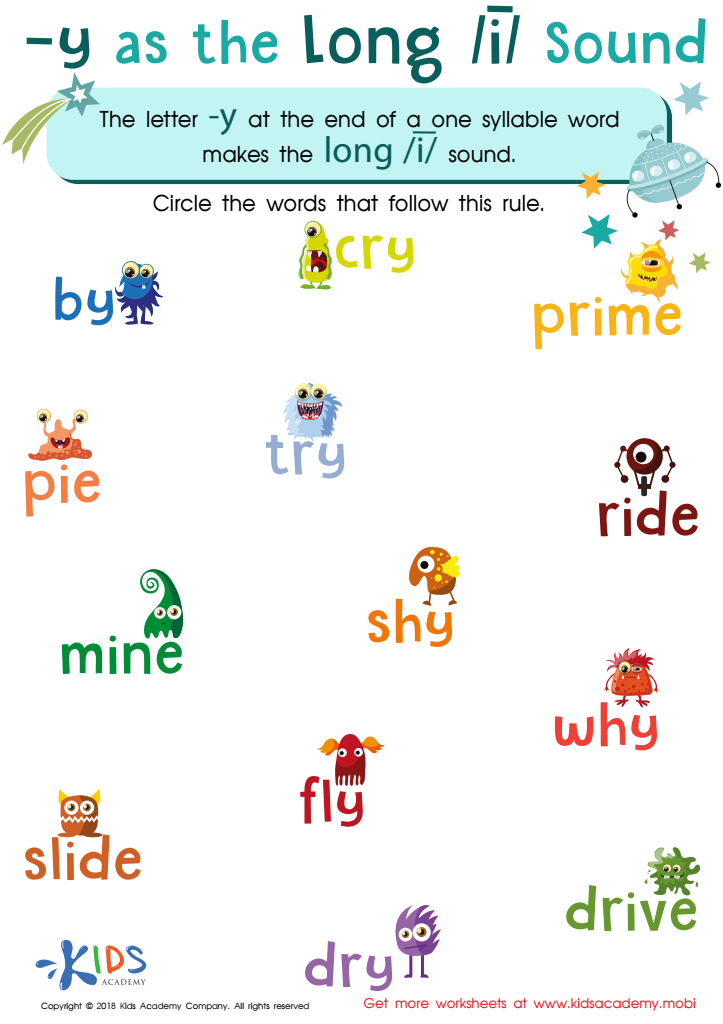
Reading: Y as Long I Worksheet




Spelling practice focusing on long and short vowels is crucial for children aged 7 to 9, as it lays a foundation for their reading and writing skills. At this developmental stage, children are honing their phonemic awareness, which is essential for decoding words they encounter. Mastery of long and short vowels helps learners distinguish between different word forms and meanings, reducing confusion with similarly spelled words.
Engaging with spelling activities centered around these vowel sounds also enhances vocabulary. Understanding the nuances of long and short vowels allows children to understand word structures, contributing to richer language comprehension and expression. This is particularly important as they transition from learning to read to reading to learn, where robust vocabulary becomes vital.
Furthermore, consistent spelling practice contributes to their overall academic confidence and success. As children find success in spelling words correctly, they build confidence in their reading and writing abilities. For parents and teachers, fostering a positive and interactive spelling routine is key. Incorporating games, songs, and creative writing reinforces learning in a fun way, making it a memorable experience that encourages love for language. Ultimately, investing time in spelling practice offers lasting benefits in literacy development that can impact a child's educational journey for years to come.