Rhyming skills development Rhyming Worksheets for Ages 7-9
4 filtered results
-
From - To
Boost your child’s phonetic awareness with our "Rhyming Skills Development Worksheets" for ages 7-9. Our expertly designed worksheets combine fun activities with educational strategies to enhance your child's ability to recognize and generate rhyming words. By engaging in varied exercises, children will sharpen their linguistic skills, expanding their vocabularies and improving reading fluency. Our comprehensive worksheets are perfect for both classroom use and home practice, making learning seamless and enjoyable. Keep your kids motivated and progress trackable with our interactive and visually appealing materials, fostering a lifelong love for language and reading.

Rhyming Words Rhyming Worksheet
 Assign to My Students
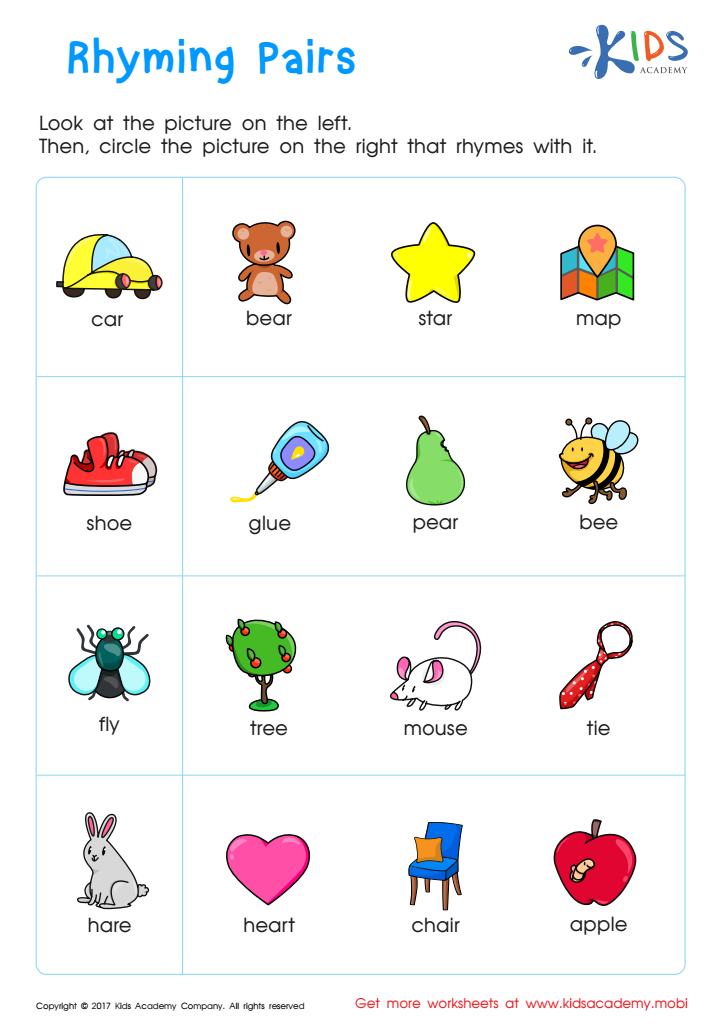
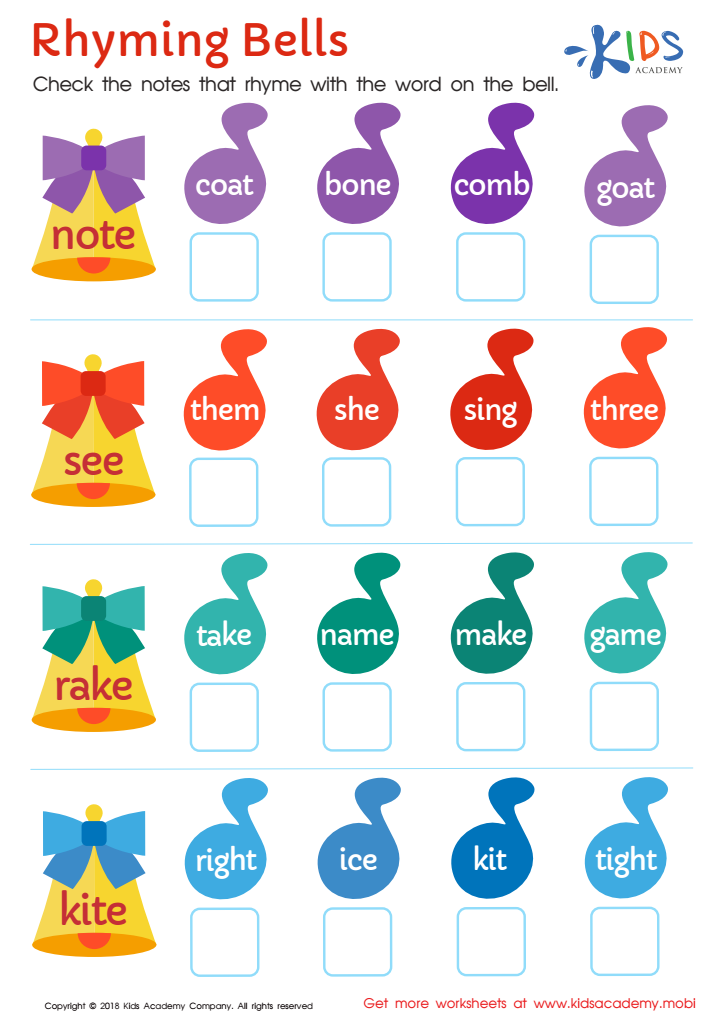
Rhyming Bells Worksheet

First Words: Picture Rhymes Worksheet







Rhyming skills development is crucial for children aged 7-9 as it lays a strong foundation for their reading and language abilities. Rhyming helps children understand how language works by highlighting phonemic awareness, which is the ability to hear and manipulate the individual sounds in words—in this case, the ending sounds. Rhyming practice aids in recognizing patterns within words, facilitating word recognition and decoding which are essential for reading fluency.
Moreover, rhyming enhances vocabulary by introducing children to new word families and fostering memory skills due to the repetitive nature of rhyming activities. When children engage in playful rhyming exercises, they often find joy in language, making learning exciting and engaging. This can foster a lifelong love for reading.
Additionally, rhyming supports social and emotional development. By participating in group rhyming games or lessons, children build listening skills, take turns, and develop cooperation. It also encourages creative thinking and improves auditory discrimination, which is crucial for effective listening and communication.
Parents and teachers should prioritize rhyming activities, such as reading rhyming books, singing rhyming songs, and playing rhyming games, as part of comprehensive early literacy strategy. This holistic approach not only boosts academic skills but also nurtures a well-rounded, confident, and enthusiastic learner.







