Handwriting improvement Tracing Letters Worksheets for Ages 7-9
3 filtered results
-
From - To
Enhance your child's handwriting skills with our engaging "Handwriting Improvement Tracing Letters Worksheets" designed specifically for ages 7-9. These printable worksheets provide a fun and interactive way for students to practice tracing both uppercase and lowercase letters. Each worksheet supports fine motor skill development and encourages proper letter formation. With a variety of activities tailored to your child's learning level, these resources are perfect for reinforcing handwriting proficiency at home or in the classroom. Help your child build confidence and achieve beautiful, legible handwriting with our comprehensive tracing worksheets that make learning enjoyable and effective!
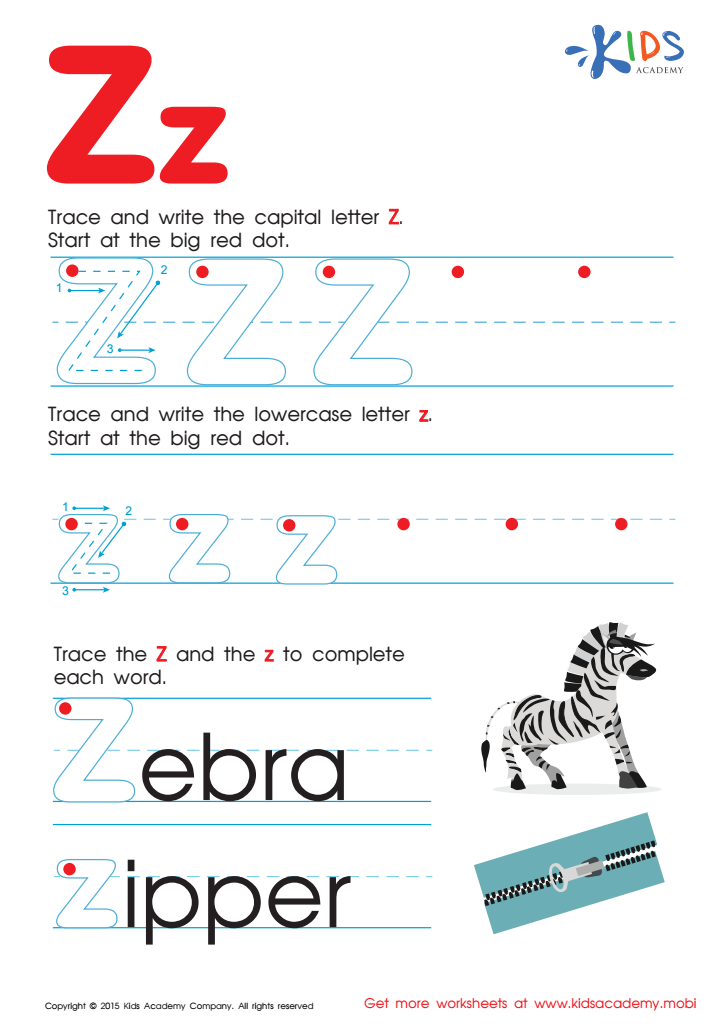
Letter Z Tracing Page
 Assign to My Students
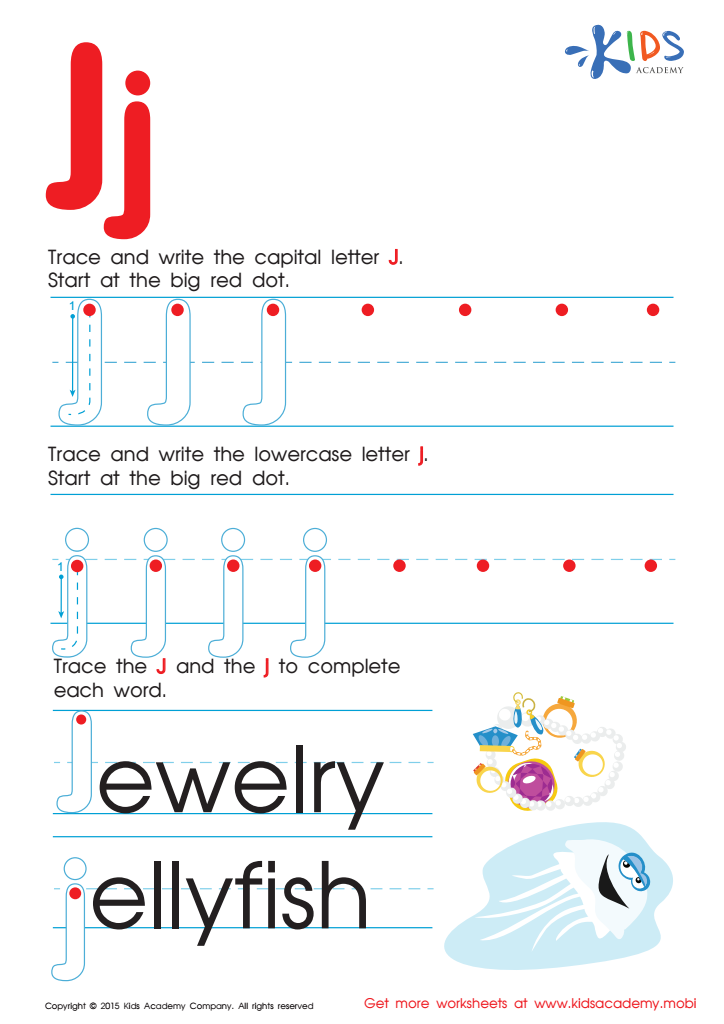
Letter J Tracing Page
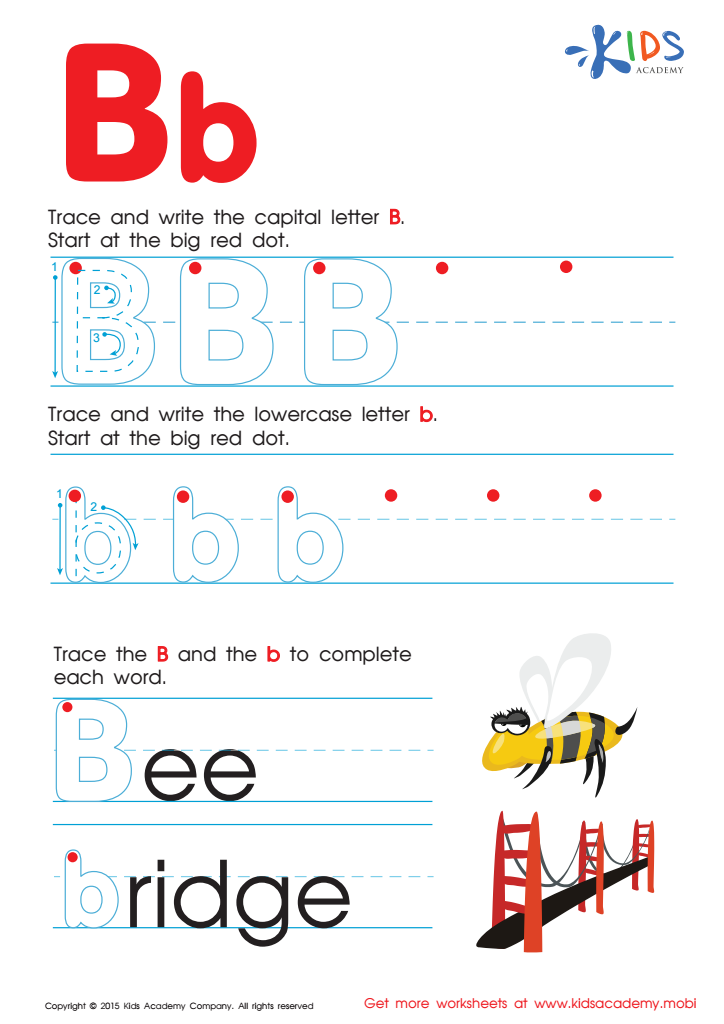
Letter B Tracing Page








Handwriting improvement, particularly tracing letters for ages 7-9, is crucial for several reasons. First, this age marks a significant period in a child's cognitive and fine motor development. Tracing letters helps children refine their hand-eye coordination and control, essential for confident writing skills necessary throughout their academic journey.
Moreover, clear and legible handwriting is paramount for effective communication. Young learners need to convey their thoughts and ideas clearly, and strong handwriting lays the foundation for them to do so. Well-developed handwriting skills can also boost a child’s self-esteem; when they can clearly express themselves on paper, it can lead to greater academic success and a positive attitude towards learning.
Additionally, in our increasingly fast-paced world dominated by technology, the ability to write by hand is often overlooked. However, studies show that handwriting aids memory retention and cognitive understanding, making it an essential skill even in a digital age.
Ultimately, parents and teachers should prioritize handwriting improvement through tracing letters, as it not only enhances a child's writing proficiency but also contributes to their overall educational outcomes, confidence, and ability to communicate effectively in various contexts.








