Vocabulary enhancement Two Letter Phonics Worksheets for Ages 7-9
6 filtered results
-
From - To
Enhance your child's vocabulary with our engaging Two Letter Phonics Worksheets designed specifically for ages 7-9. These interactive worksheets focus on the fundamental building blocks of language, helping students recognize and use two-letter phonetic sounds. Each activity encourages critical thinking and boosts reading skills, making learning enjoyable and effective. Ideal for at-home practice or classroom integration, our comprehensive resources promote language development through fun exercises including word formation, rhyming, and more. Foster a love for reading and enrich your child's vocabulary with our thoughtfully designed phonics worksheets that make mastering language skills a breeze! Start your learning adventure today!
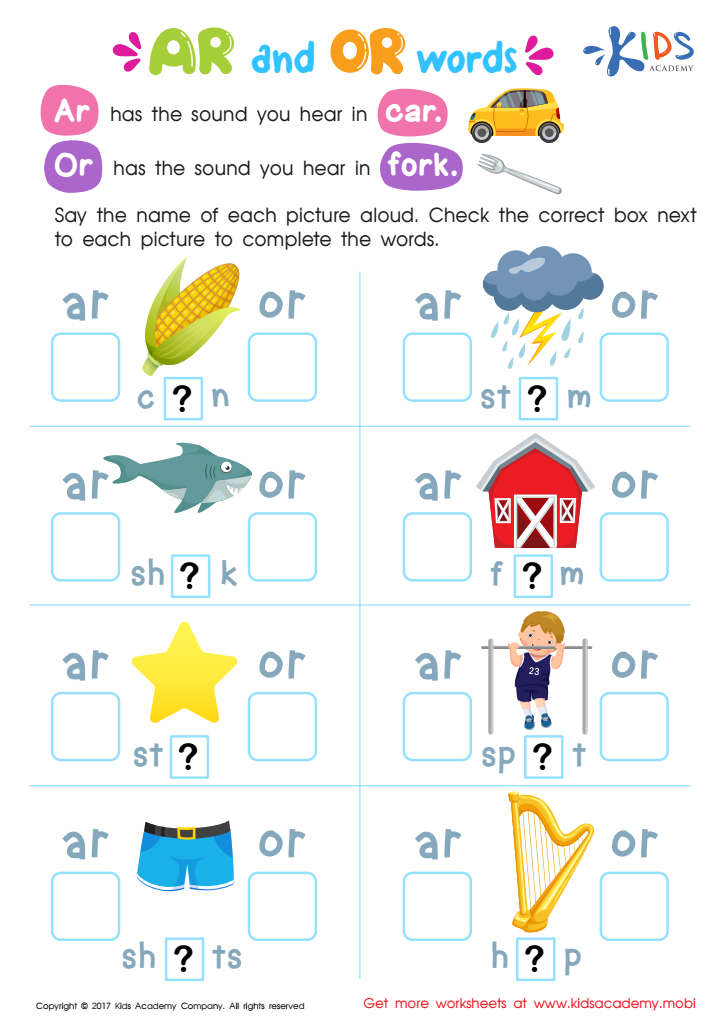
Ar and Or Words Phonics Worksheet
 Assign to My Students
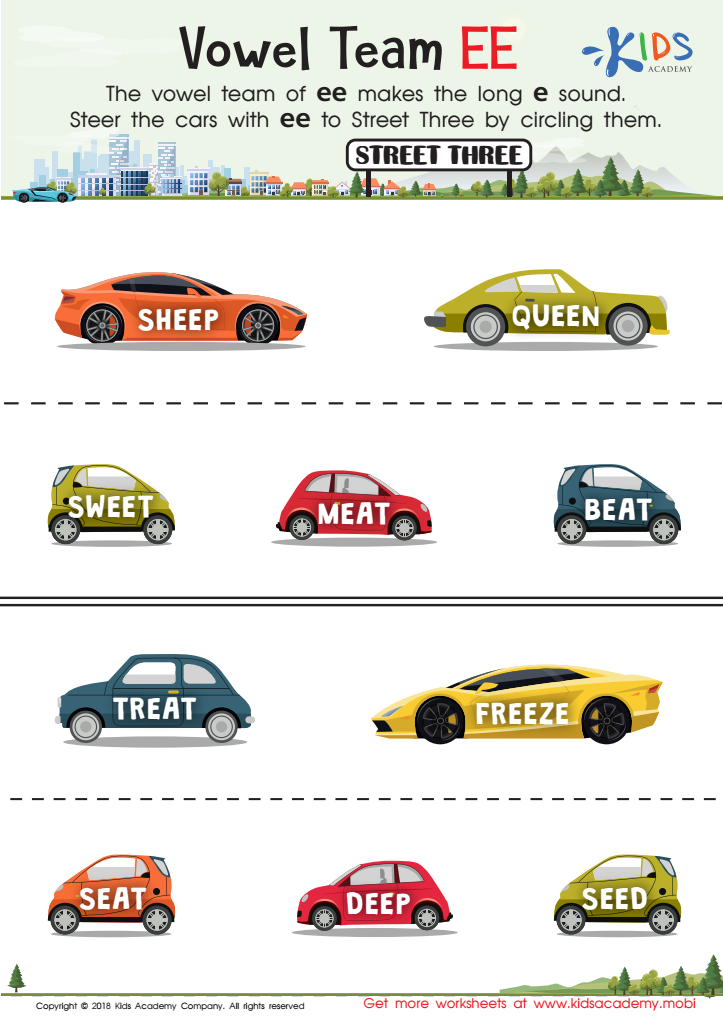
Vowel team ee Worksheet
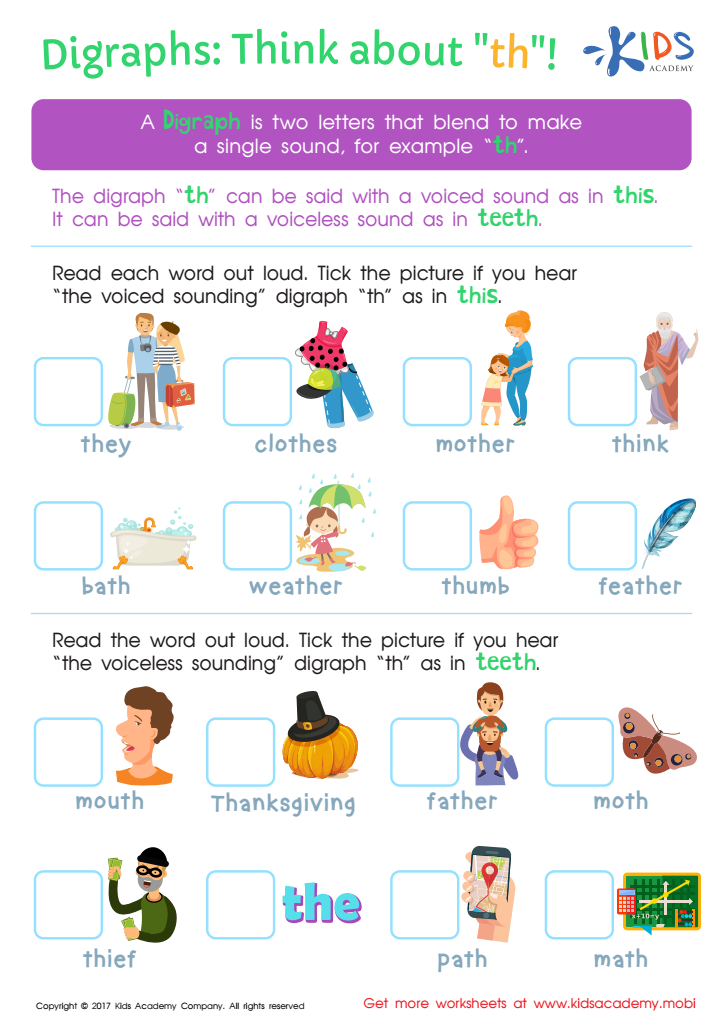
Digraphs: Think About "th" Worksheet
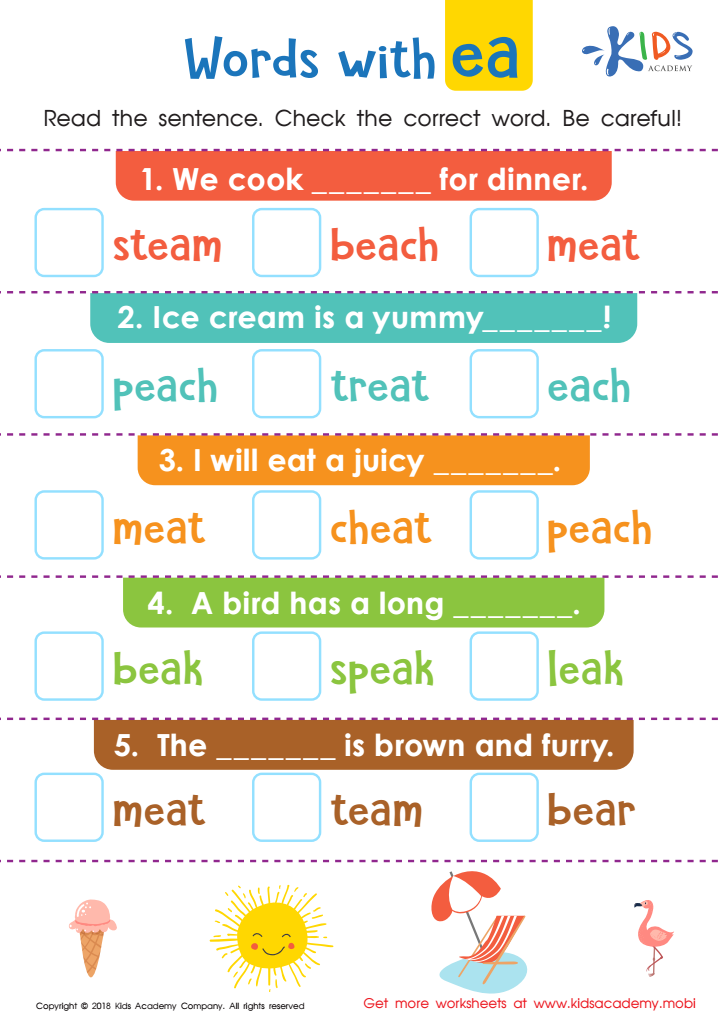
Words with ea Worksheet
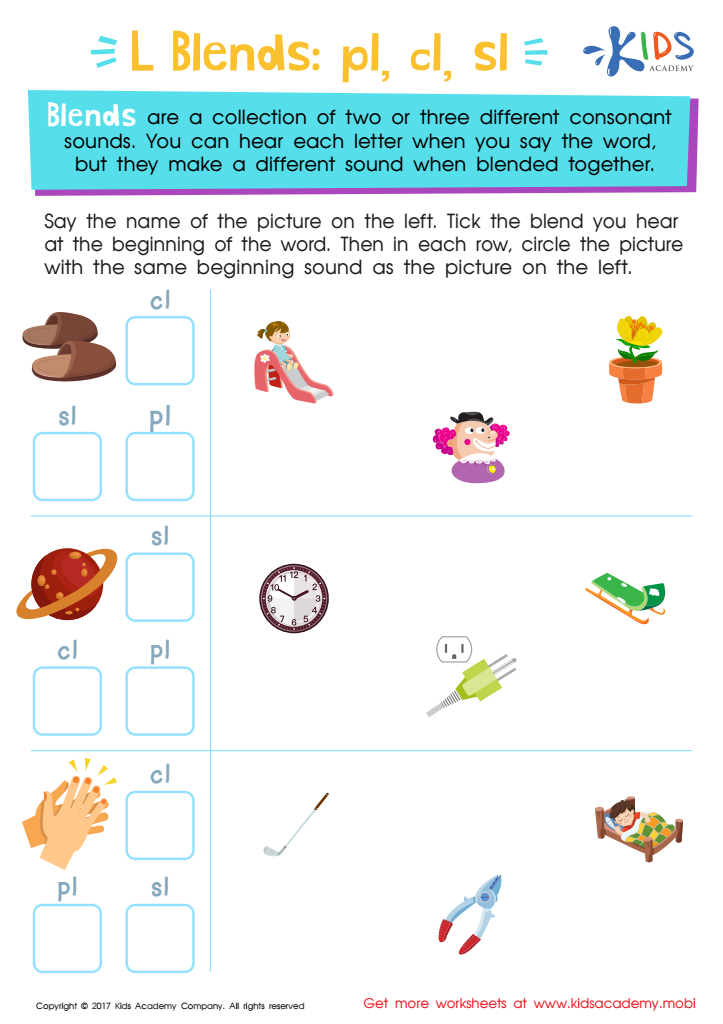
L Blends: "Pl", "Cl" and "Sl" Printable
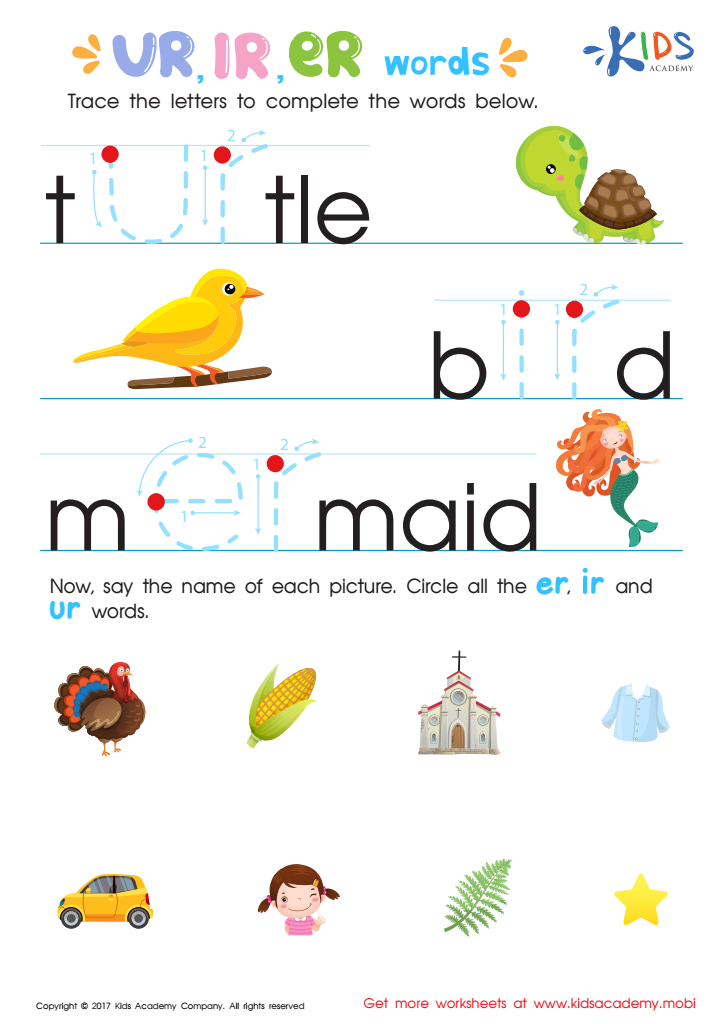
IR UR ER Words Worksheet



Vocabulary enhancement through Two Letter Phonics for ages 7-9 is crucial for several reasons. First, this developmental stage is pivotal for children's reading and language acquisition. Mastery of phonics helps children decode words, improving their reading fluency and comprehension. By focusing on two-letter phonics, children will recognize common letter combinations and their sounds, allowing them to read with greater ease and confidence.
Secondly, improved vocabulary is directly correlated with academic success across various subjects. A rich vocabulary enables students to engage more deeply with texts, enhances their ability to express ideas clearly, and supports better understanding of complex concepts. Teachers and parents can facilitate this by incorporating engaging activities that highlight two-letter combinations, making learning fun and interactive.
Additionally, vocabulary development fosters cognitive skills and critical thinking. As children learn new words, they build their ability to categorize, compare, and analyze—essential skills for problem-solving.
In summary, investing in vocabulary enhancement through Two Letter Phonics lays a strong foundation for literacy, supports overall academic achievement, and nurtures the cognitive development essential for lifelong learning. Parents and teachers play a vital role in this journey, guiding and encouraging children as they expand their language skills.







