Spelling practice Vowels Worksheets for Ages 7-9 - Page 2
29 filtered results
-
From - To
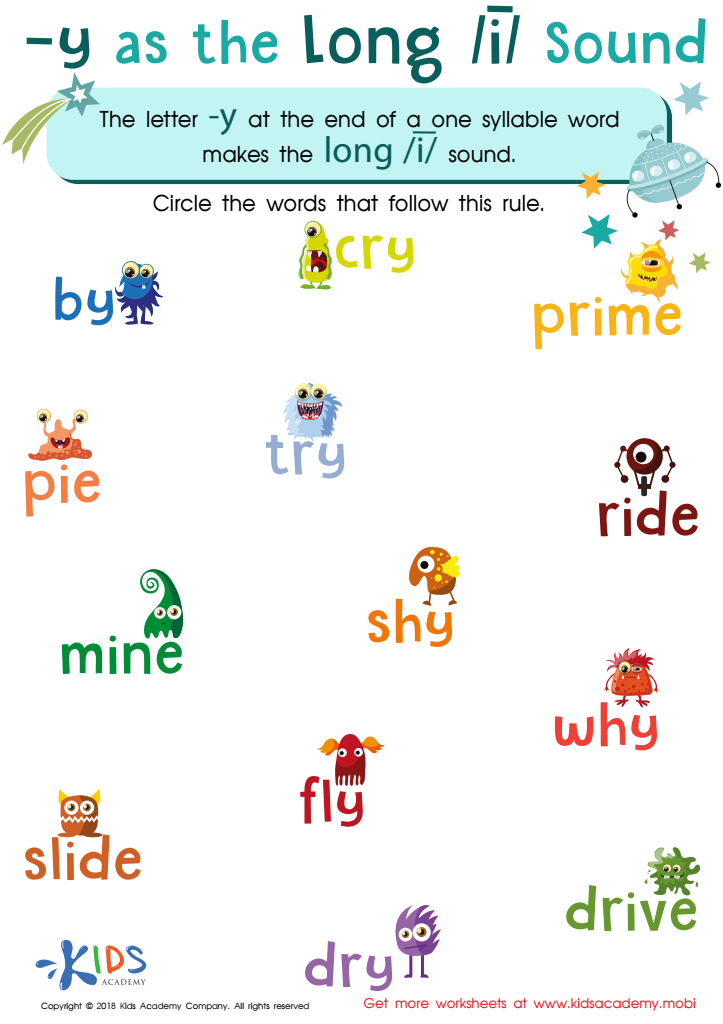
Reading: Y as Long I Worksheet
 Assign to My Students
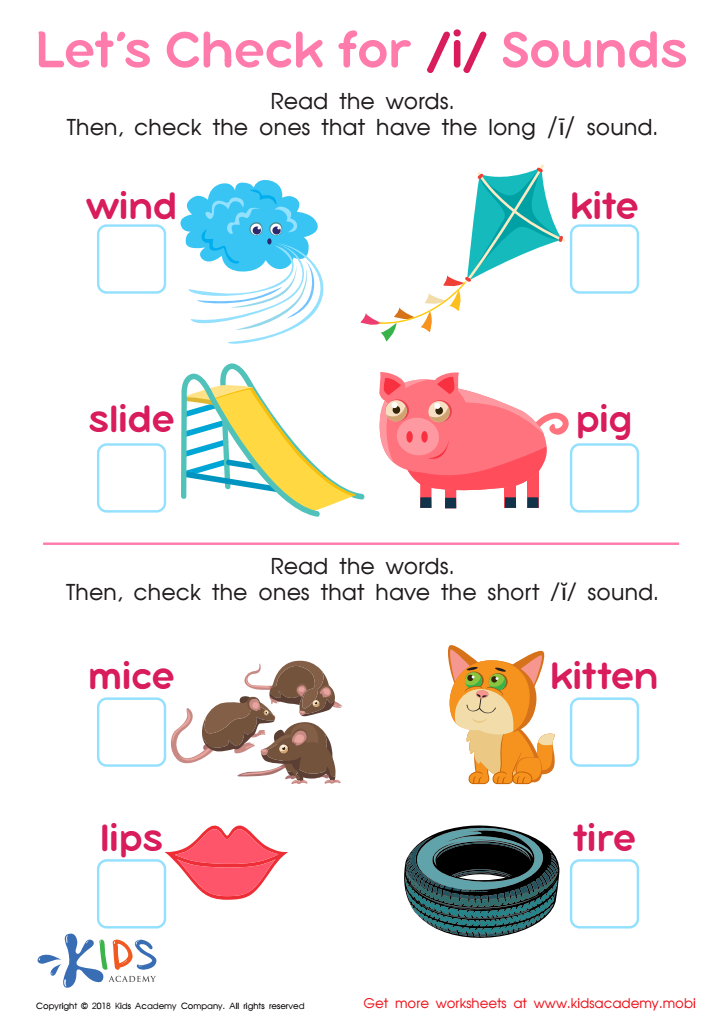
Let's Check for «i» Sounds Worksheet
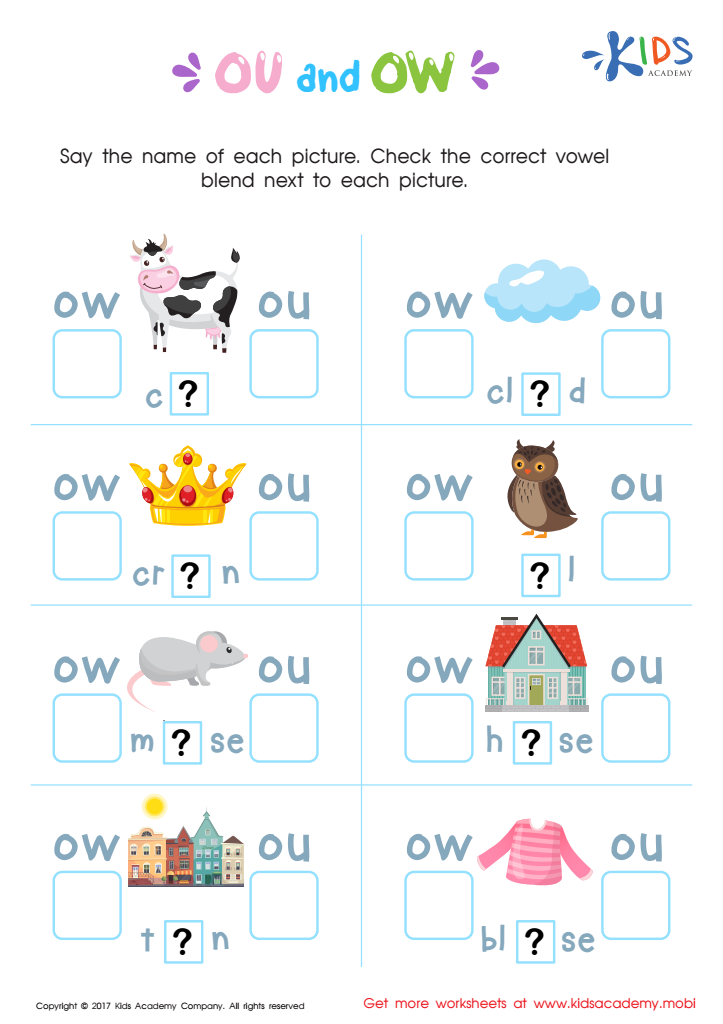
OU and OW Words Worksheet
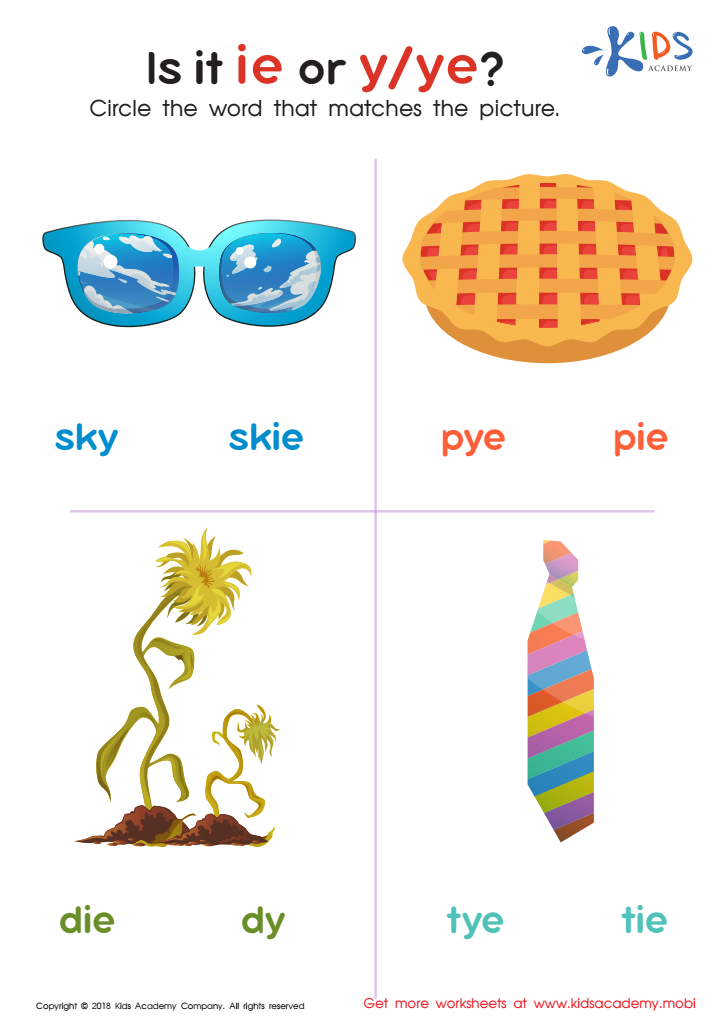
Is It IE or Y/Ye? Worksheet
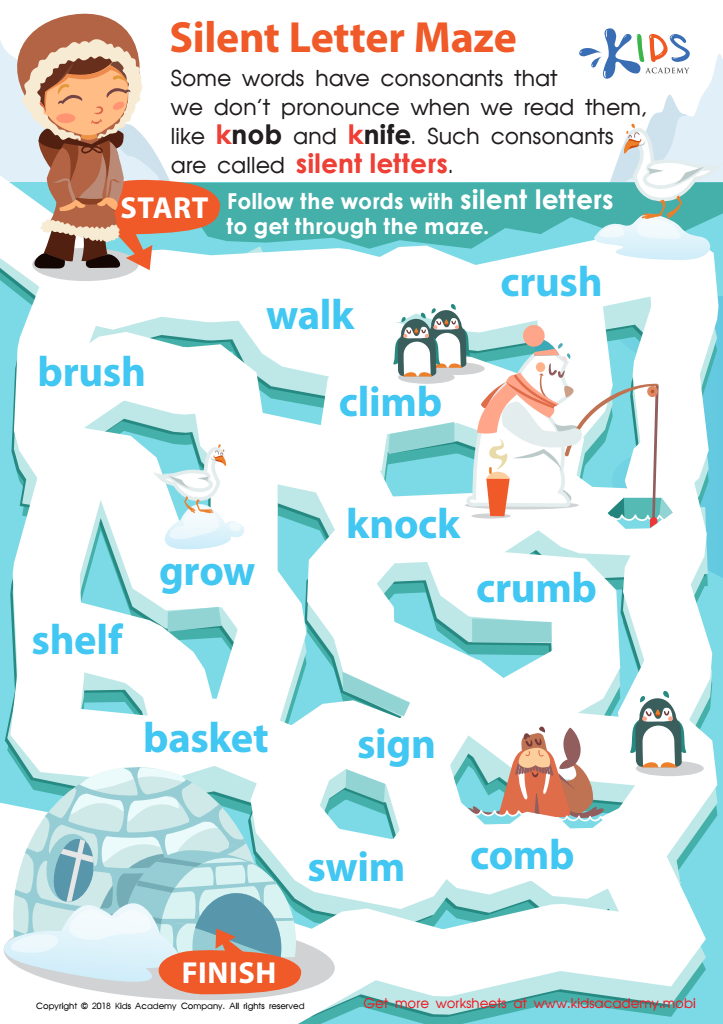
Silent Letter Maze Worksheet





Spelling practice, particularly focusing on vowels, is crucial for children aged 7-9 as it lays the foundation for their reading and writing skills. At this developmental stage, children are learning to decode words and understand phonics, which includes recognizing vowel sounds and their various representations. Mastery of vowels enhances their ability to spell multisyllabic words, improving their overall literacy.
Parents and teachers should prioritize spelling practice for several reasons. First, it boosts confidence in children’s writing abilities, enabling them to express their thoughts without being hindered by spelling difficulties. As they become more confident, their enthusiasm for reading often increases, exposing them to more vocabulary and varied sentence structures.
Moreover, consistent practice reinforces the connection between sounds and letters, essential skills for phonemic awareness. Engaging in activities that allow children to manipulate vowels—such as word games or spelling exercises—can make learning fun and interactive, solidifying their understanding in a supportive environment.
In summary, emphasizing vowel spelling practice enhances literacy skills, builds confidence, and inspires a love for language, ultimately setting the stage for future academic success. Investing time in this aspect of education reaps benefits that extend beyond just spelling, fostering lifelong learning and communication skills.







