
Understanding vowel sounds Vowels Worksheets for Ages 7-9
3 filtered results
Difficulty Level
Grade
Age
-
From - To
Subject
Activity
Standards
Explore our engaging "Understanding Vowel Sounds" worksheets designed specifically for children aged 7-9! These resources are tailored to help young learners grasp the fundamental concepts of vowel sounds through fun and interactive activities. Our carefully crafted tasks encourage kids to identify and differentiate between short and long vowels, enhancing their reading and pronunciation skills. With colorful illustrations and relatable examples, these worksheets make learning enjoyable and effective. Perfect for home or classroom use, our resources support early literacy development, ensuring a solid foundation for future reading success. Dive in and watch your child's confidence and skills grow!
Favorites
With answer key
Interactive
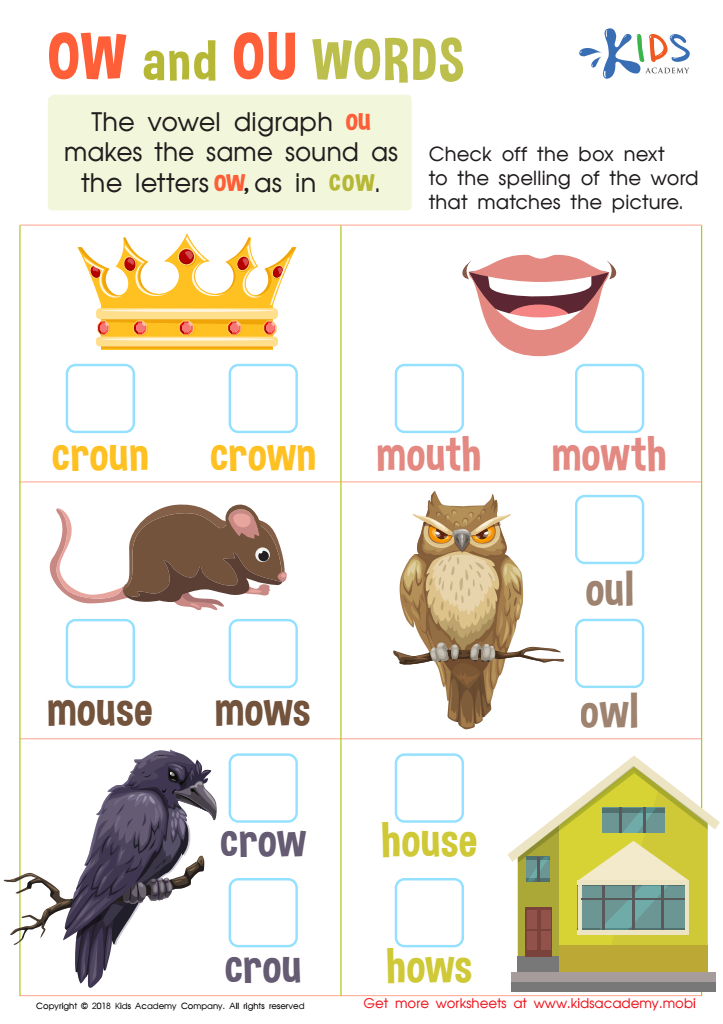
Reading: OW and OU Words Worksheet
Help your kids learn phonetics! Explain the different sounds and long/short variations. Emphasize that some vowel sounds are the same, e.g. ou = ow in cow. For practice, have them read aloud the words in the worksheet and check the box next to the spelling that matches the picture.
Reading: OW and OU Words Worksheet
Worksheet
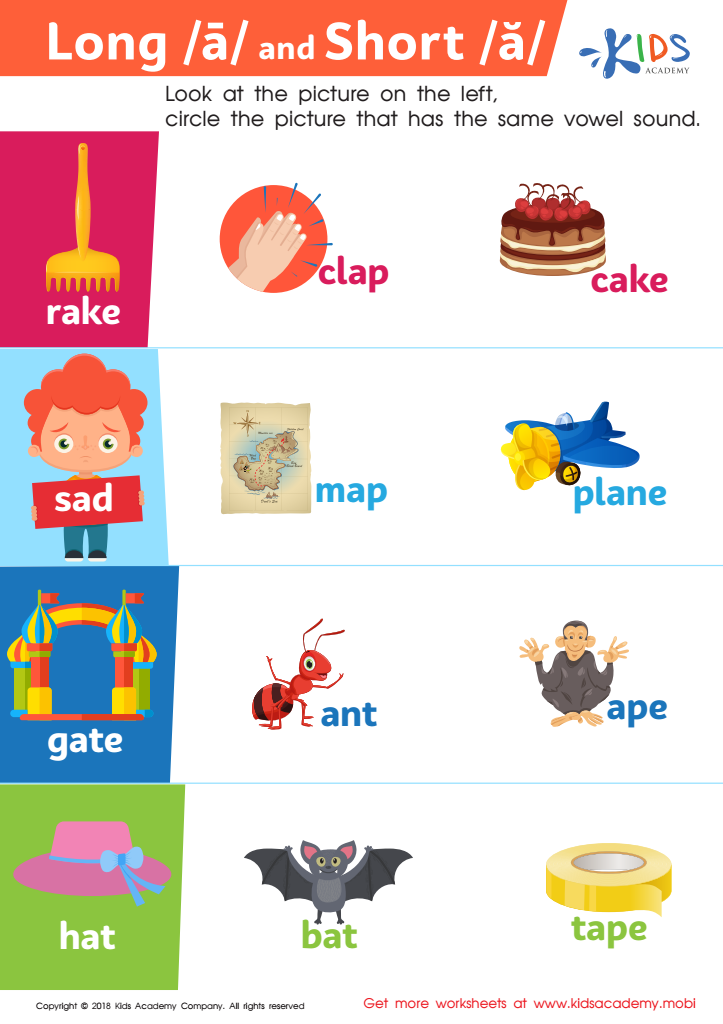
Reading: Long a and Short a Worksheet
This printable helps students practice distinguishing the long and short A sound. Pictures provide clues to read each word and students identify if it has a short or long sound. By completing this worksheet, children gain mastery of the phonics skill.
Reading: Long a and Short a Worksheet
Worksheet
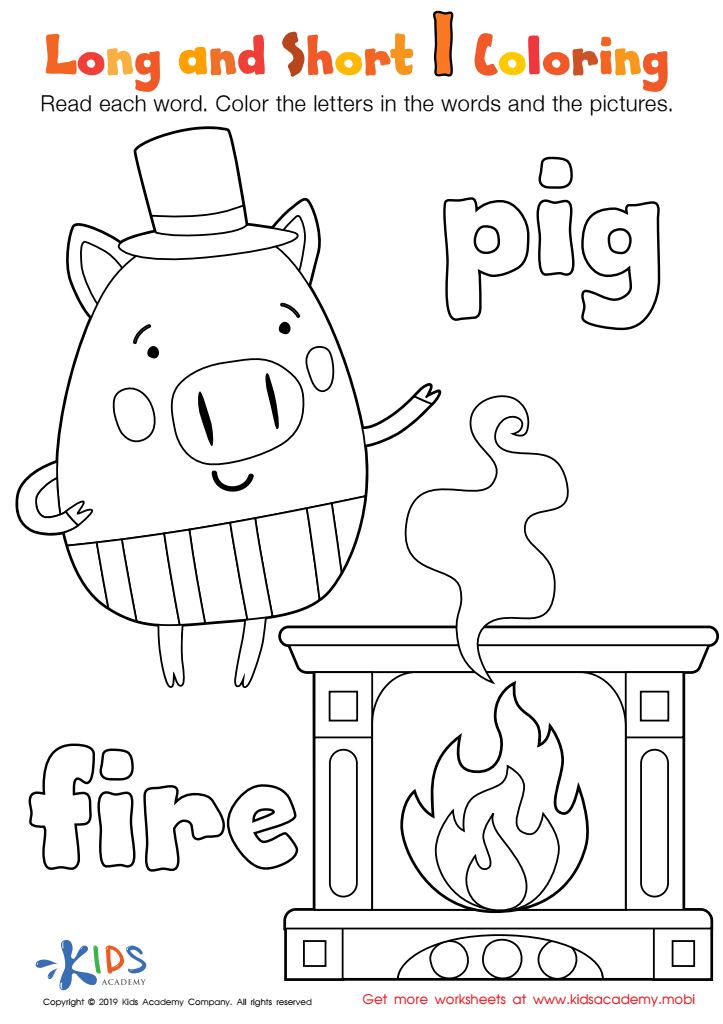
Long and Short I Worksheet
Print the worksheet and have the students read "pig" and "fire". Check for understanding the difference between long and short vowels. Color in words and pictures to make learning phonics fun! This exercise is perfect for introducing the topic to your students.
Download (PDF)
 Assign to My Students
Assign to My Students
Long and Short I Worksheet
Worksheet
Join Kids Academy for Free
Who is primarily going to use this learning content?





Understanding vowel sounds is crucial for children aged 7-9 as it forms a backbone for their literacy development. During these formative years, children are beginning to read more complex texts and write more independently, making a solid grasp of vowel sounds essential. Vowels—A, E, I, O, U, and sometimes Y—play a pivotal role in word formation and phonics; recognizing both short and long vowel sounds can significantly enhance a child’s reading fluency and comprehension.
When children understand vowel sounds, they become better equipped to decode unfamiliar words, which fosters confidence and encourages reluctant readers. This foundational skill also aids in spelling, as knowing how vowels interact with other letters helps in constructing words more accurately.
Moreover, strong phonemic awareness through vowel sounds supports literacy across all subjects, enhancing communication skills, which are vital in both academic and social contexts. Parents and teachers who prioritize understanding of vowel sounds not only equip children with vital literacy tools but also help establish a love for reading—a benefit that can last a lifetime. Overall, fostering vowel sound recognition contributes significantly to a child's language mastery, paving the way for ongoing academic success and effective communication.







