Chess knowledge Chess Worksheets for Ages 7-9
3 filtered results
-
From - To
Explore our engaging Chess Knowledge Worksheets designed specifically for children ages 7-9! These thoughtfully crafted worksheets foster critical thinking, strategic skills, and a deeper understanding of chess fundamentals. Covering key concepts such as piece movement, basic tactics, and game rules, our resources cater to various learning styles. Perfect for both classroom use and at-home practice, these worksheets encourage young learners to enhance their problem-solving abilities through fun and interactive activities. Help your child build confidence on the chessboard while developing important life skills. Dive into the world of chess with our exciting, educational worksheets today!
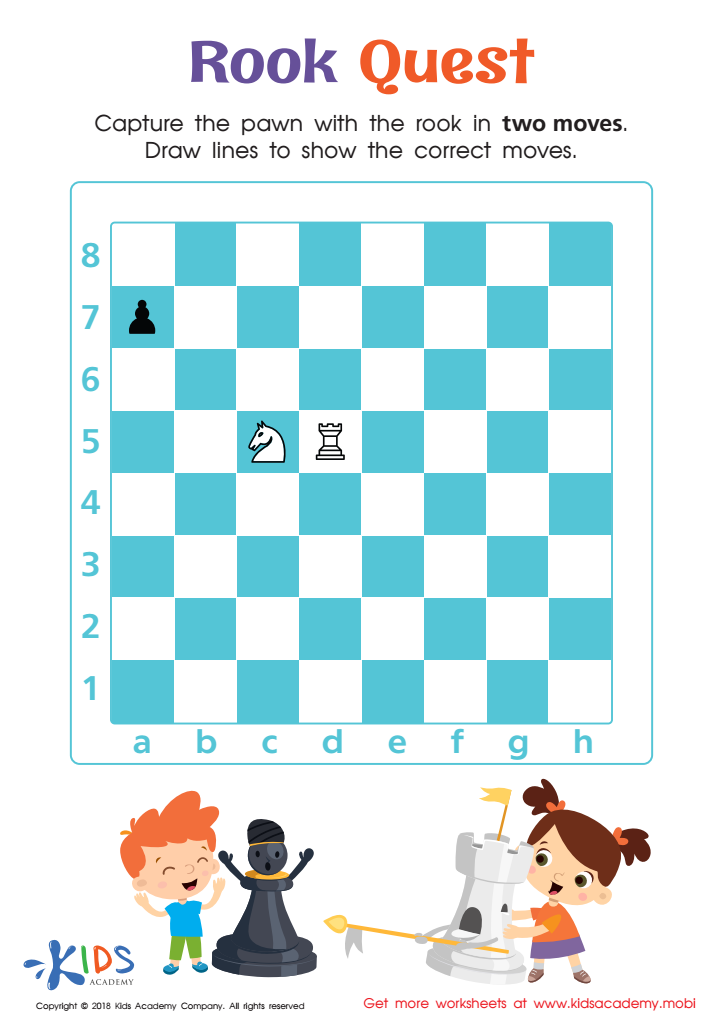
Rook Quest Worksheet
 Assign to My Students
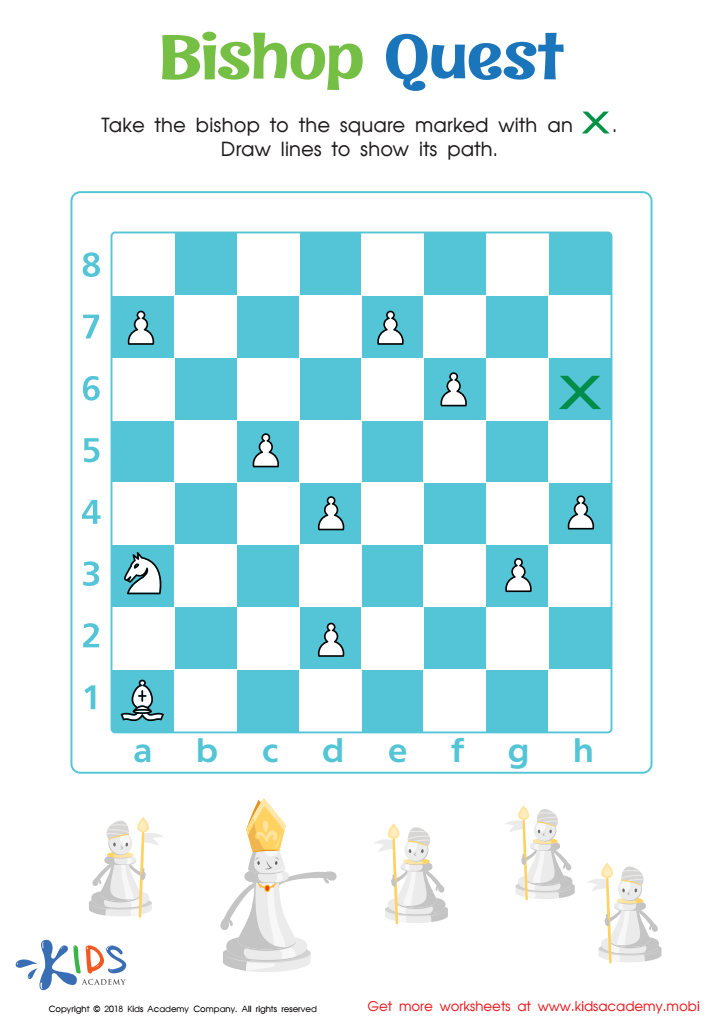
Bishop Quest Worksheet
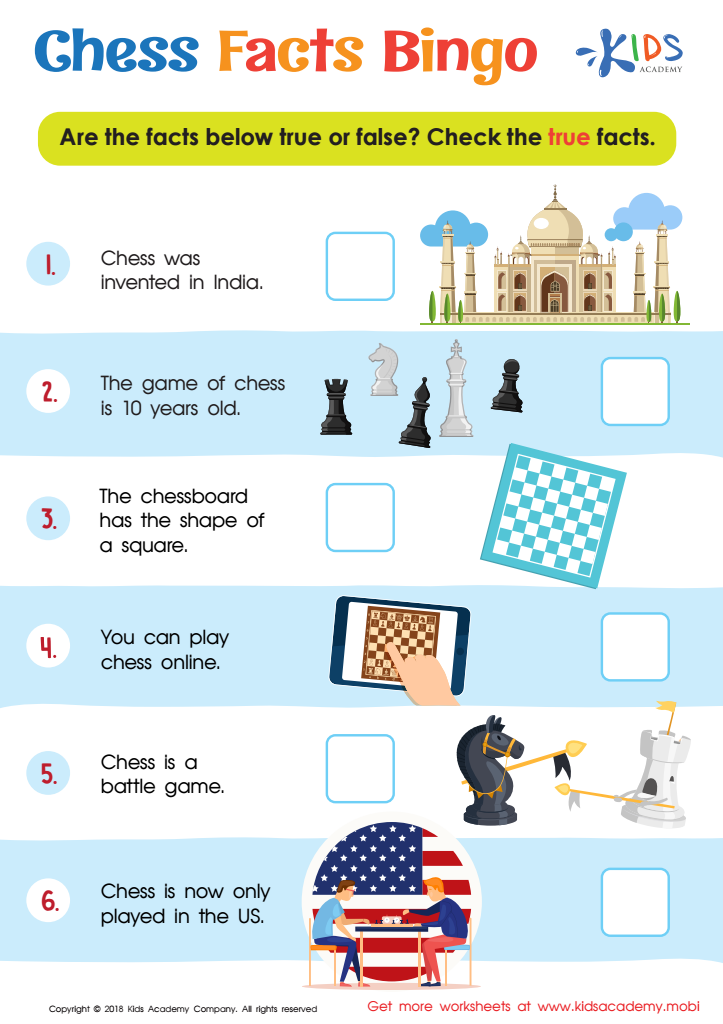
Chess Facts Bingo Worksheet







Teaching chess to children aged 7-9 offers numerous cognitive, social, and emotional benefits that can enhance their overall development. Firstly, chess stimulates critical thinking, problem-solving skills, and strategic planning, encouraging kids to evaluate multiple options and anticipate consequences. Such analytical abilities can transfer to academic subjects, improving performance, particularly in math and reading comprehension.
Moreover, chess promotes patience and concentration. As young learners engage in the game, they practice maintaining focus for extended periods, which enhances their ability to concentrate in other areas of study and daily tasks. Additionally, chess fosters sportsmanship and social skills, as children play against peers, learning to handle wins and losses gracefully, teaching resilience and emotional regulation.
Furthermore, introducing chess at this age can ignite a lifelong passion for the game, encouraging them to develop hobbies that stimulate mental agility. It is a family-friendly activity, providing opportunities for quality time between parents and children. Overall, investing time in teaching chess can advocate lifelong learning, nurture emotional intelligence, and empower children with skills that extend beyond the chessboard, making it a worthwhile pursuit for both parents and teachers.