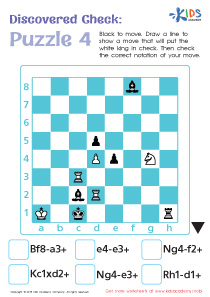
Decision making skills Chess Worksheets for Ages 7-9
3 filtered results
Difficulty Level
Grade
Age
-
From - To
Subject
Activity
Standards
Empower young minds with our engaging Decision Making Skills Chess Worksheets designed for ages 7-9. These thoughtfully crafted worksheets introduce children to the fascinating world of chess while honing their critical thinking and decision-making abilities. Each activity presents real chess scenarios, encouraging kids to think ahead, assess consequences, and choose the best moves. Suitable for beginners and young chess enthusiasts, these worksheets provide a fun and educational way to develop essential cognitive skills that extend beyond the chessboard. Foster a love for strategic thinking and enhance your child’s problem-solving capabilities with Kids Academy’s chess worksheets.
Favorites
With answer key
Interactive
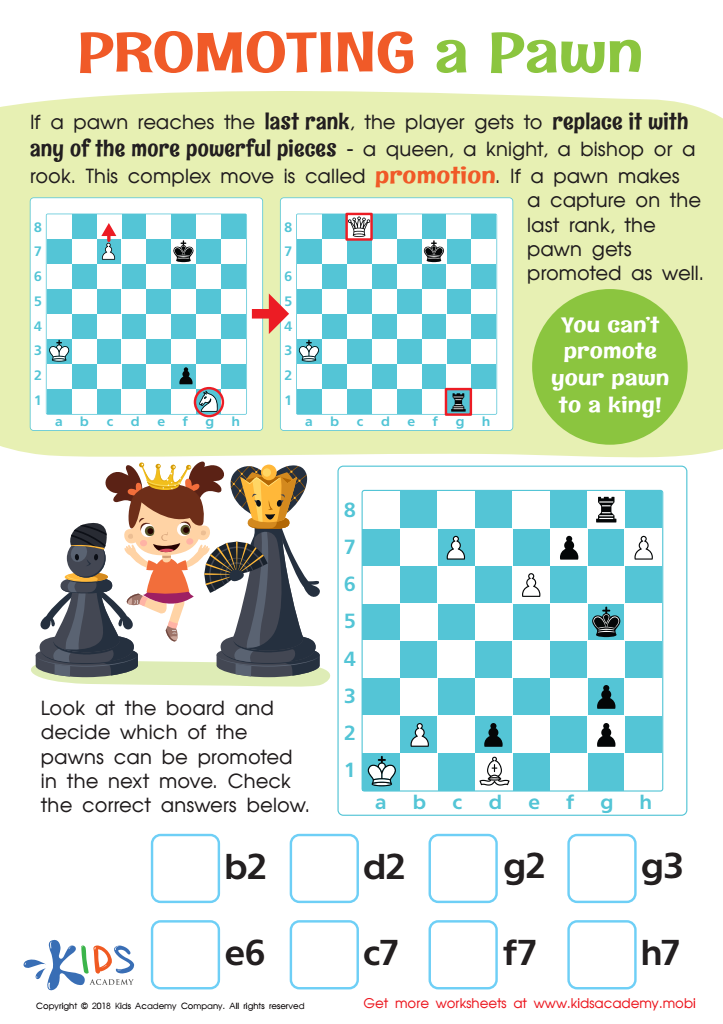
Promoting a Pawn Worksheet
Teach your kids all about pawns with this fun worksheet! Pawns may seem restricted, but experienced players can guide them across the board. If a pawn reaches the last rank, the player can upgrade it to a more powerful piece (e.g. queen, knight), or promote it if it captures an enemy piece. Give them the tools to master the game!
 Assign to My Students
Promoting a Pawn Worksheet
Worksheet
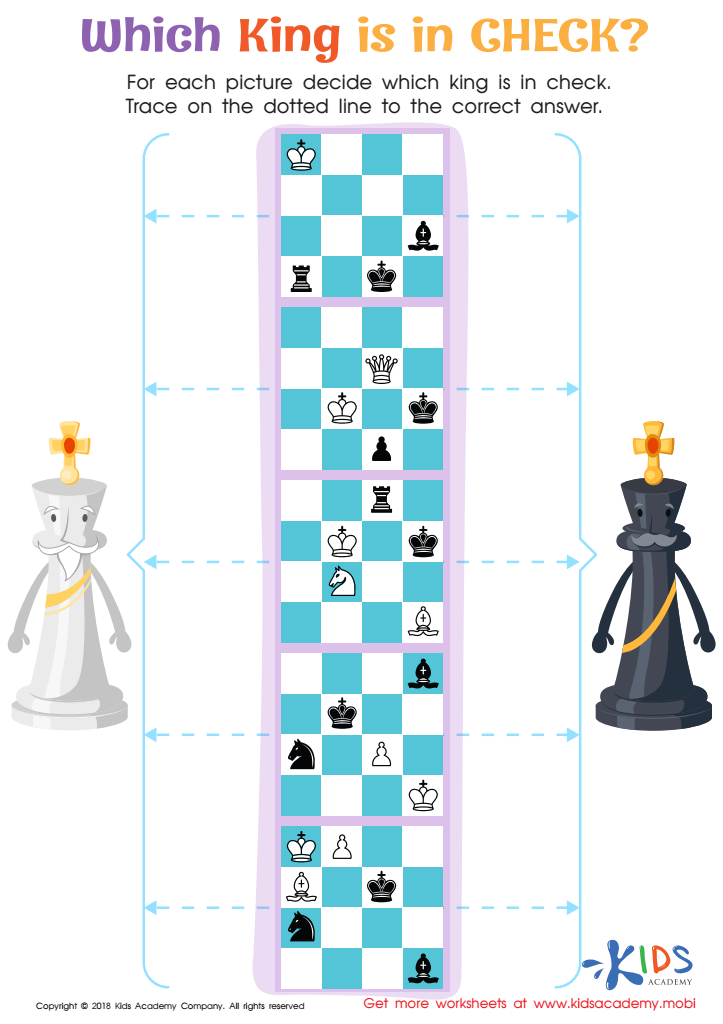
Which King is in Check? Worksheet
Teaching your children chess helps them solve problems, think critically, and develop logical patterns. With this free PDF, they'll analyze five boards to decide if the black or white king is in check. Tracing the lines, they'll improve their skills while having fun.
Which King is in Check? Worksheet
Worksheet
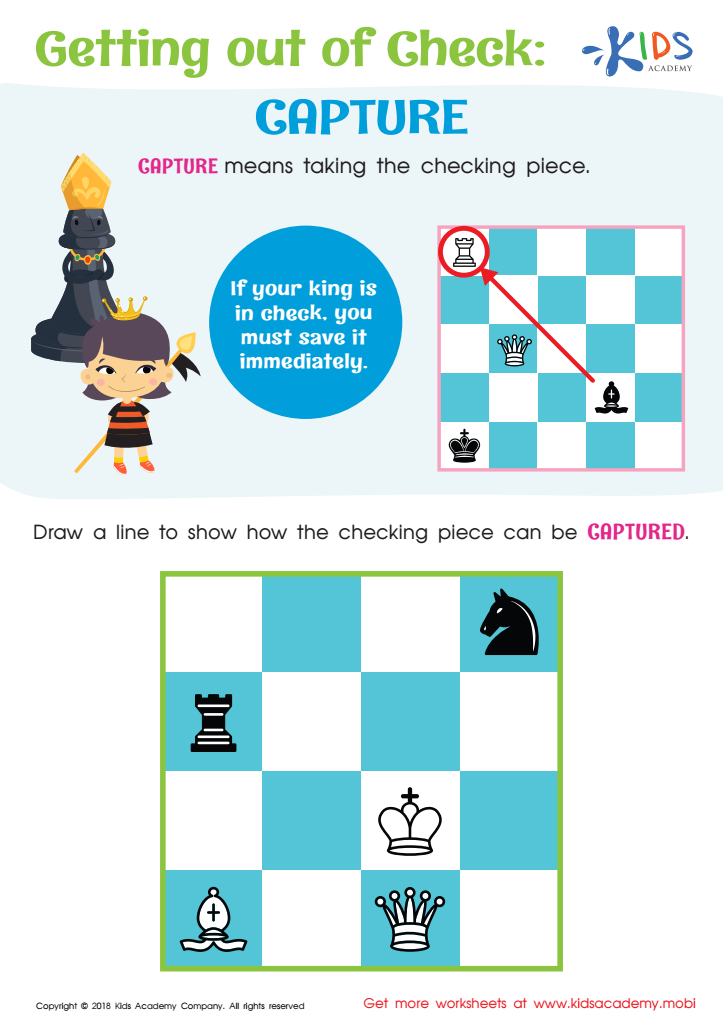
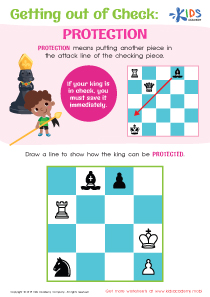
Getting out of Check: Capture
Kids love chess because it combines strategy and the thrill of outwitting their opponents! This free chess strategy worksheet teaches kids how to protect and capture the threatening piece when their king is in danger. The downloadable includes sample boards to practice with. Get it today and have your chess whiz mastering the game in no time!
Getting out of Check: Capture
Worksheet
Join Kids Academy for Free
Who is primarily going to use this learning content?







Encouraging decision-making skills in children through chess is immensely beneficial for their cognitive and emotional development, particularly at ages 7-9. At this formative stage, young minds are highly receptive to learning new skills and logical thinking processes. Chess, known for its complexity and strategic depth, serves as an excellent tool to nurture these abilities.
Firstly, chess teaches patience and thoughtful consideration. Children learn the importance of thinking ahead before making a move, a vital decision-making skill. They practice analyzing various outcomes and weighing pros and cons, helping to improve their planning and foresight abilities. This meticulous evaluation is a transferable skill useful in academic problem-solving and daily life situations.
Moreover, chess enhances cognitive abilities such as memory and concentration. Remembering the positions of different pieces and adapting to changes requires mental acuity and focus, skills that are essential for scholastic achievement.
Socially, chess also teaches the importance of rule adherence and fair play. Children learn to experience wins and losses gracefully, aiding in emotional resilience and sportsmanship.
Lastly, involving parents or teachers in this learning process provides a supportive environment, fostering stronger relationships and communal activity. In essence, chess acts as a microcosm of life's myriad challenges and offers children aged 7-9 invaluable lessons in decision-making that can last a lifetime.