Problem-solving practice Chess Worksheets for Ages 7-9
3 filtered results
-
From - To
Boost your child's critical thinking skills with our Problem-Solving Practice Chess Worksheets tailored for ages 7-9! These engaging worksheets provide young learners with fun and challenging chess scenarios, designed to enhance their reasoning, decision-making, and strategic thinking abilities. Each worksheet emphasizes key problem-solving concepts, helping children develop a stronger understanding of chess fundamentals while encouraging creativity and perseverance in overcoming challenges. Perfect for both classroom settings and home practice, our chess worksheets offer a captivating way for kids to enjoy learning through play. Unlock your child's potential and cultivate a love for chess today with these exciting educational resources!
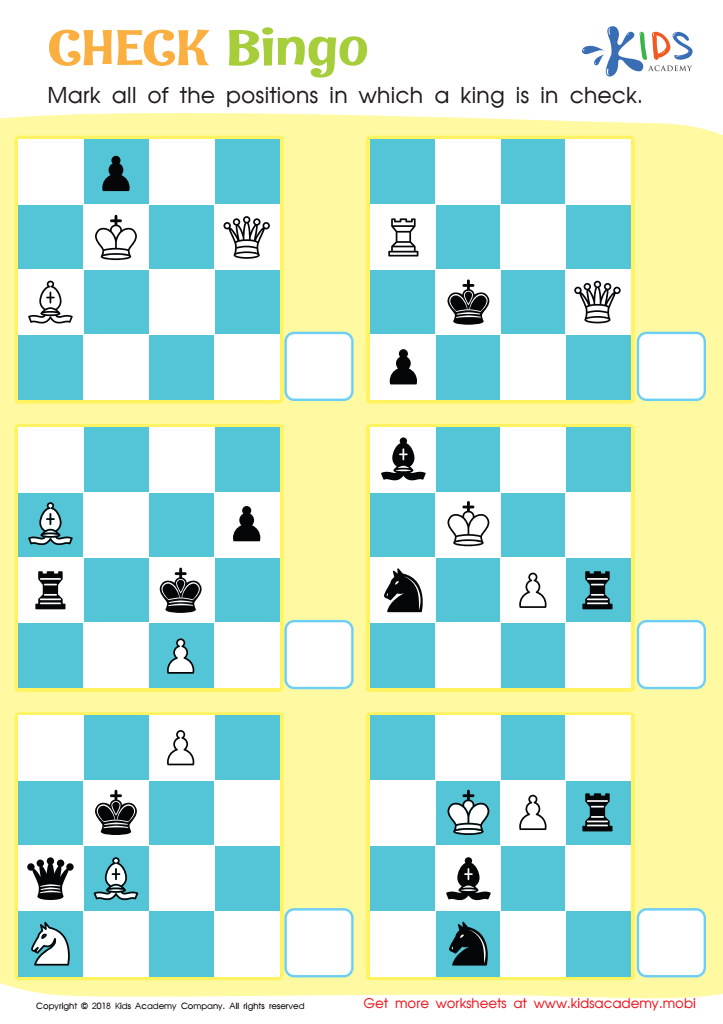
Check Bingo Worksheet
 Assign to My Students
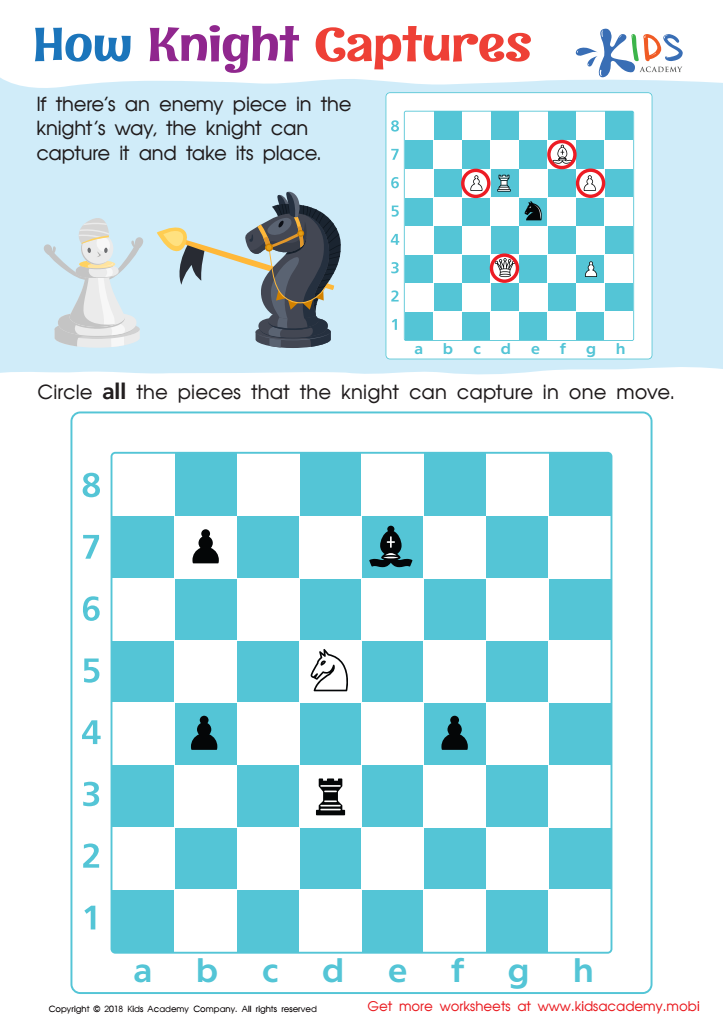
How Knight Captures Worksheet
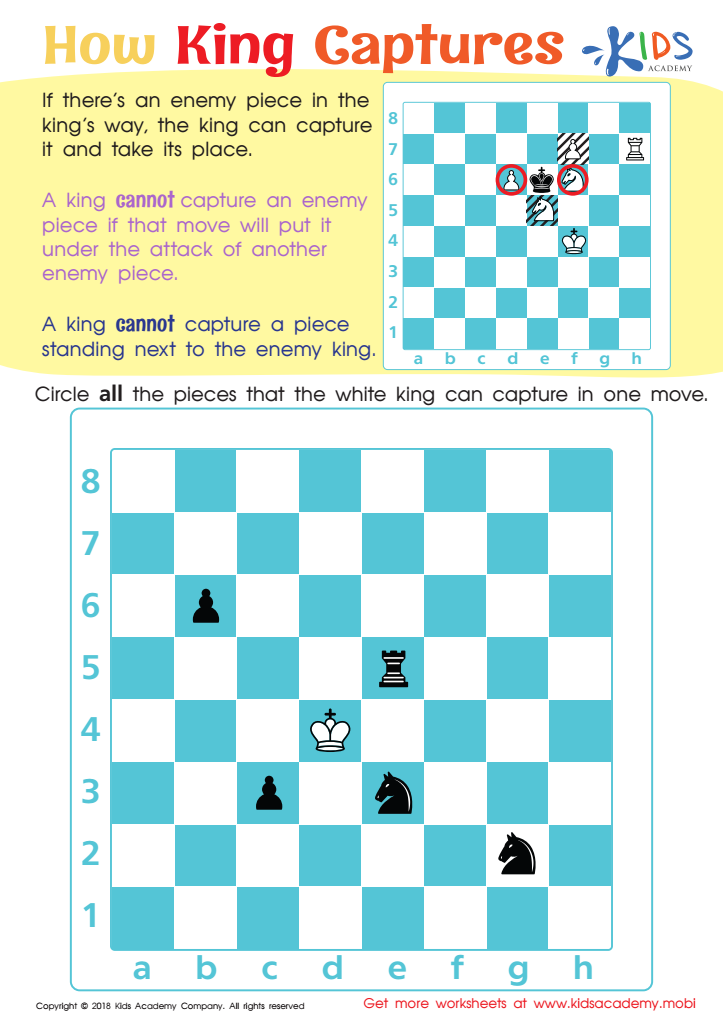
How King Captures Worksheet








Parents and teachers should care about problem-solving practice through chess for children aged 7-9 because chess offers unique cognitive benefits that enhance critical thinking and decision-making skills. Engaging with chess encourages children to analyze situations, assess potential consequences, and develop strategic plans — skills that are transferable to real-life challenges and academic subjects.
At this developmental stage, children are particularly receptive to learning skills that foster independence and resilience. Chess presents opportunities for them to face challenges head-on, learn from mistakes, and celebrate successes, promoting a growth mindset. Additionally, the game instills patience and discipline, as players must carefully consider their moves rather than rush decisions.
Moreover, chess fosters social interaction, as children often play in pairs or groups, teaching them how to communicate, collaborate, and respect their opponents. Introducing problem-solving through chess not only supports cognitive development but also enhances emotional intelligence and social skills.
Ultimately, integrating chess into educational or home learning environments can create a dynamic space for intellectual engagement, making it a valuable tool for parents and teachers committed to holistic child development. Embracing chess can empower young learners to navigate complex problems confidently, both on the board and in their daily lives.