Letter tracing skills English for Beginners Worksheets for Ages 7-9
3 filtered results
-
From - To
Boost your child's writing confidence with our "Letter Tracing Skills English for Beginners" worksheets, specially crafted for ages 7-9. Designed to support young learners and ESL students, these engaging worksheets help children master letter formation, improve handwriting, and enhance overall writing abilities. Each worksheet provides a step-by-step guide, fostering muscle memory and fine motor skills effortlessly. Perfect for classroom use or at-home practice, these resources offer a fun and interactive approach to learning the alphabet. Set your child on the path to writing success with Kids Academy's effective and enjoyable letter tracing worksheets.
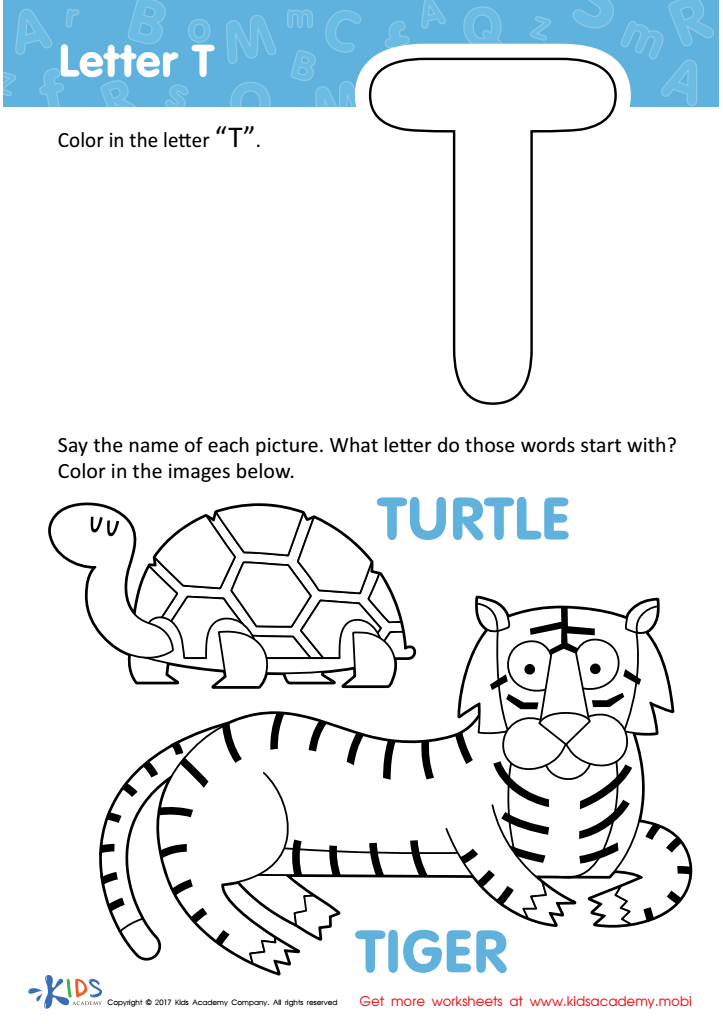
Letter T Coloring Sheet
 Assign to My Students
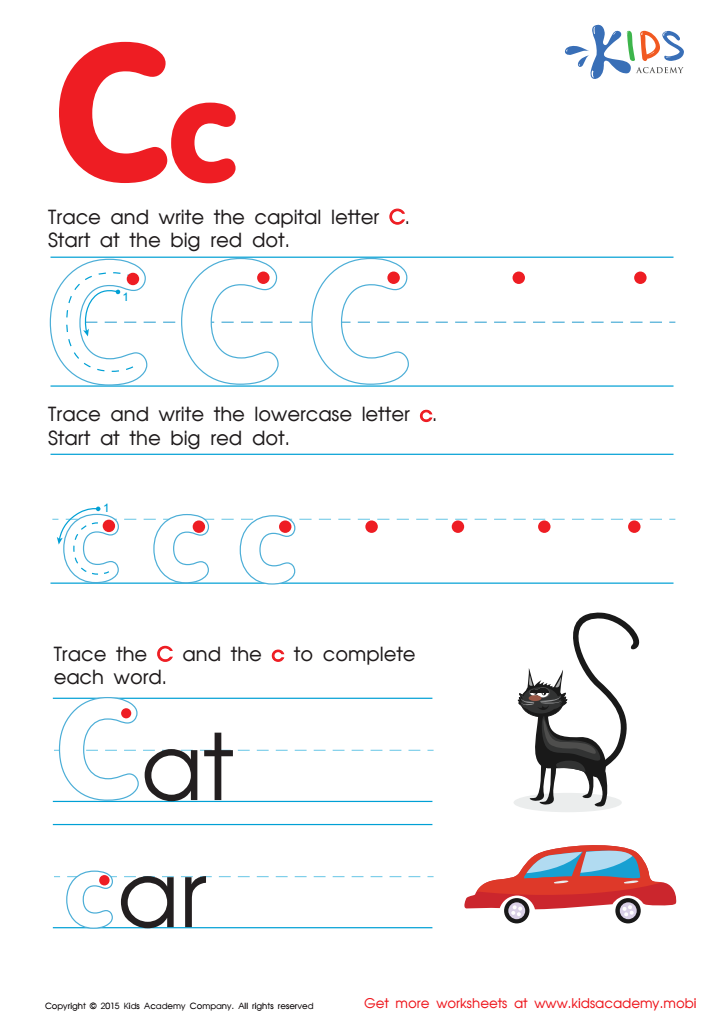
Letter C Tracing Page
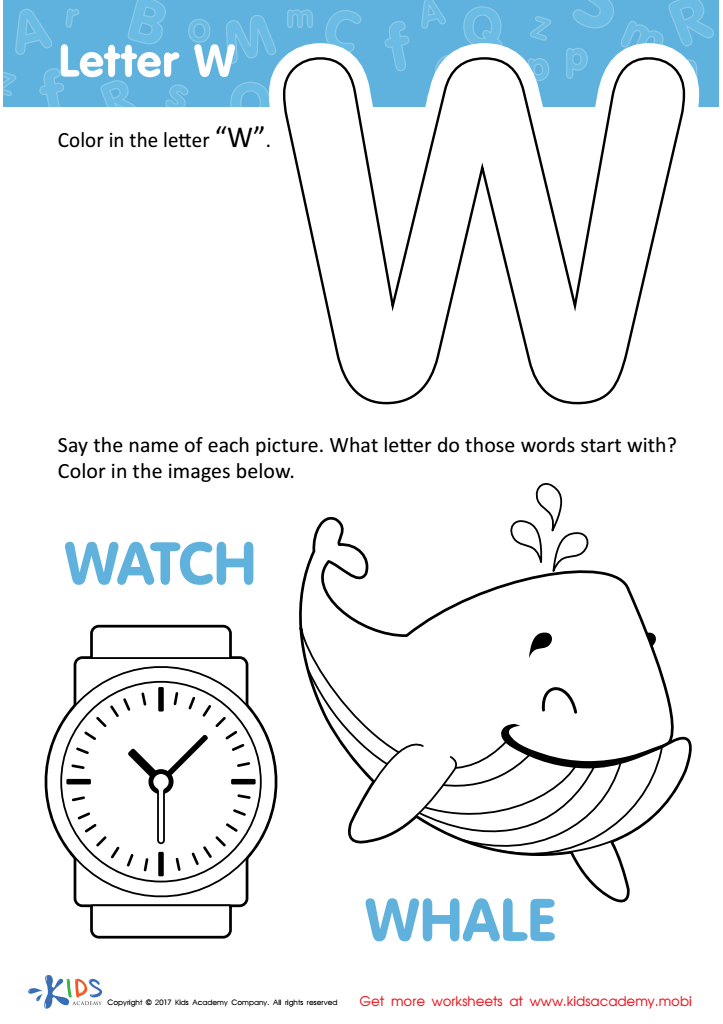
Letter W Coloring Sheet
Assign to My Students





Letter tracing skills are fundamental for young learners, particularly those between the ages of 7 and 9, as these skills underpin their ability to write fluently and accurately. Parents and teachers should prioritize letter tracing for several compelling reasons.
Firstly, letter tracing promotes fine motor skills development. By guiding children to follow the contours of letters, they enhance their hand-eye coordination and dexterity, essential for all subsequent motor tasks. Secondly, it instills muscle memory for proper letter formation. This is crucial for developing neat and legible handwriting, reducing frustration and boosting academic confidence.
Additionally, mastering letter tracing aids in enhancing literacy skills. As children repeatedly trace letters, they build a stronger connection between the visual forms of letters and their respective sounds, advancing both reading and writing proficiencies. Letter tracing also improves concentration and patience. Engaging in this meticulous activity helps young learners to focus on detail-oriented tasks, a skill that is valuable across all subjects.
Recognizing the importance of strong foundational skills in communication, parents and teachers can make letter tracing a fun and engaging task through various tools and activities. By doing so, they lay a robust groundwork for children's educational journey, fostering lifelong learning and academic success.