Applying math skills Worksheets for Ages 7-9
3 filtered results
-
From - To
Our "Applying Math Skills Worksheets for Ages 7-9" are designed to make mathematics engaging and practical for young learners. These fun and educational worksheets help children practice and master essential math concepts such as addition, subtraction, multiplication, division, fractions, and more. Each activity connects math skills to real-world problems, enhancing critical thinking and problem-solving abilities. Perfect for classroom use or additional home practice, these worksheets aim to build a solid math foundation and boost confidence in young students. Give your child the tools they need to succeed and discover the joy of math with Kids Academy.
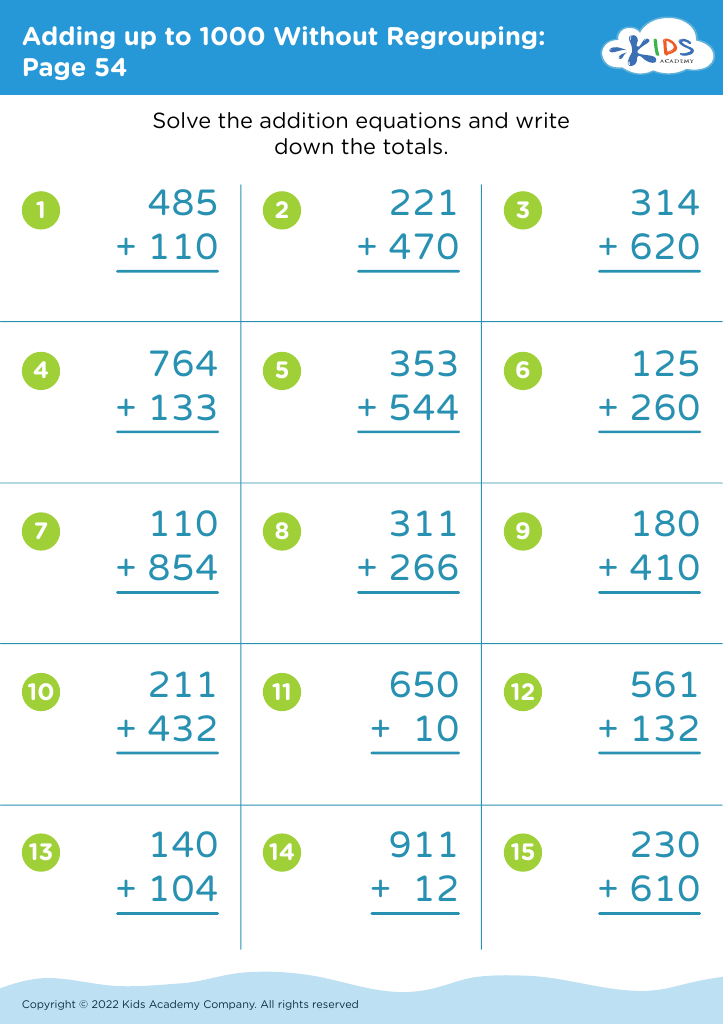
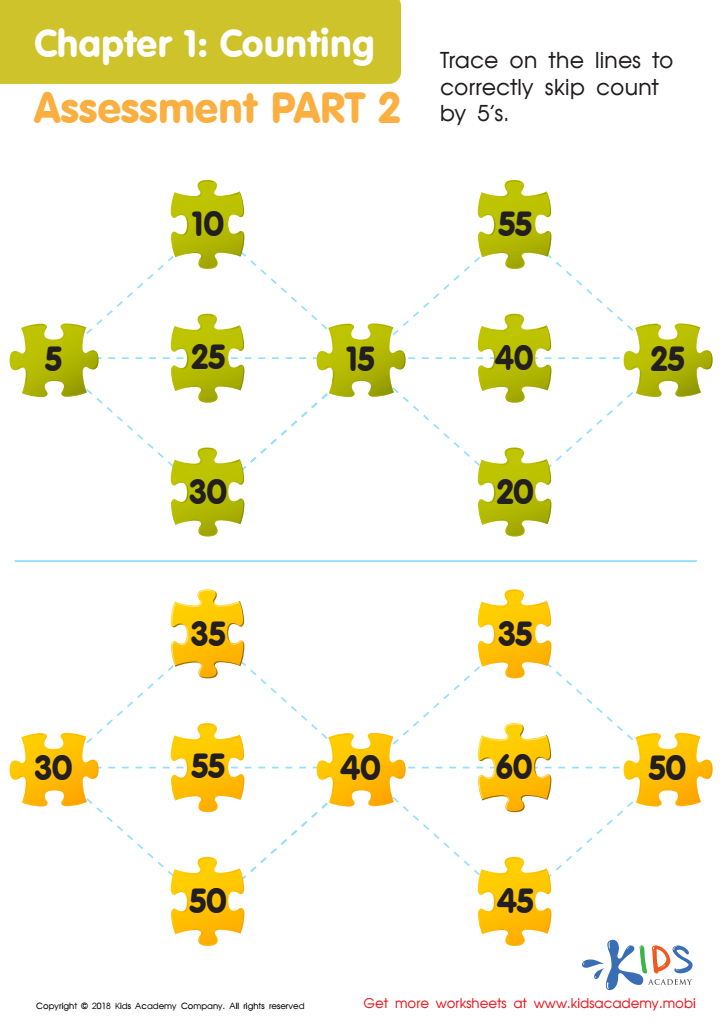
Counting: Assessment 2 Worksheet
 Assign to My Students
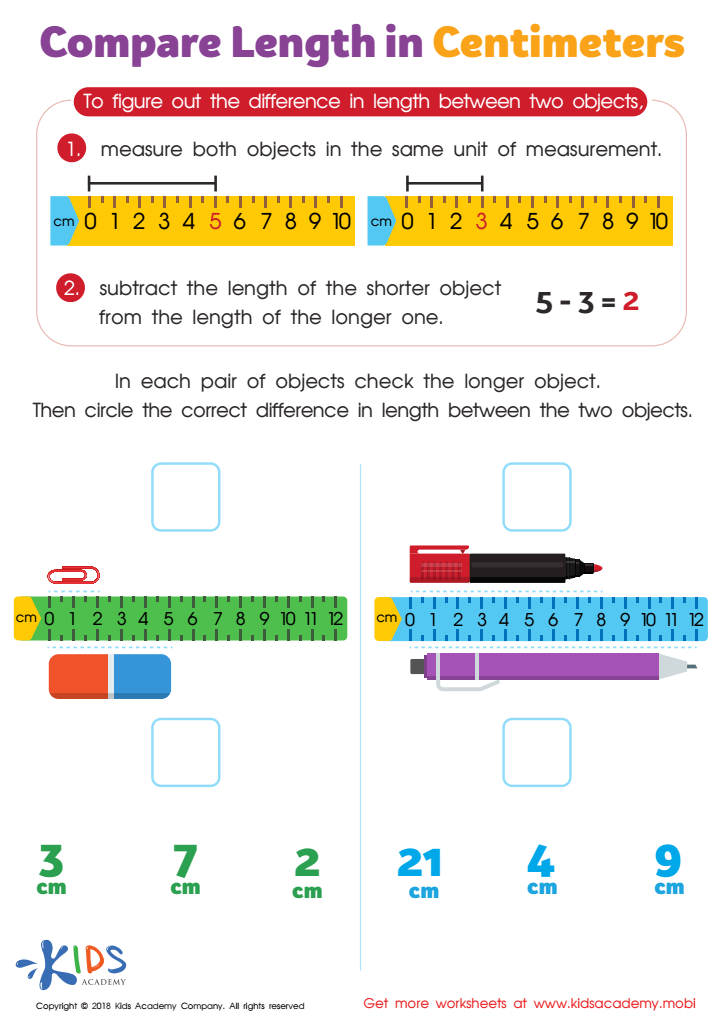
Compare Length in Centimeters Worksheet






Investing time in developing math skills for children aged 7-9 is crucial as it lays the foundation for their future academic success and day-to-day problem-solving abilities. At this age, children are transitioning from basic arithmetic to more complex concepts like multiplication, division, and fractions. Mastering these skills early on can boost their confidence and spark interest in subjects that involve mathematical reasoning, such as science and engineering.
Moreover, applying math skills enhances critical thinking and logic. Children learn to organize their thoughts, recognize patterns, and make informed decisions. For instance, learning about measurements can help them better understand the world around them—whether they're following a recipe, building a model, or figuring out if they have enough allowance to buy a toy.
Parental and teacher involvement is key to making math a fun and engaging subject. Interactive activities, such as math games or practical applications in daily tasks, can make learning feel relevant and enjoyable. Children who receive encouragement and support at home and in school often develop a positive attitude towards math, reducing math-related anxiety and setting them up for greater long-term success. Engaging math education during these formative years can make all the difference in a child's academic journey and everyday life.








