Develop problem-solving abilities Worksheets for Ages 7-9
3 filtered results
-
From - To
Unlock your child's potential with our engaging worksheets designed to develop problem-solving abilities for ages 7-9! These interactive activities promote critical thinking and enhance cognitive skills through fun and challenging scenarios. Our thoughtfully crafted materials encourage kids to analyze situations, think creatively, and develop solutions in a supportive environment. Perfect for in-class learning or at-home enrichment, these worksheets cater to various learning styles, ensuring each child can thrive. Foster a love for learning and boost confidence in their problem-solving skills with our curated collection. Explore our resources today and watch your child embrace challenges with enthusiasm!
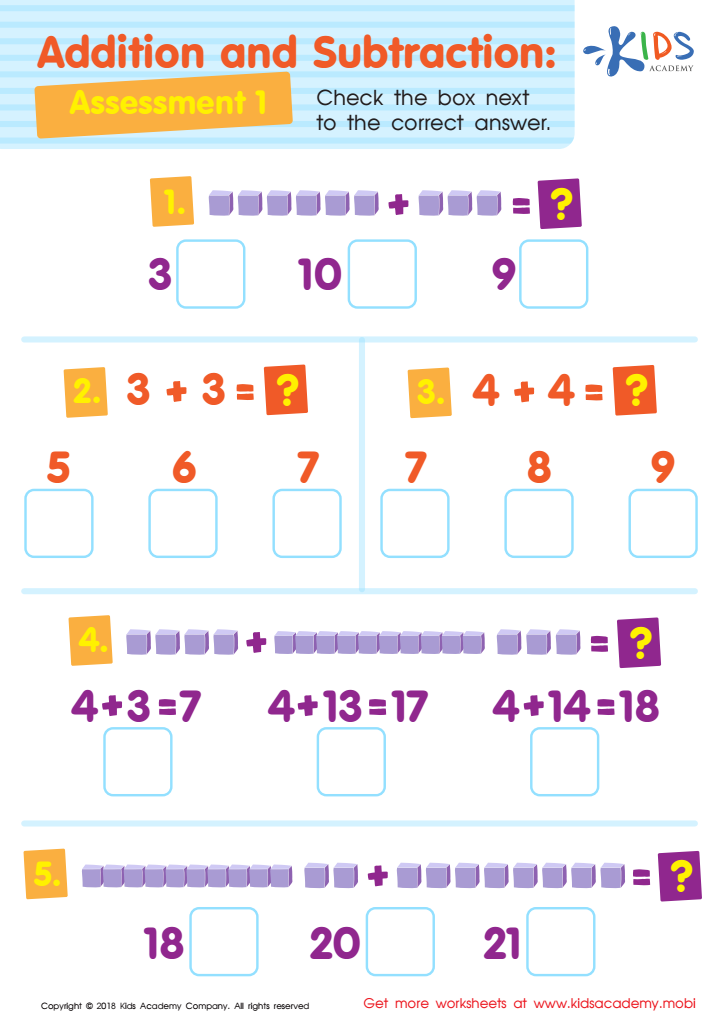
Addition and Subtraction Assessment 1 Worksheet
 Assign to My Students
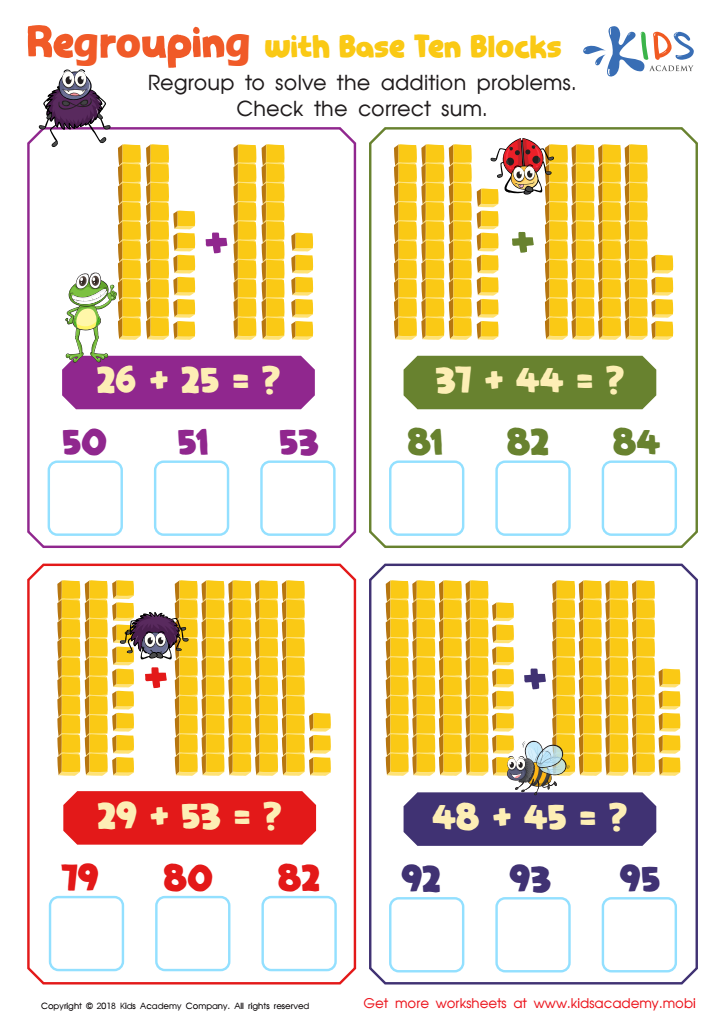
Regrouping With Base Ten Blocks Worksheet
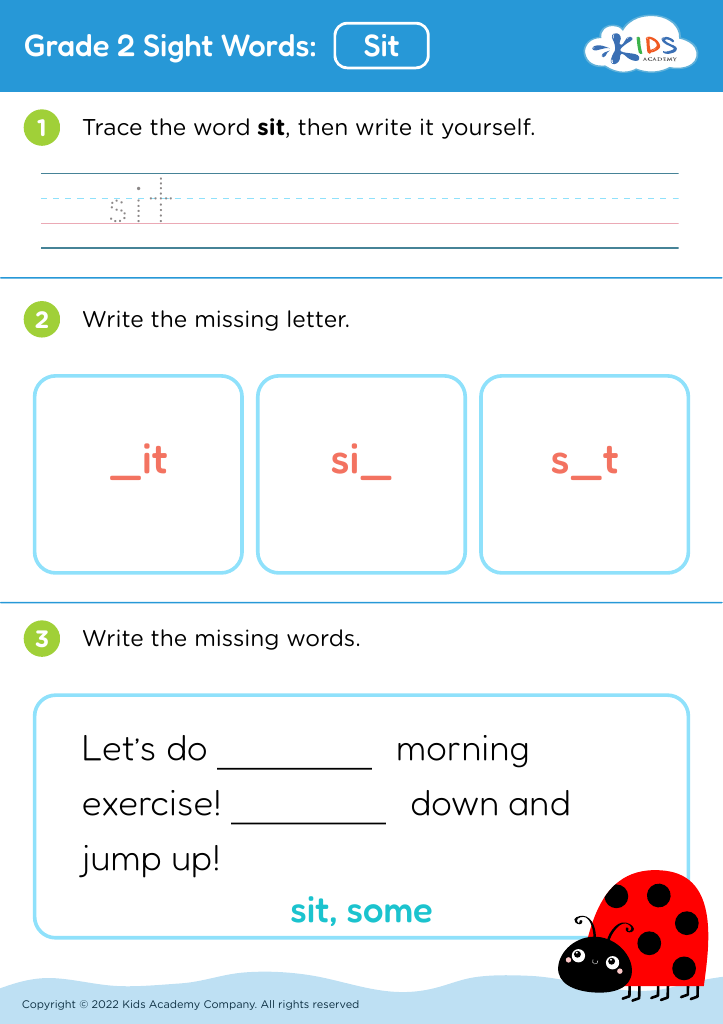





.jpg)


Developing problem-solving abilities in children ages 7-9 is crucial for their intellectual and emotional growth. At this age, children are naturally curious and begin to face more complex challenges both in and out of the classroom. Teaching them how to effectively approach and solve problems not only equips them with critical thinking skills but also enhances their confidence and resilience.
Problem-solving tasks encourage children to analyze situations, identify possible solutions, and weigh the pros and cons of each option. This process fosters cognitive skills such as reasoning, abstract thinking, and decision-making, which are foundational for academic success. Furthermore, engaging in problem-solving activities often requires collaboration with peers, promoting teamwork and social skills.
For parents and teachers, nurturing problem-solving abilities can translate to better school performance and improved interpersonal relationships. Children who can navigate challenges are more likely to demonstrate independence and creativity, traits that are invaluable as they mature. Additionally, these skills can help mitigate frustration and anxiety when facing obstacles, making learning an enjoyable experience rather than a stressful one. Overall, investing in problem-solving skills at this early stage lays the foundation for lifelong learning and adaptability.








