
Developing counting skills Worksheets for Ages 7-9
4 filtered results
Difficulty Level
Grade
Age
-
From - To
Subject
Activity
Standards
Unlock your child’s potential with our "Developing Counting Skills Worksheets for Ages 7-9." Designed by education experts, these worksheets blend fun with learning to build strong foundational math skills. Perfect for second and third graders, the activities engage young minds through colorful exercises in counting, number patterns, and problem-solving. Whether practicing skip counting, visualizing numbers, or mastering basic arithmetic, your child will gain confidence and proficiency in math. Ideal for both classroom and home use, these worksheets cater to various learning styles, ensuring every child’s success. Start your child's mathematical journey with Kids Academy today!
Favorites
With answer key
Interactive
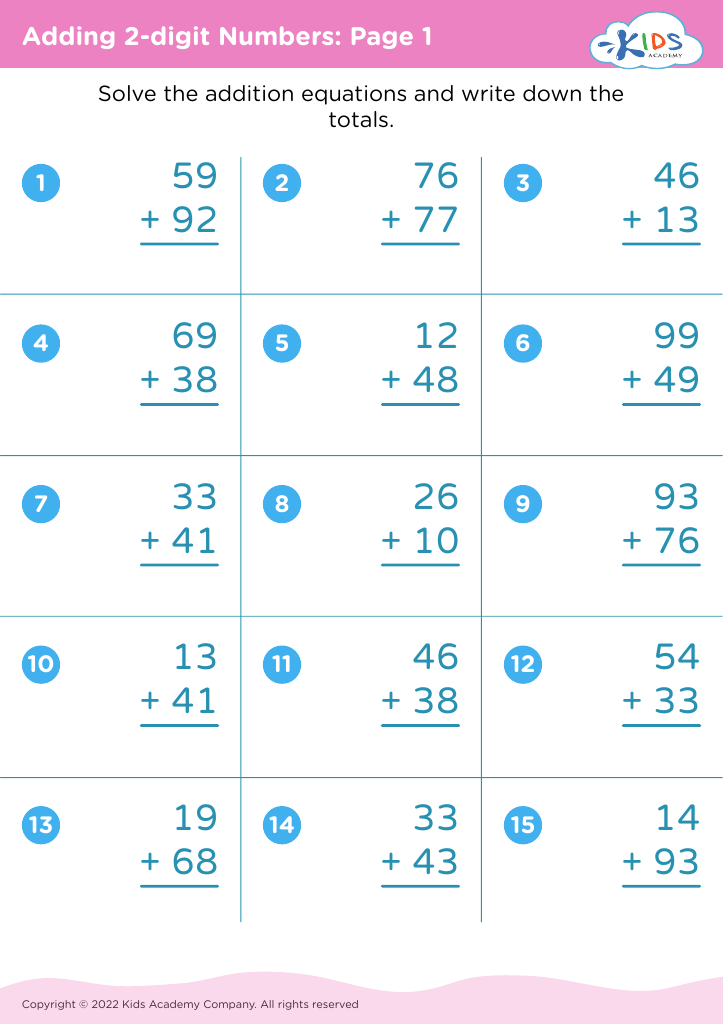
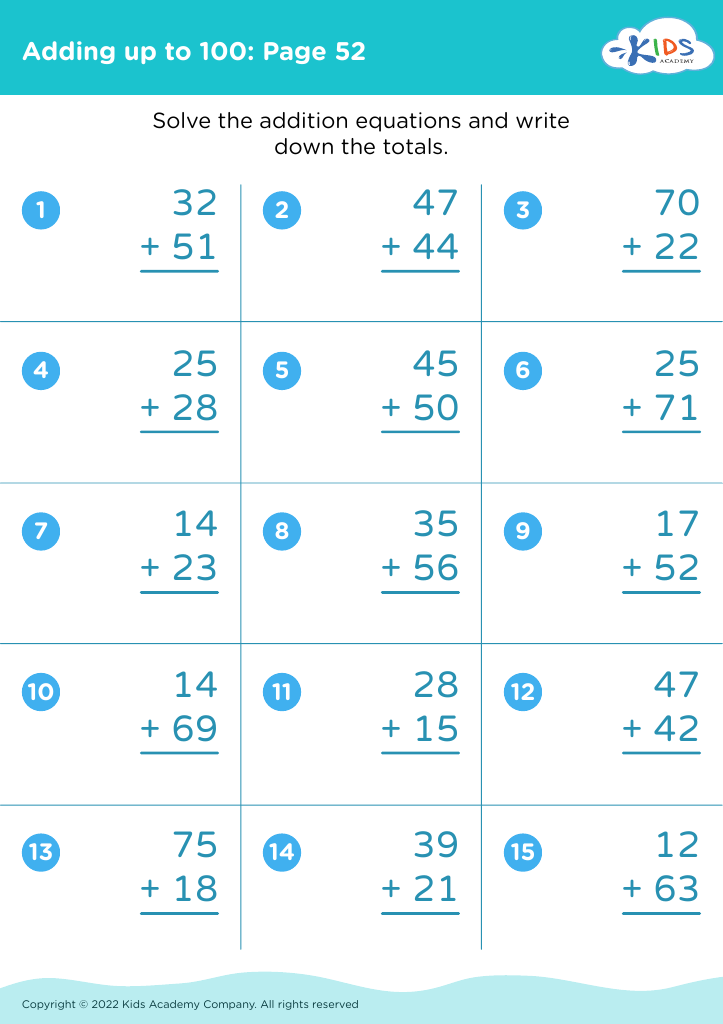
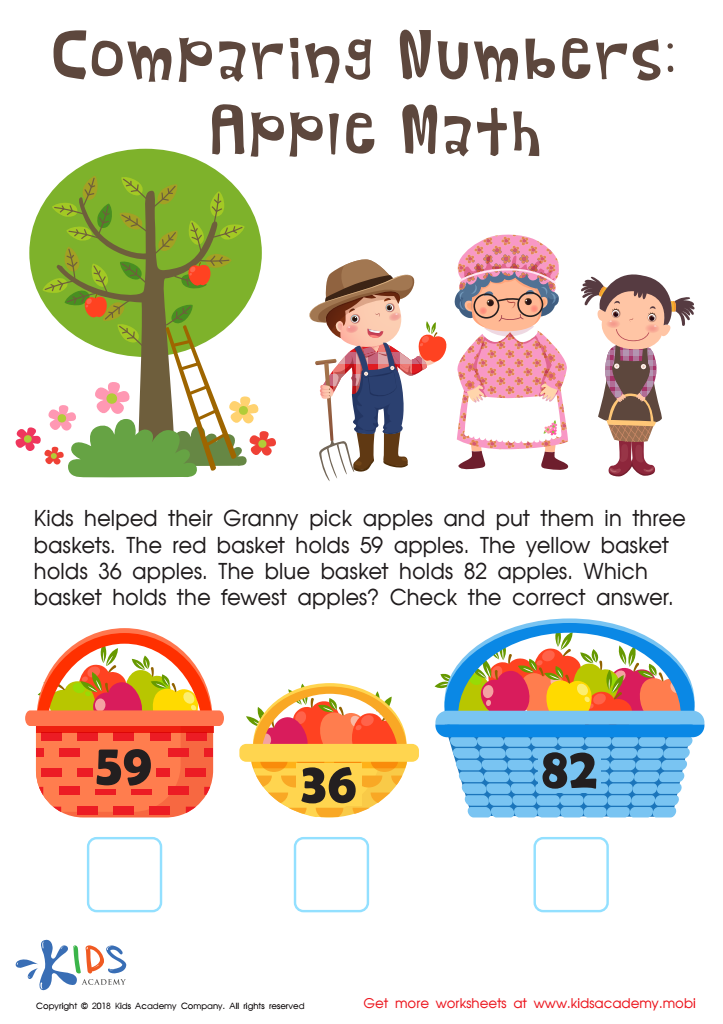
Apple Math Worksheet
Math is more than just counting, adding, subtracting, multiplying, and dividing. Your child may be feeling overwhelmed by all the complexities, like comparing numbers and their differences. But with this worksheet, you can make comparing numbers fun again!
 Assign to My Students
Apple Math Worksheet
Worksheet
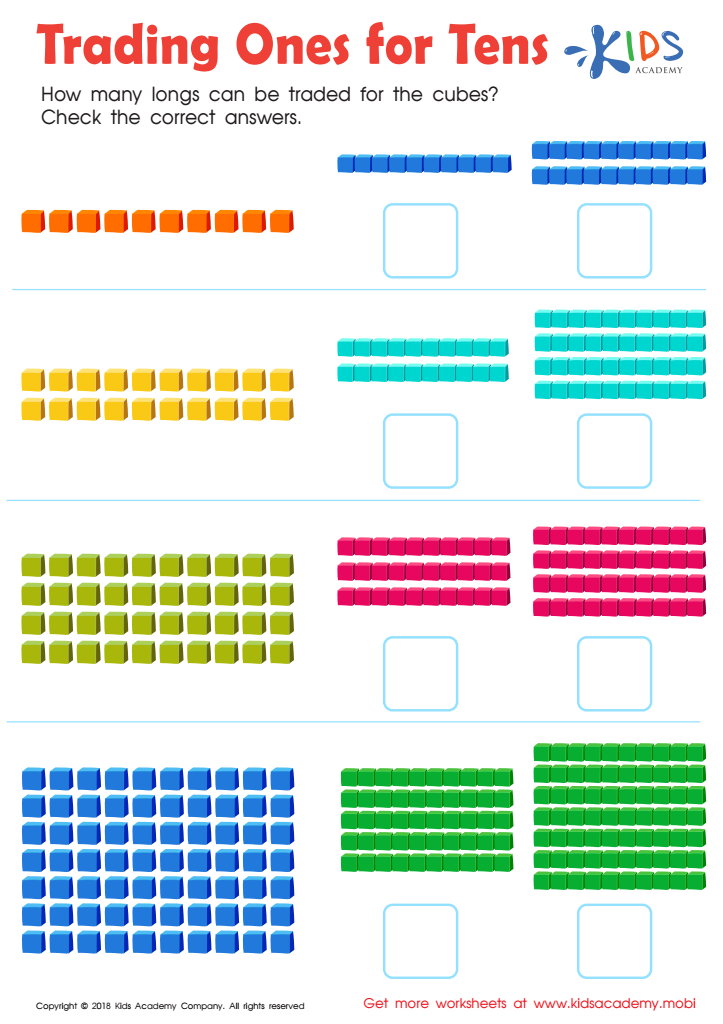
Trading Ones for Tens Worksheet: Part 2
Introduce your early learners to regrouping numbers! Catch their attention with this brightly colored worksheet. See how many 10s can be created from the cubes. Then, check the box with the correct answer to complete the sheet! Download now and get started!
Trading Ones for Tens Worksheet: Part 2
Worksheet
Join Kids Academy for Free
Who is primarily going to use this learning content?


.jpg)




Developing counting skills for children aged 7-9 is crucial and parents and teachers should prioritize this fundamental aspect of early education. At this age, children are transitioning from simple counting to more complex mathematical concepts, which serve as the building blocks for their future learning.
Firstly, counting skills help children understand numerical values and sequences. This comprehension is vital as it underpins more advanced mathematical operations such as addition, subtraction, multiplication, and division. By grasping these basics early, children build a strong foundation for future math learning.
Secondly, counting fosters problem-solving and logical reasoning. When children learn to count objects, they develop strategies to handle various amounts, boosting their cognitive development. This skill nurtures their ability to approach and solve real-world problems, enhancing critical thinking and decision-making abilities.
Thirdly, proficiency in counting is linked to academic success. Studies have shown that children with strong early math skills perform better not only in math but also in other subjects. Early competence in counting reinforces their confidence and interest in learning.
Finally, counting skills are essential for everyday life. From counting money and telling time to measuring ingredients for a recipe, these skills support practical life tasks. Parents and teachers play a crucial role in providing the guidance and practice necessary to develop these skills, thus equipping children with essential tools for their education and daily lives.








