Unlock the magic of counting with our "Enhance Counting Skills Worksheets" designed specifically for children aged 7-9! Our engaging and interactive worksheets guide young learners through various counting techniques, helping them master important mathematical concepts while having fun. Featuring a mix of activities such as number sequences, counting objects, and engaging word problems, these resources support skill development through hands-on practice. Ideal for classroom use or homeschooling, our worksheets encourage critical thinking and problem-solving. Explore creative ways to reinforce counting skills and boost confidence in math. Give your child the foundation they need for future success in mathematics!
Check out this FREE "Enhance counting skills" Trial Lesson for age 7-9!

Add within 1,000 using Standard Addition & Place Value 3 addends

Favorites
With answer key
Interactive
  • 7-9
  • Enhance counting skills
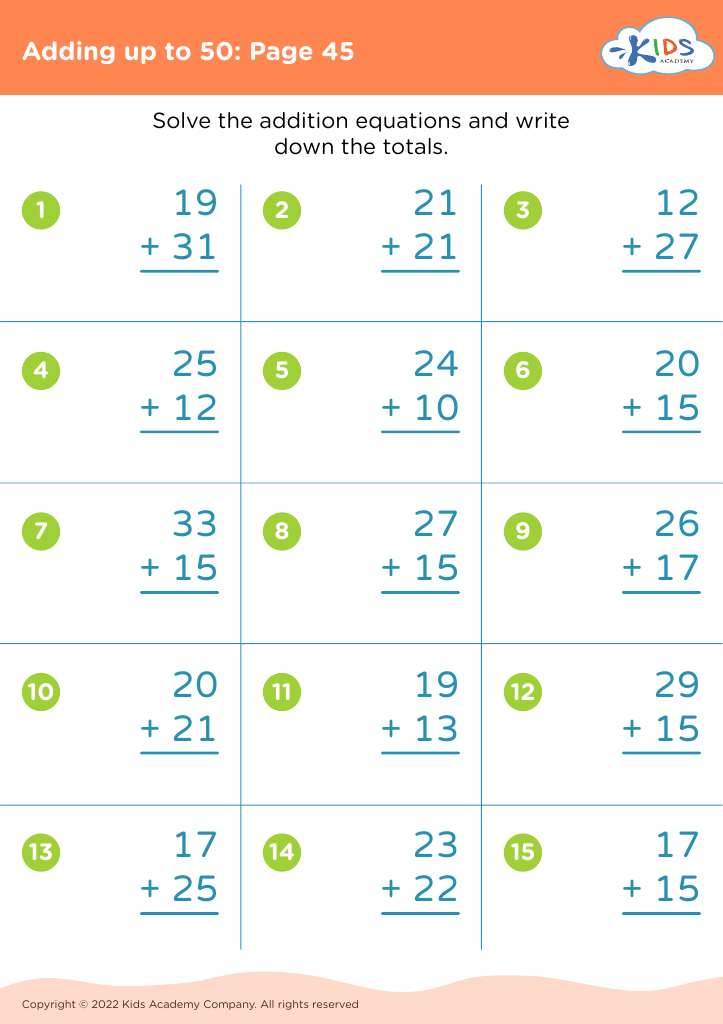
Adding up to 50: Page 45

Adding up to 50: Page 45

Adding up to 50: Page 45
Worksheet
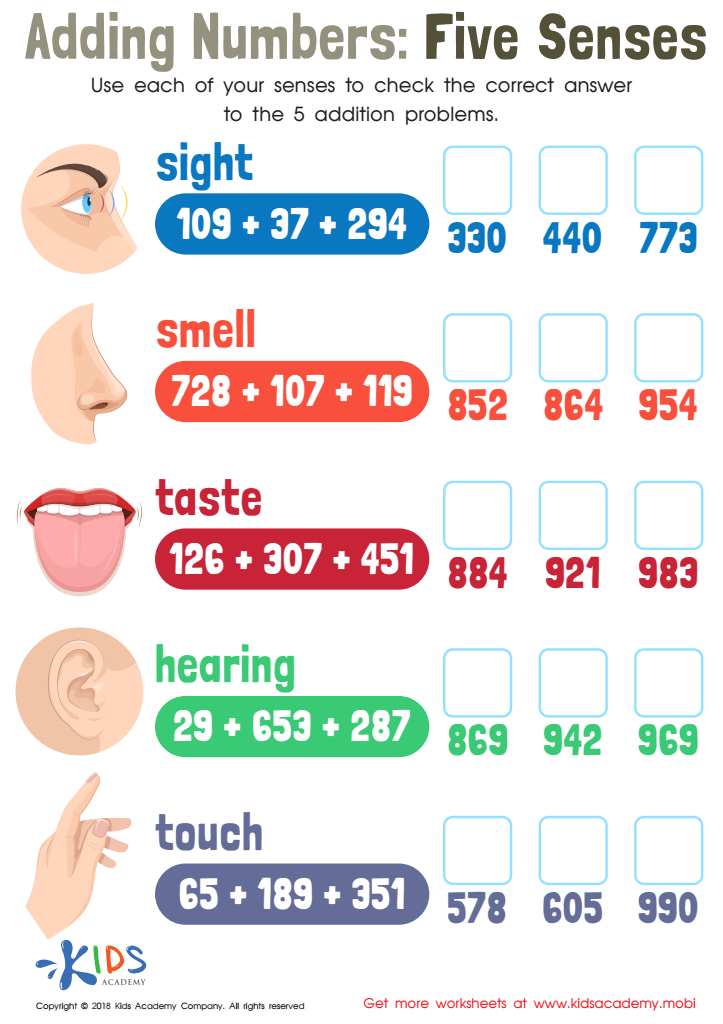
Adding Numbers: Five Senses Worksheet

Adding Numbers: Five Senses Worksheet

Help your child identify the five senses on their body: eye, nose, tongue, ear, and skin. Explain that they're used for seeing, smelling, tasting, hearing and touching. Then, have them solve the five addition problems in the worksheet and check the correct answers.
Adding Numbers: Five Senses Worksheet
Worksheet
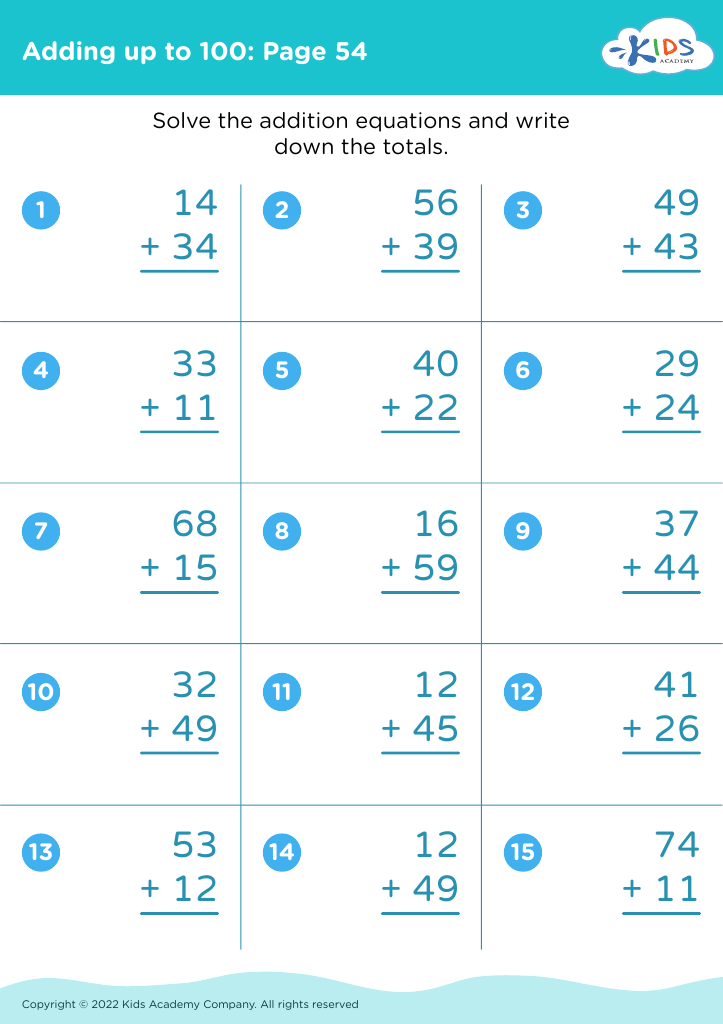
Adding up to 100: Page 54

Adding up to 100: Page 54

Adding up to 100: Page 54
Worksheet
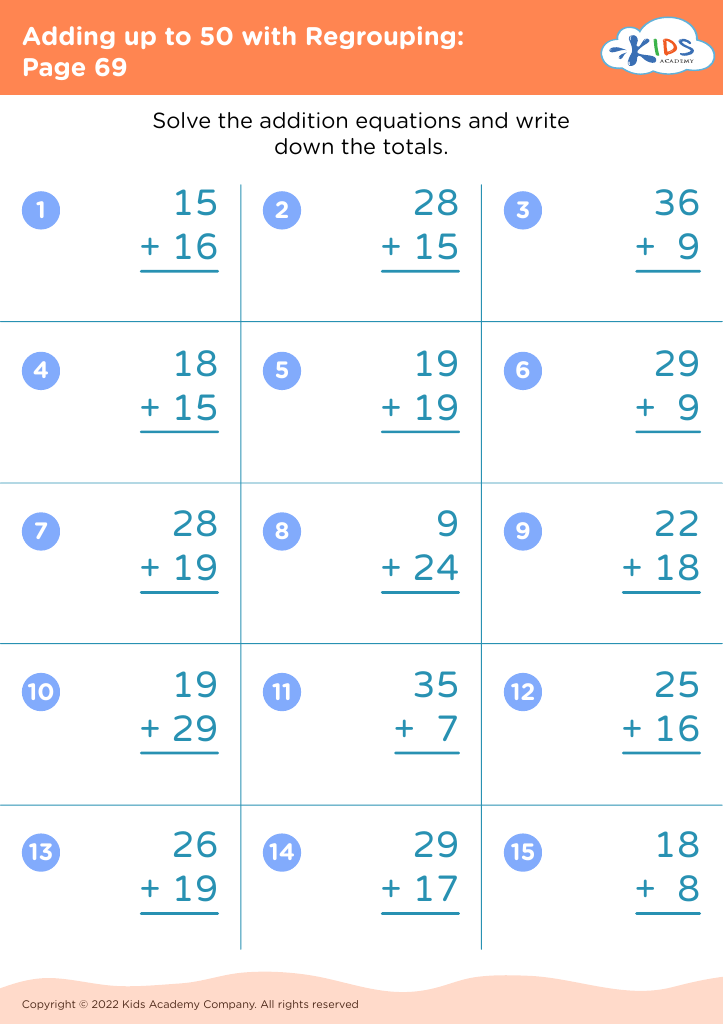
Adding up to 50 with Regrouping: Page 69
Worksheet
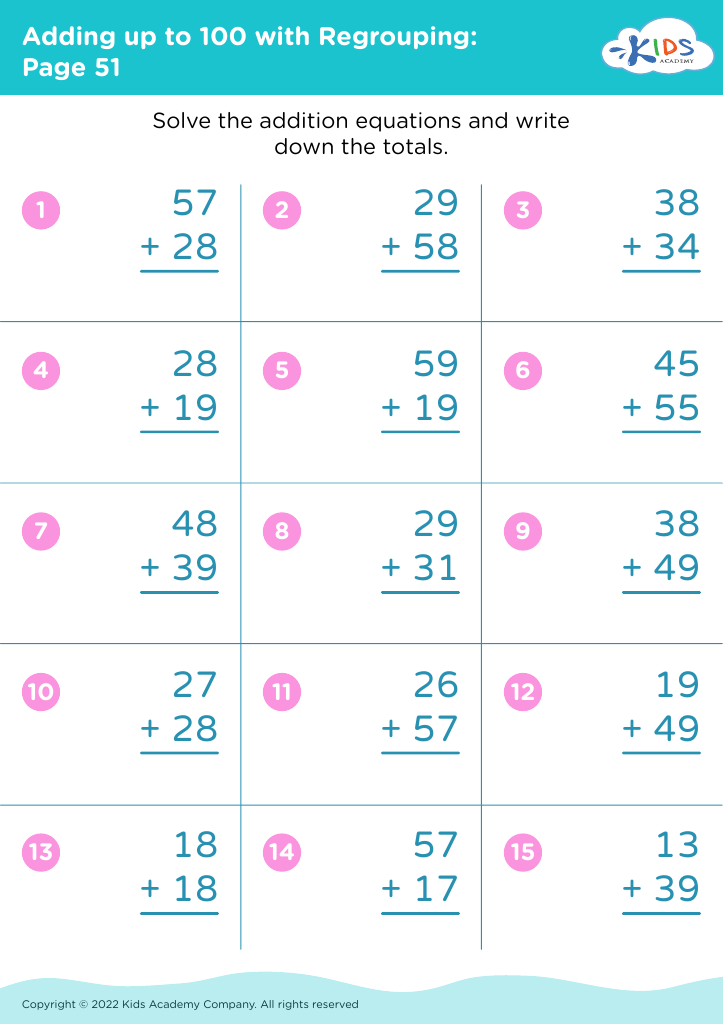
Adding up to 100 with Regrouping: Page 51
Worksheet
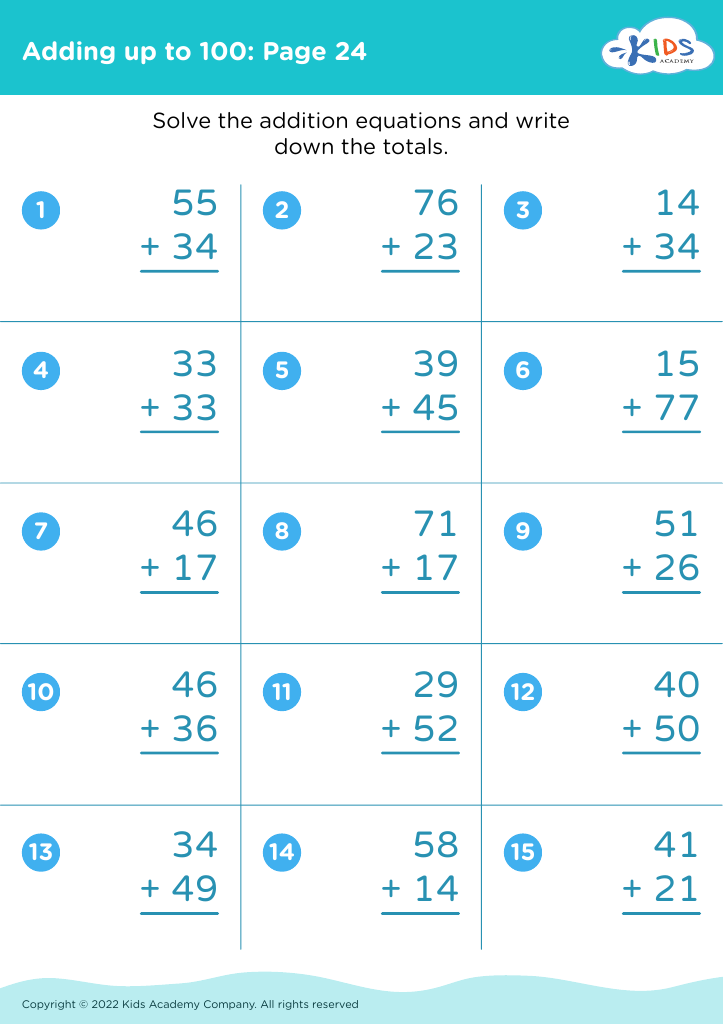
Adding up to 100: Page 24

Adding up to 100: Page 24

Adding up to 100: Page 24
Worksheet
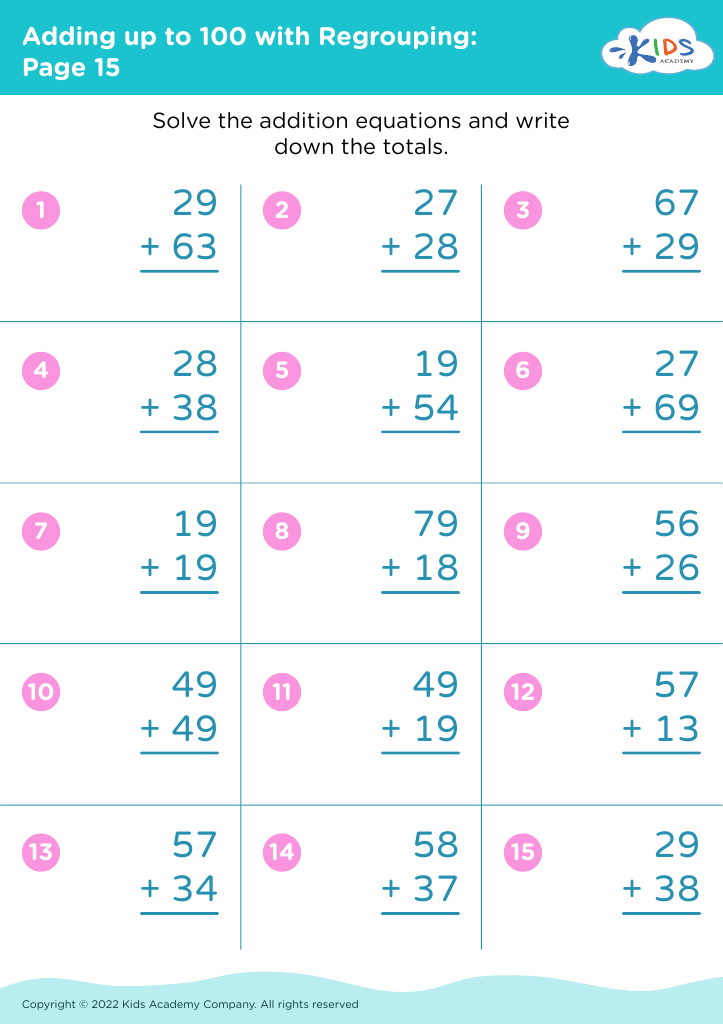
Adding up to 100 with Regrouping: Page 15
Worksheet
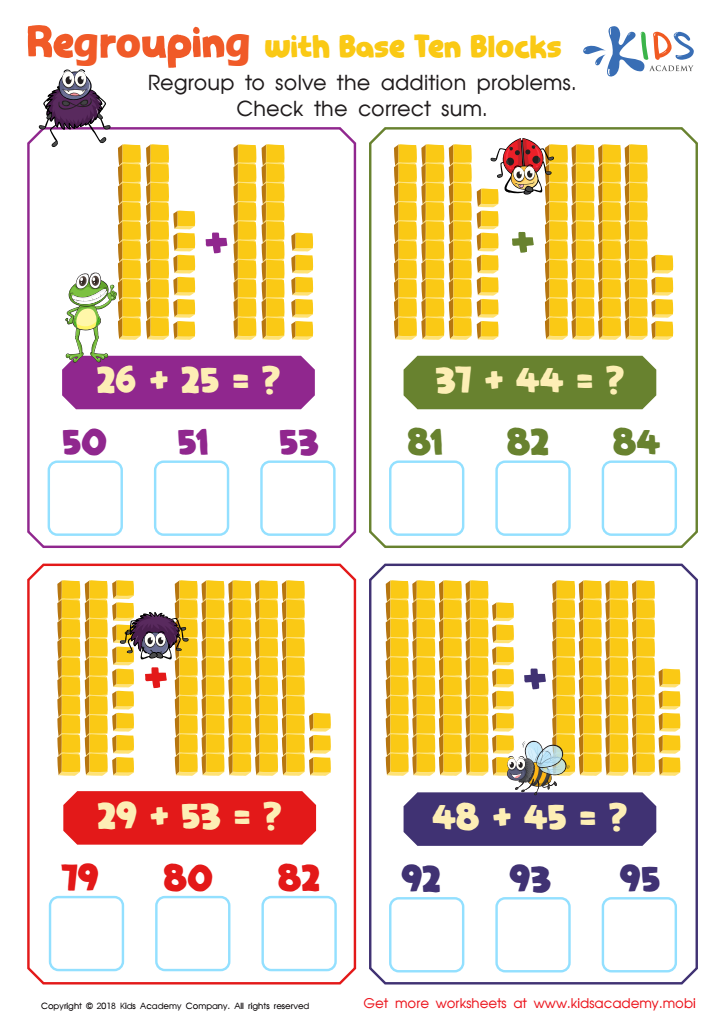
Regrouping With Base Ten Blocks Worksheet
Regrouping With Base Ten Blocks Worksheet
Challenge your child to regroup the base ten blocks and solve the four equations in this worksheet. This exercise requires counting and adding up in base ten. When they are done, help them check the correct sum.
Regrouping With Base Ten Blocks Worksheet
Worksheet
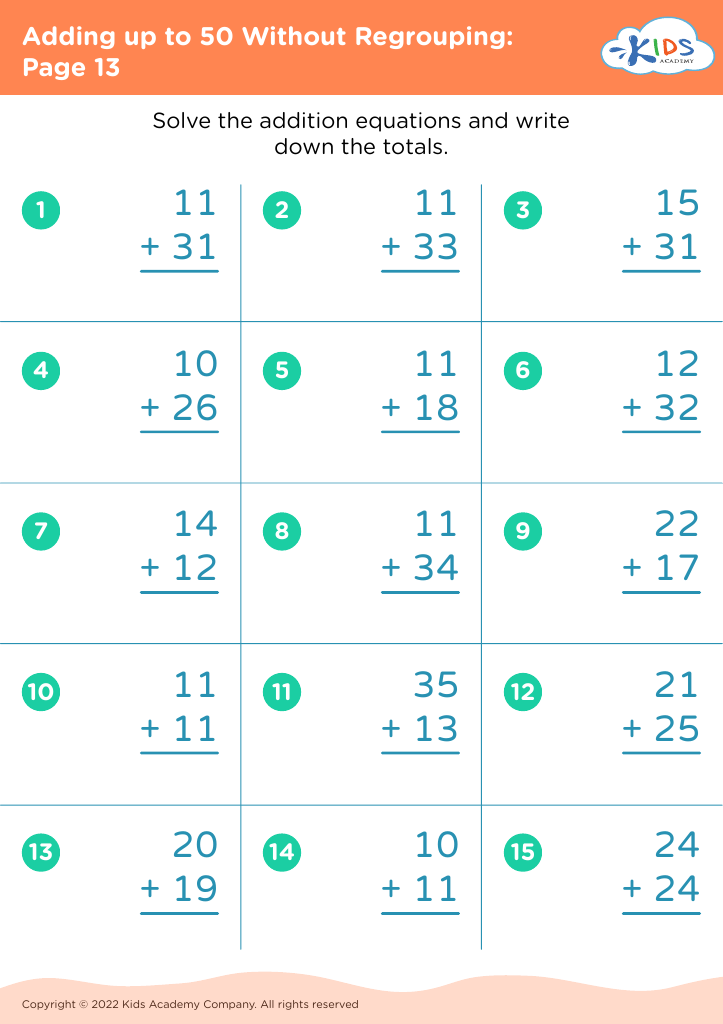
Adding up to 50 Without Regrouping: Page 13
Worksheet
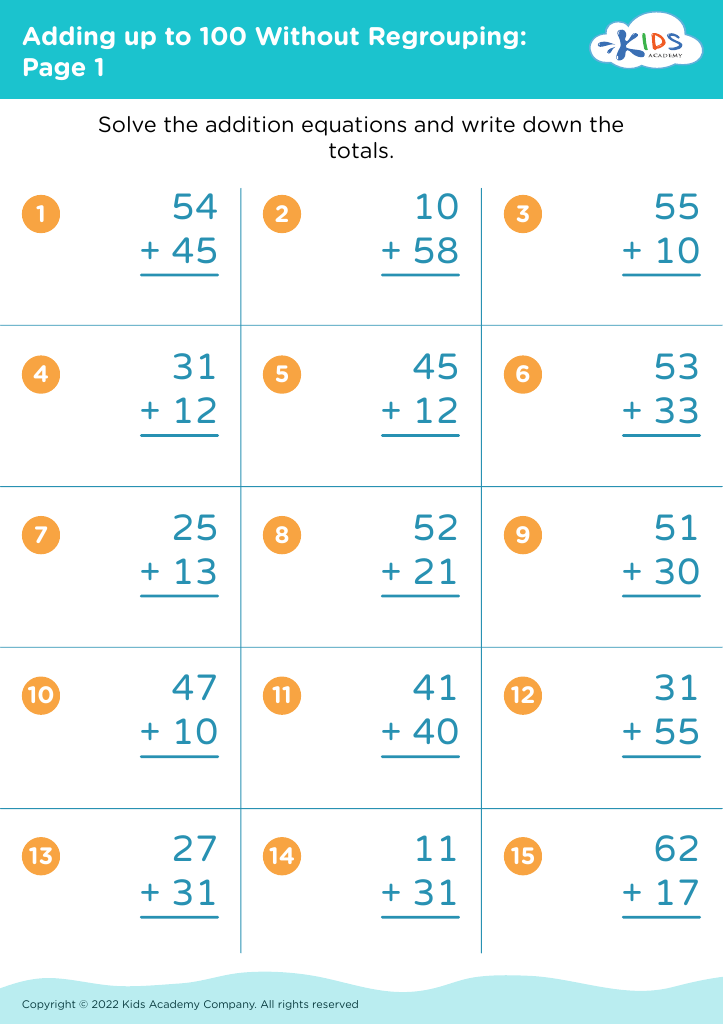
Adding up to 100 Without Regrouping: Page 1
Worksheet
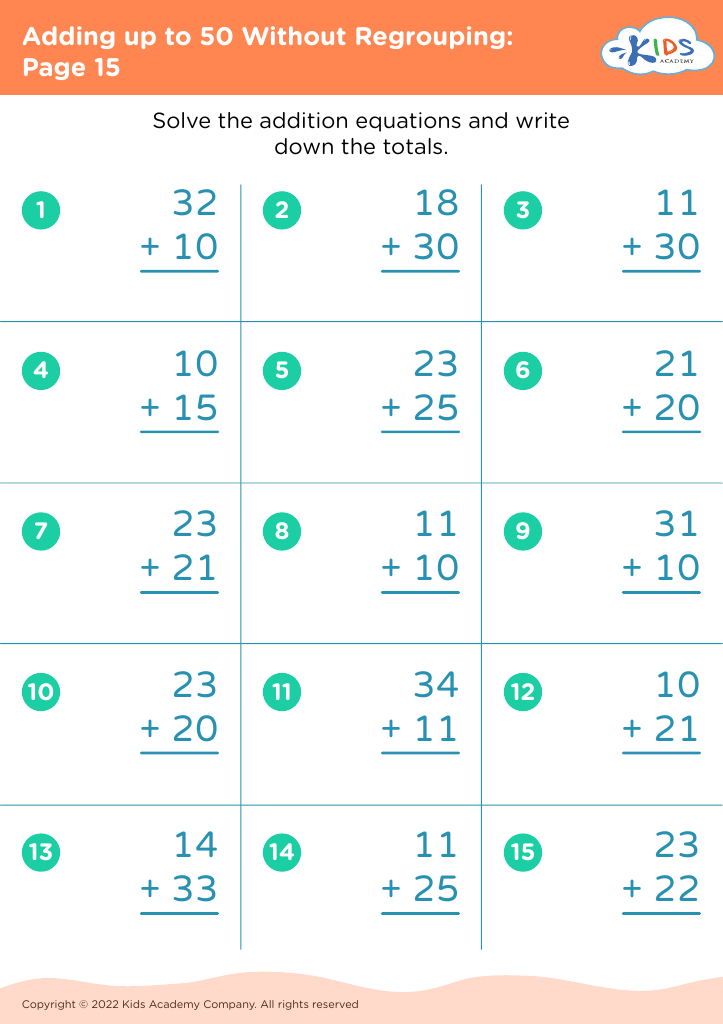
Adding up to 50 Without Regrouping: Page 15
Worksheet
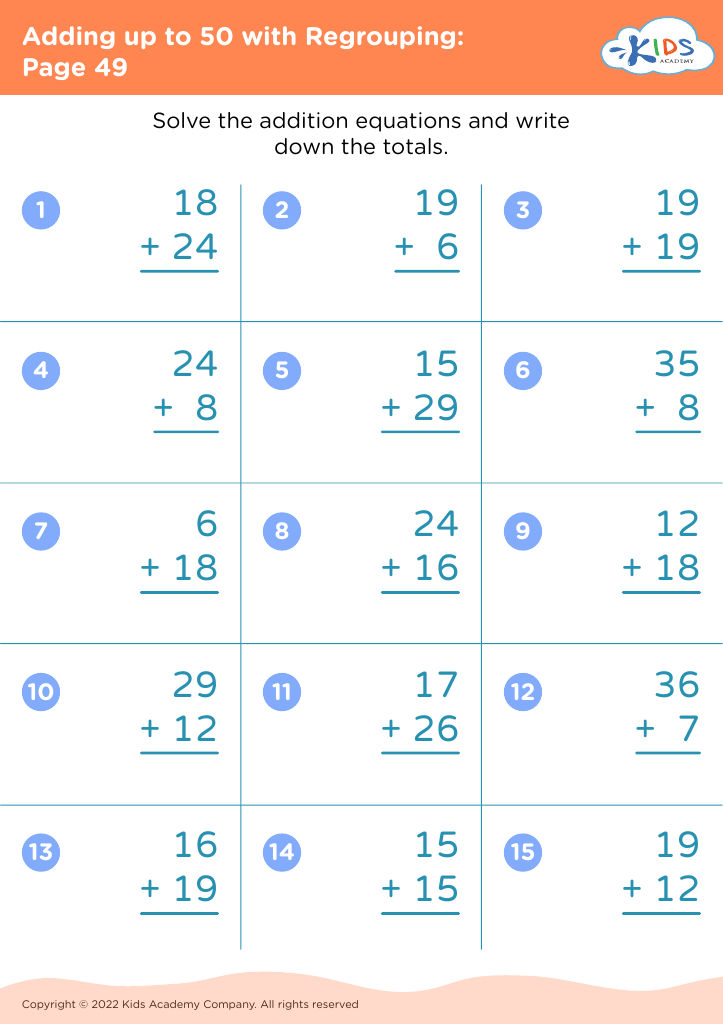
Adding up to 50 with Regrouping: Page 49
Worksheet
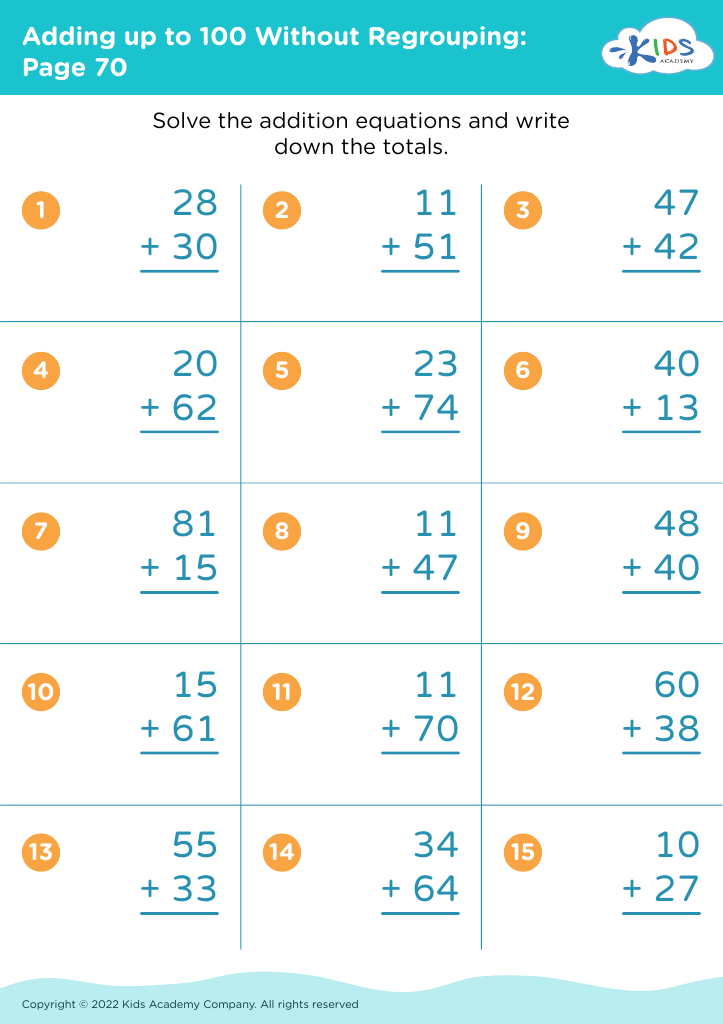
Adding up to 100 Without Regrouping: Page 70
Worksheet
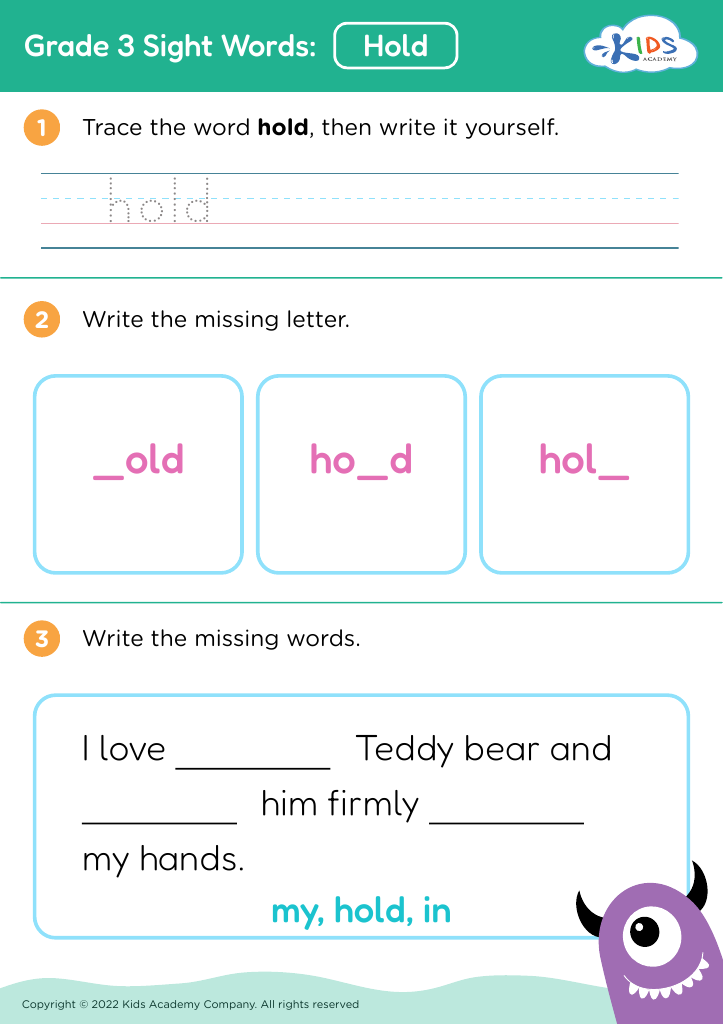
Grade 3 Sight Words: Hold

Grade 3 Sight Words: Hold

Grade 3 Sight Words: Hold
Worksheet


Enhancing counting skills for children ages 7-9 is crucial for their overall mathematical development and future academic success. At this age, students begin to encounter more complex arithmetic concepts, such as addition, subtraction, multiplication, and even early fractions. Strong counting skills serve as the foundation for these concepts, enabling children to approach mathematics with confidence and proficiency.

Additionally, counting skills underpin essential life skills, such as budgeting, telling time, and understanding measurements, all of which children encounter in daily life. When parents and teachers prioritize the enhancement of counting skills, they not only equip children with mathematical tools but also foster critical thinking and reasoning abilities.

Moreover, engaging students in activities that build counting skills can spark a love for math, encouraging them to view it as an enjoyable and relatable subject. This positive attitude can significantly impact their willingness to tackle more challenging mathematical ideas in the future.

In conclusion, fostering counting skills in younger children lays a strong foundation for their pivotal future learning experiences, promoting both academic success and essential life skills that will support their growth long after they leave the classroom.