
Enhancing creativity Worksheets for Ages 7-9
10 filtered results
Difficulty Level
Grade
Age
-
From - To
Subject
Activity
Standards
Unlock your child's imaginative potential with our "Enhancing Creativity Worksheets for Ages 7-9"! Designed to inspire curiosity and innovative thinking, these engaging worksheets provide fun activities that spark creativity in young learners. From drawing challenges to storytelling prompts, each resource encourages kids to think outside the box while developing essential cognitive skills. Perfect for home or classroom use, our worksheets foster artistic expression and problem-solving abilities, making learning an enjoyable experience. Explore a variety of topics and let your child’s creativity flourish! Download your free worksheets today and watch as they embark on a joyful journey of discovery and self-expression.
Favorites
With answer key
Interactive
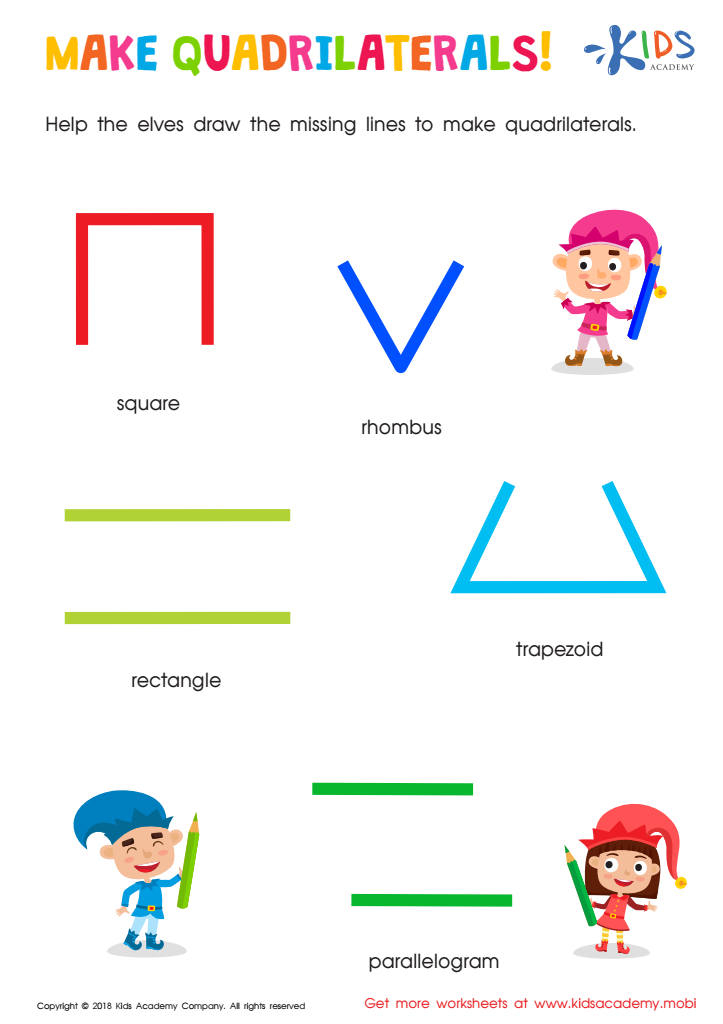
Make Quadrilaterals Worksheet
This fun and colorful worksheet will help your child understand and identify quadrilaterals. It's simple and encourages them to draw lines to create a square, rectangle, rhombus, trapezoid, and parallelogram. Stimulate their minds and watch them learn while they have fun!
Make Quadrilaterals Worksheet
Worksheet
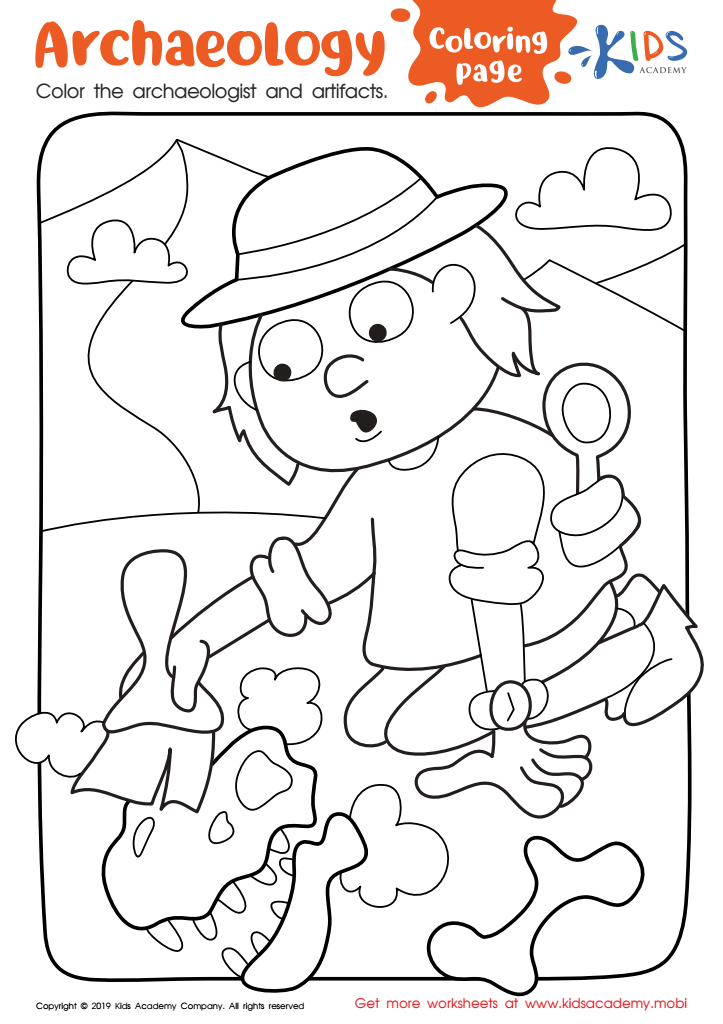
Archaelogy Coloring Page Worksheet
Colour and learn with this fun sheet! It's a great way for kids to find out what archeologists do; from digging for artifacts, to learning about their tools, to discovering what makes something an artifact. They'll have a blast while learning about history, honing their creativity and imagination.
Download (PDF)
 Assign to My Students
Assign to My Students
Archaelogy Coloring Page Worksheet
Worksheet
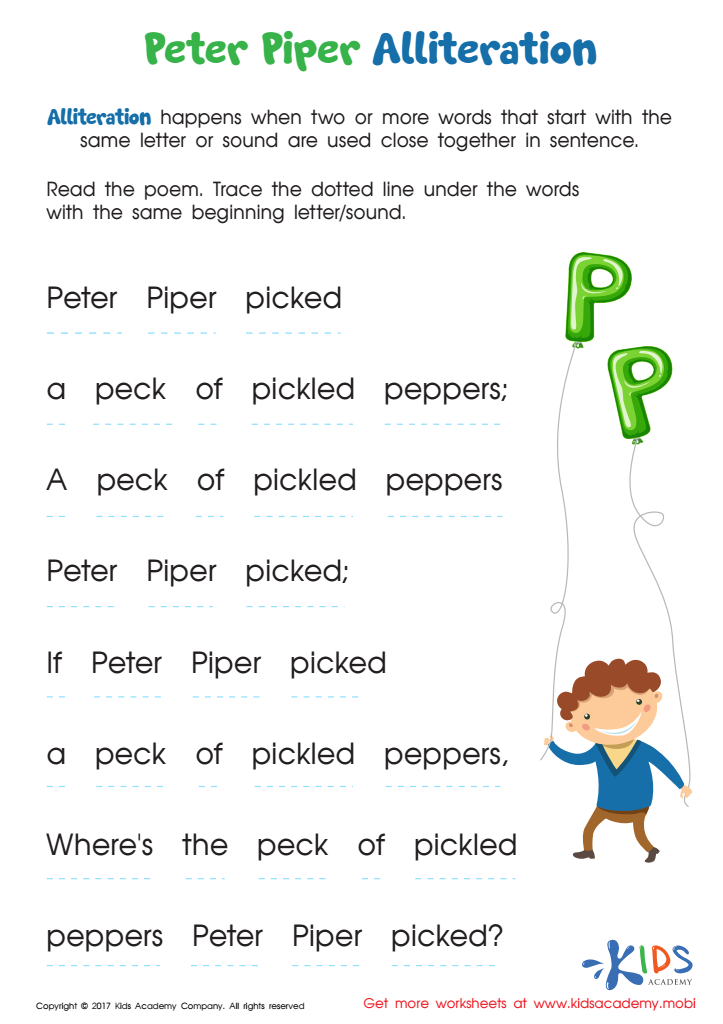
Peter Piper Alliteration Worksheet
Kids love tongue twisters! This worksheet familiarizes them with alliteration through Peter Piper, a beloved nursery rhyme. They underline words that start with the same letter sound, learning to recognize alliteration.
Peter Piper Alliteration Worksheet
Worksheet
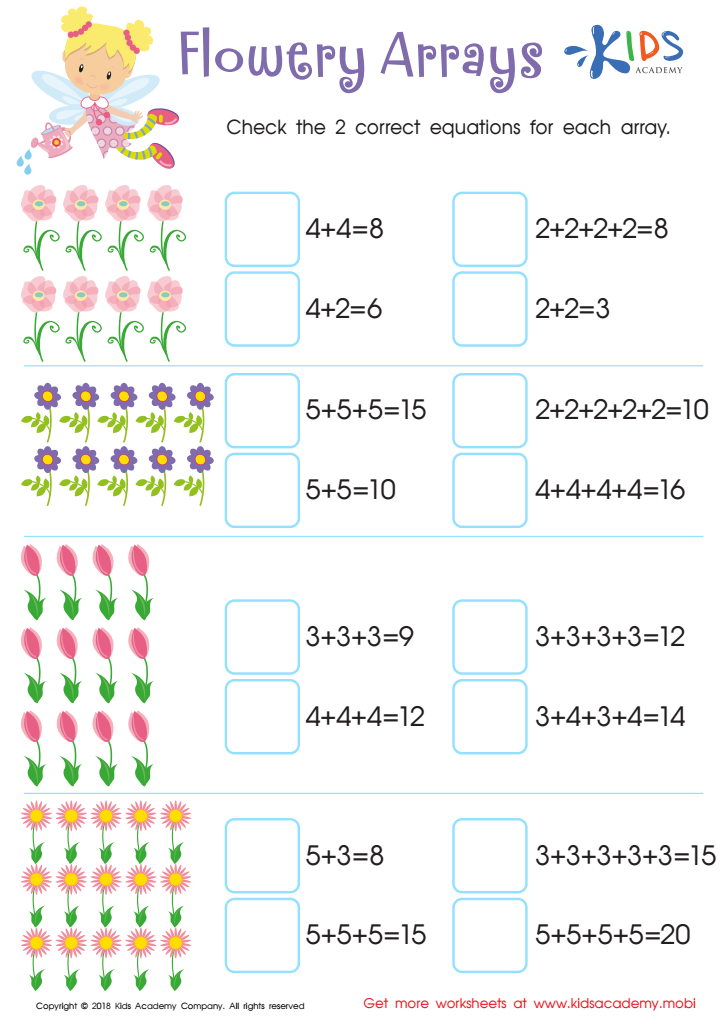
Flowery Arrays Worksheet
This worksheet helps your child learn to identify and represent arrays. For example, both 3+3+3+3=12 and 4+4+4=12 are arrays but the first is arranged in rows and the second in columns. Let your child use this knowledge to answer the four questions in this pdf and check the two correct equations.
Flowery Arrays Worksheet
Worksheet
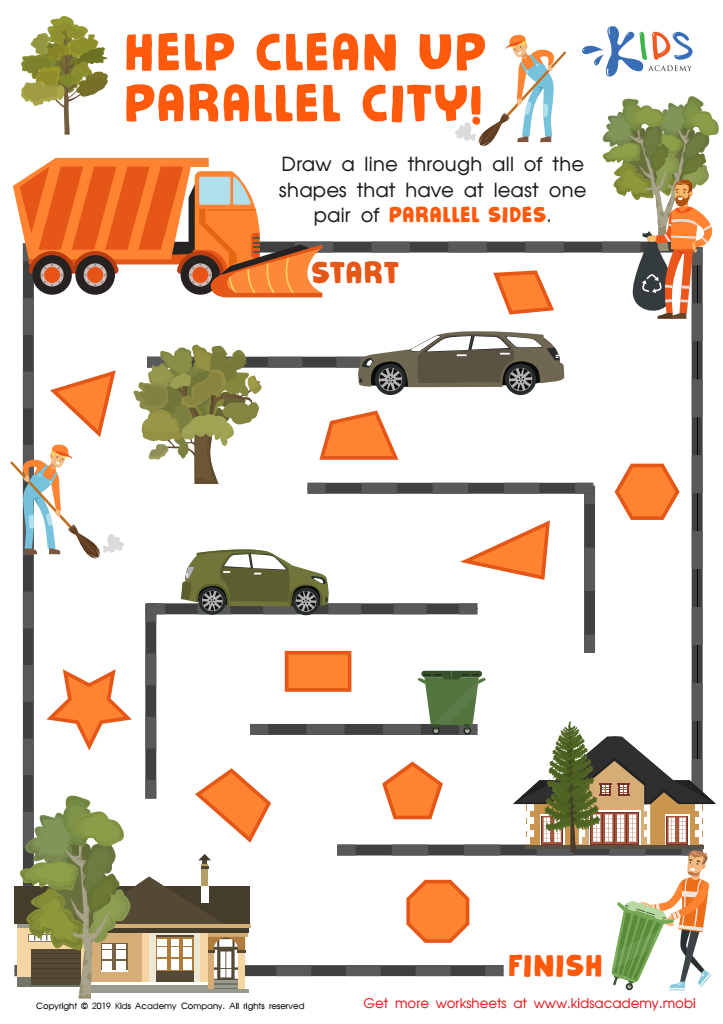
Help Clean Up Parallel City Worksheet
Explain to your kids what parallel sides are and have them identify the shapes with parallel sides in the picture. Then let them draw a line through all the shapes with at least one pair of parallel sides. This colorful worksheet will help them understand and practice this concept.
Help Clean Up Parallel City Worksheet
Worksheet
Join Kids Academy for Free
Who is primarily going to use this learning content?






Enhancing creativity in children aged 7-9 is crucial as this stage is pivotal for cognitive and emotional development. At this age, children are beginning to think independently and explore their interests. Encouraging creativity helps them express their thoughts and feelings in constructive ways, fostering self-confidence. Engaging in creative activities promotes problem-solving skills, as they learn to approach challenges from different angles.
Creativity also plays a vital role in academic achievement; children who engage in creative thinking tend to excel in various subjects. This exposure helps enhance critical thinking skills—which are necessary for comprehension and analysis—when faced with complex ideas and tasks. Moreover, the arts often promote teamwork, as children frequently collaborate on projects and share ideas. This not only improves social skills but also teaches them the value of diverse perspectives.
Lastly, nurturing creativity fosters resilience. When children are allowed to take risks and explore their innovative potentials, they learn to cope with failure and view challenges as opportunities for growth. In an ever-evolving world, instilling creativity equips children with the adaptability needed for future success, making it essential for parents and teachers to prioritize these developmental opportunities.








