Improving observational skills Worksheets for Ages 7-9
4 filtered results
-
From - To
Unlock your child's potential with our engaging "Improving Observational Skills Worksheets for Ages 7-9". Designed to sharpen attention to detail, these printable worksheets encourage young learners to notice differences, spot patterns, and enhance critical thinking. Each activity is crafted to be both fun and educational, keeping kids motivated while they build essential life skills. Perfect for home or classroom use, our worksheets offer a variety of exercises from matching and sequencing to puzzle-solving, ensuring a comprehensive approach to improving observation. Help your child see the world with keener eyes and a sharper mind today!
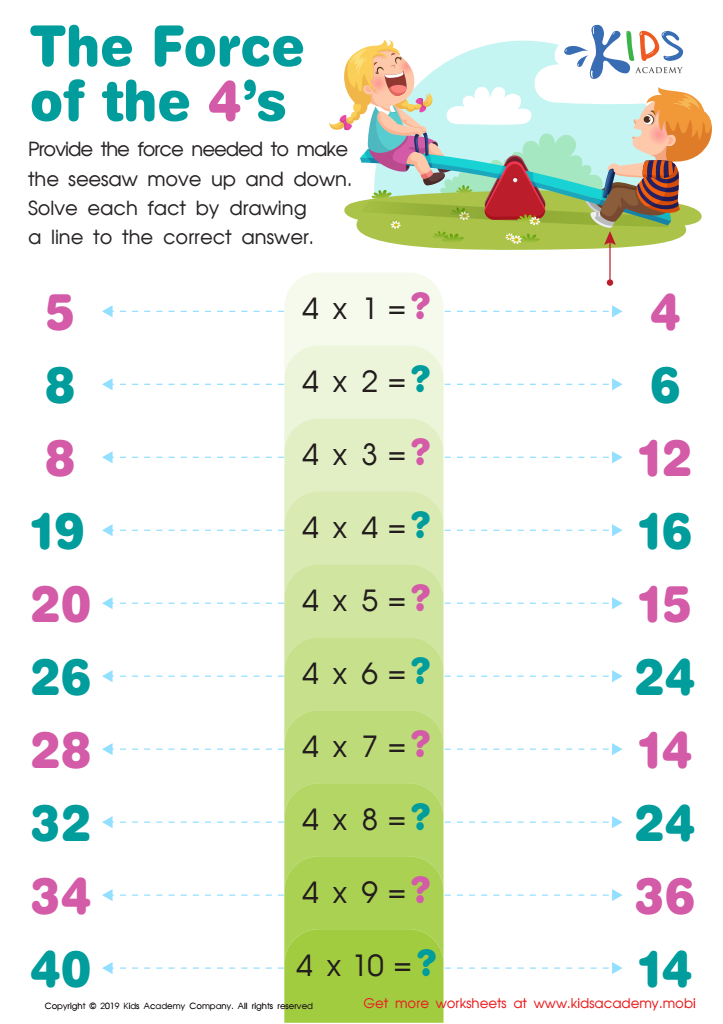
The Force of the 4's Worksheet
 Assign to My Students
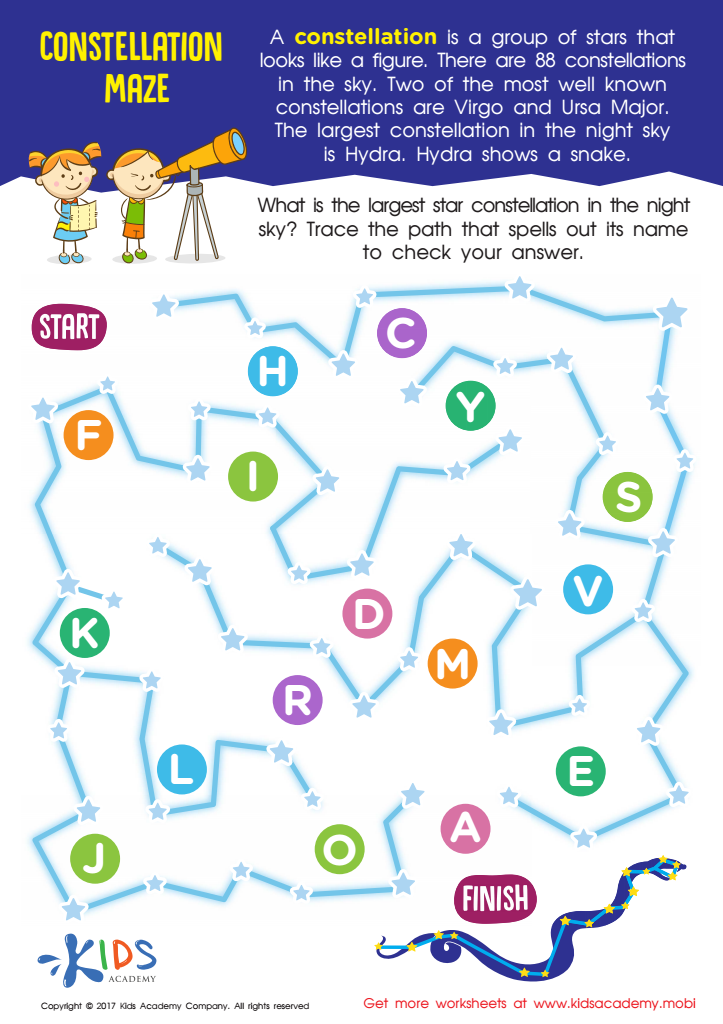
Constellations Worksheet







Improving observational skills in children aged 7-9 is crucial for their development. At this stage, kids are naturally curious and their cognitive abilities are rapidly expanding. Strengthening their observation skills helps to nurture critical thinking, attention to detail, and problem-solving abilities. When children learn to observe effectively, they become more aware of their surroundings, making it easier for them to understand and remember information. This awareness contributes significantly to academic success, especially in subjects like science, math, and reading comprehension.
In addition to academic benefits, strong observational skills enhance social interactions. Children who are good observers can better read social cues, making them more empathetic and effective in communication. These skills are foundational for developing emotional intelligence. For parents and teachers, fostering these skills means encouraging activities like nature walks, interactive play, and hands-on experiments that require careful observation.
Ultimately, investing in a child's observational skills sets the stage for lifelong learning and adaptiveness. It empowers them to navigate complex situations with greater ease and to develop a more inquisitive, analytical mindset. Thus, prioritizing the improvement of observational skills in young children provides them with tools for better learning, social interaction, and a heightened sense of awareness about the world around them.








