
Knowledge reinforcement Worksheets for Ages 7-9
3 filtered results
Difficulty Level
Grade
Age
-
From - To
Subject
Activity
Standards
Enhance your child’s learning journey with our Knowledge Reinforcement Worksheets, designed specifically for ages 7-9! These engaging and interactive worksheets focus on reinforcing essential skills while making learning fun. Covering a variety of subjects, including math, reading, and science, each worksheet provides targeted practice to strengthen comprehension and retention. Ideal for both homeschooling and classroom settings, our resources encourage independent learning and critical thinking. Plus, colorful illustrations and creative activities keep young minds motivated. Browse our selection to empower your child’s educational growth and build a solid foundation for future success! Explore the joy of learning today!
Favorites
With answer key
Interactive
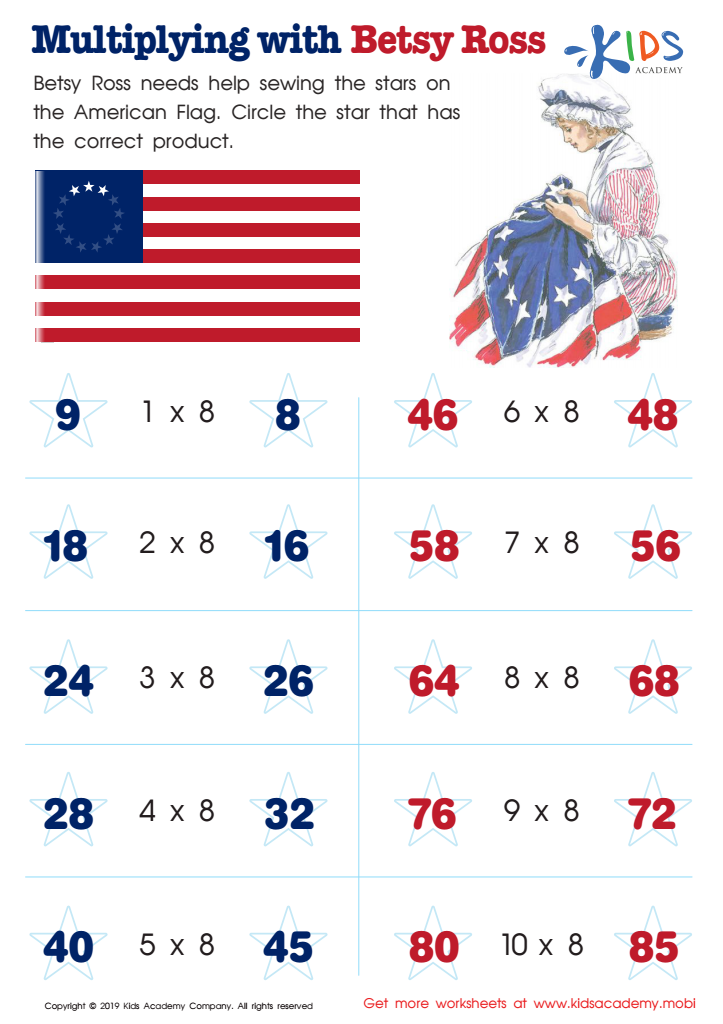
Multiplying with Betsy Ross Worksheet
Before getting into the worksheet, have your students take a quick history lesson on Betsy Ross. Ask them if they know her role in American history. On the printout, ask your kids to identify what Betsy Ross is doing - sewing the stars on the American Flag. Have them circle the star that has the correct pattern.
 Assign to My Students
Multiplying with Betsy Ross Worksheet
Worksheet
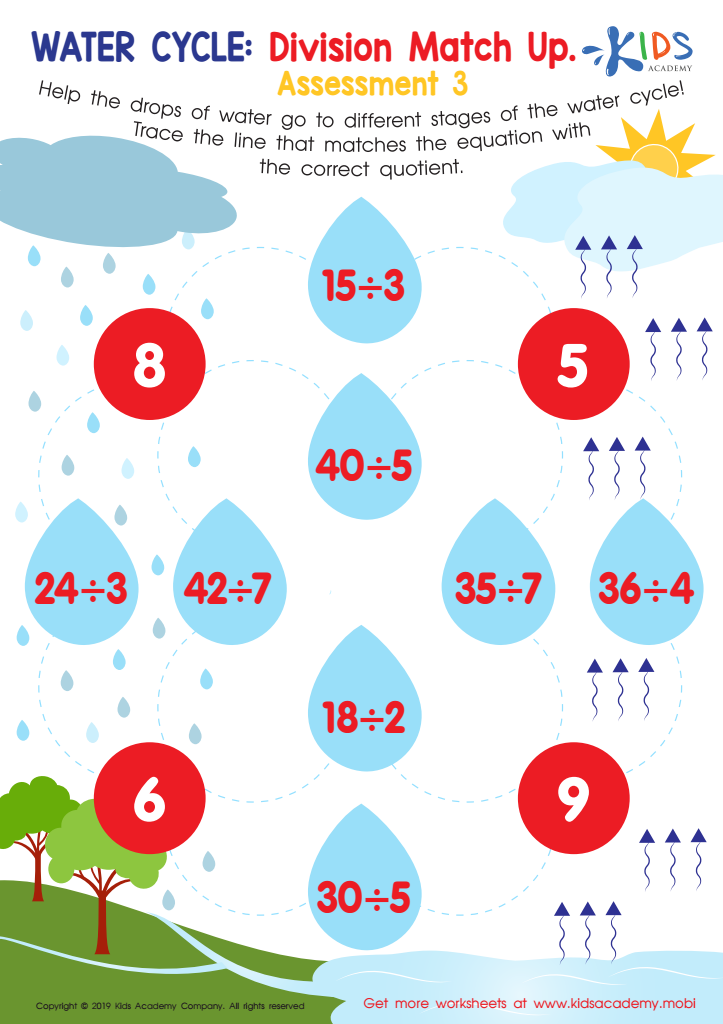
Water Cycle Division Match Up Assessment 3 Worksheet
Division is more fun than schoolwork with this assessment! Traceable lines let kids match equations to quotients, helping them build automaticity and giving you an easy way to see their progress.
Water Cycle Division Match Up Assessment 3 Worksheet
Worksheet
Join Kids Academy for Free
Who is primarily going to use this learning content?








Knowledge reinforcement is pivotal in the developmental phase of children aged 7-9, as it strengthens their cognitive skills and enhances their understanding of concepts. During these formative years, children are transitioning from early literacy and numeracy into more complex subjects and critical thinking. Reinforcing knowledge helps solidify foundational skills, ensuring that children retain and apply what they learn.
For parents and teachers, consistent reinforcement allows for a collaborative and supportive learning environment. Through regular practice, discussions, and hands-on activities, children become more confident and motivated learners. This reinforcement not only aids memory but also fosters curiosity, encouraging children to further explore topics and develop research skills.
Moreover, parents and teachers should recognize that children learn at varied paces. Tailoring reinforcement strategies to individual learning styles can help accommodate diverse needs, ensuring that no child feels left behind. Engaging children in reinforcement activities nurtures their social, emotional, and academic growth, laying the groundwork for lifelong learning. Ultimately, caring about knowledge reinforcement means committing to a child’s holistic development, empowering them to embrace challenges and succeed in an increasingly complex world.








