
Language skills development Worksheets for Ages 7-9
3 filtered results
Difficulty Level
Grade
Age
-
From - To
Subject
Activity
Standards
Enhance your child's language abilities with our engaging Language Skills Development Worksheets designed for ages 7-9. These carefully crafted worksheets focus on enriching vocabulary, comprehension, grammar, and writing skills. Created by expert educators, each activity is meant to make learning fun and accessible. Our worksheets cater to various skill levels, ensuring every child can progress confidently. Perfect for classroom use or additional practice at home, our resources provide a solid foundation for academic success. Visit Kids Academy’s language skills section to explore our collection and support your child’s journey to becoming a proficient communicator.
Favorites
With answer key
Interactive
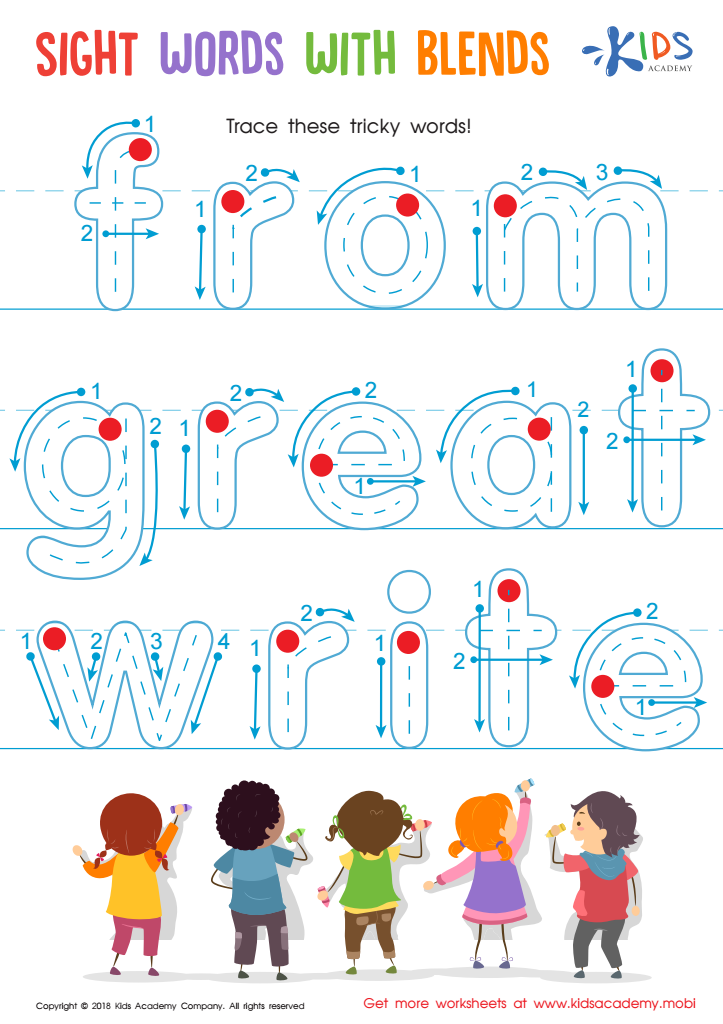
Sight Words with Blends Worksheet
This free PDF lets your children trace and write sight words with tricky blends. The guide numbers help them start from the top, building fine motor skills and enhancing sight word vocab. It's a great way to give your kids a solid foundation for reading!
 Assign to My Students
Sight Words with Blends Worksheet
Worksheet
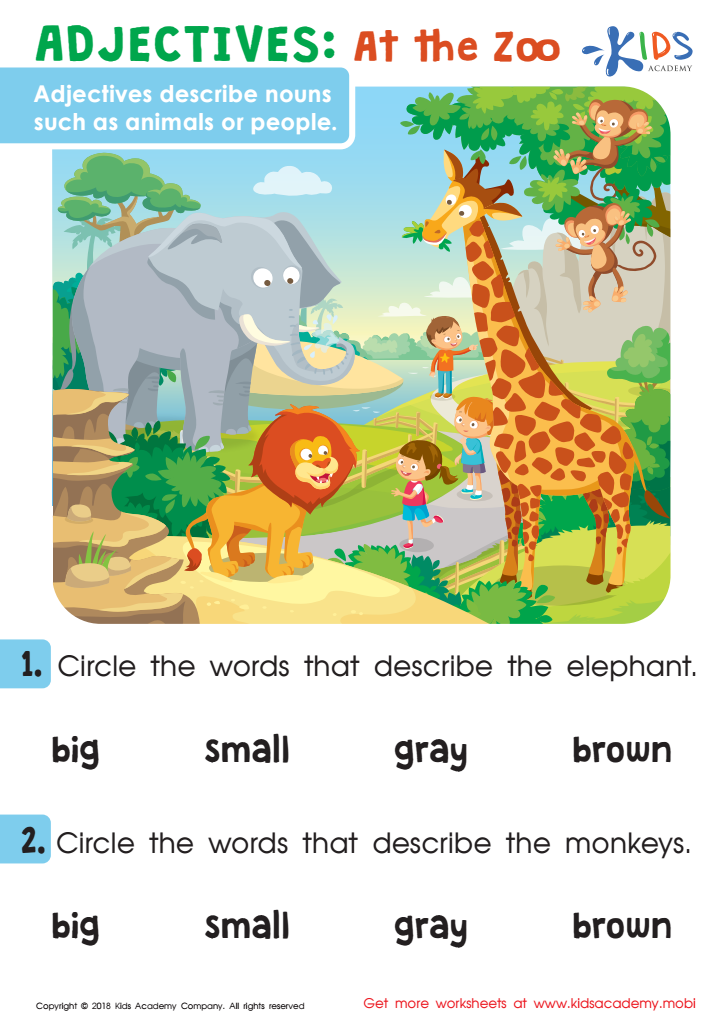
Adjectives: At The Zoo Worksheet
Take your kids to the zoo and ask them about their favorite activities and animals. This worksheet is a great way for kids to learn about adjectives. Explain that adjectives describe nouns like people or animals (e.g. big, tall, dark). Look at the printout with your kids and help them circle words that describe the animals in the picture.
Adjectives: At The Zoo Worksheet
Worksheet
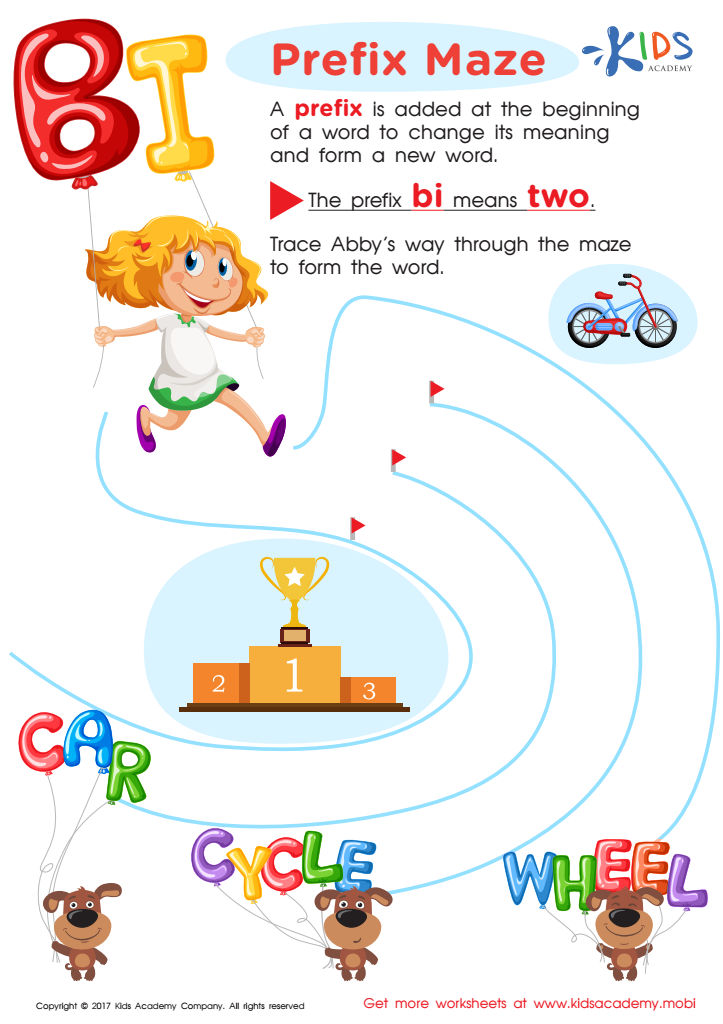
Prefix Bi Words Worksheet
Help "bi" find its root word in this fun and colorful prefix worksheet! Your child will learn how words are built while having a great time!
Prefix Bi Words Worksheet
Worksheet
Join Kids Academy for Free
Who is primarily going to use this learning content?







Language skills development for children ages 7-9 is critical for their academic success and overall cognitive development. During this formative period, children are transitioning from learning to read to reading to learn, which underscores the importance of robust language skills. These skills include vocabulary acquisition, sentence structure, comprehension, and effective communication.
Parents and teachers should prioritize language development because it directly impacts a child's ability to understand and process new information. Strong language skills support better performance across all subjects, including math and science, as well as social studies. For example, understanding word problems in math requires solid reading comprehension skills. Additionally, a rich vocabulary enables children to express their thoughts clearly and engage more meaningfully in discussions and social interactions.
Moreover, developing good language skills early on can build a child's confidence and academic self-esteem, encouraging a positive attitude toward learning. Language proficiency also promotes critical thinking and problem-solving abilities, which are essential for lifelong learning and adapting to new situations.
Lastly, fostering language development creates a strong foundation for future learning. As children grow older and curriculum demands become more rigorous, those with strong foundational language skills will find it easier to cope with complex texts and engage in higher-order thinking tasks. Thus, paying attention to language development at ages 7-9 is an investment in a child's future success and overall intellectual growth.








