Learn addition Worksheets for Ages 7-9
4 filtered results
-
From - To
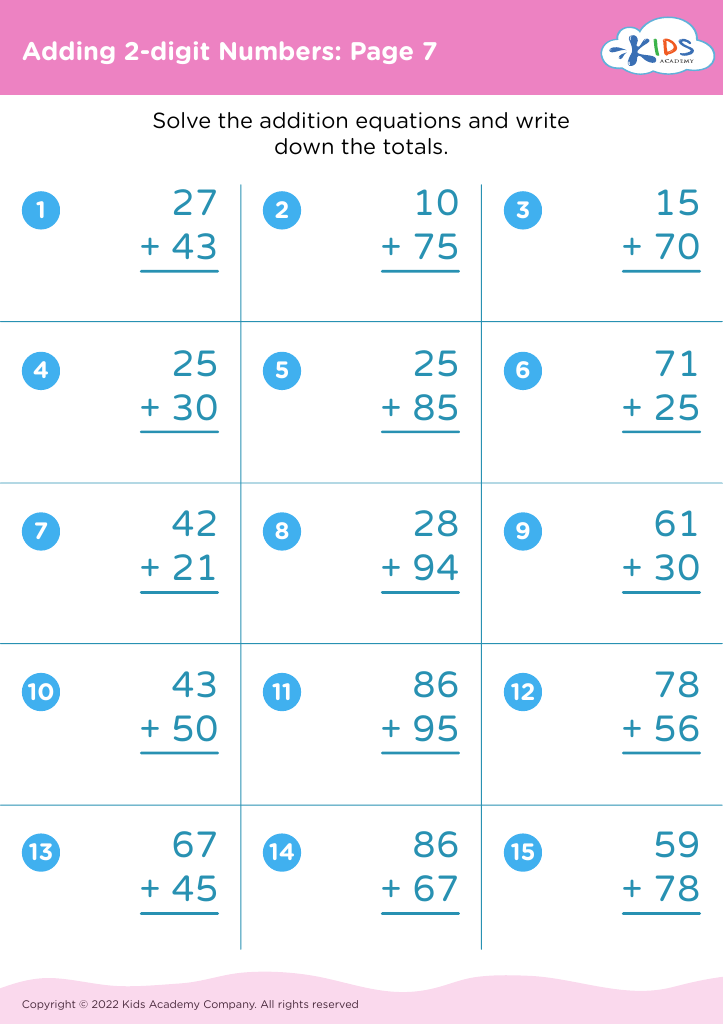
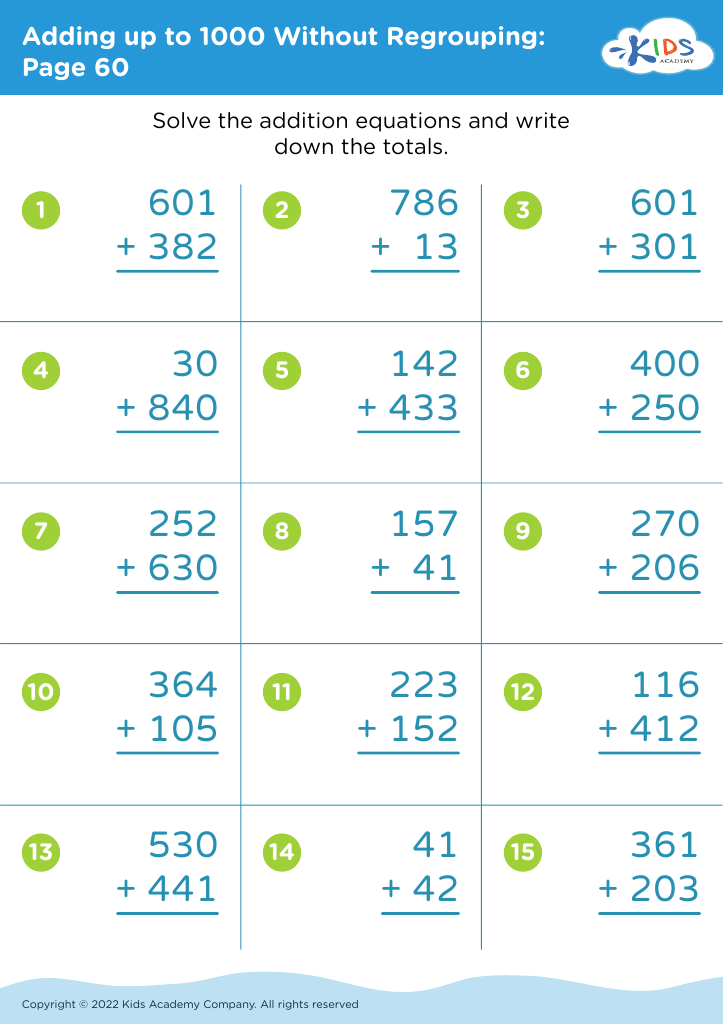
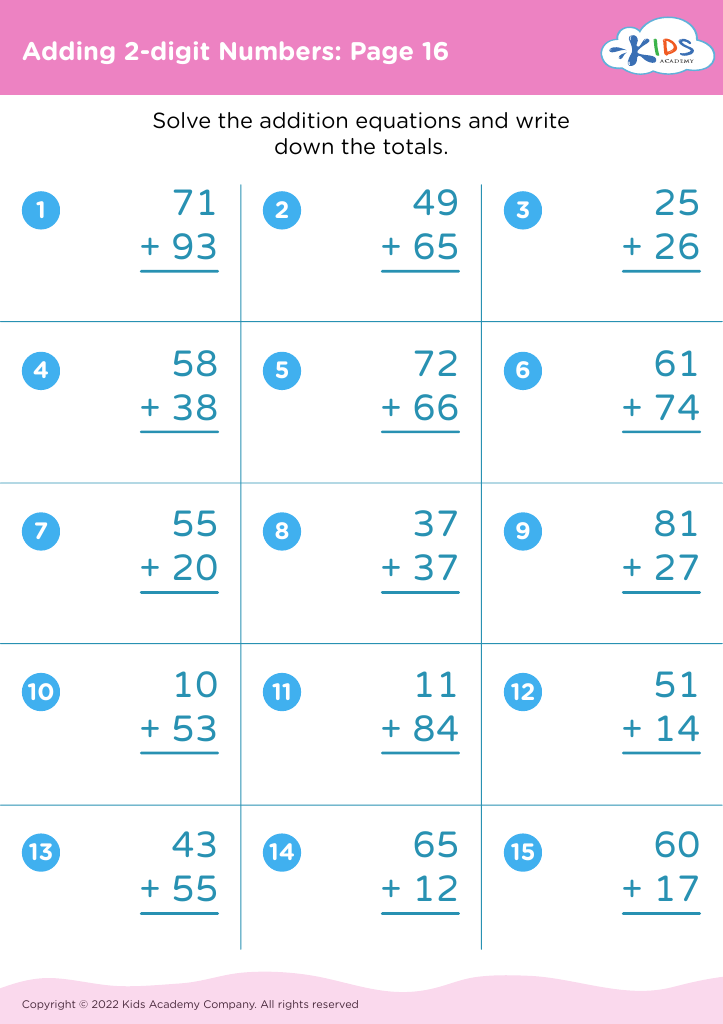
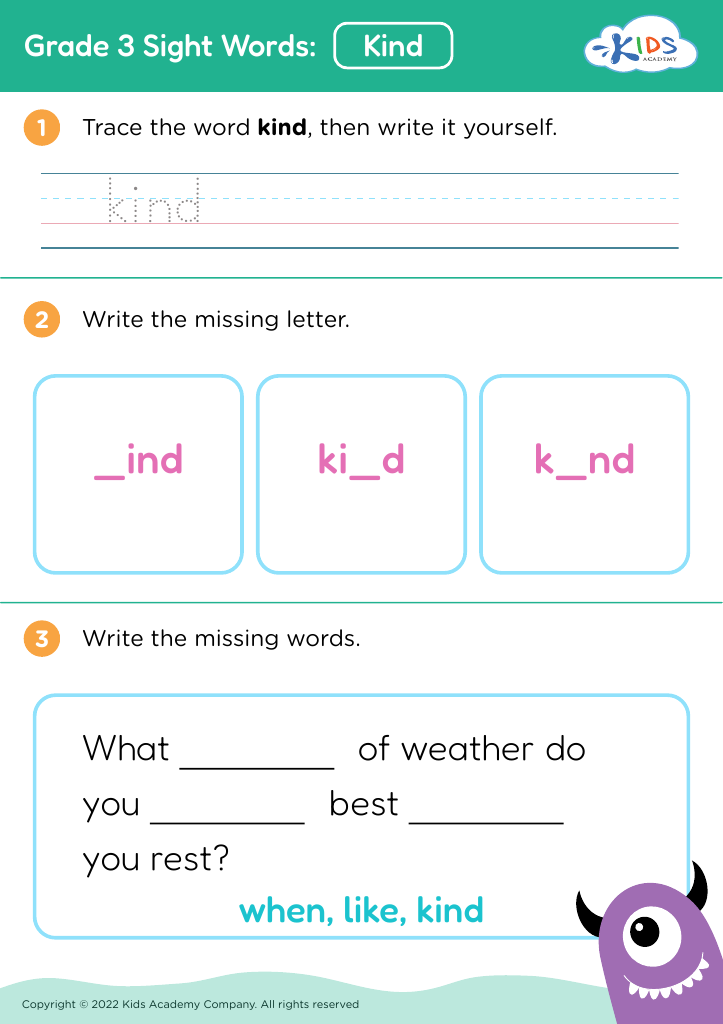
Unlock the joy of math with our "Learn Addition Worksheets for Ages 7-9!" Designed to make learning addition fun and engaging, these worksheets are perfect for young learners. Each sheet is filled with colorful illustrations and creative problems that help kids master addition skills progressively. Whether it's simple single-digit addition or challenging multi-digit problems, our worksheets cater to all levels. Boost your child's confidence and spark their love for math with interactive exercises that make learning feel like play. Explore our collection today and watch your child's math skills flourish!


.jpg)




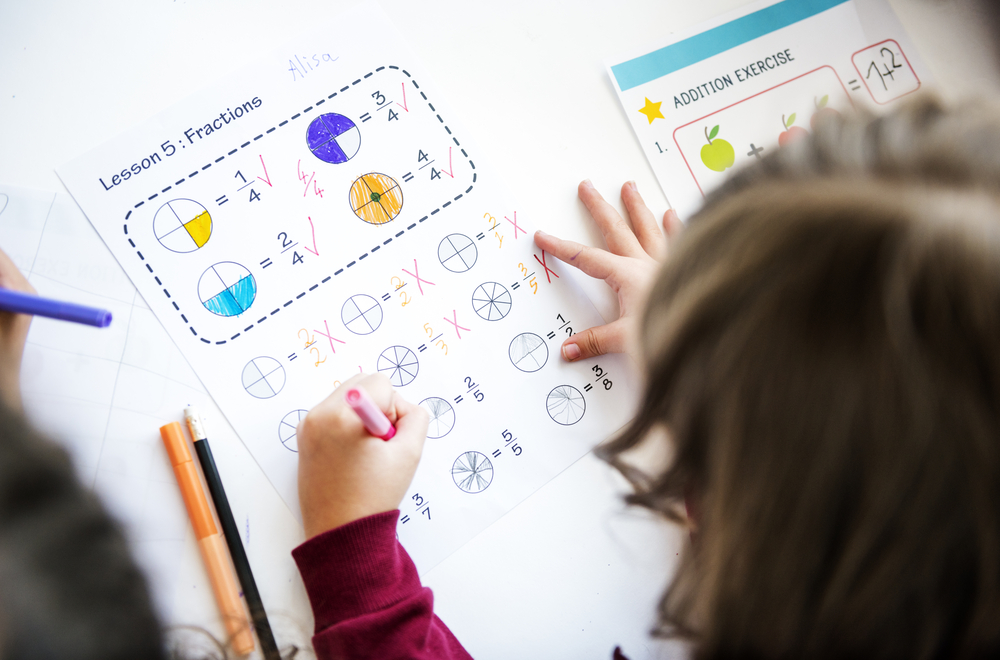
Learning addition for ages 7-9 is fundamental for multiple reasons. At this age, children are building the foundation for their lifelong relationship with mathematics. Addition serves as one of the simplest and most essential operations in math, acting as a building block for more complex concepts such as subtraction, multiplication, and division.
By mastering addition, children develop critical thinking and problem-solving skills. It enhances their ability to tackle everyday tasks, from counting money to telling time, making them more independent and confident. Early proficiency in math fosters a positive attitude toward the subject, helping to mitigate math anxiety as they progress through more challenging material.
From a brain development perspective, engaging with addition strengthens neural connections and cognitive agility. Repetition and practice improve memory and the ability to process numerical information quickly. Moreover, strong basic math skills are correlated with better performance across all academic disciplines, not just mathematics.
Parents and teachers should prioritize teaching addition because it sets the groundwork for educational success and practical life skills. By ensuring that children grasp this fundamental skill early on, they provide them with a toolkit for academic achievement and everyday functionality. This proactive approach will benefit children's educational journeys and general problem-solving abilities in the future.








