Phonological awareness Worksheets for Ages 7-9
3 filtered results
-
From - To
Enhance your child's reading abilities with our engaging Phonological Awareness Worksheets, designed specifically for ages 7-9. At Kids Academy, we understand the importance of developing strong foundational reading skills. Our comprehensive worksheets focus on key phonological segments, such as identifying sounds, syllables, and rhyming words. Perfect for both classroom and home use, these expertly crafted resources make learning fun and interactive. With colorful illustrations and playful exercises, children will easily grasp essential concepts, boosting their confidence in reading and pronunciation. Empower your child with our phonological awareness worksheets and set them on the path to reading success.
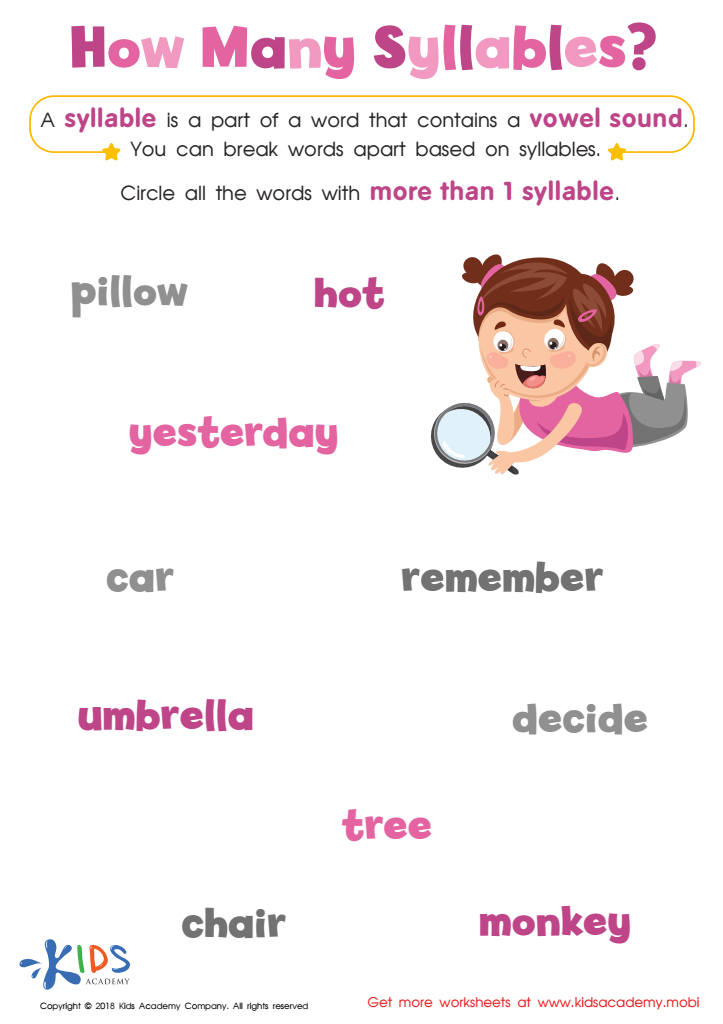
Reading: How Many Syllables Worksheet
 Assign to My Students
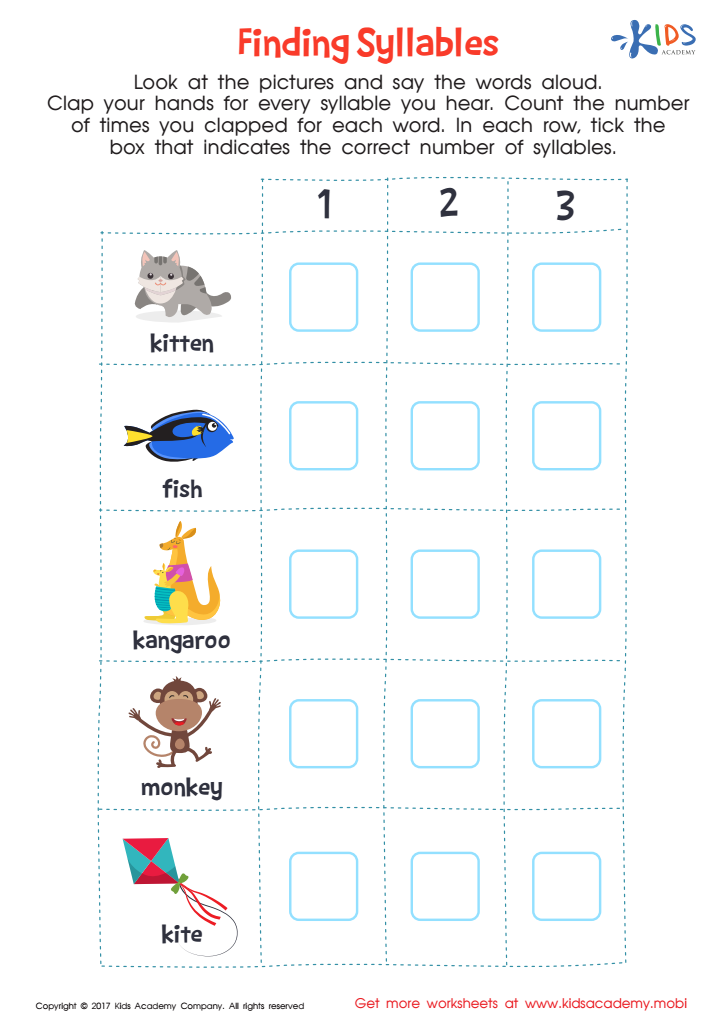
Finding Syllables Word Structure Worksheet
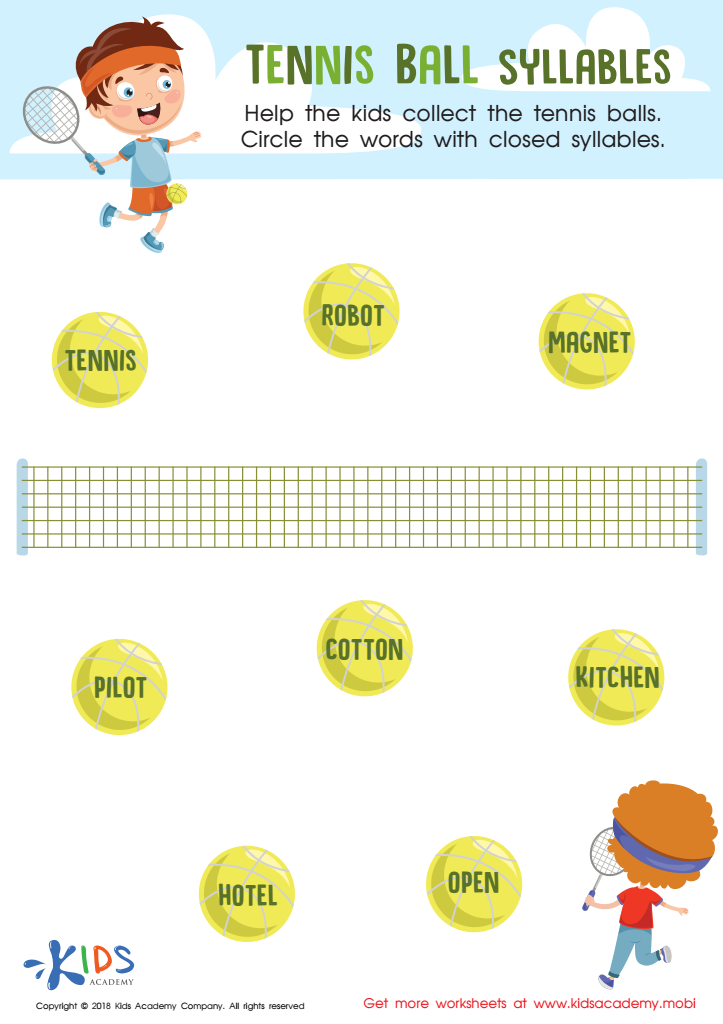
Tennis Ball Syllables Worksheet







Phonological awareness is incredibly important for children ages 7-9 as it is one of the critical foundations of reading and spelling. During these formative years, children's brains are highly receptive to language development, and fostering strong phonological skills can significantly impact their literacy abilities. Phonological awareness refers to the ability to recognize and manipulate sounds in spoken language, such as identifying rhymes, syllables, and individual phonemes.
Parents and teachers should care about this because strong phonological awareness is directly linked to successful reading outcomes. Children who develop these skills tend to have an easier time understanding the alphabetic principle—that letters represent sounds in words. This understanding is essential for decoding new words, improving reading fluency, and ultimately enhancing comprehension.
Moreover, phonological awareness is a skill that can prevent or mitigate reading difficulties and dyslexia. Early identification and targeted support for children struggling with these skills can lead to timely interventions, significantly improving their academic trajectory.
Finally, nurturing phonological awareness can boost children’s self-confidence. As they become more adept at reading and spelling, they are more likely to enjoy learning, participate actively in class, and pursue knowledge independently. Thus, parents and teachers play a vital role in ensuring children develop strong phonological skills, laying a solid foundation for their future academic success.








