Pronunciation practice Worksheets for Ages 7-9
3 filtered results
-
From - To
Boost your child's speaking and listening skills with our Pronunciation Practice Worksheets for Ages 7-9! Specifically designed for young learners, these engaging activities enhance their phonetic awareness and articulate speech. Through fun exercises and games, children will master challenging sounds and enrich their vocabulary. Perfect for homeschoolers, teachers, or supplementary practice, our worksheets offer clear instructions and vivid illustrations to make pronunciation enjoyable and effective. Help your child build confidence in their reading and speaking abilities today with Kids Academy's expertly crafted learning resources. Discover the difference in your child’s communication skills!
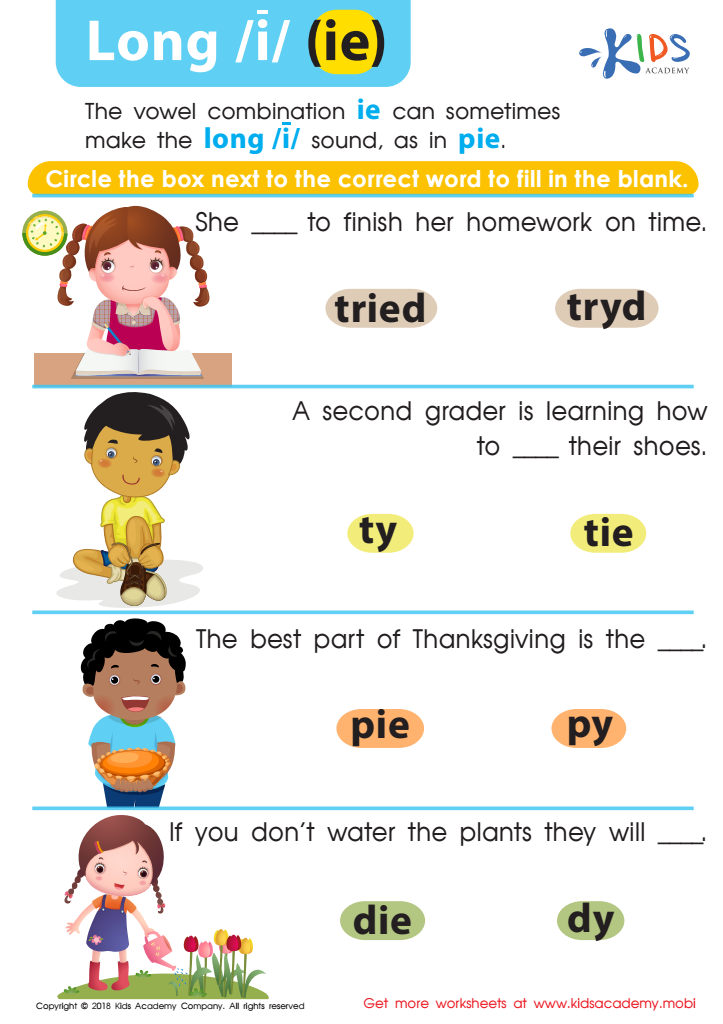
Reading: Long I and IE Worksheet
 Assign to My Students
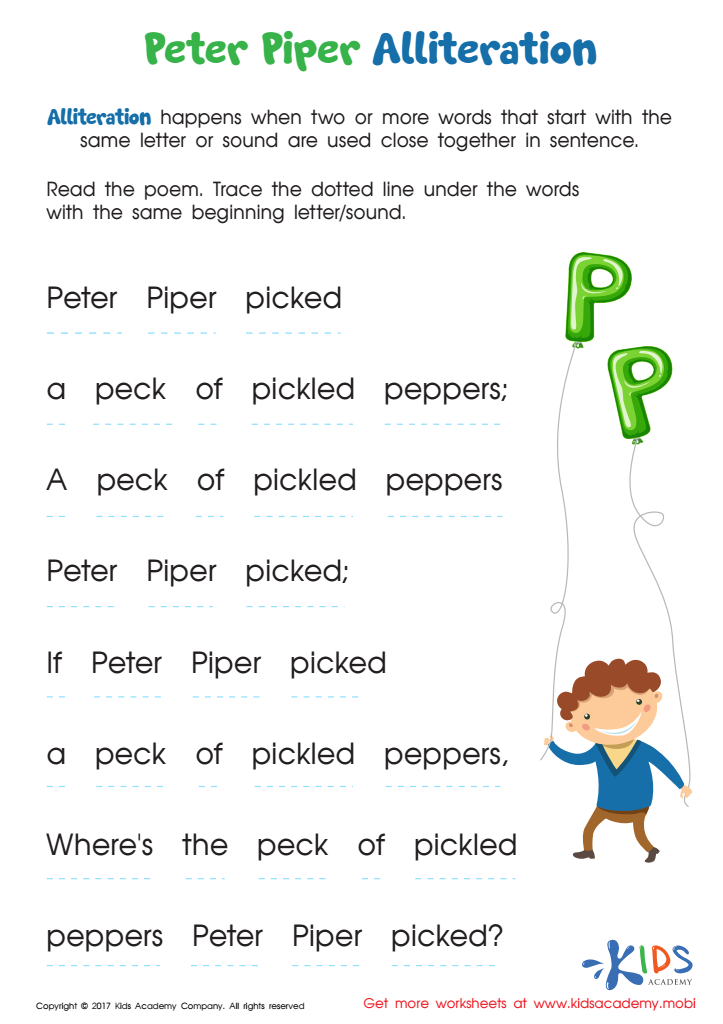
Peter Piper Alliteration Worksheet







Pronunciation practice for children ages 7-9 is crucial in fostering effective communication and language development. At this developmental stage, children are rapidly acquiring linguistic skills and laying the groundwork for their future communication abilities. Proper pronunciation aids in making themselves understood clearly, boosting their confidence when speaking and reading aloud. As children in this age range become more social, clear communication helps them form better relationships with peers, teachers, and family members.
Moreover, incorrect pronunciation can be misinterpreted, leading to misunderstandings that might affect academic performance and social interactions. This age is particularly significant because children are usually introduced to more complex vocabulary and reading materials in both school and everyday life. Practicing good pronunciation enhances their phonemic awareness, an essential skill that supports reading and spelling proficiency.
For teachers, focusing on pronunciation can make dictation and listening comprehension exercises more effective. For parents, supporting this at home by reading together and correcting mistakes gently encourages a positive attitude towards learning. Both teachers and parents create an environment where children feel encouraged to ask questions and try new words.
Early identification of any speech difficulties can lead to timely intervention, avoiding more significant issues later. Hence, paying attention to pronunciation at this critical stage sets children on a path to academic success and robust social interactions.








