Reading thermometers Worksheets for Ages 7-9
3 filtered results
-
From - To
Discover our engaging "Reading Thermometers Worksheets" specifically designed for children aged 7 to 9! These interactive worksheets help young learners develop essential skills in reading thermometers and understanding temperature concepts. With a variety of fun activities and illustrated examples, kids will practice counting degrees in both Fahrenheit and Celsius, while gaining confidence in interpreting critical data. Perfect for enhancing science knowledge, these worksheets support classroom learning, home study, or summer practice. Created by experts, our resources are curriculum-aligned and promote a hands-on approach to mastering thermometer reading. Let your child explore the fascinating world of temperatures with our vibrant worksheets today!
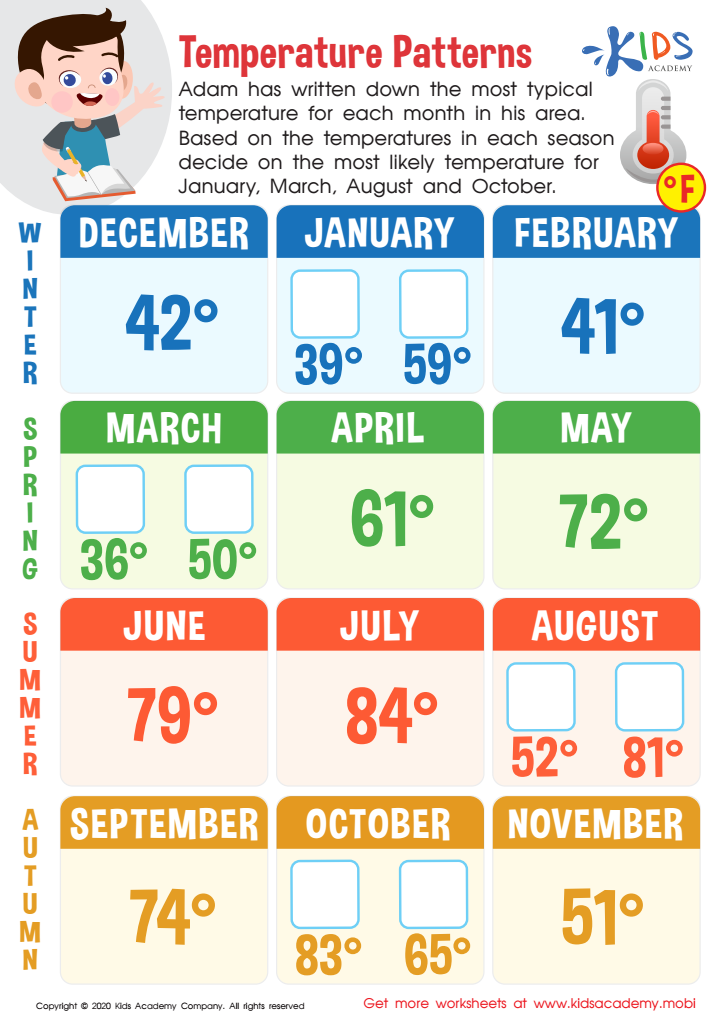
Temperature Patterns Worksheet
 Assign to My Students
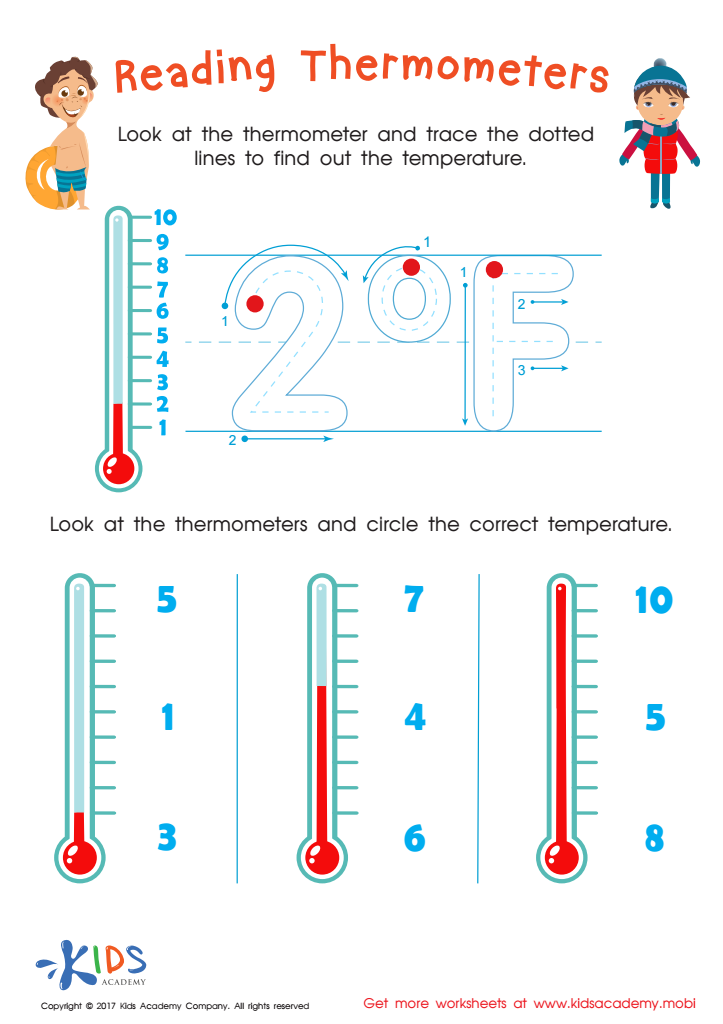
Reading Thermometers Printable
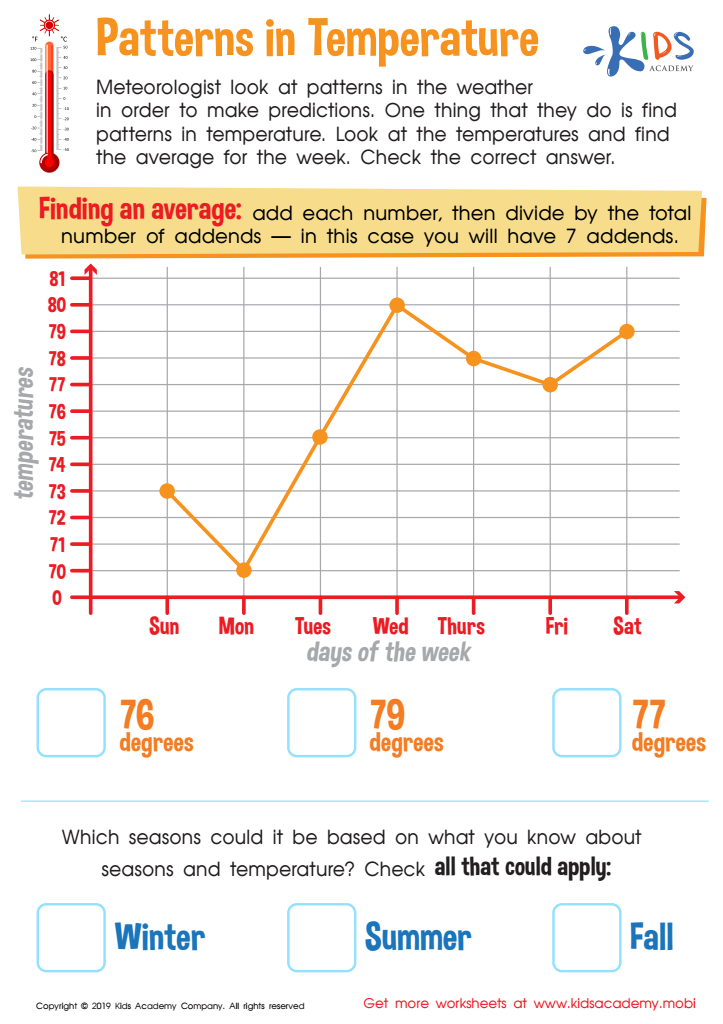
Patterns in Temperature Worksheet




.jpg)
Reading thermometers, particularly for children aged 7-9, is essential for several reasons. At this age, children are developing critical thinking and problem-solving skills, and learning to read thermometers fosters these abilities. It enhances their understanding of measurements, temperature, and the concept of scale, laying the groundwork for future science and math learning.
Furthermore, reading thermometers is a practical life skill that promotes safety and health awareness. Understanding how to accurately gauge temperature—whether it pertains to weather conditions, cooking, or measuring body temperature—empowers children to make informed decisions. This knowledge can be vital in parental or teacher-led conversations about health, safety, and the environment.
Incorporating thermometers into lessons also captivates children’s interest by engaging them in hands-on activities and real-world applications. This approach makes learning more enjoyable and relatable, encouraging a love of science.
Moreover, as they learn to interpret these readings, children practice critical skills such as data gathering and analysis, which are vital for future academic success. Ultimately, by emphasizing the importance of reading thermometers, parents and teachers can instill a sense of curiosity and responsibility in children, preparing them for both academic challenges and everyday situations.








