
Sound differentiation Worksheets for Ages 7-9
3 filtered results
Difficulty Level
Grade
Age
-
From - To
Subject
Activity
Standards
Discover our engaging Sound Differentiation Worksheets for Ages 7-9, designed to boost auditory skills while making learning fun! These worksheets provide a variety of activities that help young learners identify and differentiate between various sounds, enhancing their phonemic awareness and overall literacy. With playful illustrations and engaging exercises, children will practice blending and segmenting sounds, aiding their reading and writing abilities. Perfect for classroom use or at-home practice, our worksheets cater to different learning styles, ensuring every child has the opportunity to succeed. Unlock your child’s potential in language development today with our thoughtfully crafted resources!
Favorites
With answer key
Interactive
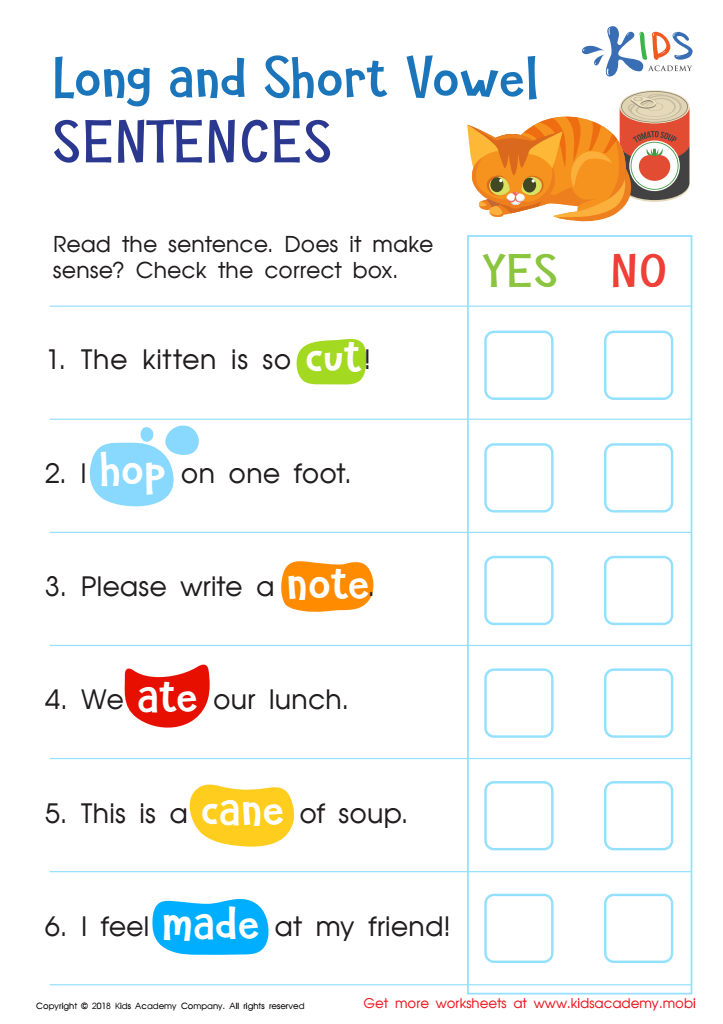
Long and Short Vowel Sentences: Assessment Worksheet
This printable worksheet helps kids practice differentiating between short and long vowel sounds. They'll use context clues to figure out which words make sense in simple sentences. A great way to build reading and writing skills!
 Assign to My Students
Long and Short Vowel Sentences: Assessment Worksheet
Worksheet
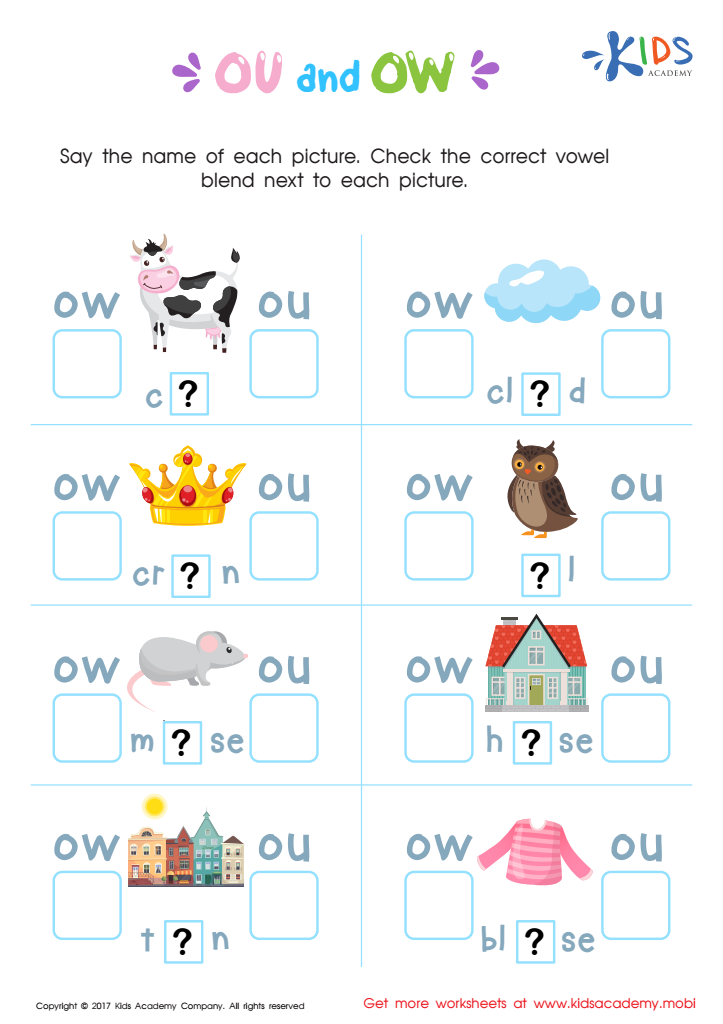
OU and OW Words Worksheet
Enhance your child's reading and spelling with this ou and ow words worksheet! Fun pictures and common words make mastering the diphthongs ou and ow easy and enjoyable.
OU and OW Words Worksheet
Worksheet
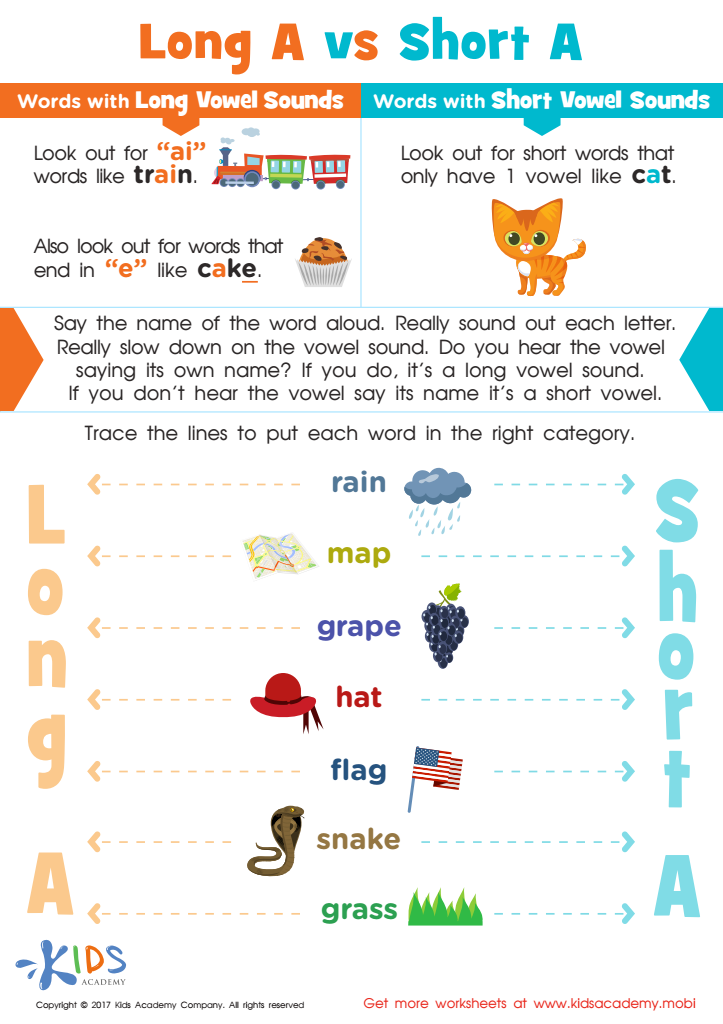
Long and Short Vowel A Spelling Worksheet
Help your child learn tricky spellings by focusing on vowel sounds. Read about each one, see examples and work through the long and short vowel A worksheet. Your child will be able to sound out words to determine if the vowel is long or short.
Long and Short Vowel A Spelling Worksheet
Worksheet
Join Kids Academy for Free
Who is primarily going to use this learning content?







Sound differentiation is crucial for children aged 7-9, as it directly impacts their literacy development and cognitive abilities. During this critical stage, children begin to encounter more complex texts and academic tasks that require a strong foundation in phonological awareness. Understanding the subtle differences between sounds enhances their ability to decode words, spurring fluent reading and effective spelling skills.
Moreover, sound differentiation exercises improve children's auditory skills, which are essential for following instructions, participating in discussions, and engaging in effective listening. Without these skills, children might struggle to comprehend reading materials or fully grasp verbal communications, leading to frustration in and outside the classroom.
Additionally, fostering sound differentiation means accommodating various learning styles and needs. Children with dyslexia or auditory processing disorders can greatly benefit from focused phonics activities, giving them tools to succeed academically.
In summary, sound differentiation is not merely an isolated skill but a building block for broader learning and development. By prioritizing it, parents and teachers can equip children with skills that pave the way for ongoing academic success and confident communication, nurturing lifelong learners who feel empowered by their abilities.








