
Sound discrimination Worksheets for Ages 7-9
3 filtered results
Difficulty Level
Grade
Age
-
From - To
Subject
Activity
Standards
Enhance your child's auditory skills with our engaging Sound Discrimination Worksheets designed for ages 7-9. These worksheets provide fun and interactive activities that help children distinguish between different sounds, which is essential for language development and literacy skills. Kids will enjoy identifying, matching, and categorizing sounds through a variety of exercises tailored to their learning level. By focusing on sound discrimination, children will improve their listening skills, memory, and attention to detail. Ideal for both classroom and at-home learning, our worksheets not only support educational growth but also keep young learners entertained. Unlock your child's listening potential today!
Favorites
With answer key
Interactive
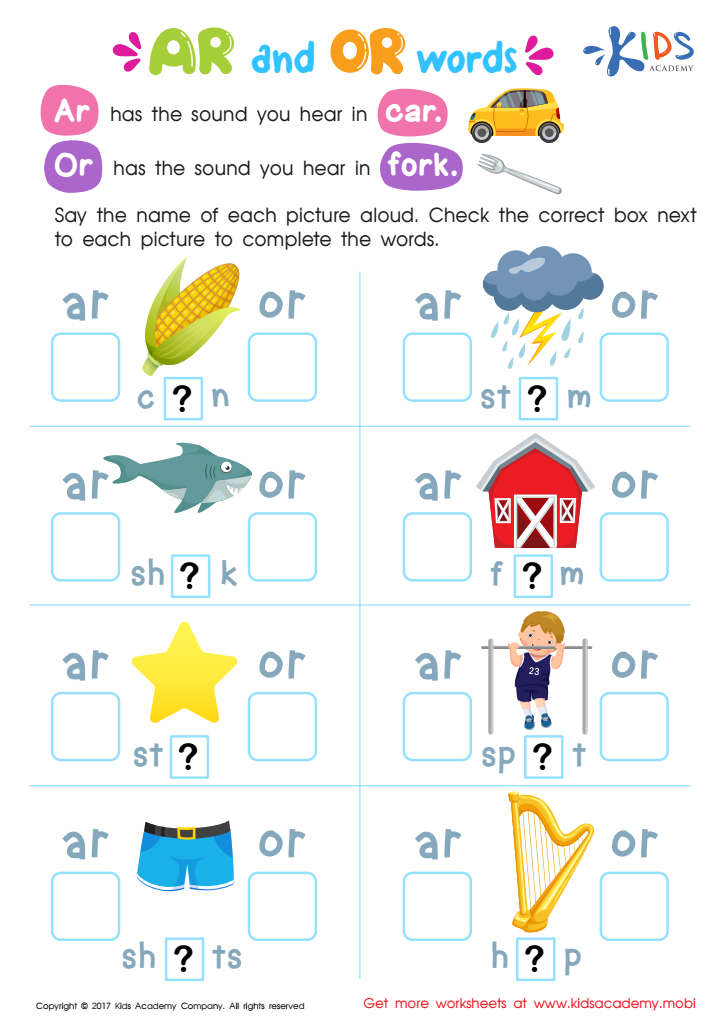
Ar and Or Words Phonics Worksheet
Master the distinct digraphs 'ar' and 'or' with this fun phonics worksheet from Kids Academy! With meaningful illustrations, it'll guide your child to choose the right one. Get ready for the great results!
 Assign to My Students
Ar and Or Words Phonics Worksheet
Worksheet
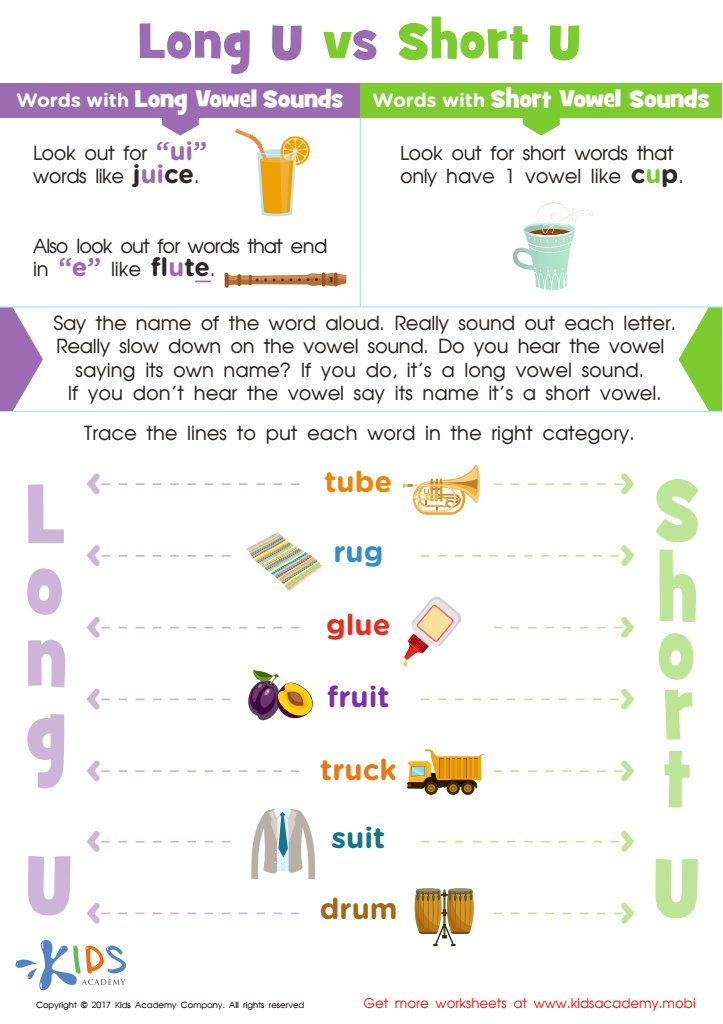
Long and Short Vowel U Spelling Worksheet
Help your child learn long and short vowel sounds with this fun long and short vowel U worksheet! Kids can become proficient spellers by mastering simple spelling tricks and sounding out letters.
Long and Short Vowel U Spelling Worksheet
Worksheet
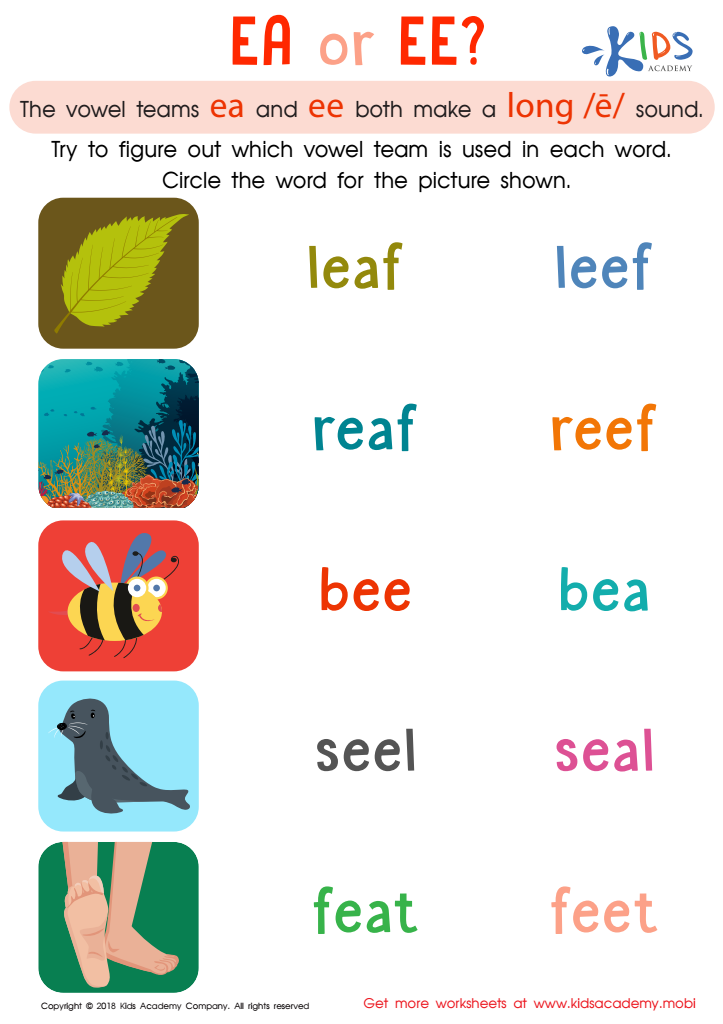
Reading: EA and EE Worksheet
Confused by the long E sound's varying spellings? Give students practice with this printable. It will improve their reading and spelling skills by helping them identify the correct spellings for words with the /ee/ and /ea/ vowel teams. Clear up the confusion and sharpen their skills.
Reading: EA and EE Worksheet
Worksheet
Join Kids Academy for Free
Who is primarily going to use this learning content?








Sound discrimination is crucial for children aged 7-9 as it forms the foundation for effective communication and academic achievement. During this developmental stage, children hone their literacy skills, and strong sound discrimination directly influences their reading abilities, spelling, and overall language development.
When children can distinguish between similar sounds, they are better equipped to decode words and understand phonemic concepts. This skill is not only essential for reading but also for listening comprehension and verbal expression. Children who struggle with sound discrimination may face challenges in communicating and understanding instructions, resulting in frustration and declining confidence.
Furthermore, sound discrimination closely relates to social skills. Children who listen attentively and recognize subtle auditory differences are more likely to engage in dialogues, collaborate with peers, and build friendships.
Both parents and teachers play a vital role in nurturing this skill. Creating a rich linguistic environment and incorporating activities like rhyming games, phonics exercises, and auditory games can enhance sound discrimination. Ultimately, investing in this skill supports academic success and social-emotional development, shaping a child's overall learning experience. By prioritizing sound discrimination, parents and teachers empower children to become confident, articulate individuals.








