Understanding communities Worksheets for Ages 7-9
3 filtered results
-
From - To
Discover our engaging "Understanding Communities" worksheets designed for children aged 7-9! These carefully curated activities help young learners explore the concept of communities, enhancing their social studies skills. Through fun and interactive exercises, students will identify different community roles, understand various environments, and learn about the importance of cooperation and diversity. Each worksheet promotes critical thinking and encourages creativity, making learning enjoyable. Whether at home or in the classroom, our resources support comprehensive understanding and foster curiosity about the world around them. Download the worksheets today to help your child connect with their community in meaningful ways!
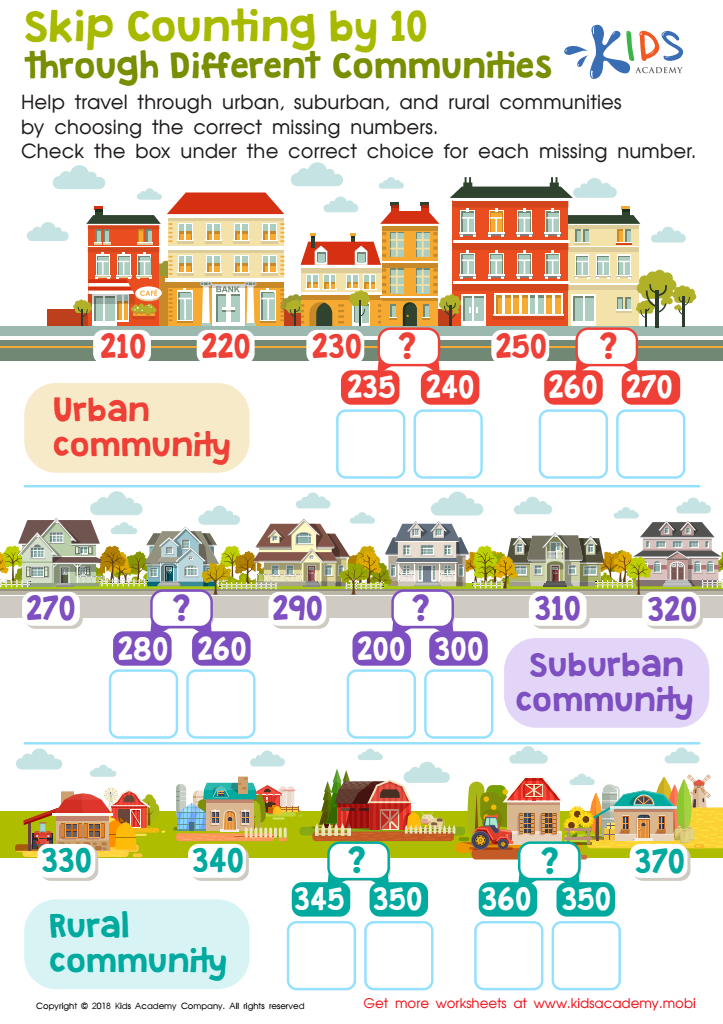
Skip Counting by 10 through Different Communities Worksheet
 Assign to My Students
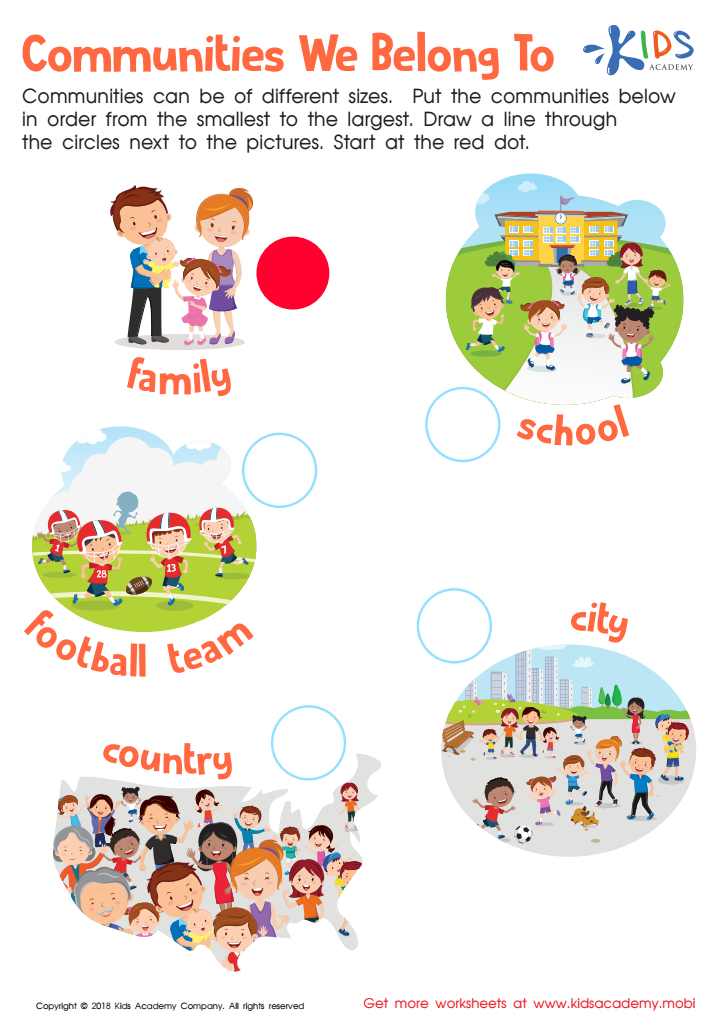
Communities We Belong to Worksheet
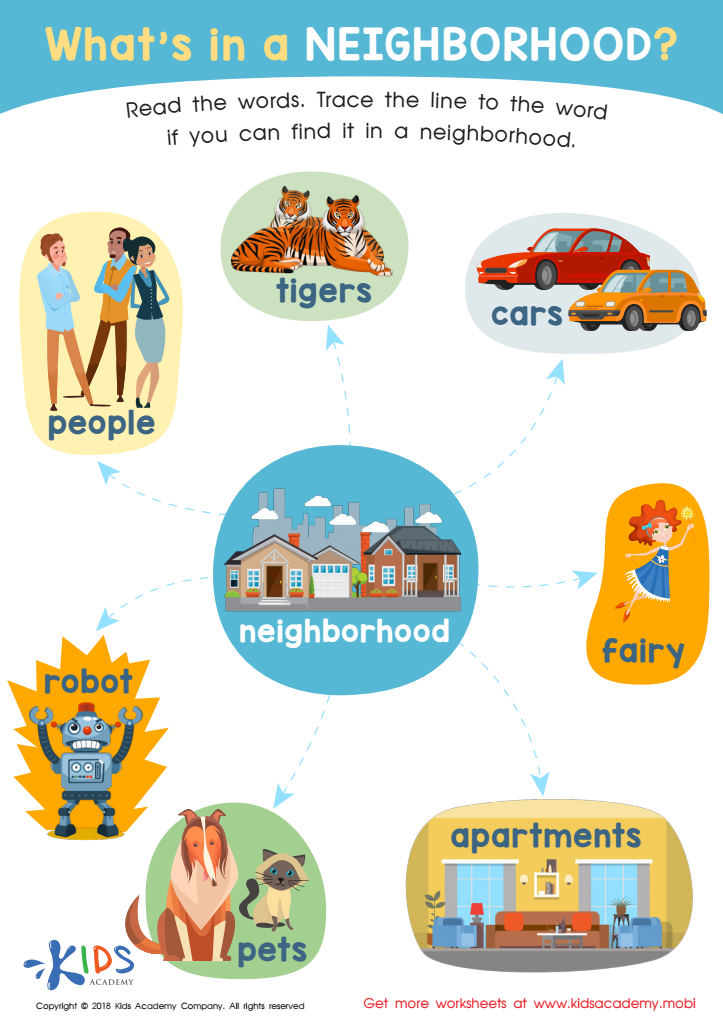
What's in a Neighborhood? Worksheet


.jpg)


.jpg)
Understanding communities is crucial for children aged 7-9 as it lays the foundation for their social, emotional, and cognitive development. At this age, children are becoming more aware of their surroundings and are increasingly interested in the world around them. Parents and teachers should care about instilling this knowledge because it fosters empathy and respect for diverse cultures, traditions, and experiences.
By exploring communities, children learn to appreciate the value of collaboration and the importance of social responsibility. This can lead to an understanding of how communities function and how individuals contribute to the larger society. It also encourages critical thinking, as children begin to explore questions like "What makes a strong community?" and "How can I make a difference?"
Additionally, learning about communities helps children develop communication and teamwork skills that are essential for their personal and academic growth. Engaging them in community-related projects can spark their creativity and promote problem-solving skills. Ultimately, cultivating an understanding of community in young minds empowers them, making them informed and compassionate citizens who are more likely to be engaged and active in their own communities as they grow.








