Understanding democracy Worksheets for Ages 7-9
3 filtered results
-
From - To
Discover the "Understanding Democracy Worksheets" specifically designed for children aged 7-9, available on Kids Academy. These engaging worksheets introduce young learners to the fundamental concepts of democracy, including the importance of voting, civic responsibilities, and the role of citizens in a democratic society. Tailored to ignite curiosity and foster critical thinking, each worksheet includes fun activities and exercises that promote discussion and understanding of democratic values. Perfect for parents and educators looking to enhance social studies lessons, our resources make learning about democracy both informative and enjoyable, empowering the next generation to become informed and active citizens in a democratic world.
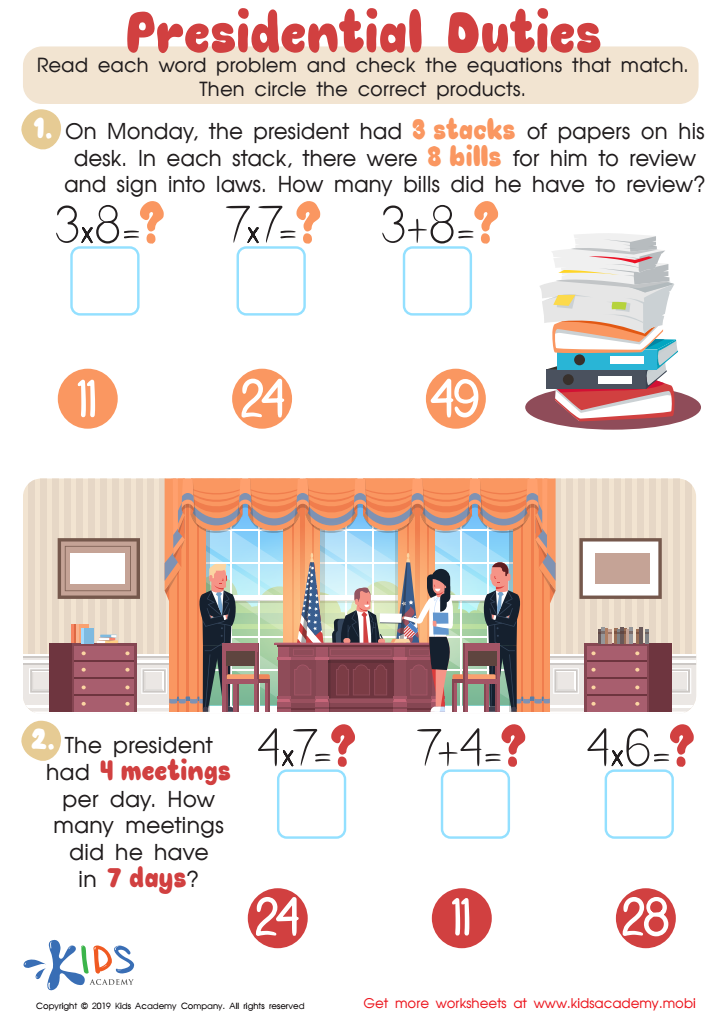
Presidential Duties Worksheet
 Assign to My Students
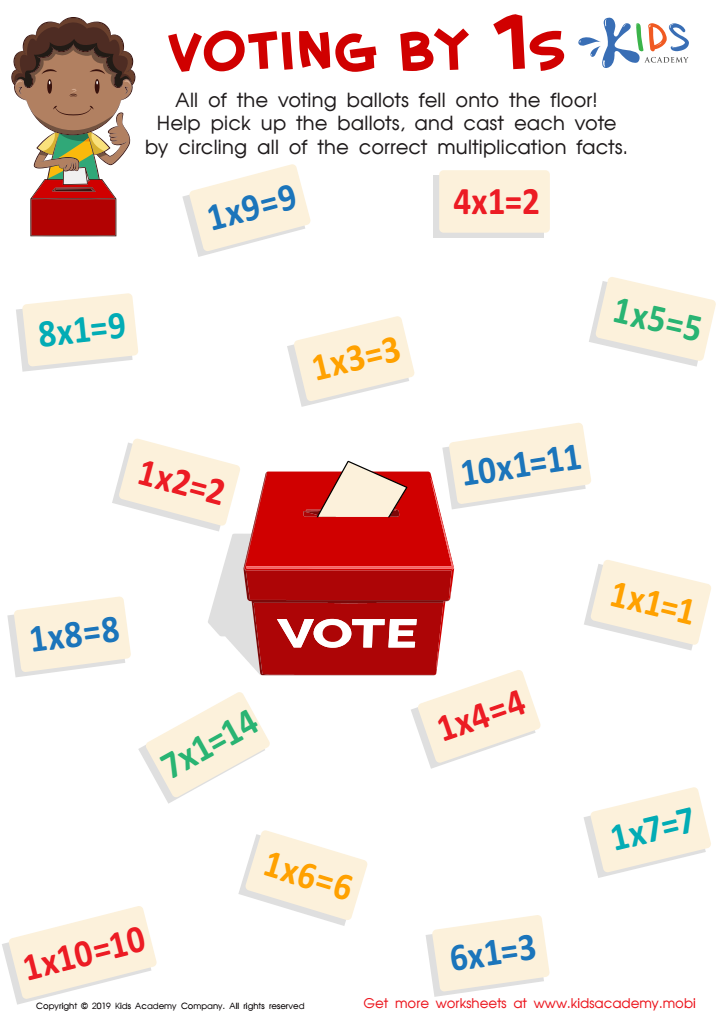
Voting by 1s Worksheet
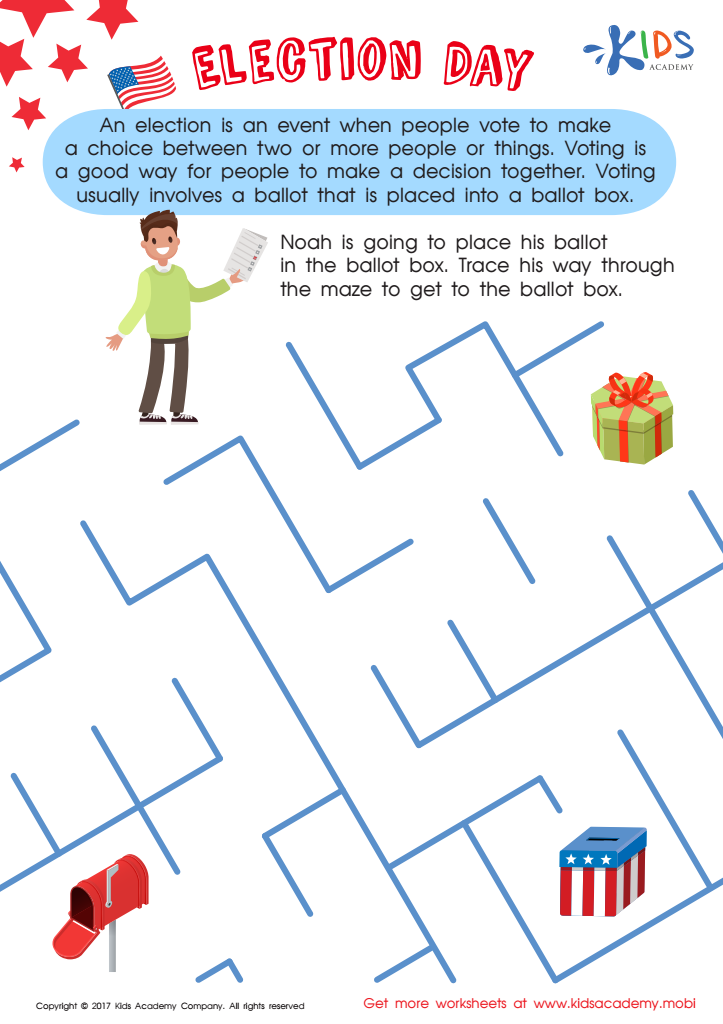
Election Day Worksheet



.jpg)




Understanding democracy is crucial for children aged 7-9, as it lays the groundwork for informed and active citizenship in the future. At this age, children are beginning to form opinions and understand their role within a community. By teaching them about democracy, parents and teachers can help foster critical thinking skills, encouraging kids to ask questions and engage in discussions about fairness, justice, and equality.
Learning about democratic principles, such as voting, rights, and responsibilities, empowers children to recognize their voices matter and that they can impact their environments. It promotes values like respect for others' opinions and the importance of participation, whether in school, at home, or in the community.
Furthermore, understanding democracy helps reduce feelings of helplessness among children. They learn that they can be part of decision-making processes, whether in a classroom setting or by participating in local events. This empowerment encourages social awareness and civic engagement, preparing them to be responsible adults.
Additionally, early education about democracy can help address future societal challenges by creating informed citizens who are more likely to advocate for equality and justice. Ultimately, nurturing a democratic mindset in young children promotes a more engaged and understanding society.








