
Understanding economics Worksheets for Ages 7-9
3 filtered results
Difficulty Level
Grade
Age
-
From - To
Subject
Activity
Standards
Discover the world of economics with our engaging "Understanding Economics Worksheets" designed for ages 7-9. These worksheets simplify fundamental economic concepts through interactive activities, making learning fun and accessible. Perfect for young learners, they cover essential topics such as trade, goods, services, and money management. Each worksheet promotes critical thinking and creativity, helping students grasp important financial concepts early on. Educators and parents can easily incorporate these resources into their teaching routines, ensuring a hands-on learning experience. Foster your child's economic literacy skills and set a strong foundation for their future with our thoughtfully crafted worksheets. Explore and download today!
Favorites
With answer key
Interactive
 Assign to My Students
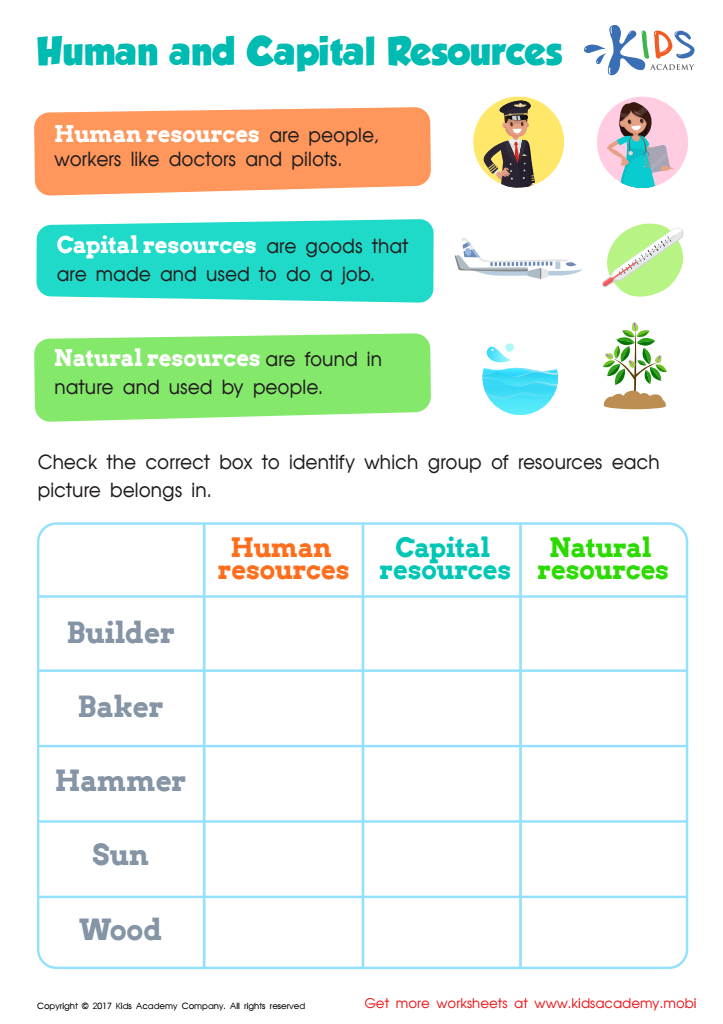
Human and Capital Resources Worksheet
It helps identify and differentiate human, natural and capital resources, so your kid can understand how each affects their world.
Human and Capital Resources Worksheet
Worksheet
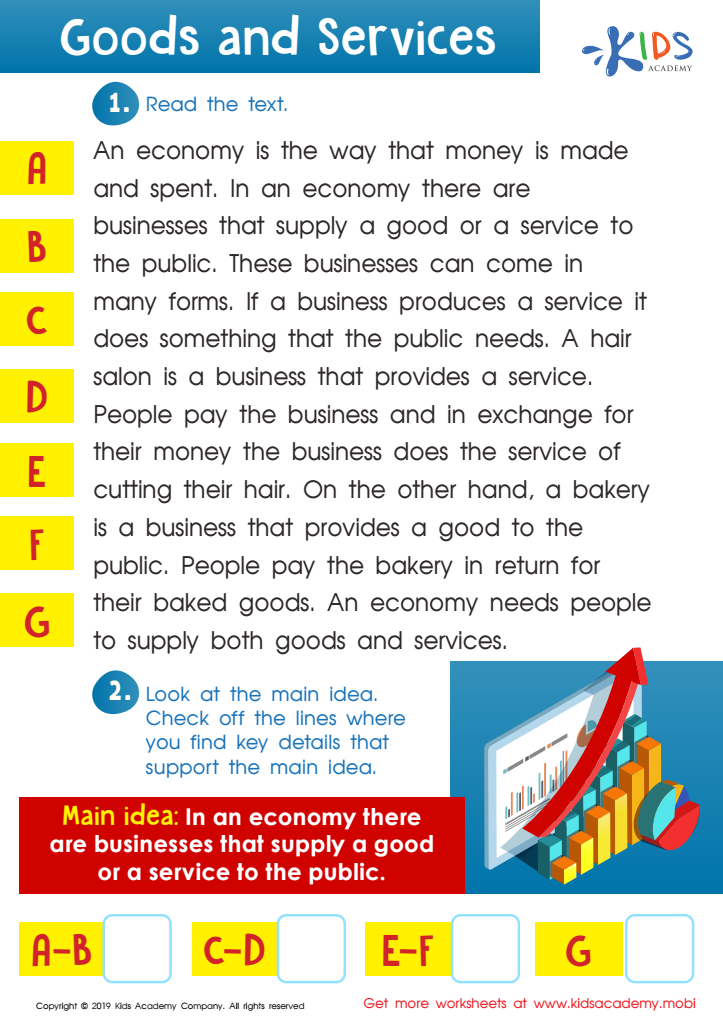
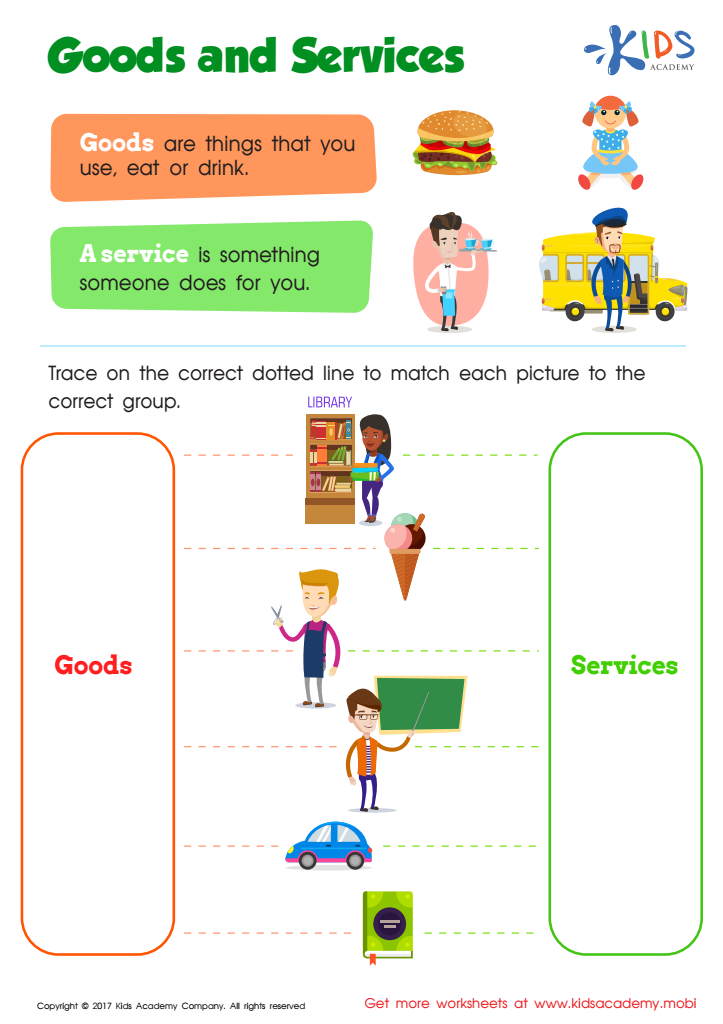
Goods and Services Worksheet
Teach your kids about the economy and businesses with this worksheet. Ask them if they know what goods and services are. After they complete the worksheet, they'll have a better understanding. Read the text to them and guide them step-by-step through the instructions. Help them learn!
Goods and Services Worksheet
Worksheet
Join Kids Academy for Free
Who is primarily going to use this learning content?







Understanding economics at a young age sets the foundation for lifelong financial literacy and responsible decision-making. For children aged 7-9, engaging with basic economic concepts cultivates skills like critical thinking, problem-solving, and awareness of their surroundings. When parents and teachers introduce topics like scarcity, choice, and trade, children learn to recognize the value of resources and the impact of decisions—both personal and communal.
Early exposure to economic principles helps children grasp the importance of saving, budgeting, and assessing needs versus wants. This knowledge empowers them to make informed choices, fostering not only financial competence but also cultivating responsible consumer habits. Moreover, understanding economics encourages teamwork and negotiation skills when collaborating with peers or in group projects.
In an increasingly complex world, familiarizing children with basic economics can help them understand broader societal issues, such as wealth distribution and civic responsibility. Teaching these concepts can inspire future leaders who are equipped to tackle economic challenges with empathy and insight. Therefore, prioritizing economics education for young learners is crucial for preparing them for a financially savvy future, while also nurturing skills necessary for personal and societal success.








