
Understanding fossils Worksheets for Ages 7-9
3 filtered results
Difficulty Level
Grade
Age
-
From - To
Subject
Activity
Standards
Dive into the fascinating world of fossils with our "Understanding Fossils Worksheets" for ages 7-9. These engaging printables, designed by Kids Academy, offer young learners a hands-on approach to exploring ancient life. Through fun activities, children will investigate how fossils form, what they reveal about Earth's history, and why they're important to science. Perfect for classroom use or at-home learning, these worksheets help students develop critical thinking and observation skills. Let your child embark on a journey to the past and ignite their curiosity with our expertly crafted fossil exploration materials. Keep learning fun and informative!
Favorites
With answer key
Interactive
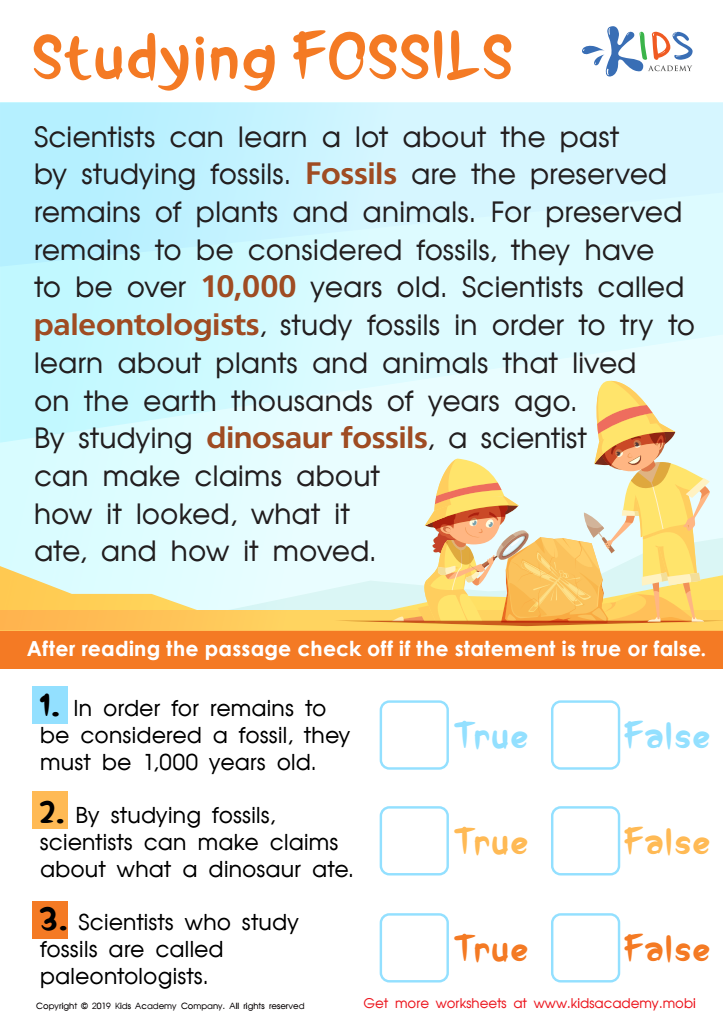
Studying Fossils Worksheet
Fossils captivate children! It's no wonder why; when we learn about them, we are getting a glimpse into history and uncovering old mysteries! With this free download, kids will understand what a paleontologist is and how they use fossils to learn about long-gone plants and animals. They'll discover that old bones are priceless and that exploring ancient history can be exciting!
 Assign to My Students
Studying Fossils Worksheet
Worksheet
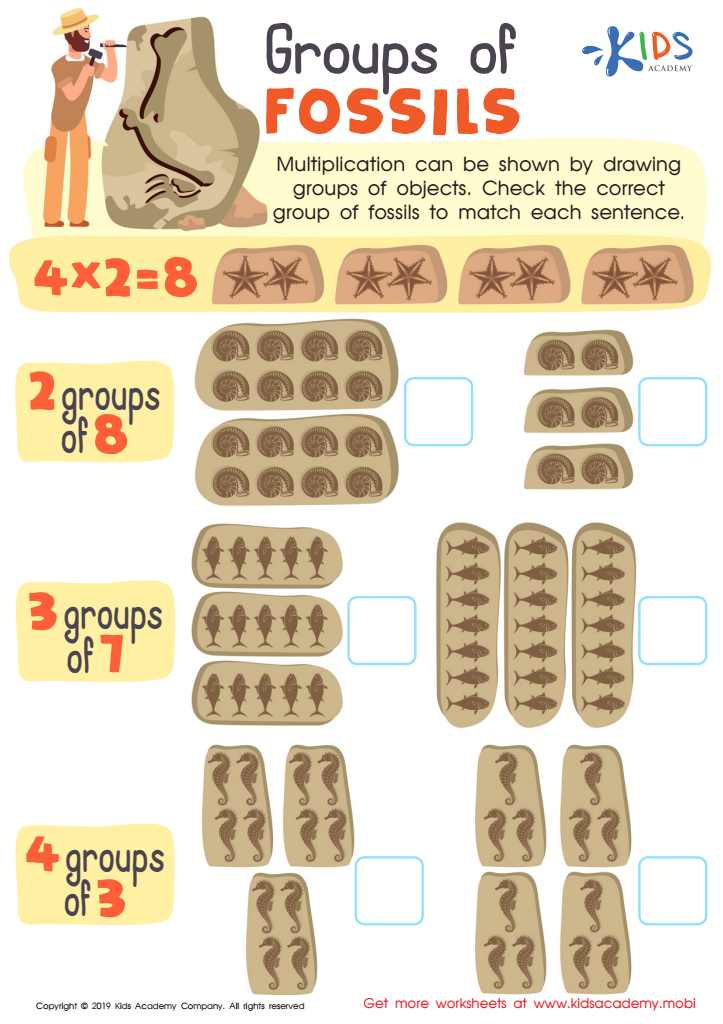
Groups of Fossils Worksheet
Kids need to learn multiplication after mastering addition and subtraction. To make it fun, use worksheets like this one. Have kids draw objects to match each sentence - this helps them understand multiplication better. With this approach, they'll be sure to learn the concepts.
Groups of Fossils Worksheet
Worksheet
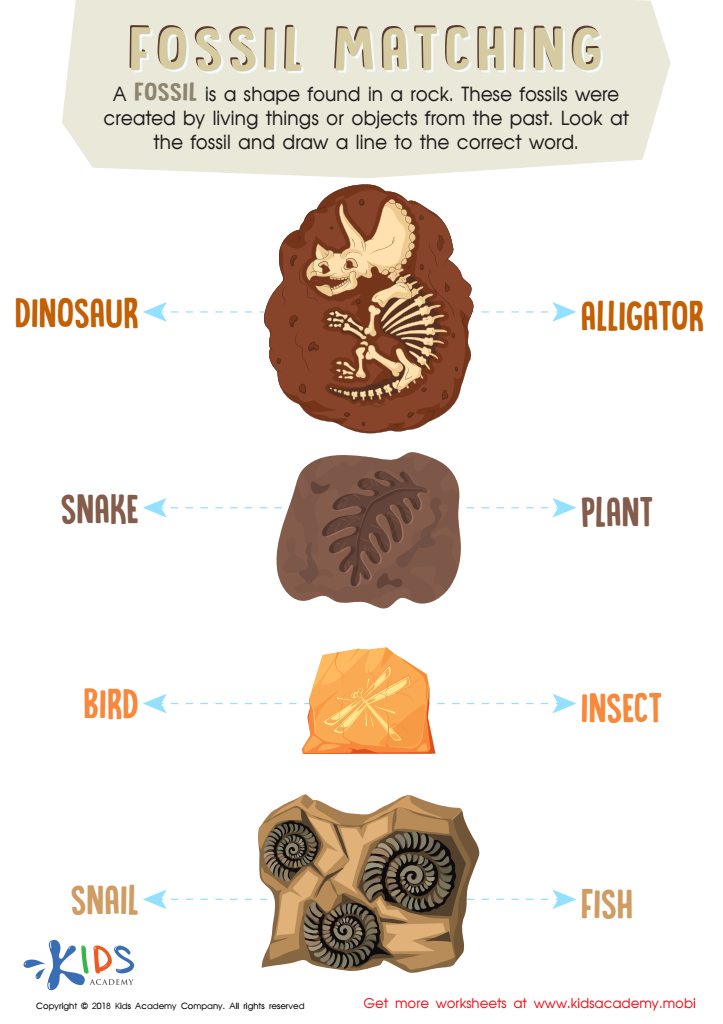
Fossil Matching Worksheet
Kids love learning about fossils! Let them go on a dig of their own with this free worksheet. They'll match pictures of fossils with the correct word choice and get tangible representation. Plus, they'll have imagery to refer to when thinking about fossils!
Fossil Matching Worksheet
Worksheet
Join Kids Academy for Free
Who is primarily going to use this learning content?







Understanding fossils is essential for young children aged 7-9 as it fosters curiosity, critical thinking, and a deeper appreciation for science and natural history. At this developmental stage, kids are naturally inquisitive and eager to learn how the world works. Introducing them to fossils, the preserved remains of ancient organisms, offers a captivating glimpse into Earth's distant past, sparking their imagination and enhancing their learning experience.
For one, studying fossils can help children grasp fundamental scientific concepts, such as the passage of time, evolution, and extinction. Recognizing that creatures like dinosaurs once roamed the Earth millions of years ago can cultivate a sense of wonder and respect for the natural world. Moreover, it can introduce them to the idea of change over time, an important concept in understanding both natural history and current environmental issues.
Additionally, engaging with fossils can improve critical thinking skills. Children learn to make observations, ask questions, and seek evidence to derive conclusions, fostering an inquiry-based learning attitude. This process enhances problem-solving abilities and nurtures a questioning mind.
Lastly, fossil education supports cross-curricular connections. It links science with subjects like geography (understanding different prehistoric environments), math (measuring and dating fossils), and literacy (reading about paleontologists' discoveries). For parents and teachers, this integrated approach ensures a well-rounded education, essential for holistic childhood development.








