Check out this FREE "Understanding fractions" Trial Lesson for age 7-9!

P

Favorites
With answer key
Interactive
  • 7-9
  • Understanding fractions
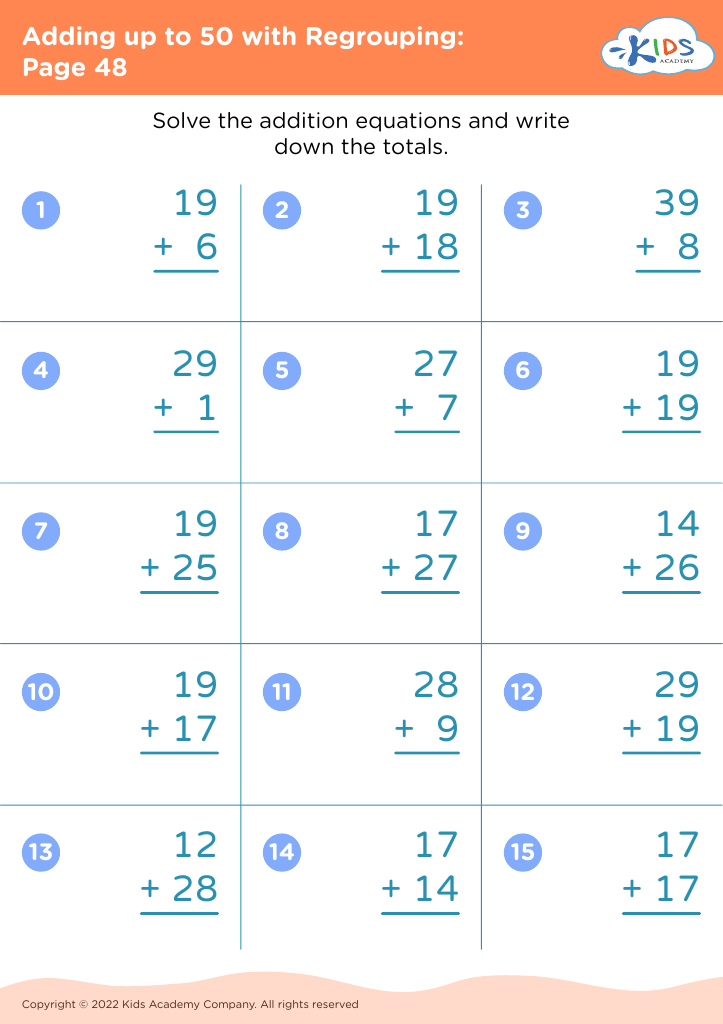
Adding up to 50 with Regrouping: Page 48
Worksheet
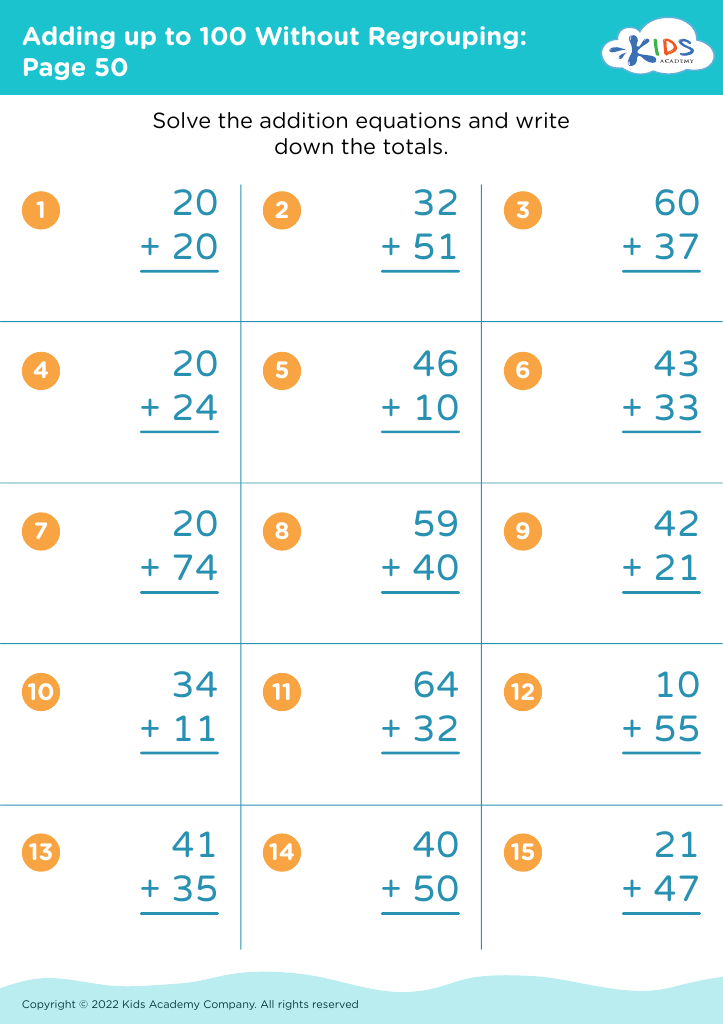
Adding up to 100 Without Regrouping: Page 50
Worksheet
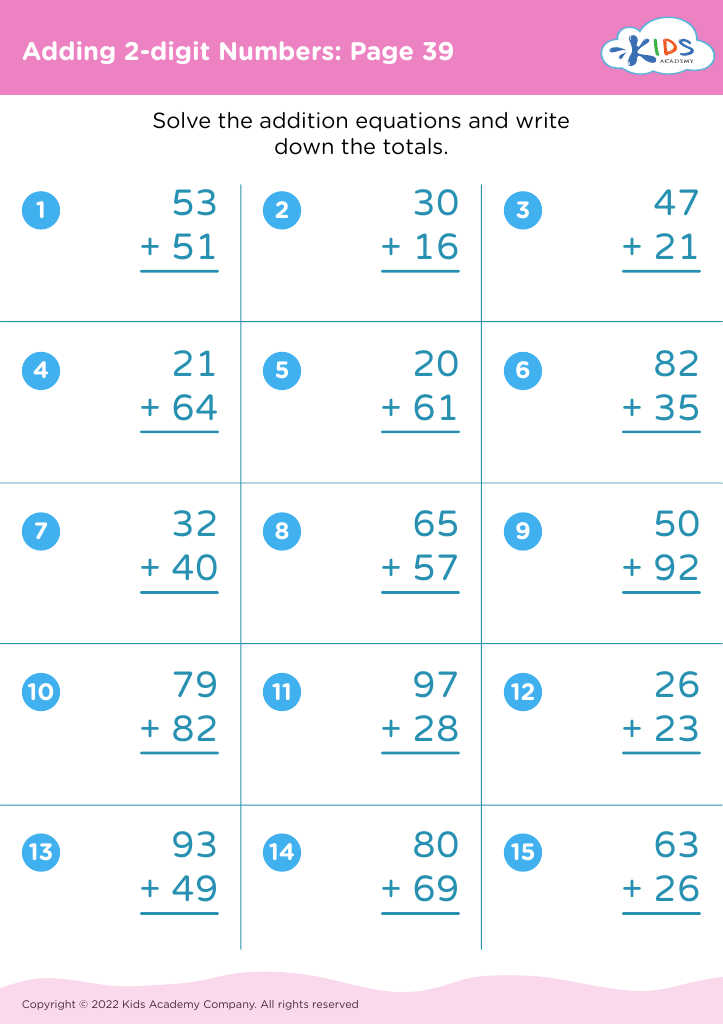
Adding 2-digit Numbers: Page 39

Adding 2-digit Numbers: Page 39

Adding 2-digit Numbers: Page 39
Worksheet
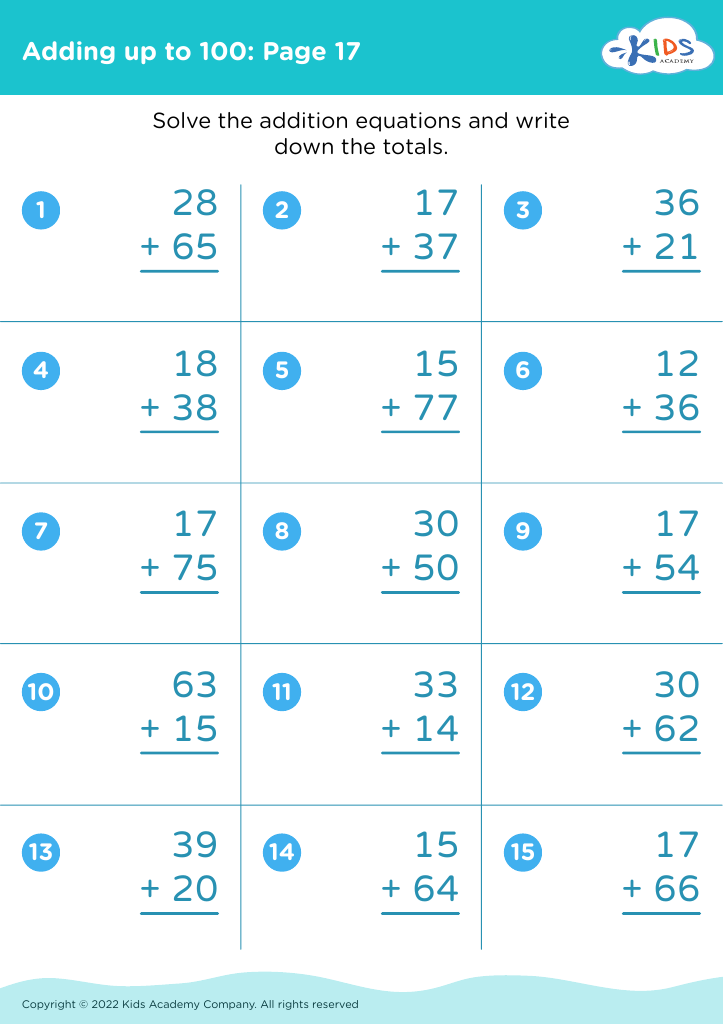
Adding up to 100: Page 17

Adding up to 100: Page 17

Adding up to 100: Page 17
Worksheet
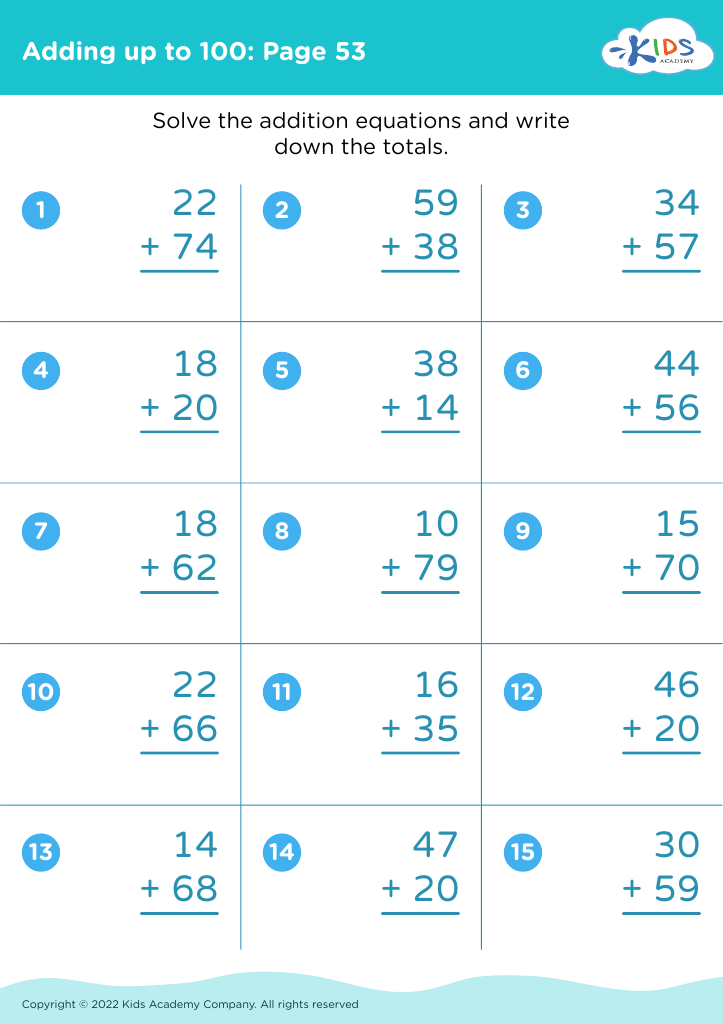
Adding up to 100: Page 53

Adding up to 100: Page 53

Adding up to 100: Page 53
Worksheet
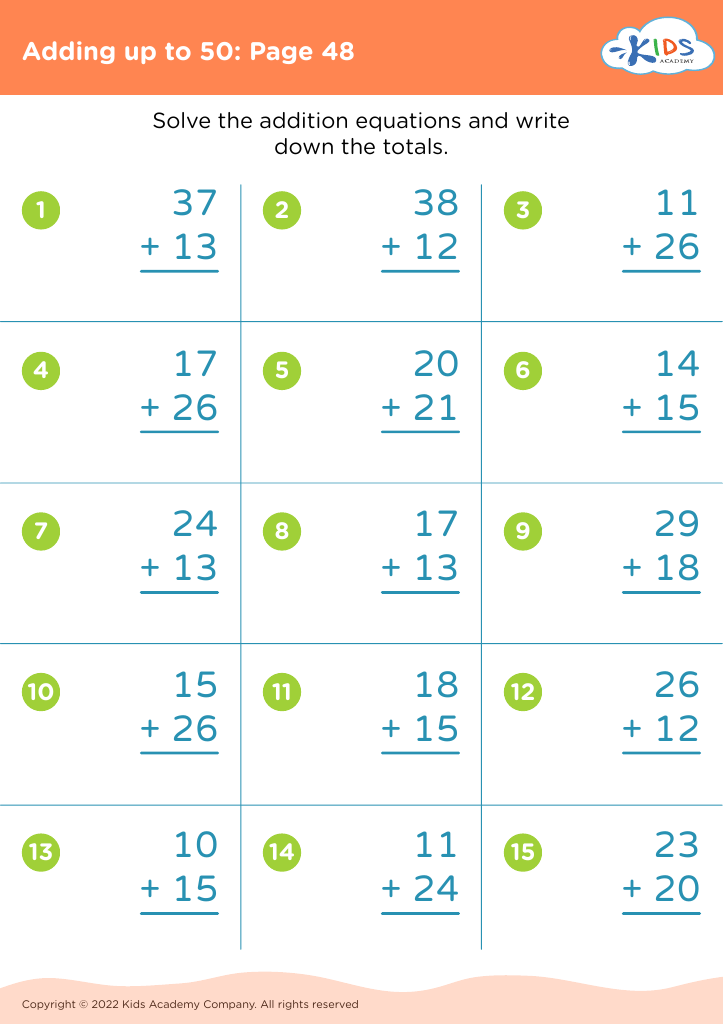
Adding up to 50: Page 48

Adding up to 50: Page 48

Adding up to 50: Page 48
Worksheet
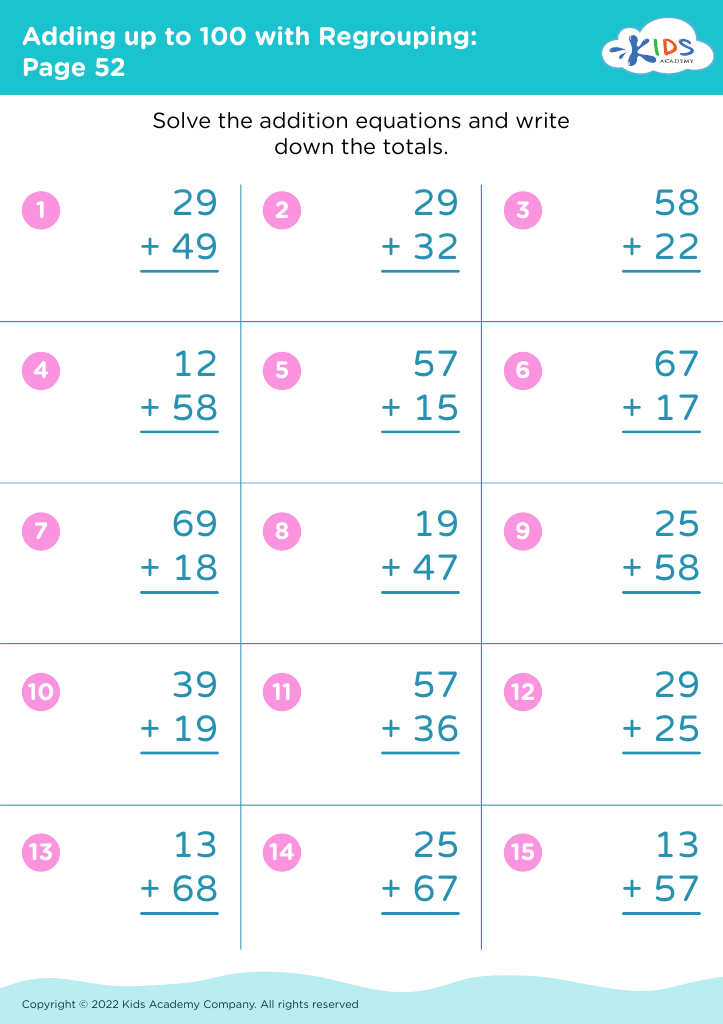
Adding up to 100 with Regrouping: Page 52
Worksheet
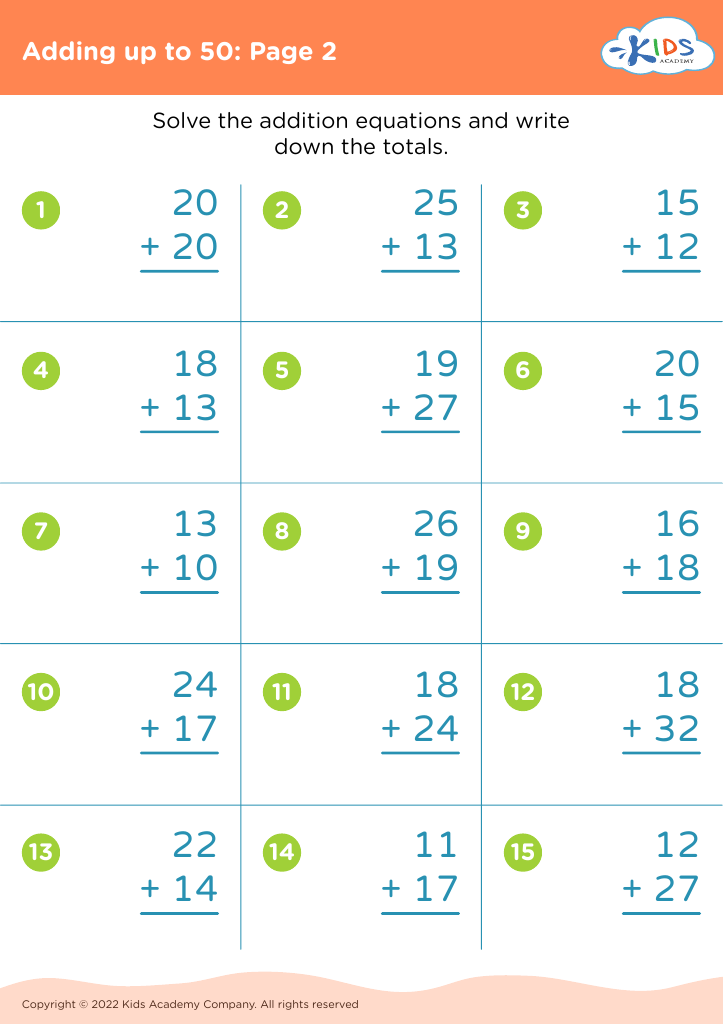
Adding up to 50: Page 2

Adding up to 50: Page 2

Adding up to 50: Page 2
Worksheet
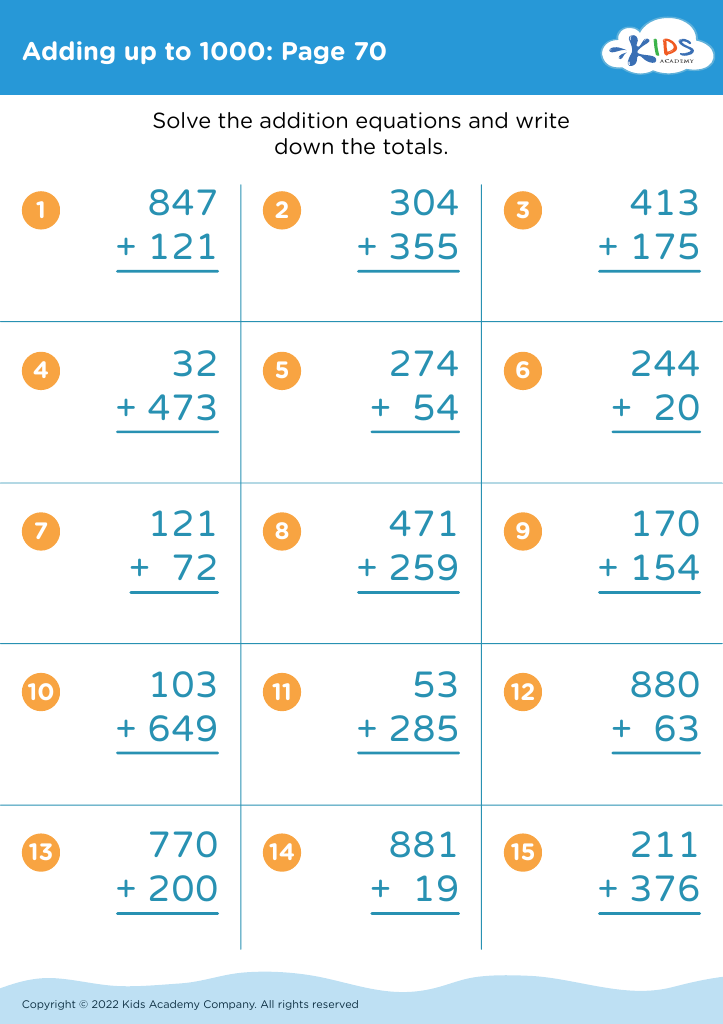
Adding up to 1000: Page 70

Adding up to 1000: Page 70

Adding up to 1000: Page 70
Worksheet
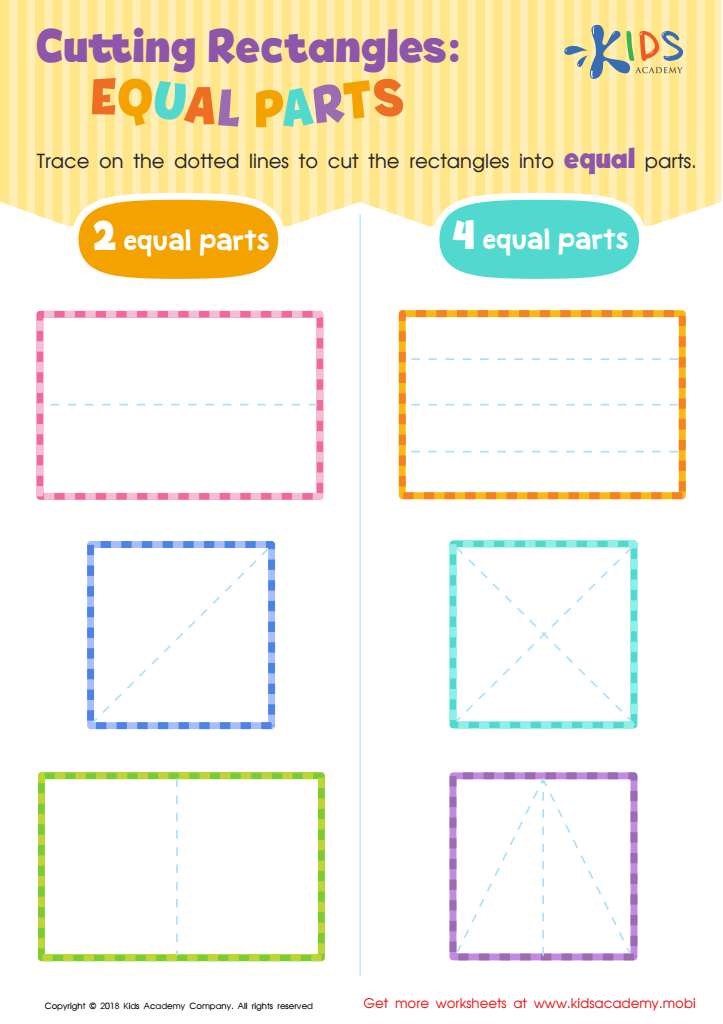
Cutting Rectangles: Equal Parts Worksheet

Cutting Rectangles: Equal Parts Worksheet

Help your child learn to divide shapes into two or four equal parts with this worksheet. It has six rectangles that need to be cut up as directed, following the dotted lines. Show it to your child and watch them gain confidence in mastering this skill.
Cutting Rectangles: Equal Parts Worksheet
Worksheet
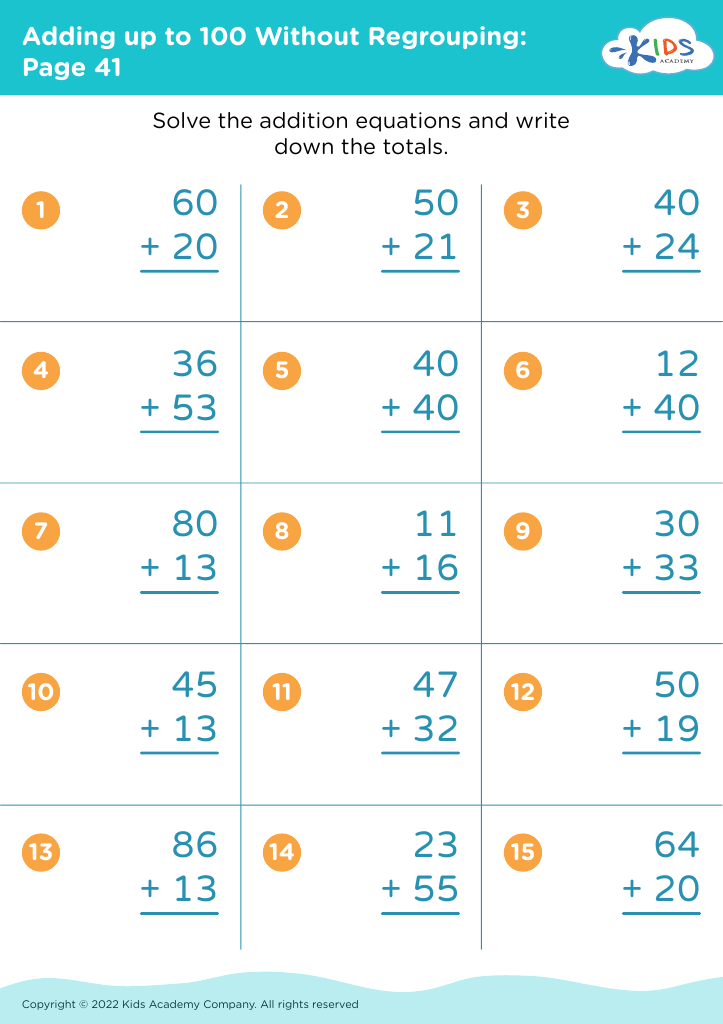
Adding up to 100 Without Regrouping: Page 41
Worksheet
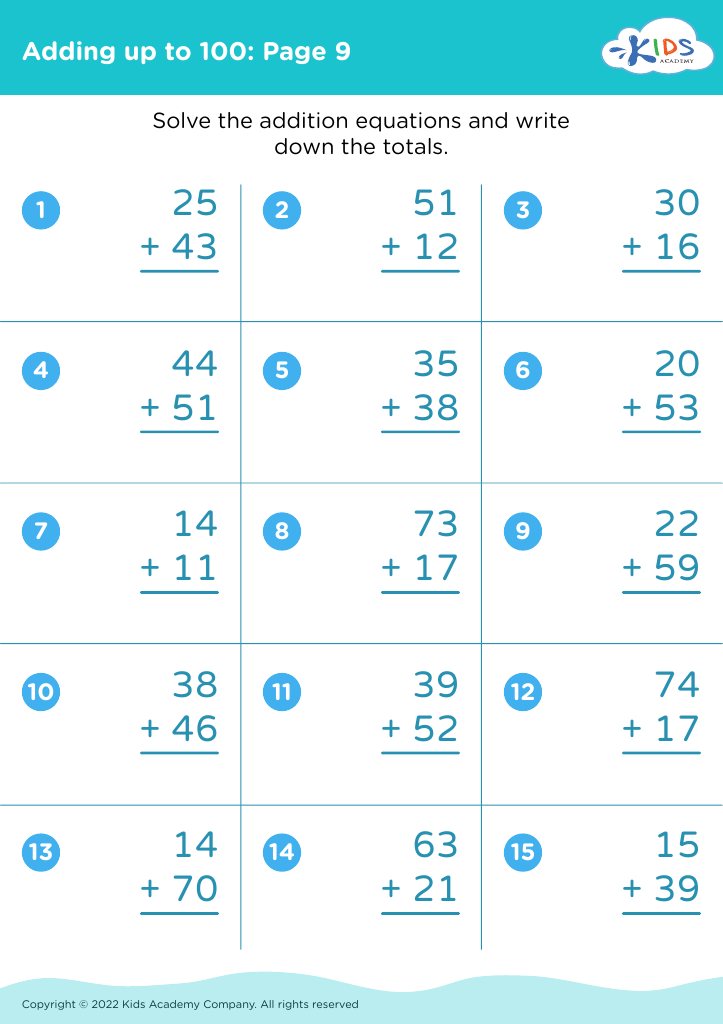
Adding up to 100: Page 9

Adding up to 100: Page 9

Adding up to 100: Page 9
Worksheet
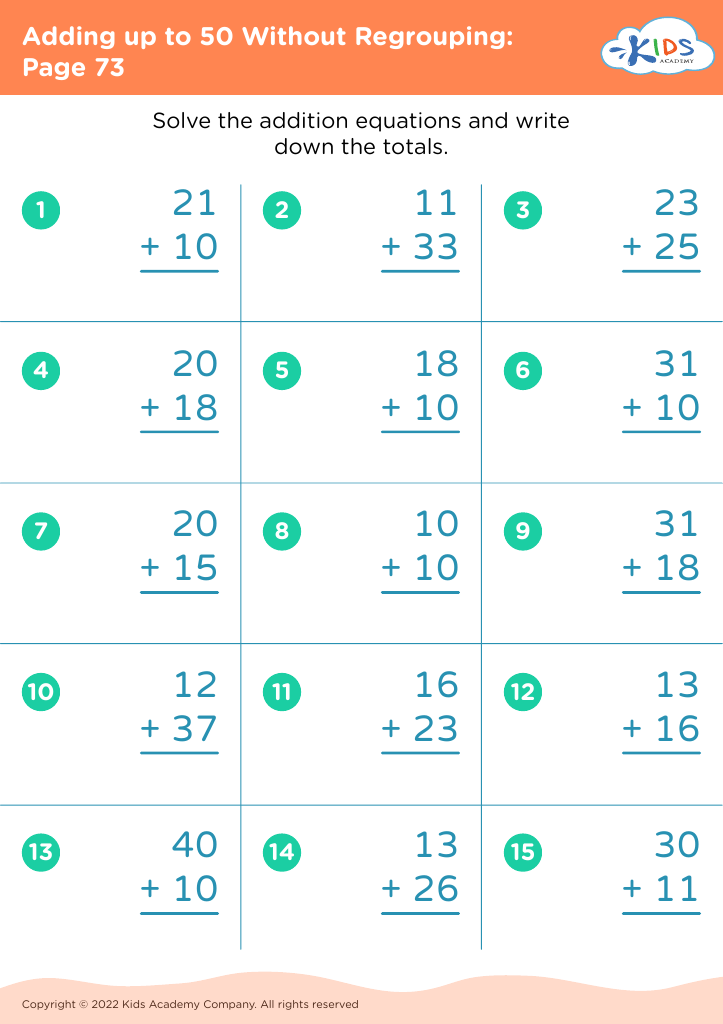
Adding up to 50 Without Regrouping: Page 73
Worksheet
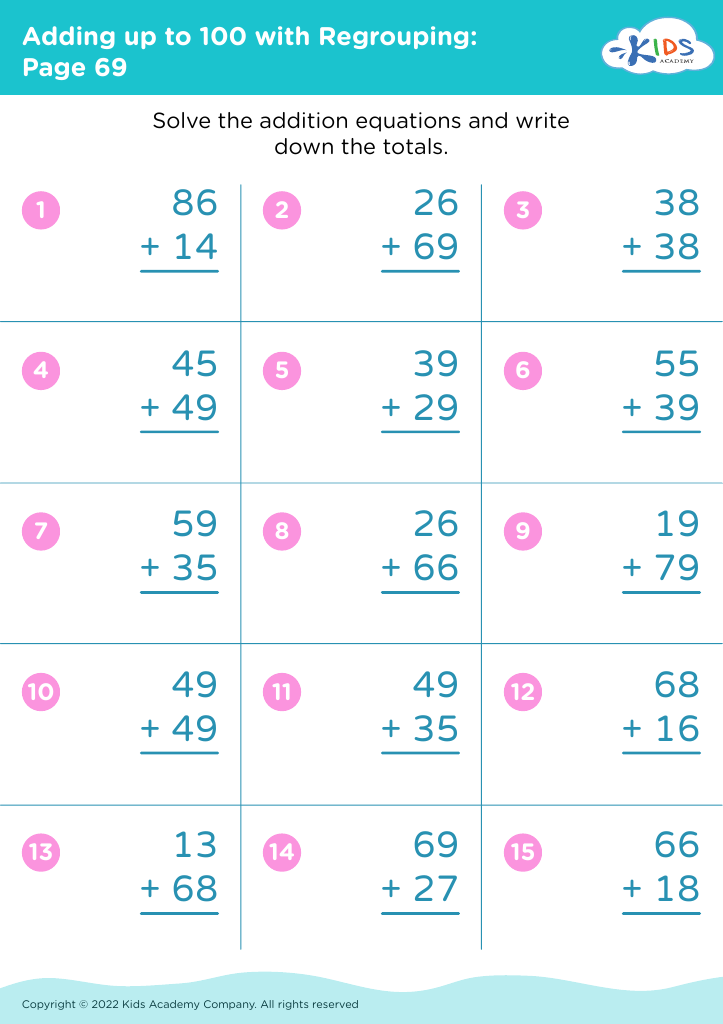
Adding up to 100 with Regrouping: Page 69
Worksheet
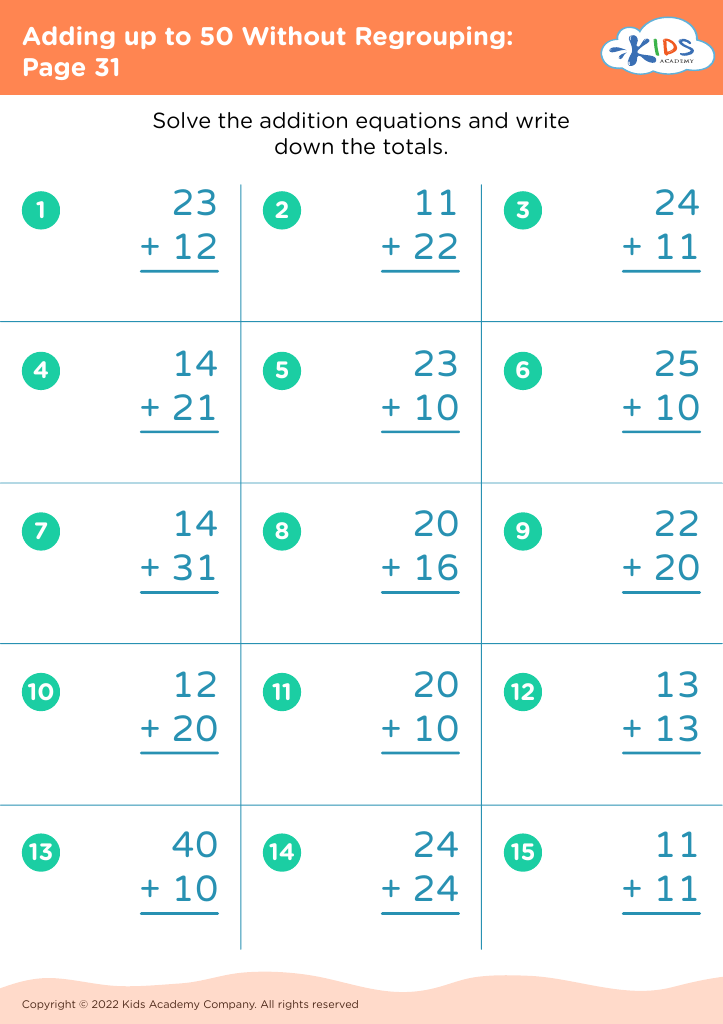
Adding up to 50 Without Regrouping: Page 31
Worksheet
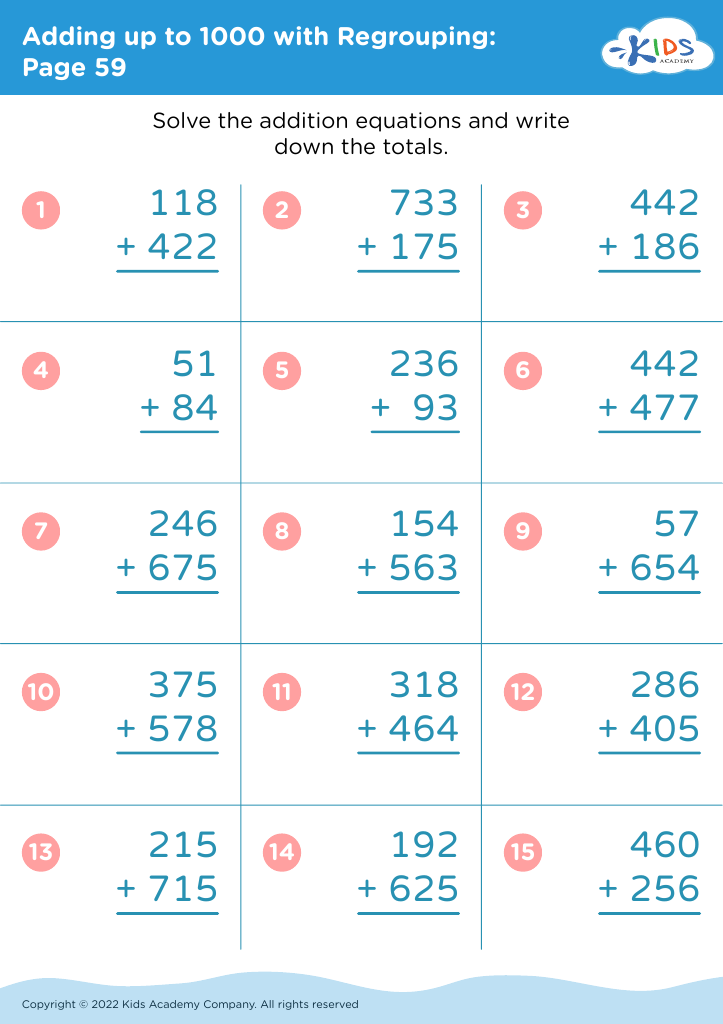
Adding up to 1000 with Regrouping: Page 59
Worksheet
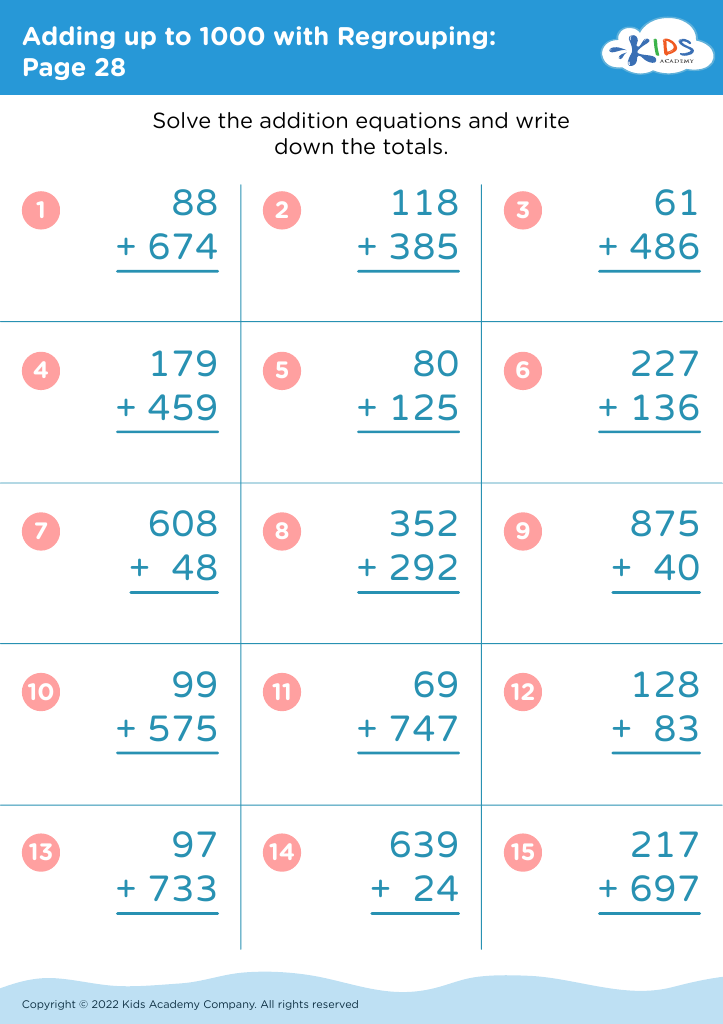
Adding up to 1000 with Regrouping: Page 28
Worksheet
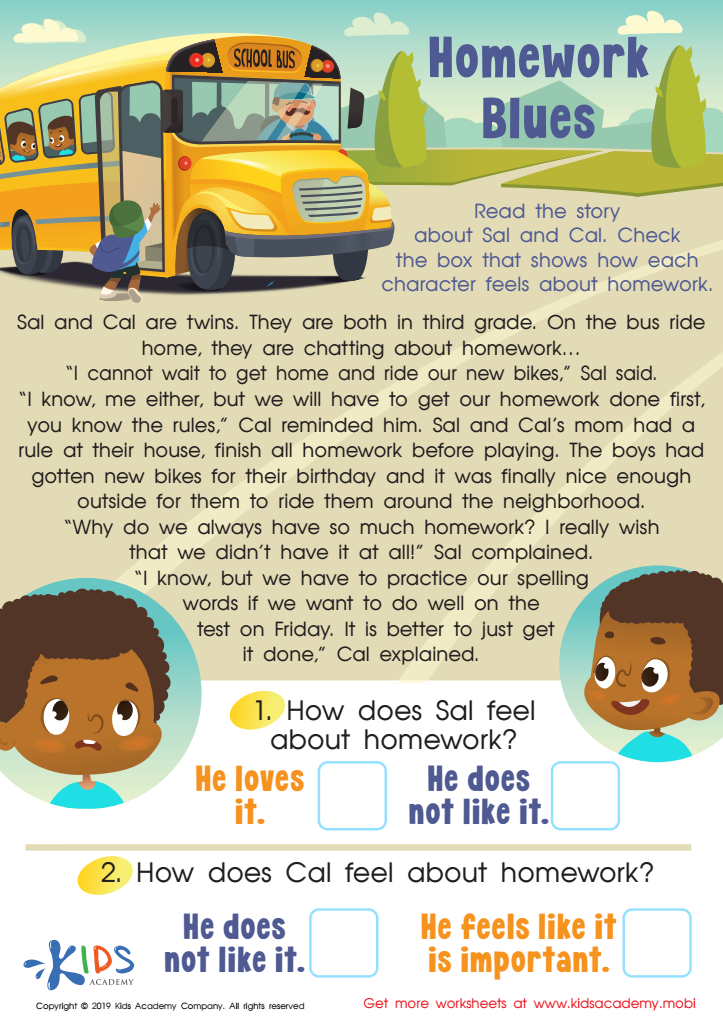
Homework Blues Worksheet


Homework Blues Worksheet

Cal and Sal don't love doing homework, just like your kids. Use this worksheet to help your children understand why homework is important. Read the passage together and then answer the questions at the bottom of the page. It's a fun way to learn together!
Homework Blues Worksheet

Worksheet
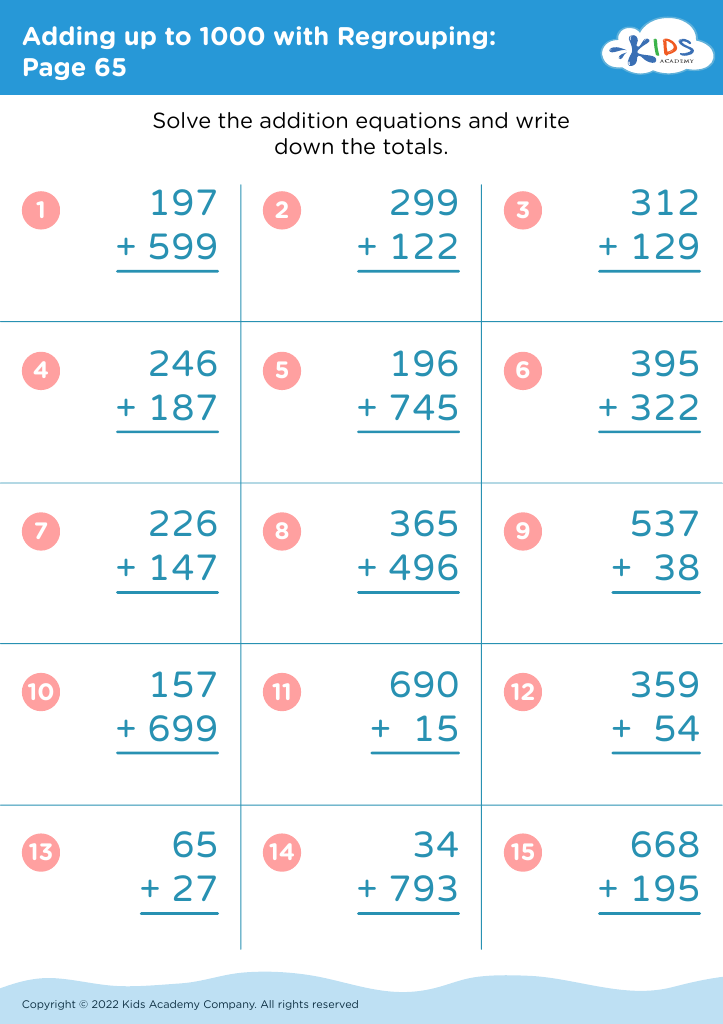
Adding up to 1000 with Regrouping: Page 65
Worksheet
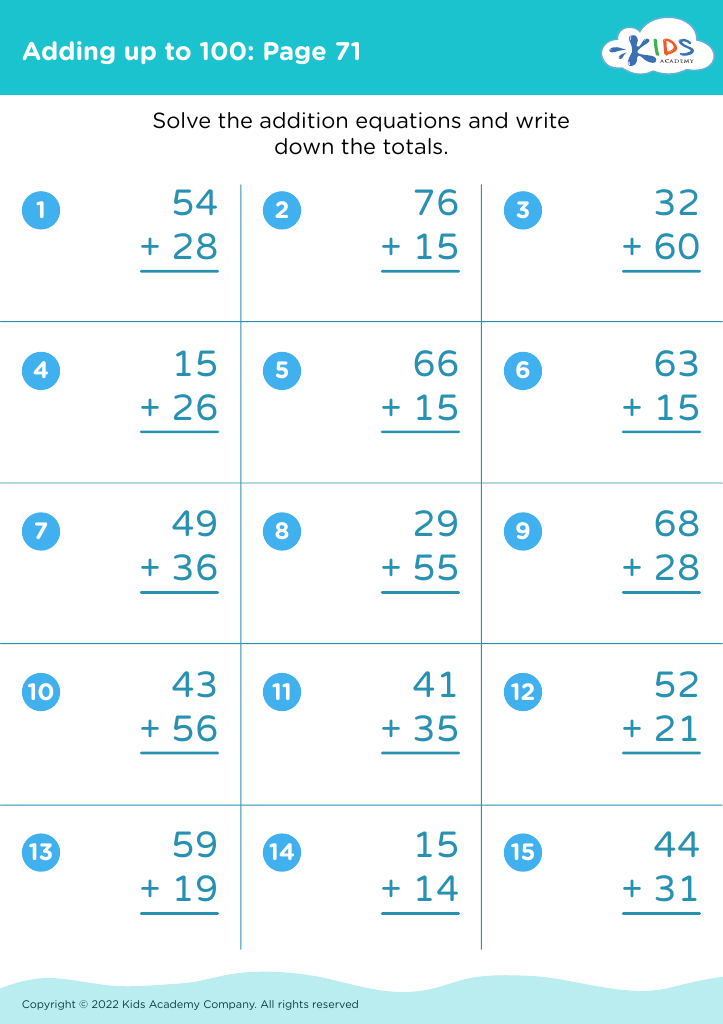
Adding up to 100: Page 71

Adding up to 100: Page 71

Adding up to 100: Page 71
Worksheet
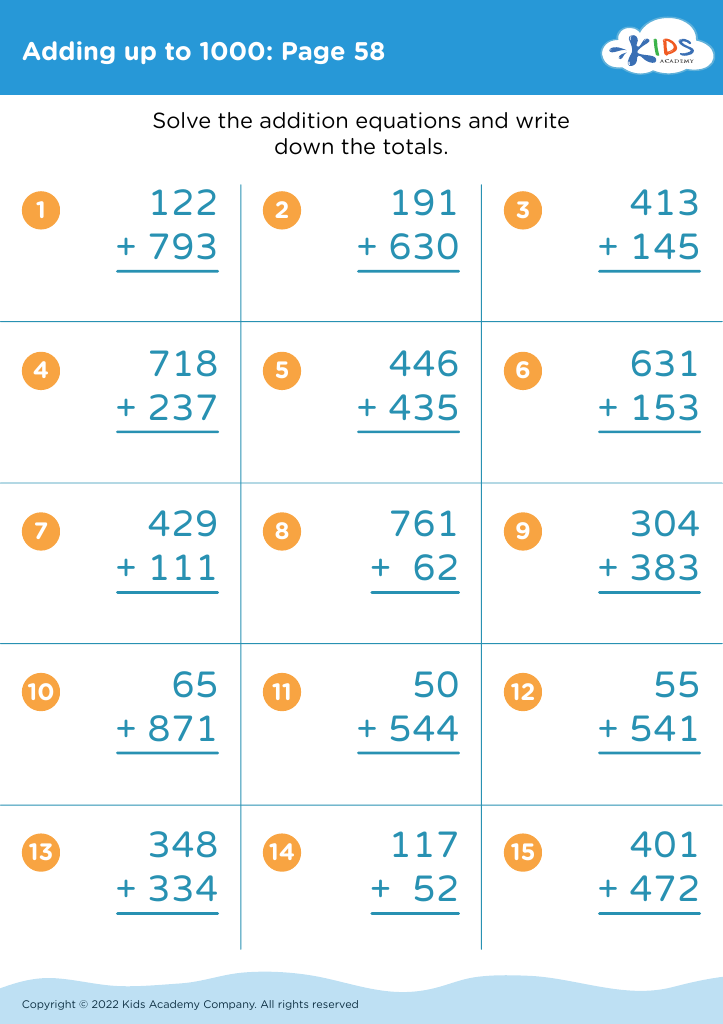
Adding up to 1000: Page 58

Adding up to 1000: Page 58

Adding up to 1000: Page 58
Worksheet
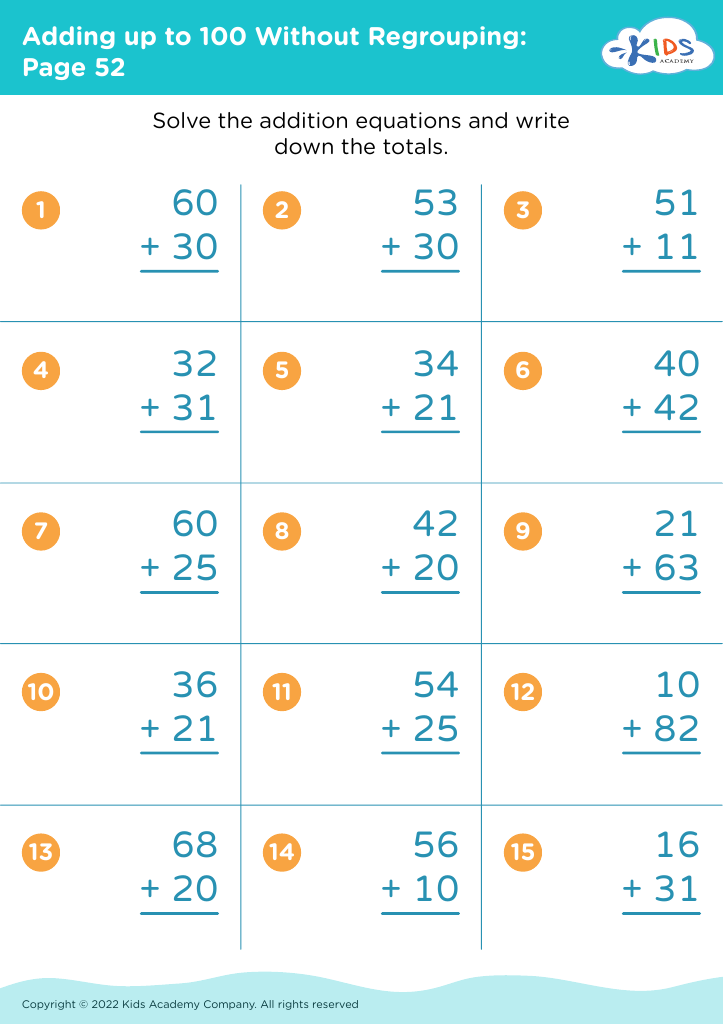
Adding up to 100 Without Regrouping: Page 52
Worksheet
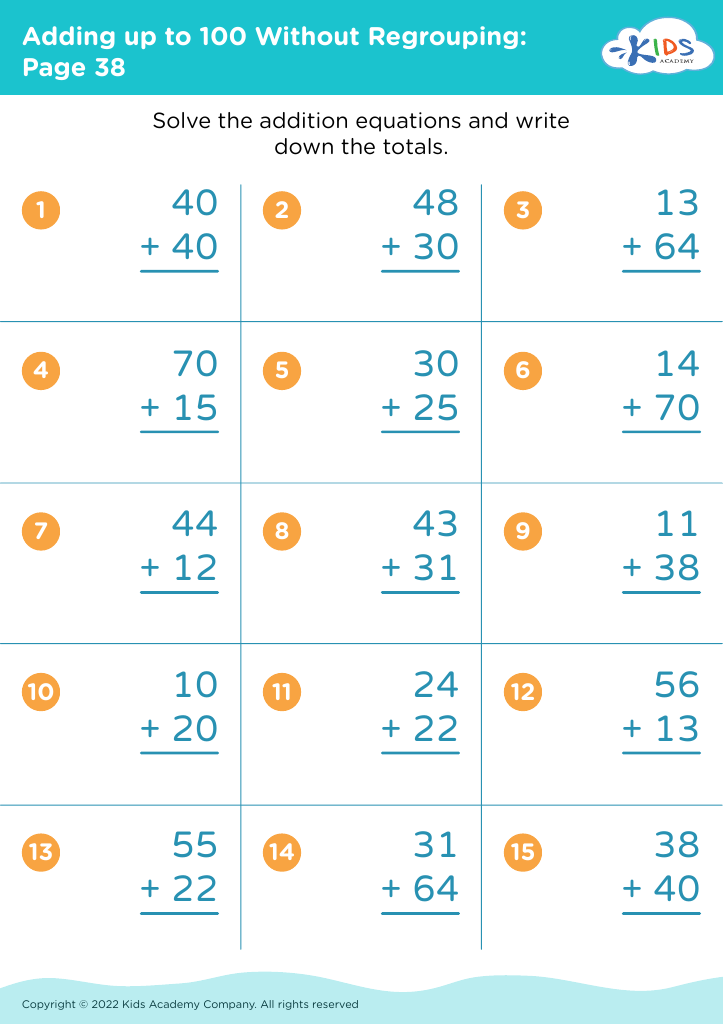
Adding up to 100 Without Regrouping: Page 38
Worksheet
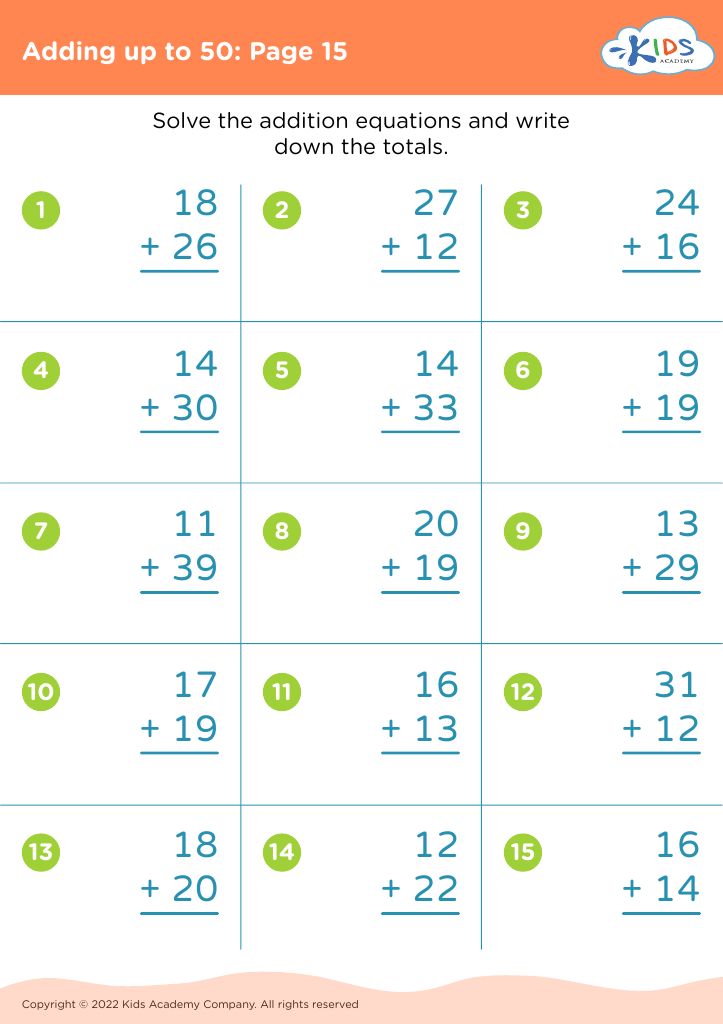
Adding up to 50: Page 15

Adding up to 50: Page 15

Adding up to 50: Page 15
Worksheet


Understanding fractions is fundamental for children aged 7-9 as it lays the groundwork for higher mathematical concepts and everyday life skills. For one, fractions are a crucial part of the curriculum and a gateway to understanding more complex arithmetic, such as division, percentages, and algebra. A solid grasp of fractions allows students to tackle advanced math courses with greater ease and confidence.

For parents and teachers, fostering an understanding of fractions in early grades can significantly impact a child's academic growth. Critical thinking and problem-solving skills are enhanced as children learn to compare, simplify, and operate with fractions. These skills are transferable to other subject areas such as science, cooking, and financial literacy, enriching a child's overall education.

Additionally, an appreciation for fractions can improve a child’s cognitive development. Fractions help sharpen spatial awareness and the ability to see parts of a whole, skills that are beneficial in daily activities such as following a recipe or understanding time.

Furthermore, early difficulties in grasping fractions can lead to long-term math anxiety and avoidance. By ensuring that children understand fractions well, parents and teachers can cultivate a more positive attitude towards math, building confidence and resilience in facing academic challenges.

In essence, a strong foundation in fractions for children aged 7-9 underpins future success in both academics and practical applications, making it an essential focus for educators and parents alike.