Understanding light sources Worksheets for Ages 7-9
6 filtered results
-
From - To
Explore our engaging "Understanding Light Sources Worksheets for Ages 7-9" designed to make learning about light both fun and educational. Ideal for young learners, these printable worksheets help children differentiate between natural and artificial light sources while fostering critical thinking and observational skills. Each activity is crafted to align with educational standards, ensuring your child not only enjoys the process but also retains vital science concepts. Perfect for classroom use or homeschooling, these worksheets are a valuable resource for sparking curiosity and enhancing understanding of the world around us. Dive into the wonders of light with your child today!
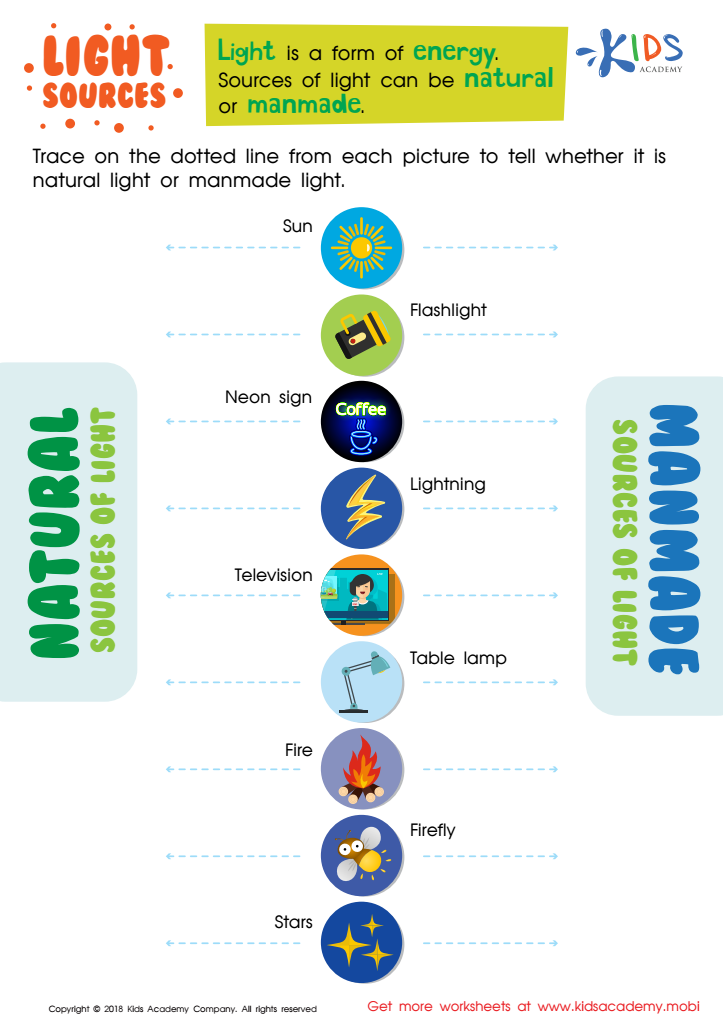
Natural and Manmade Light Sources Worksheet
 Assign to My Students
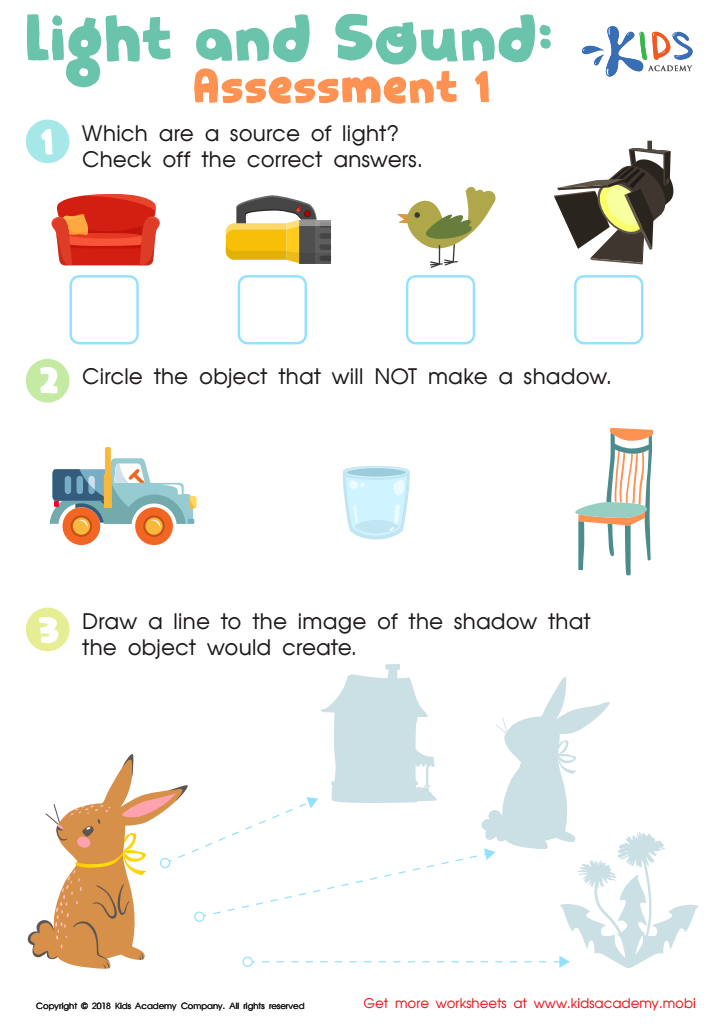
Light and Sound: Assessment 1 Worksheet
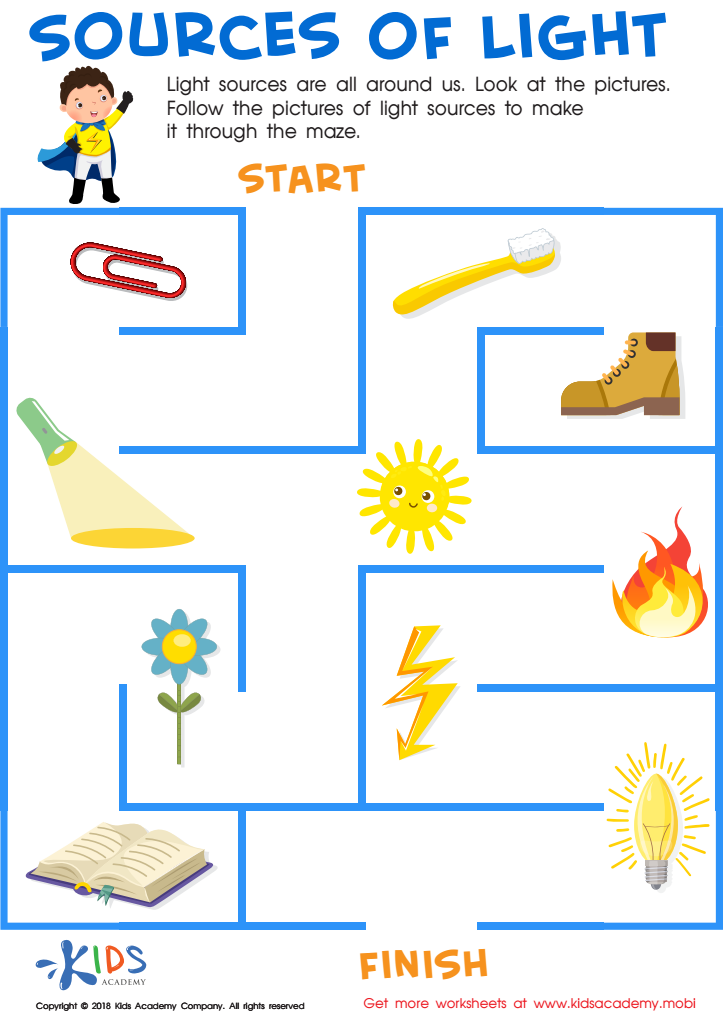
Sources of Light Worksheet
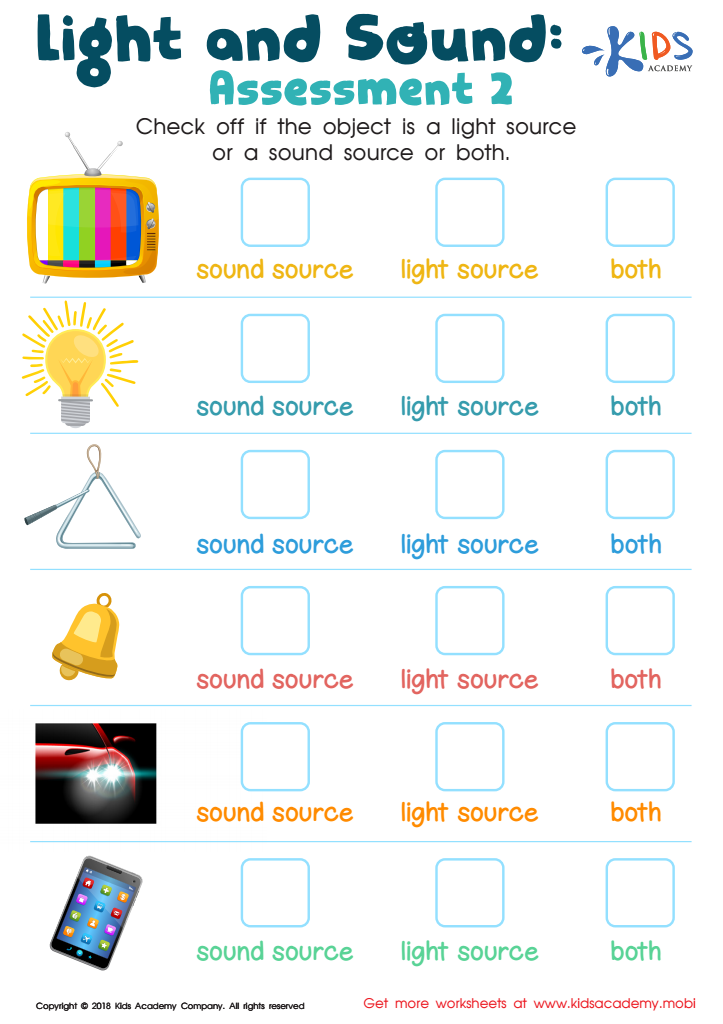
Light and Sound: Assessment 2 Worksheet
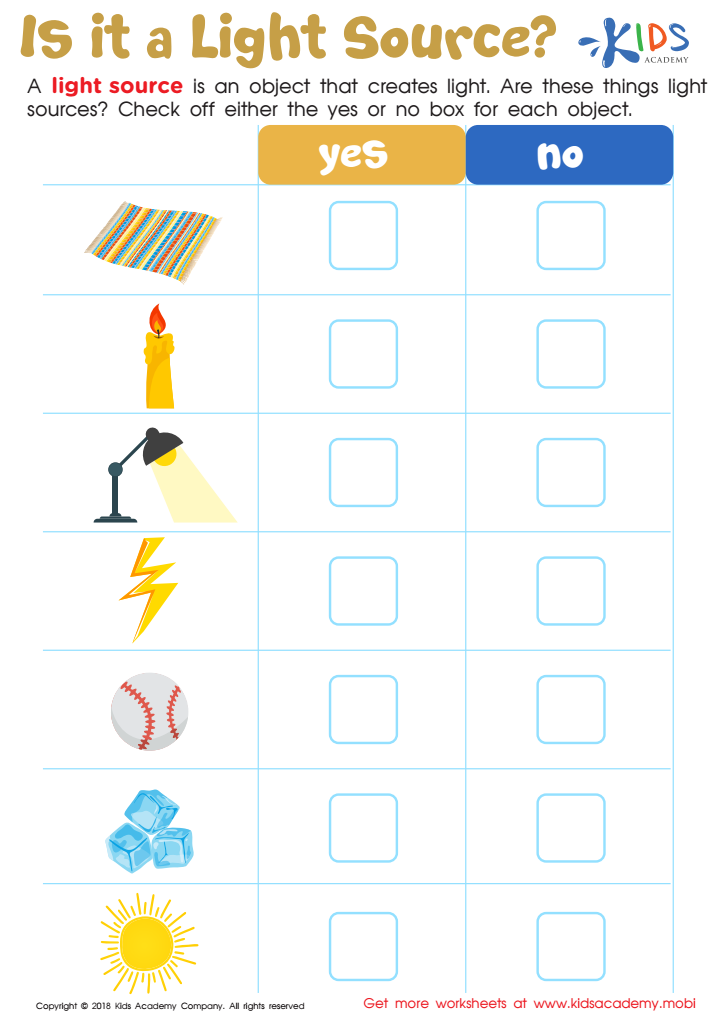
Is It a Light Source? Worksheet
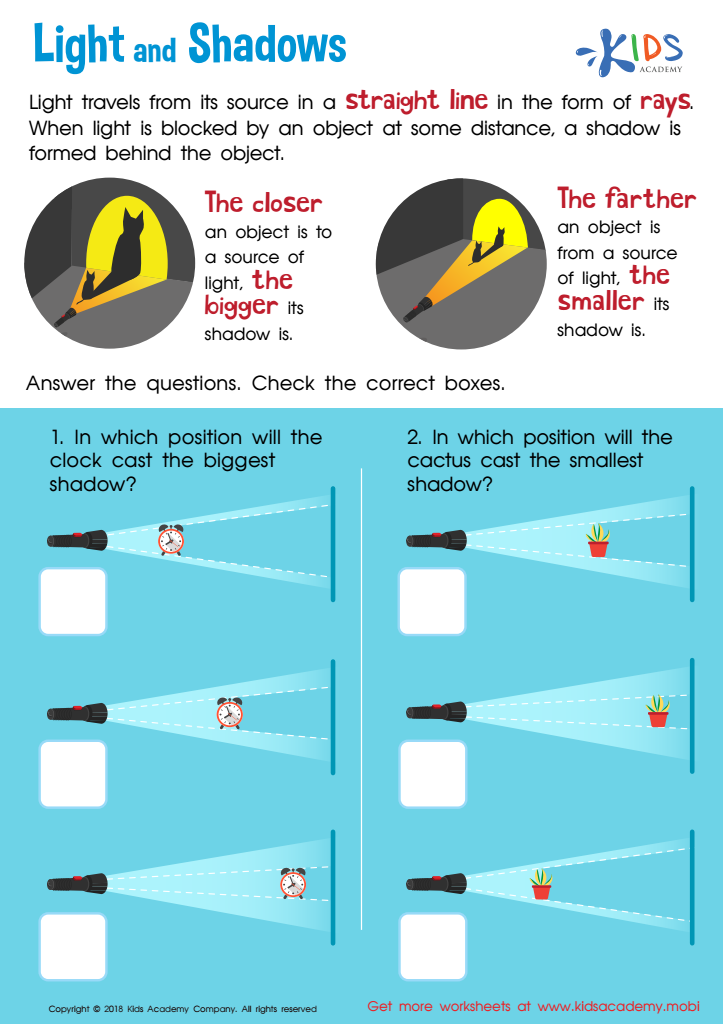
Light and Shadow Worksheet for Grade 3







Understanding light sources is essential for children ages 7-9 because it forms a foundation for scientific curiosity and knowledge. At this age, kids begin to comprehend basic scientific principles, and learning about light helps them make sense of the world around them. Knowledge about natural and artificial light sources—like the sun, bulbs, and screens—can spur an interest in broader topics such as energy, technology, and environmental science.
Moreover, understanding light can have practical benefits. For instance, kids learn how to use light in their everyday lives, such as realizing the importance of sunlight for plants (a basis for understanding ecosystems) or recognizing how streetlights improve safety at night. Additionally, such knowledge fosters critical thinking by encouraging kids to ask questions and find answers through observation and experiments.
From a pedagogical viewpoint, this aligns with inquiry-based learning methods, promoting engagement and retention of information. For parents and teachers, incorporating light-based topics in lessons helps inculcate important life skills like curiosity, problem-solving, and ecological awareness. By investing in this area, we support children in developing a deeper understanding of the natural environment and technological applications, ensuring they grow up to be informed and responsible individuals.








