Understanding patterns Worksheets for Ages 7-9 - Page 3
52 filtered results
-
From - To
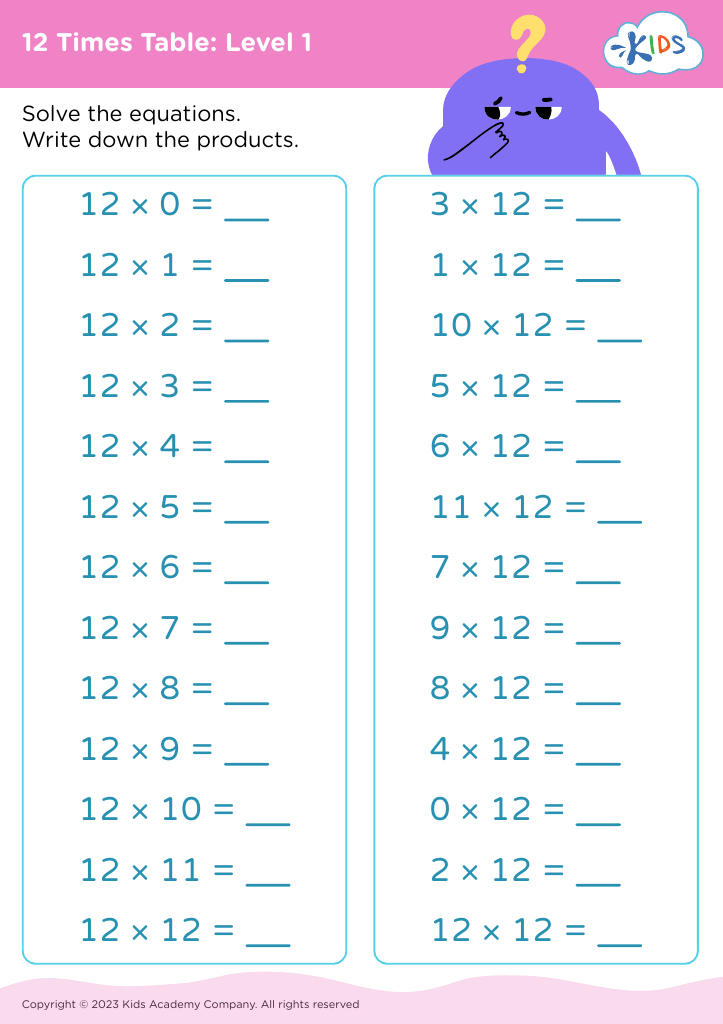
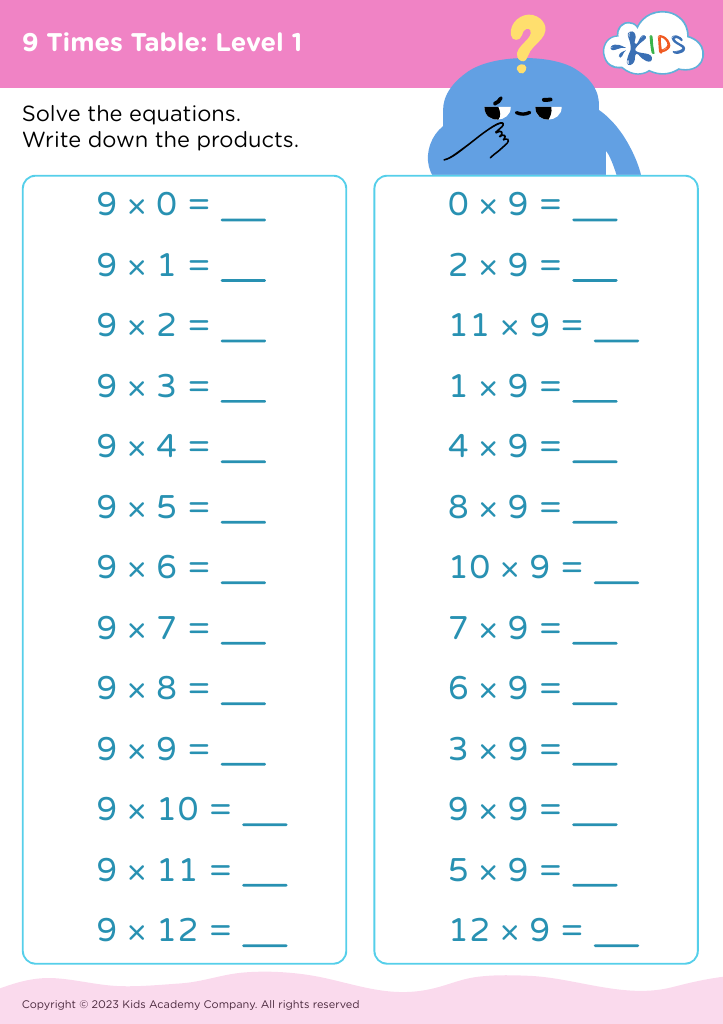





Understanding patterns is essential for children aged 7-9, as it underpins many foundational concepts in mathematics and other disciplines. At this age, children are developing critical thinking skills and recognizing patterns helps them make connections between different ideas. For instance, mastering patterns enhances their ability to grasp more complex mathematical concepts such as addition, subtraction, multiplication, and division, and will eventually support their understanding of algebraic thinking.
In addition to mathematics, pattern recognition plays a critical role in subjects like science, where students observe trends in data and develop hypotheses. Encouraging children to identify and explore patterns in their surroundings nurtures their observational skills, creativity, and problem-solving abilities. This understanding fosters a growth mindset, as children learn persistence through trial and error while working with patterns.
Moreover, recognizing patterns in daily life—such as routines—can improve a child's organizational skills and time management. For teachers and parents, introducing engaging and interactive activities focused on patterns will stimulate children's enthusiasm for learning. Ultimately, fostering this understanding aids in developing confident learners who are equipped to tackle more complex challenges as they progress in their education.








