Understanding perspectives Worksheets for Ages 7-9
3 filtered results
-
From - To
Discover our "Understanding Perspectives Worksheets for Ages 7-9" designed to enhance your child's social and cognitive skills. These engaging worksheets help young learners grasp the concept of different viewpoints, aiding in the development of empathy and critical thinking. By exploring various scenarios and characters, children will learn to see situations from multiple angles, promoting open-mindedness and conflict resolution skills. Tailored for kids aged 7-9, our worksheets are perfect for classroom use or at-home practice. Equip your child with the tools to understand and appreciate diverse perspectives, preparing them for social success and collaborative learning. Start today with Kids Academy!
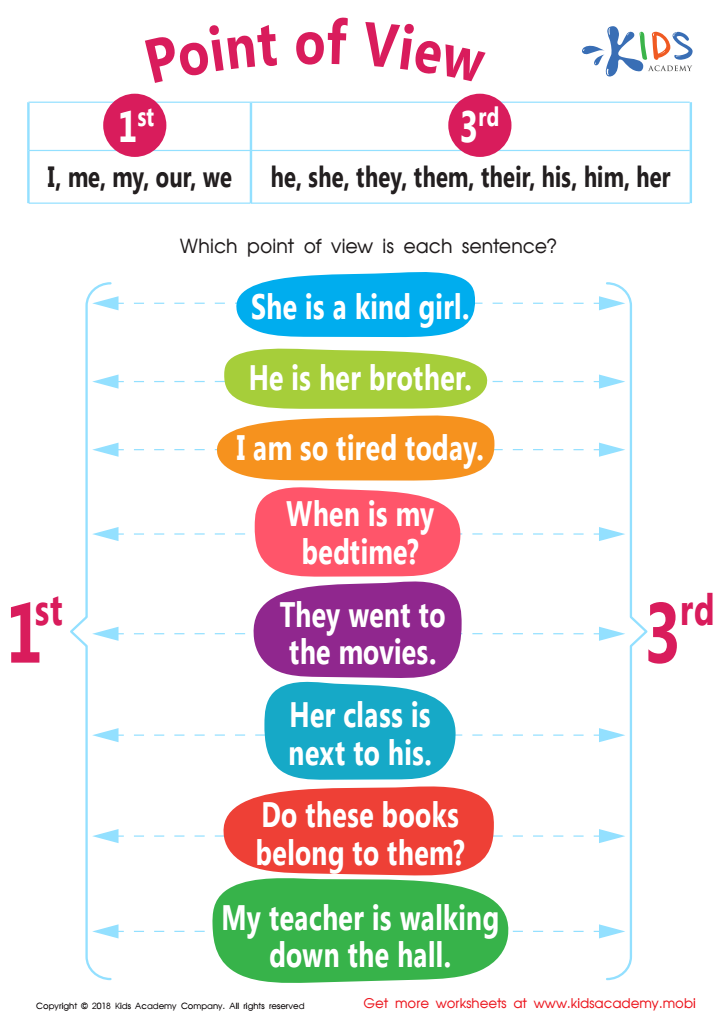
Point of View Worksheet
 Assign to My Students
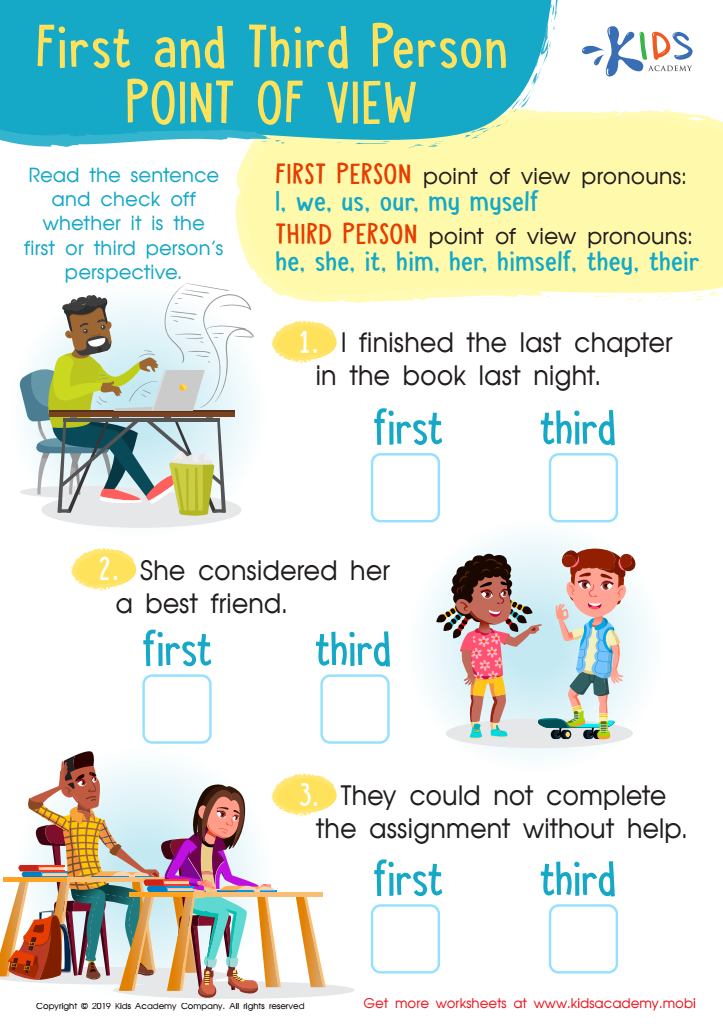
First and Third Person Point of View Worksheet
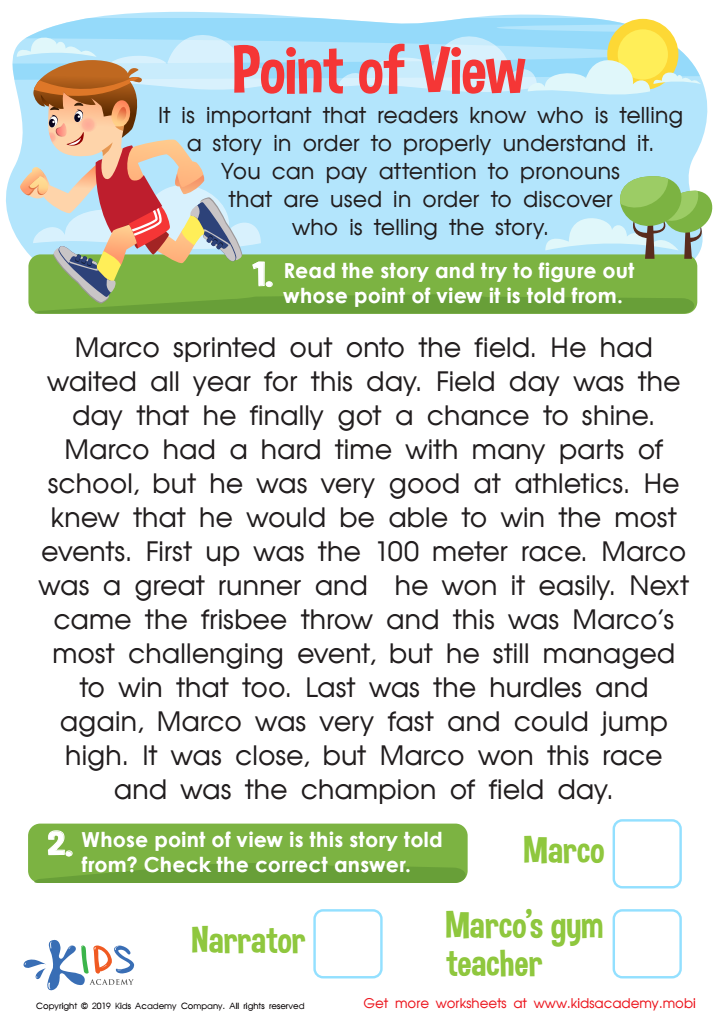
Point of View Worksheet








Understanding perspectives is crucial for children aged 7-9 for several developmental and academic reasons. At this stage, kids are not only developing cognitive skills but also social and emotional intelligence. When children grasp the concept of different perspectives, they become better equipped to empathize with others, fostering more compassionate relationships. Empathy helps reduce bullying and encourages inclusivity, creating a more harmonious classroom environment.
From an academic standpoint, understanding various viewpoints enhances critical thinking skills. When children recognize that there are multiple ways to solve a problem or understand a story, they become more flexible and creative thinkers. This skill is essential for subjects like reading comprehension, where understanding a character’s motivations and viewpoints deepens the overall learning experience.
Moreover, teaching perspective-taking can empower children to resolve conflicts independently. When they understand another person’s feelings or thoughts, they're more likely to find fair solutions, reducing the need for adult intervention in minor disputes.
Lastly, understanding perspectives prepares children for the increasingly globalized world. It nurtures their ability to accept and appreciate cultural and individual differences, setting the foundation for becoming respectful and open-minded adults.
Prioritizing this skill helps in raising well-rounded individuals who are not only academically proficient but also socially aware and emotionally intelligent.








