Understanding plurals Worksheets for Ages 7-9
4 filtered results
-
From - To
Discover engaging and educational "Understanding Plurals Worksheets" designed specifically for children aged 7-9. These interactive worksheets help young learners grasp the concept of plurals through fun exercises and examples. Kids will explore different plural forms, including regular and irregular nouns, while enhancing their vocabulary and grammatical skills. Perfect for classroom use or home learning, these resources promote reading comprehension and writing proficiency. Each worksheet is crafted to encourage critical thinking and creativity, making learning about plurals enjoyable and effective. Help your child develop a strong foundation in English grammar while they play and learn with our thoughtfully designed worksheets!
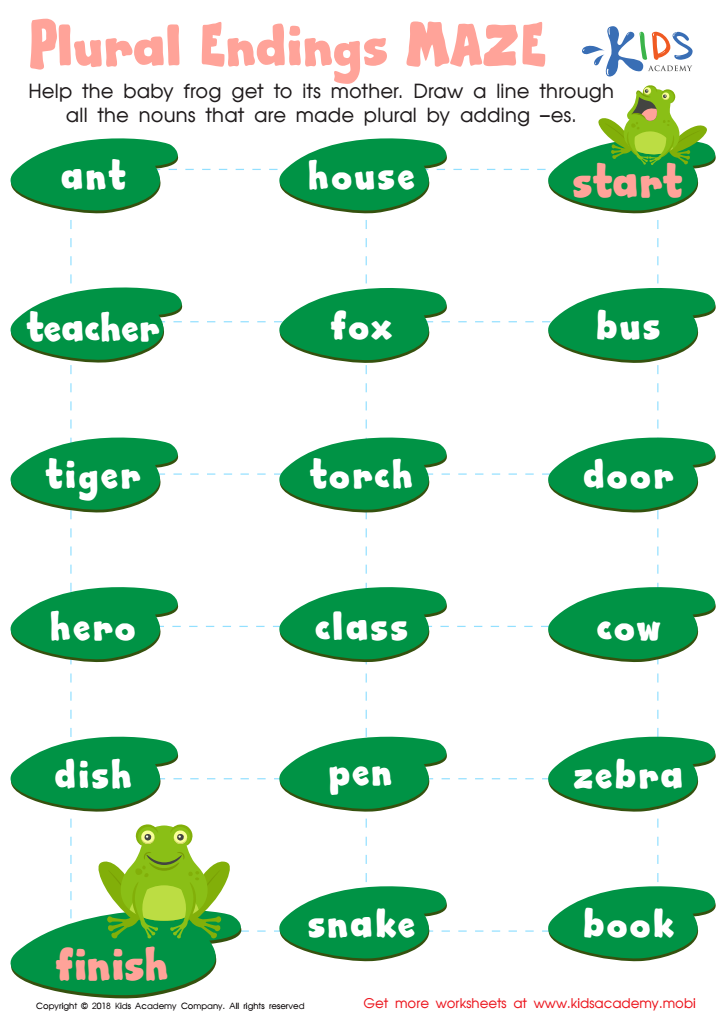
Plural Endings Maze Worksheet
 Assign to My Students
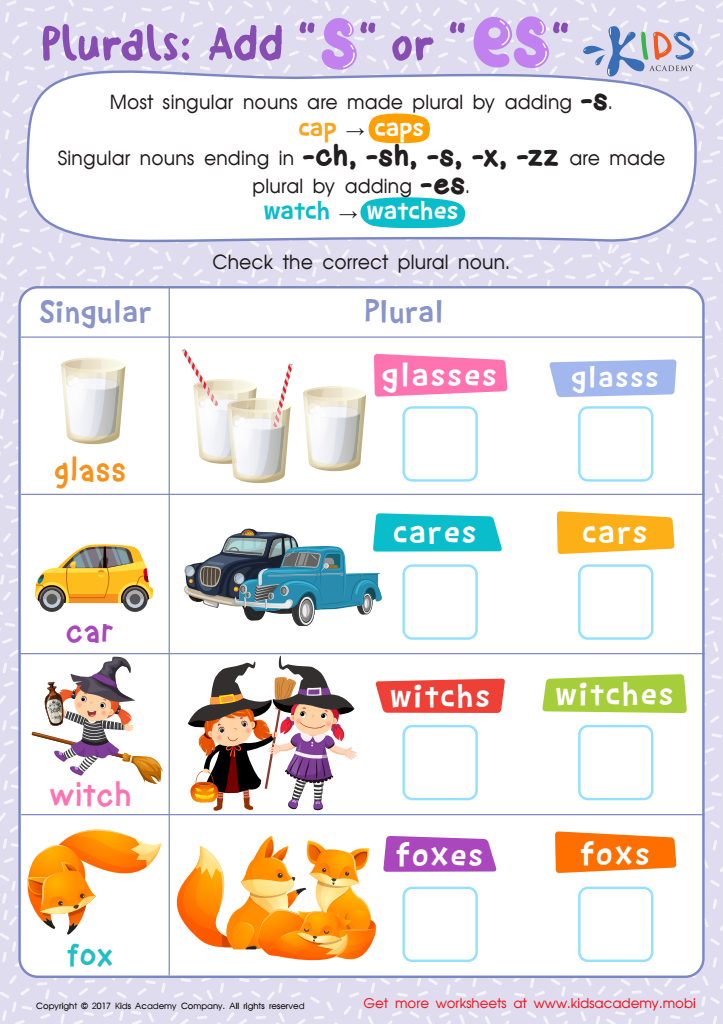
Plurals: "–es" or "–es"? Worksheet
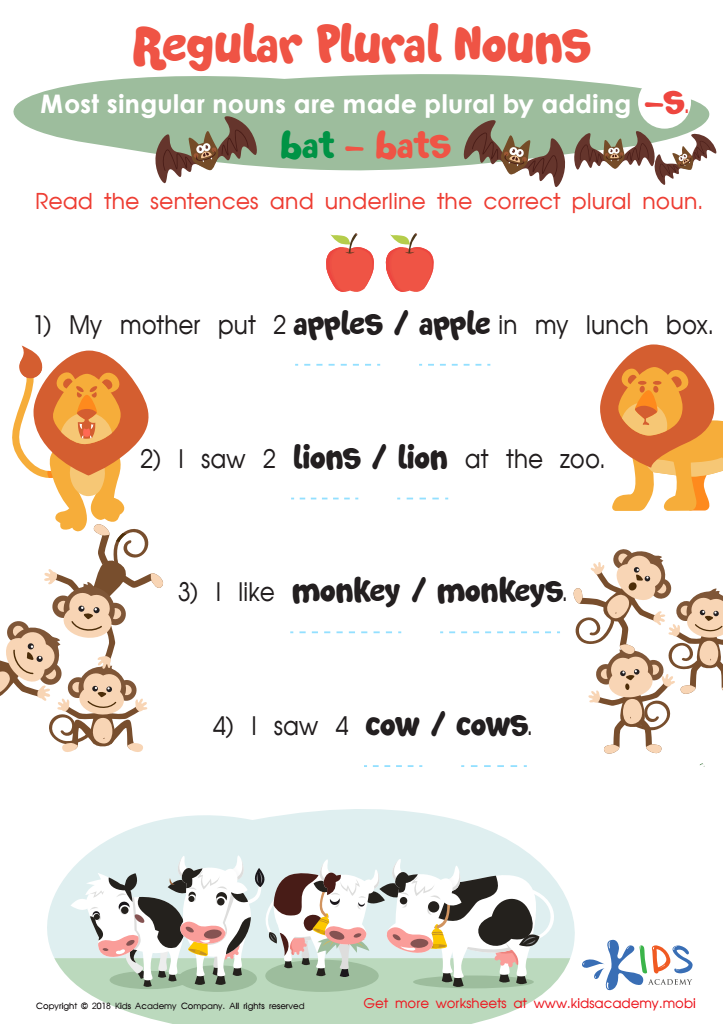
Regular Plural Nouns Worksheet








Understanding plurals is essential for children ages 7-9 as it lays the foundational skills needed for effective communication and literacy. At this age, children are developing their reading and writing abilities, and mastering plurals enriches their vocabulary. Grasping the concept of plurals helps children articulate thoughts more clearly; instead of saying "two cat," they learn to say "two cats," which enhances their grammatical correctness.
Moreover, plurals enable children to understand quantity and relationships between objects. This understanding boosts their mathematical skills when they encounter problems involving groups of items. As they progress in school, the complexity of reading materials increases, and being proficient in pluralization aids in comprehension of texts, leading to a more engaging and enjoyable literacy experience.
Additionally, learning about plurals encourages children to participate in discussions and express themselves confidently, fostering social interactions with peers. By emphasizing the importance of understanding plurals, parents and teachers cultivate not only academic skills but also promote self-assurance in children, essential components for their overall development. Thus, a strong grasp of pluralization is valuable for enhancing communication, boosting confidence, and supporting academic success in early learners.








