Understanding syllables Worksheets for Ages 7-9
6 filtered results
-
From - To
Discover the fun and engaging "Understanding Syllables Worksheets" designed for children ages 7-9! These educational worksheets help young learners grasp the concept of syllables, enhancing their reading and writing skills. Featuring a variety of activities, children will identify, count, and practice breaking down words into syllables, fostering a strong foundation in phonics and pronunciation. Ideal for both classroom and at-home learning, our worksheets cater to different learning styles and provide colorful illustrations that keep kids motivated. Empower your child with essential language skills through interactive exercises that turn learning into a delightful experience! Perfect for honing literacy skills at an early age.
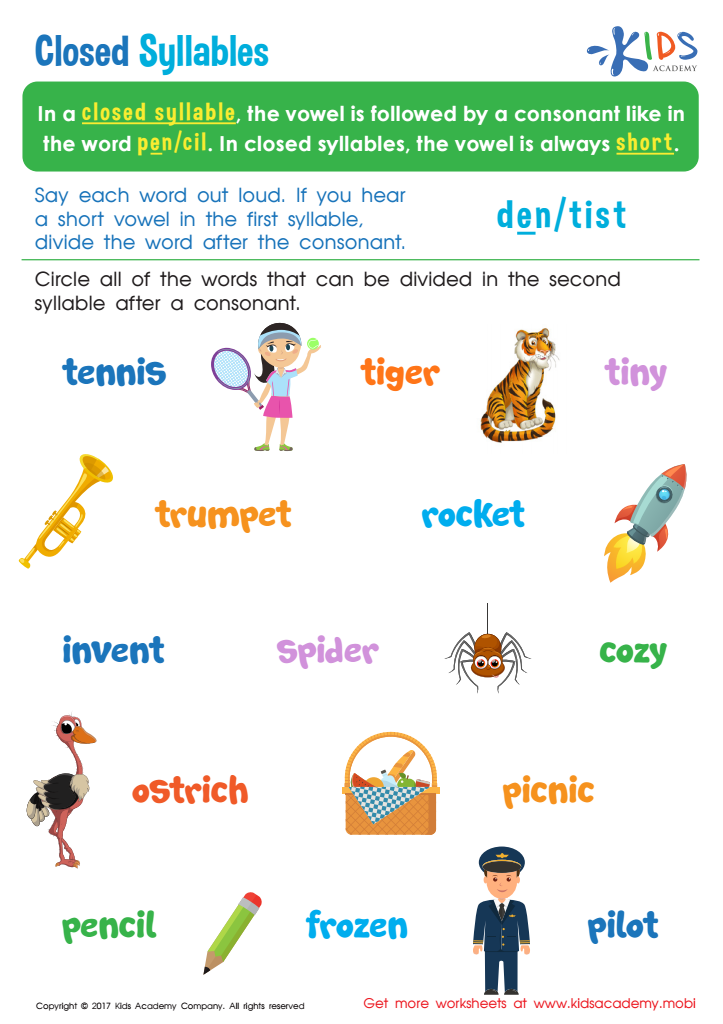
Closed Syllable Spelling Worksheet
 Assign to My Students
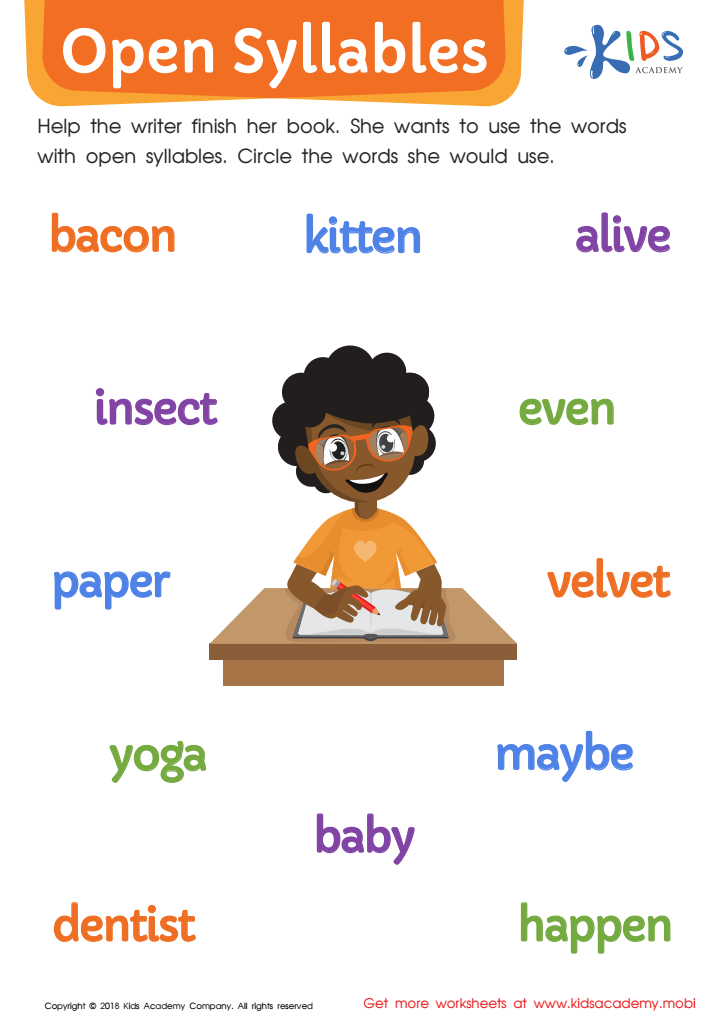
Open Syllables Worksheet
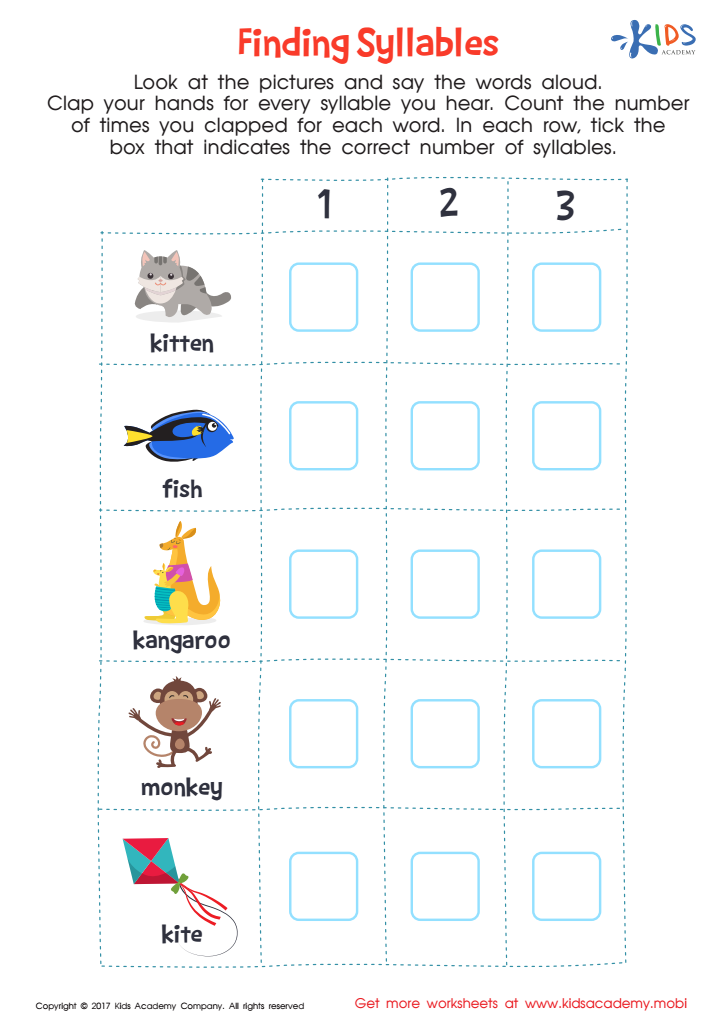
Finding Syllables Word Structure Worksheet
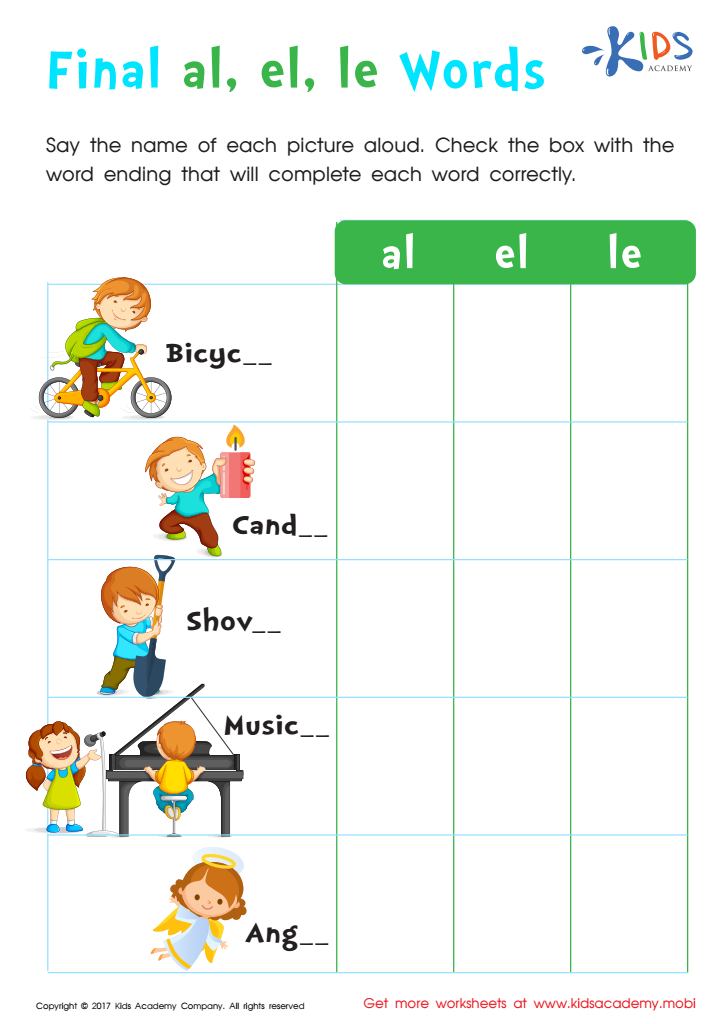
Spelling Words Ending with –le, –el and –al Worksheet
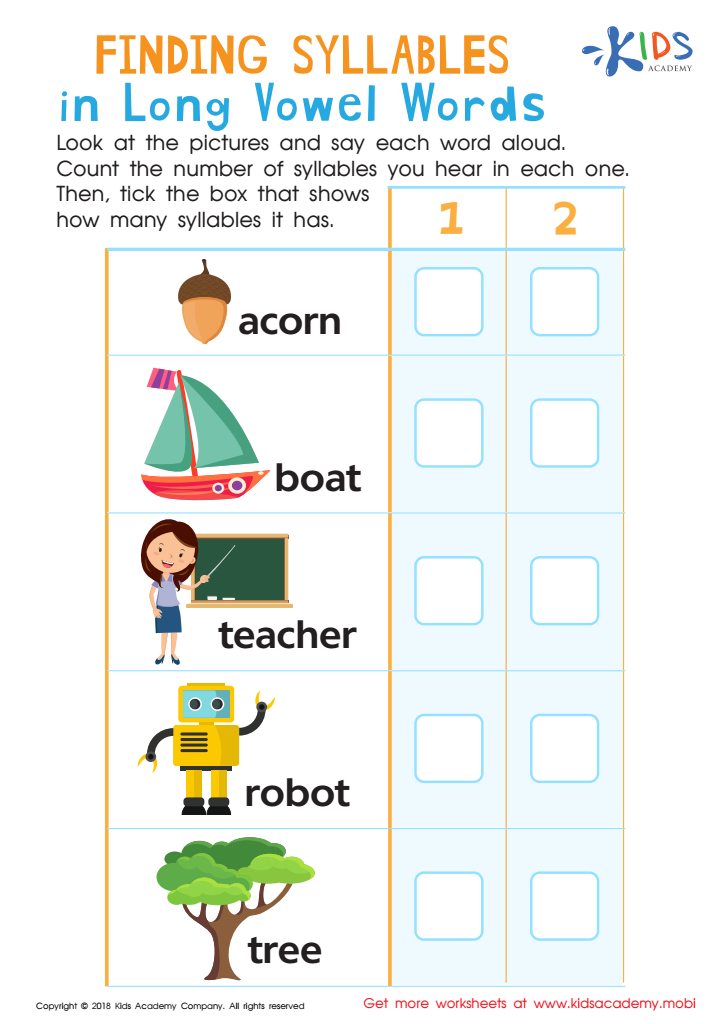
Finding Syllables in Long Vowel Words Worksheet








Understanding syllables is crucial for children aged 7-9 as it lays the foundation for reading, writing, and the overall development of language skills. At this age, children transition from learning to read to reading to learn, making syllable awareness vital. Recognizing syllables helps children break down words into manageable parts, enhancing their decoding skills when encountering unfamiliar words. This skill is especially important for spelling, as many spelling rules are based on syllable patterns.
Moreover, a solid grasp of syllables aids in developing vocabulary and comprehension. When children understand the structure of words, they become better equipped to infer meanings and make connections between words and ideas. It also fosters phonemic awareness, contributing to clearer speech and improved listening skills.
Teachers and parents can encourage syllable counting through games and activities, making the learning process fun and engaging. By prioritizing syllable recognition, educators and caregivers help children build confidence, making reading a more enjoyable experience. This foundational skill not only impacts literacy but also supports overall cognitive development, laying the groundwork for academic success in other subjects. Thus, understanding syllables is a vital aspect of learning for children aged 7-9 that should be actively promoted by parents and teachers alike.








