Visual recognition skills Worksheets for Ages 7-9
3 filtered results
-
From - To
Enhance your child's visual recognition skills with our engaging worksheets designed specifically for ages 7-9. These printable activities aim to cultivate the ability to identify, differentiate, and categorize various visual elements, essential for academic success. Our carefully crafted worksheets offer a fun and interactive way for children to practice observing shapes, colors, patterns, and objects. Through stimulating exercises, kids will boost their focus, memory, and problem-solving abilities. Our resources provide an ideal blend of education and creativity, making learning an enjoyable adventure. Download our visual recognition skills worksheets today and watch your child's confidence and skills grow!
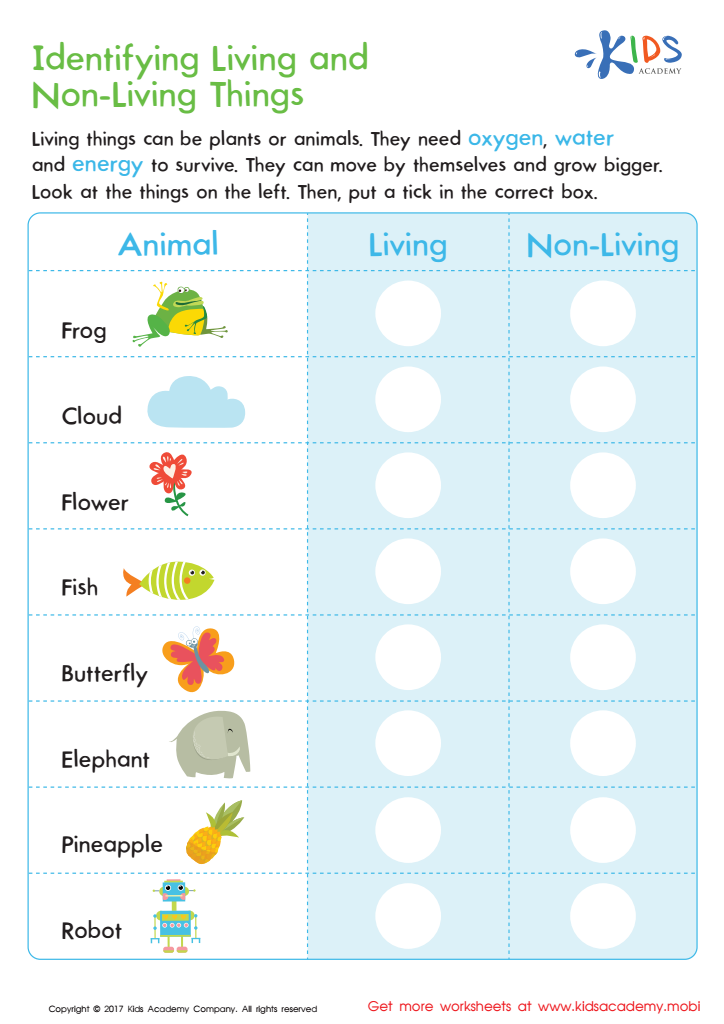
Identifying Living or Non–living Worksheet
 Assign to My Students








Visual recognition skills are crucial for children aged 7-9 as they form the foundation for effective learning and cognitive development. During this stage, children increasingly engage with complex information, making the ability to recognize and interpret visual stimuli—such as letters, numbers, shapes, and patterns—essential for academic success. These skills enhance reading and writing abilities, allowing children to identify letters quickly, recognize sight words, and comprehend illustrations in texts.
Furthermore, visual recognition plays a significant role in problem-solving and critical thinking. As children encounter new concepts in subjects like mathematics and science, strong visual recognition enables them to discern patterns and relationships, sharpening their analytical skills. Additionally, proficiency in visual recognition supports creativity through art and design, allowing children to express themselves more effectively.
For parents and teachers, fostering visual recognition skills through engaging activities—such as games, puzzles, and interactive learning tools—can make learning enjoyable while strengthening these essential abilities. Investing time in developing visual recognition not only boosts academic performance but also promotes self-confidence and independence in young learners, preparing them for future educational challenges. By prioritizing these skills, we ensure a well-rounded foundation that supports lifelong learning.








