Fraction comparison Adding 2-digit Numbers Worksheets for Ages 7-9
3 filtered results
-
From - To
Welcome to our Fraction Comparison and Adding 2-Digit Numbers Worksheets for children ages 7-9! These engaging and educational resources are designed to help young learners master essential math skills. Our carefully crafted worksheets focus on comparing fractions while reinforcing their ability to add 2-digit numbers, making learning both fun and interactive. With a variety of exercises, children will enhance their understanding of numerical relationships and develop confidence in their math abilities. Perfect for classroom settings or at-home practice, these worksheets support skill-building in a structured manner. Dive in and watch your child's math skills flourish! Ideal for parents and educators alike!
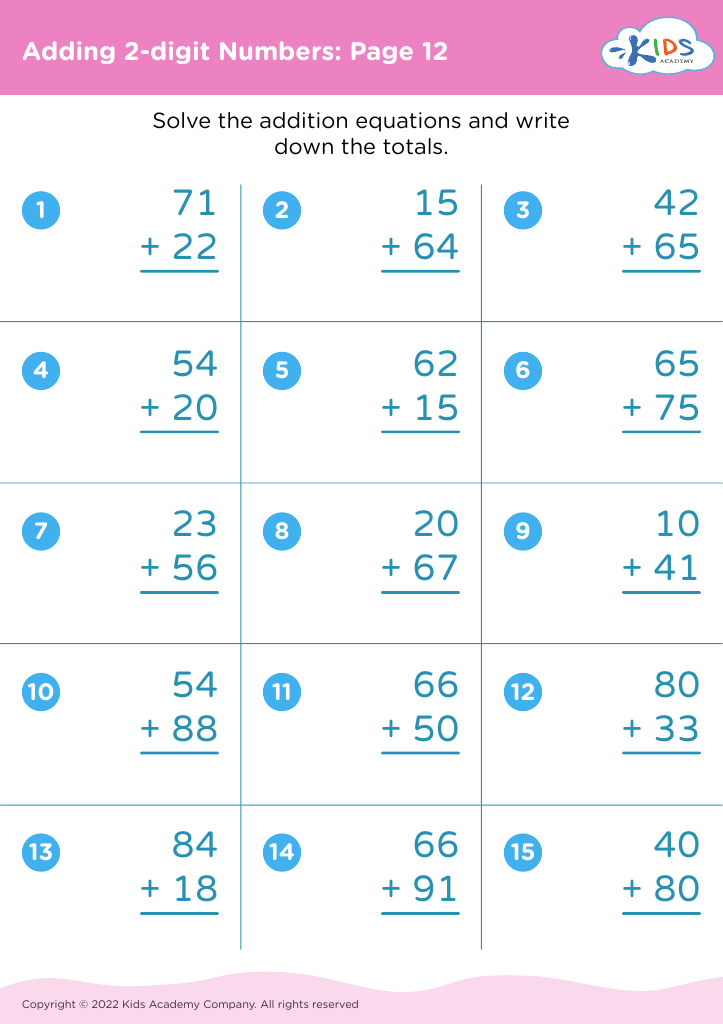
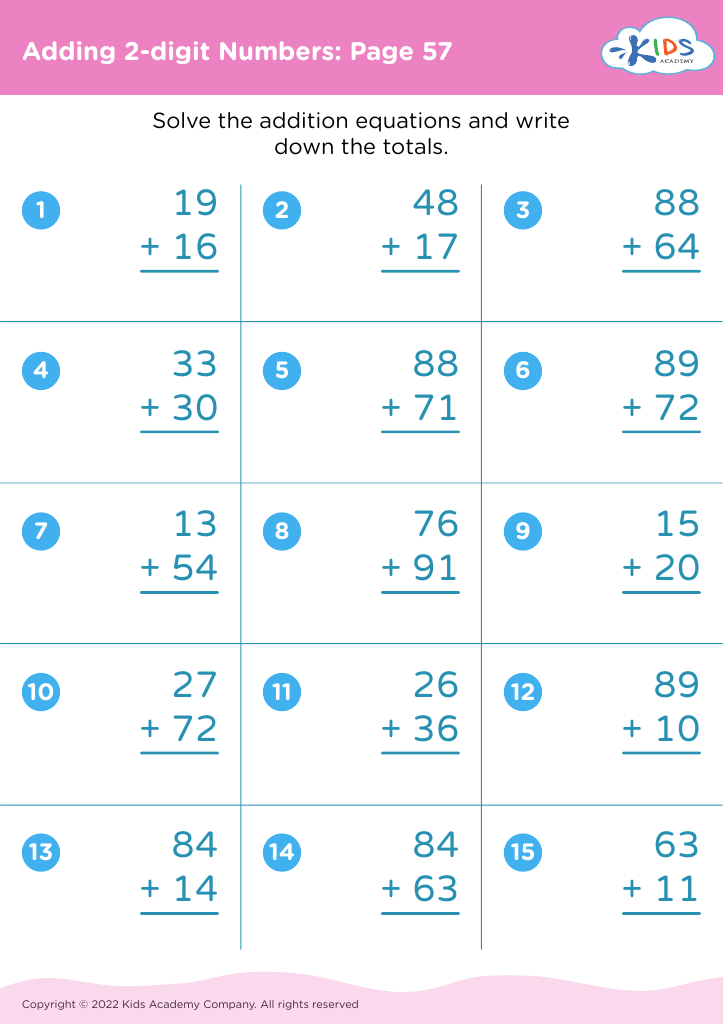
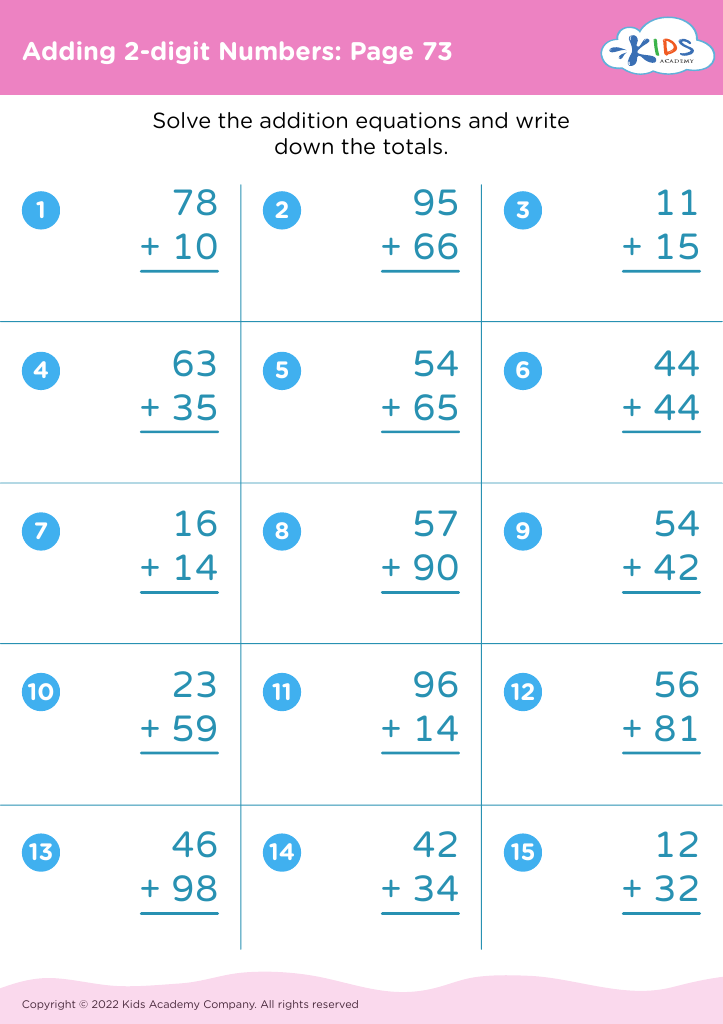








Understanding fraction comparison and adding 2-digit numbers are essential skills for children aged 7-9, as these foundational concepts are pivotal in their overall mathematical development.
Firstly, learning to compare fractions encourages critical thinking and promotes a deeper understanding of numbers. As students grasp the concept of fractions, they become proficient in recognizing relationships between parts and wholes, which lays the groundwork for more complex topics such as addition, subtraction, and even proportions later on.
Simultaneously, mastering the addition of 2-digit numbers builds numerical fluency and confidence. This age group is crucial for cultivating mental math skills, which enhances problem-solving abilities and nurtures independence in tackling math challenges.
By fostering these skills, parents and teachers are equipping children with tools necessary for real-life applications, from budgeting their allowance to understanding portion sizes in cooking, benefitting them both academically and practically. Moreover, these skills create a positive attitude towards mathematics, reducing anxiety and building resilience in facing future mathematical challenges.
Ultimately, focusing on these areas provides children with a solid mathematical foundation, paving the way for their success in both school and life. Parents and educators play a key role in supporting this growth through guidance and encouragement.








