Develop fine motor skills Adding up to 100 Misc Worksheets for Ages 7-9
4 filtered results
-
From - To
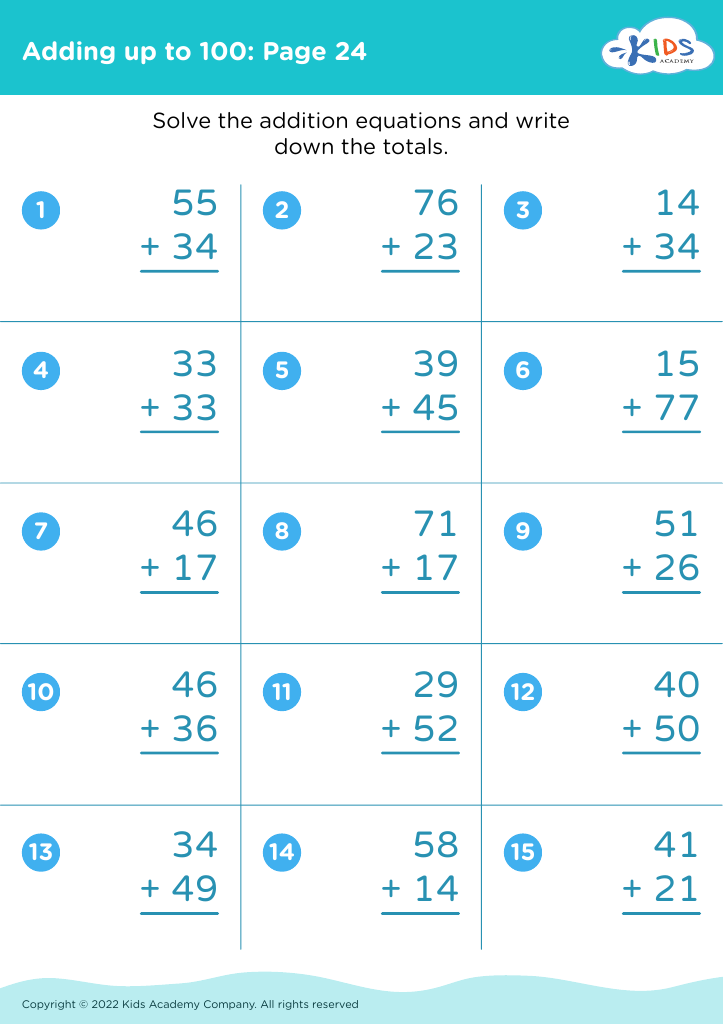
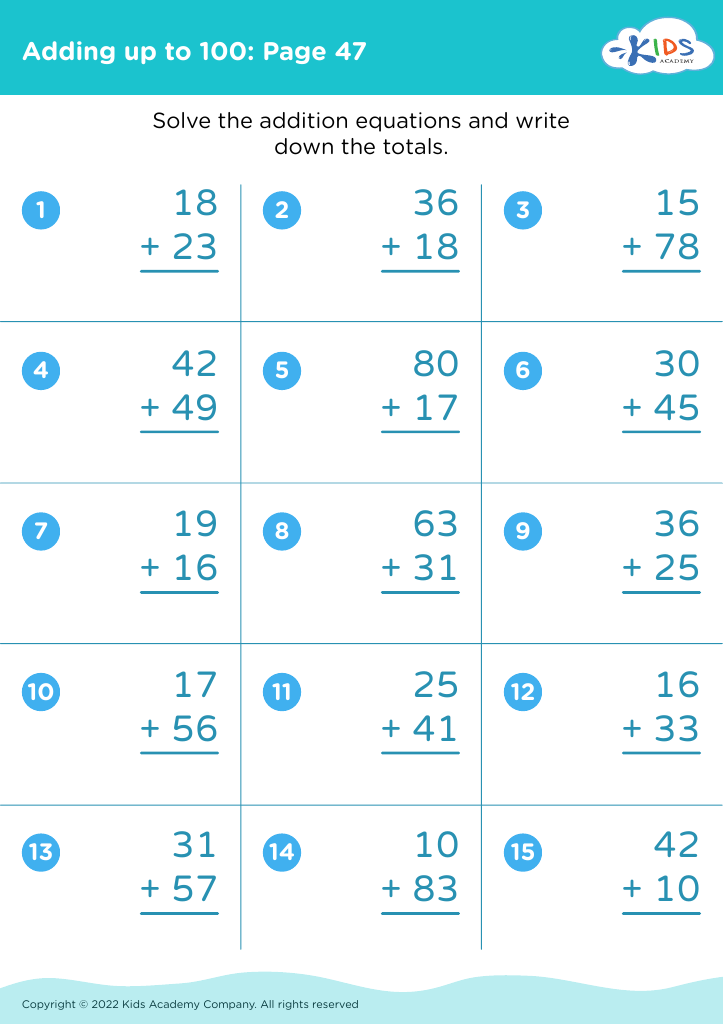
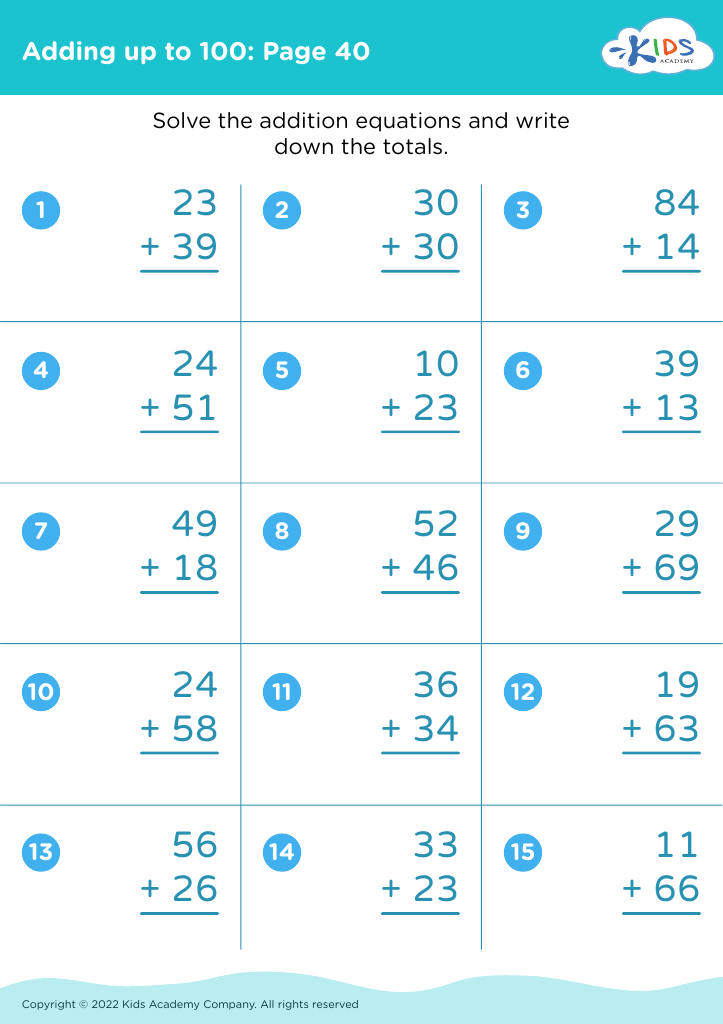
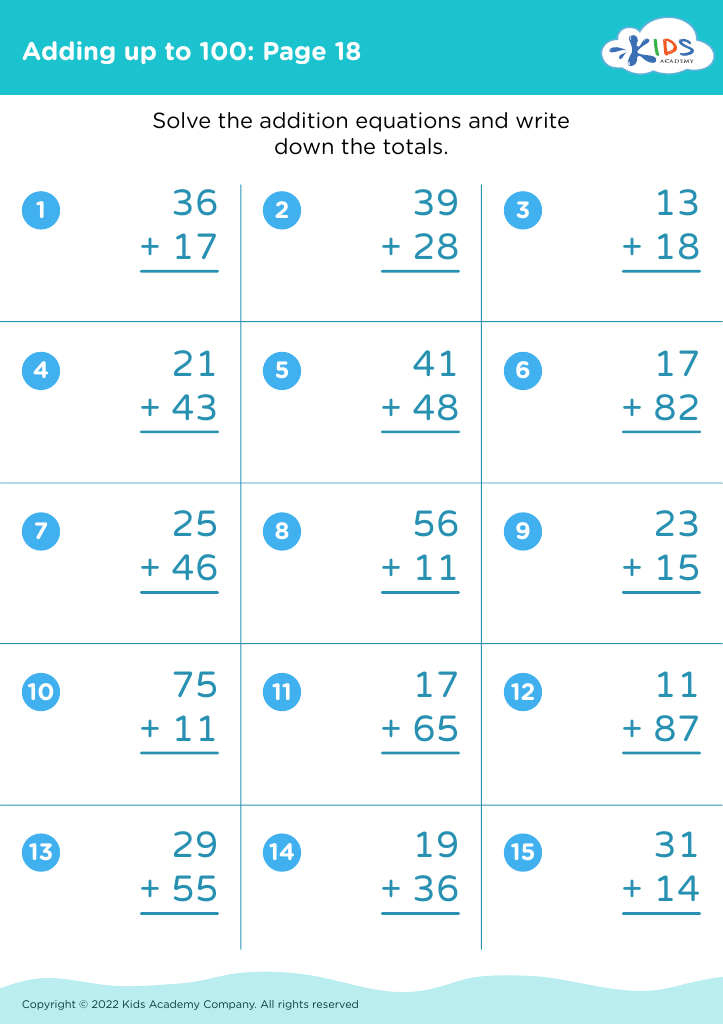
Enhance your child's fine motor skills with our "Adding up to 100 Misc Worksheets for Ages 7-9." These engaging worksheets are designed to promote confidence in math while also encouraging essential motor skills development. Each activity focuses on fun and hands-on experiences, allowing children to practice number recognition and addition in a creative way. Equipped with activities that incorporate tracing, cutting, and coloring, these resources make learning enjoyable and effective. Perfect for homeschooling or classroom settings, our worksheets provide a comprehensive approach to mastering addition up to 100 while fostering vital coordination and dexterity. Empower your child’s learning journey today!


Developing fine motor skills is crucial for children aged 7-9 as these skills form the foundation for numerous everyday tasks, enhancing their academic performance and overall independence. Fine motor skills involve the coordination of small muscles, particularly in the hands and fingers, which are essential for tasks like writing, drawing, and working with tools. As children in this age group engage with various academic subjects, strong fine motor skills are vital for activities such as crafting, using scissors, manipulating small objects, and managing school supplies.
Parents and teachers should care about fostering these skills as they directly influence a child's learning experiences. Proficient fine motor skills can improve a child's confidence and academic participation, creating a positive feedback loop. Furthermore, developing these abilities can aid in their social interactions, encouraging cooperative play and collaborative projects where these skills are often utilized.
Moreover, focusing on fine motor development can lay the groundwork for future complex tasks, from academics to daily life activities, such as buttoning shirts or tying shoelaces. By prioritizing these skills, adults ensure that children are equipped for success, building competence and confidence as they navigate both academic challenges and everyday life.