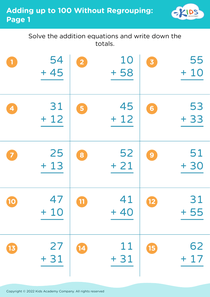
Basic Math Skills Adding up to 100 with Regrouping Worksheets for Ages 7-9
3 filtered results
-
From - To
Enhance your child’s arithmetic skills with our Basic Math Skills Adding up to 100 with Regrouping Worksheets, designed specifically for ages 7-9. These engaging worksheets offer a fun way for young learners to practice addition within 100, while mastering the essential concept of regrouping. Through hands-on problems and step-by-step guidance, children build confidence and accuracy in their calculations. Perfect for classroom and home use, our worksheets align with educational standards and cater to different learning styles. Prepare your child for future math success with our expertly crafted resources tailored to make learning math enjoyable and effective.
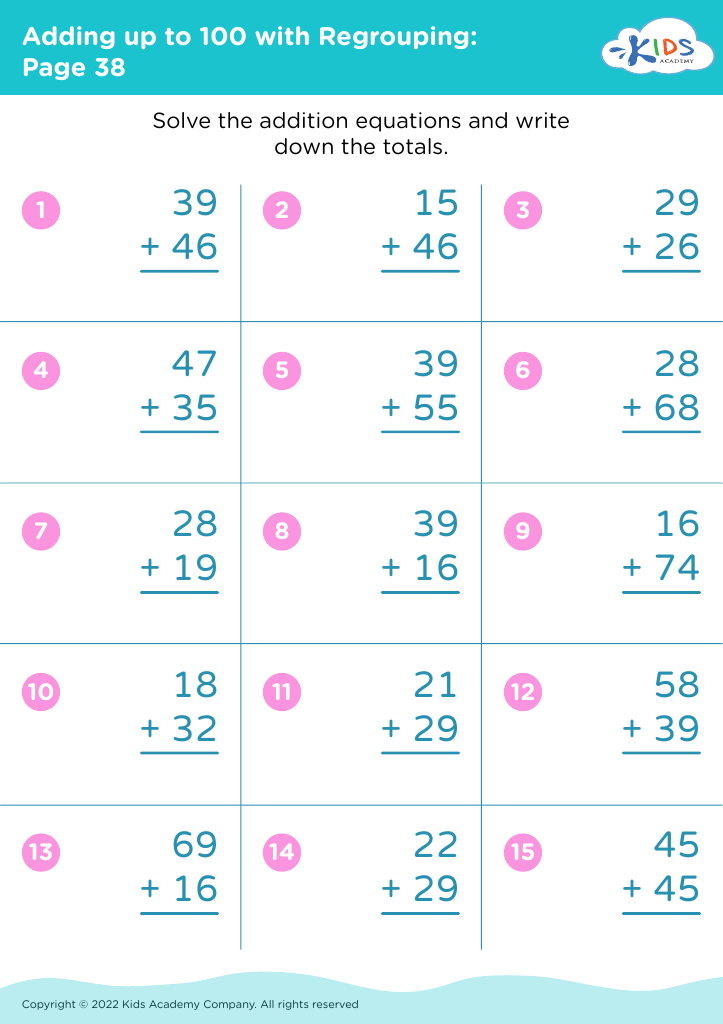
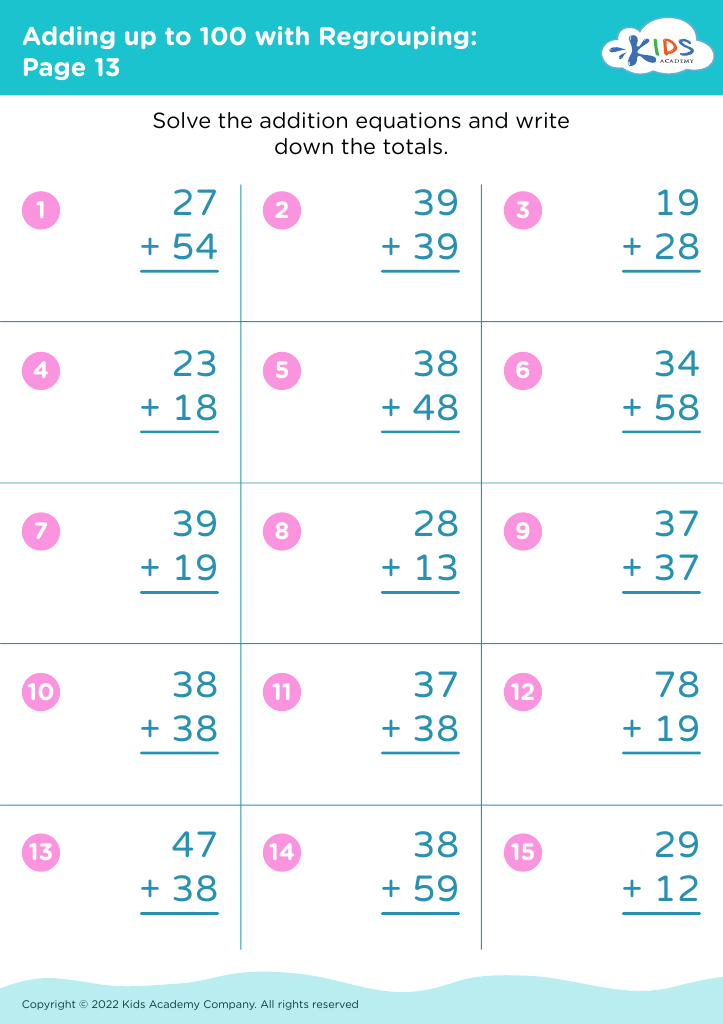
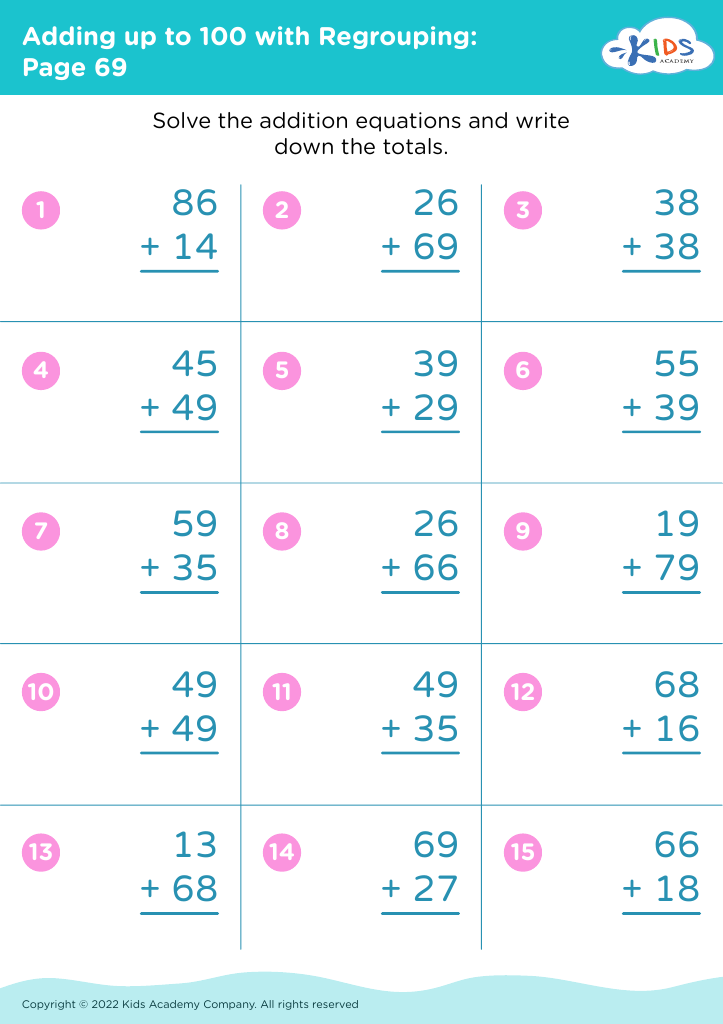




Developing strong basic math skills, particularly the ability to add up to 100 with regrouping, is essential for children ages 7-9 for several key reasons.
First, mastering addition with regrouping lays the foundation for future math concepts. It introduces students to the idea of carrying over values, a skill that is critical for understanding more advanced operations such as subtraction, multiplication, and division. Without a solid grasp of these basic operations, children may struggle with more complex problems and concepts later in their academic careers.
Second, proficiency in addition with regrouping builds confidence. As children successfully solve problems that involve carrying over, they feel more competent and are more likely to participate in math activities. This bolstered self-esteem can positively affect their attitudes towards math, transforming it from a source of anxiety into an area of interest.
Third, these skills are applicable in real life. Everyday tasks such as handling money, cooking, or planning trips often require quick and accurate addition. By mastering addition up to 100 with regrouping, children gain valuable tools that will help them navigate real-world scenarios.
Finally, cultivating these skills aligns with cognitive development. Kids ages 7-9 are at a crucial stage where they are developing their logical thinking and problem-solving abilities. Focusing on foundational math skills aids this cognitive growth, preparing them for lifelong learning and success. Parental and teacher support during this learning phase presents an invaluable opportunity to foster resilience, curiosity, and an enduring understanding of mathematics.