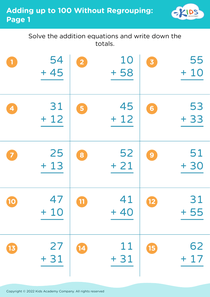
Comparing Fractions Adding up to 100 with Regrouping Worksheets for Ages 7-9
9 filtered results
-
From - To
Unlock the magic of fractions with our engaging "Comparing Fractions Adding up to 100 with Regrouping" worksheets, designed specifically for children aged 7-9. These interactive resources teach young learners essential math skills, like identifying and comparing fractions, while incorporating the added challenge of regrouping. With colorful illustrations and step-by-step guidance, our worksheets make learning fun and easy! Ideal for classroom settings or homeschooling, these printable activities promote critical thinking and problem-solving. Whether your child is mastering the basics or looking to improve their math skills, our worksheets offer the perfect blend of practice and enjoyment, paving the way for numerical confidence!
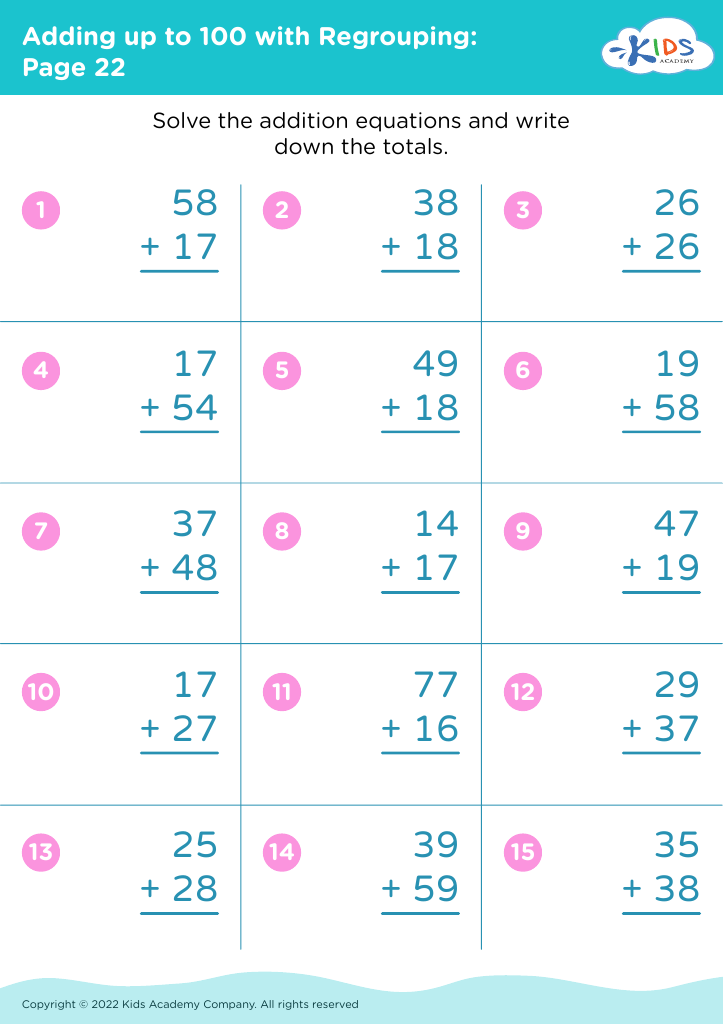
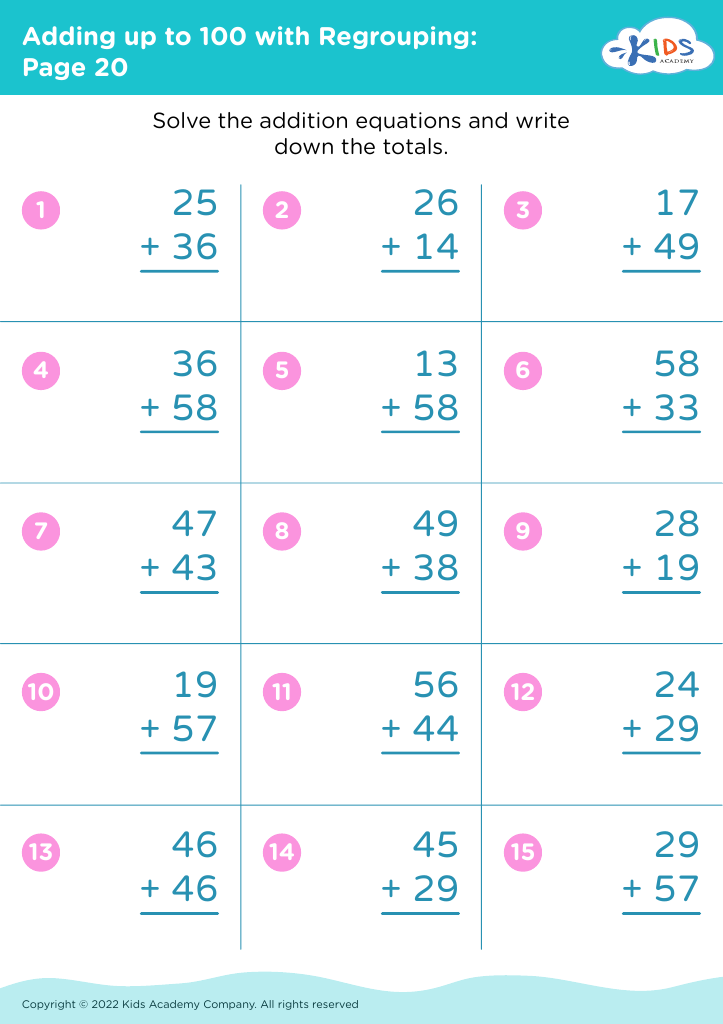
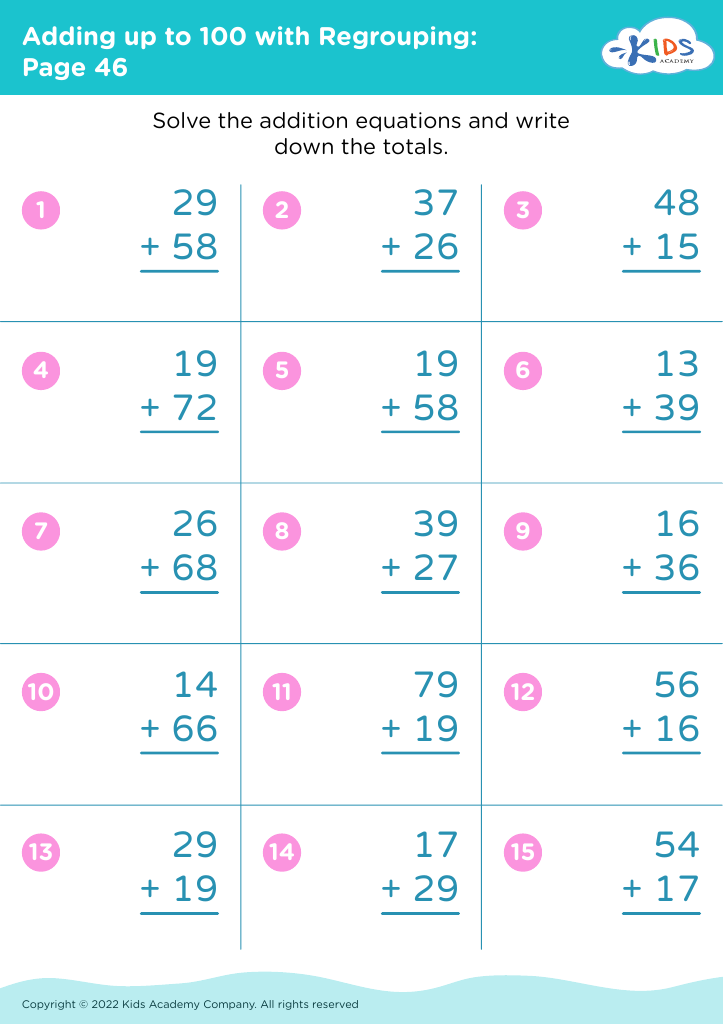
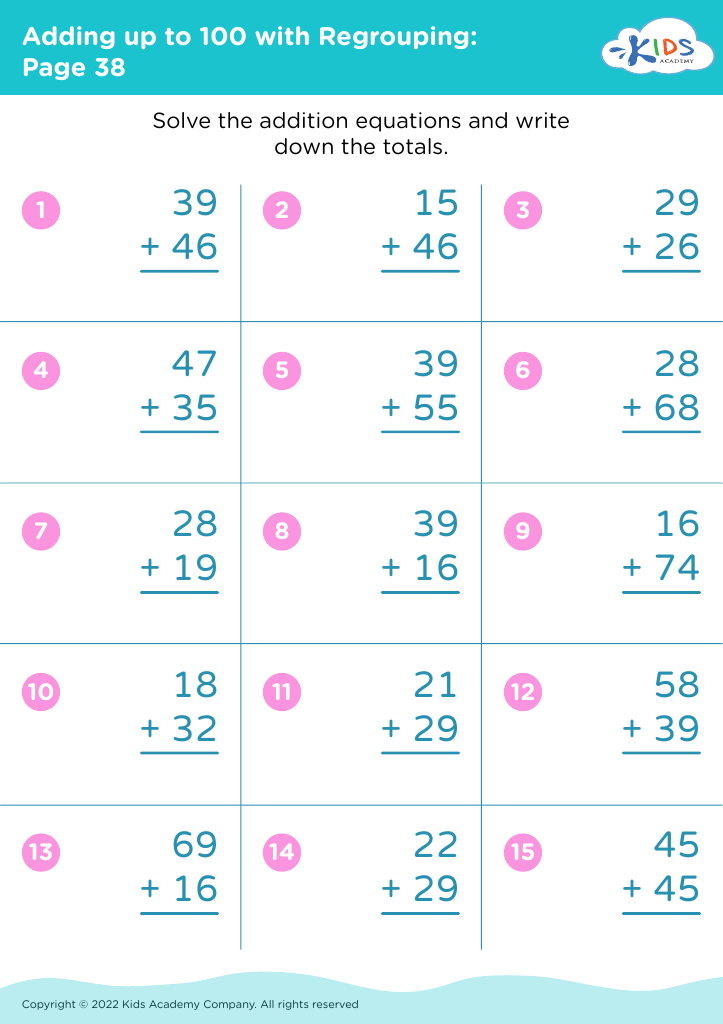
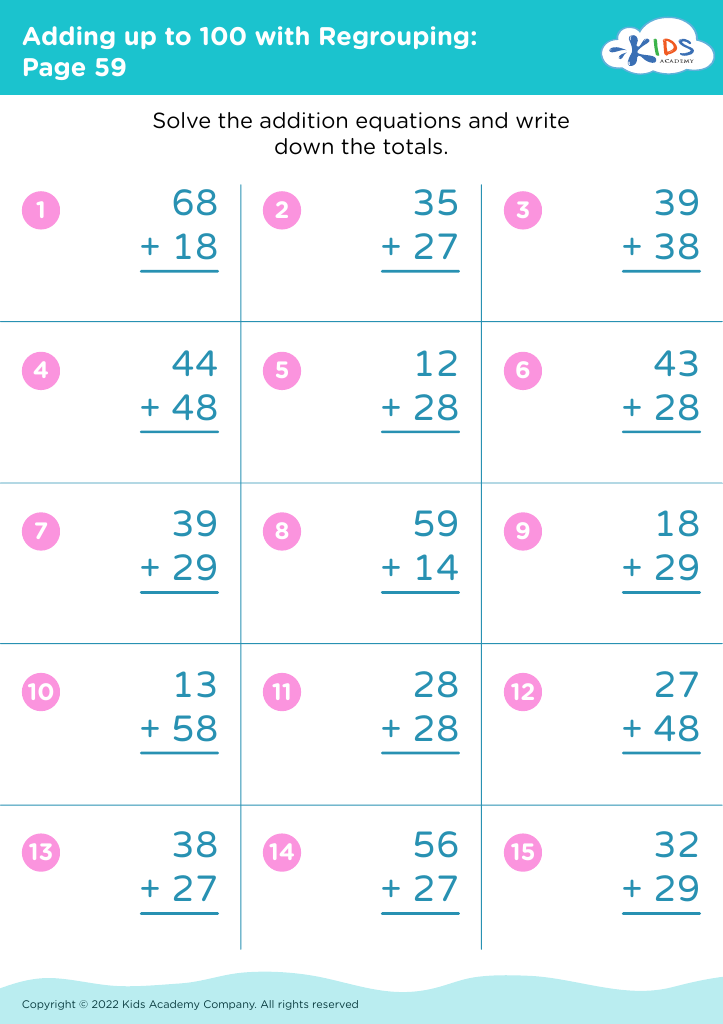
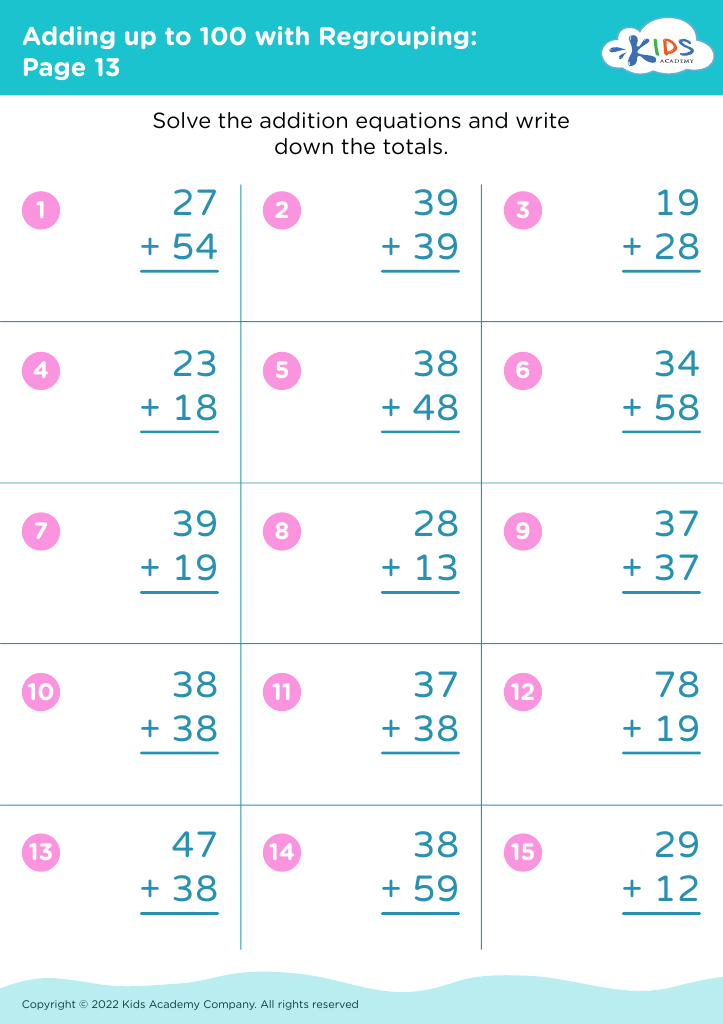
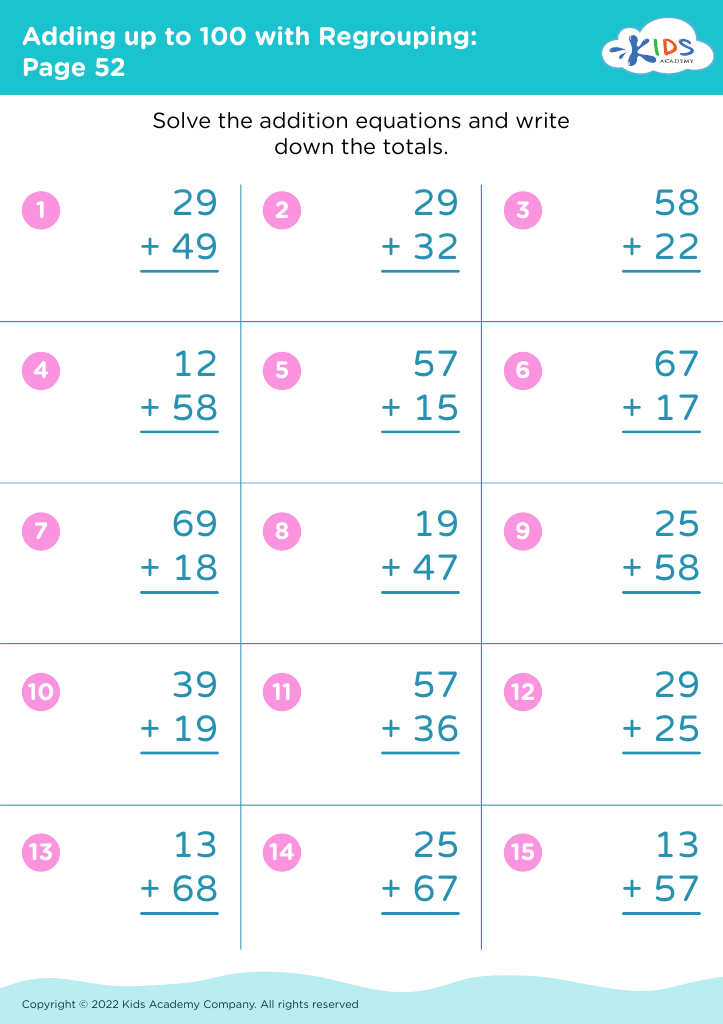
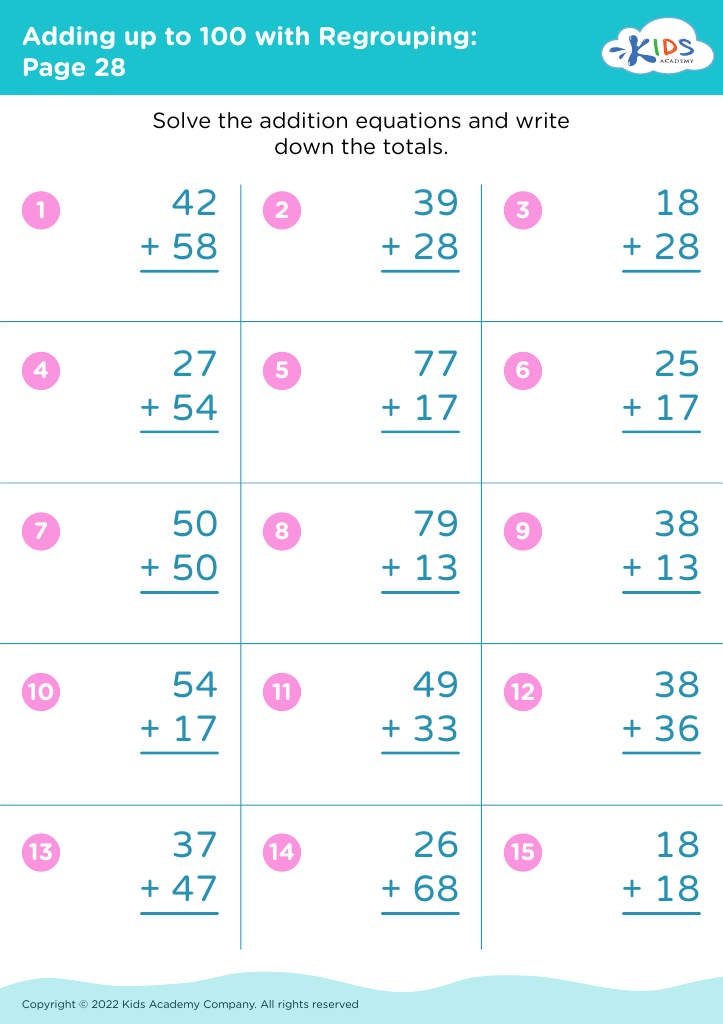
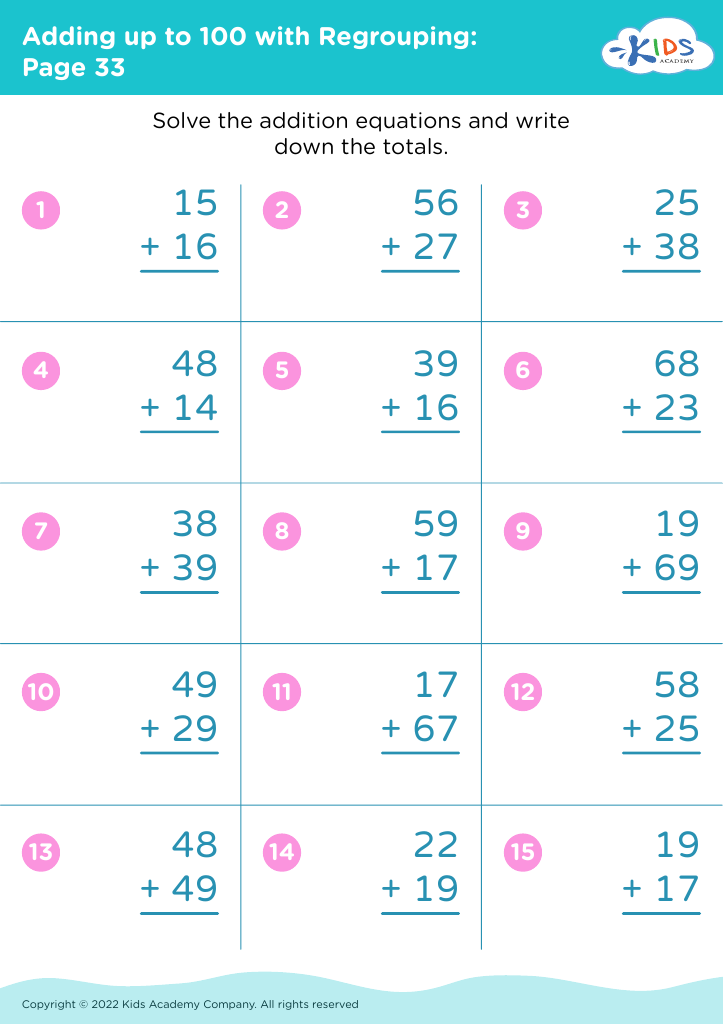




Parents and teachers should care about comparing fractions that add up to 100 with regrouping for children aged 7-9 as it lays the foundation for critical mathematical concepts. At this developmental stage, children are starting to grasp the idea of fractions, which involves understanding parts of a whole—a skill vital for everyday life.
Introducing the concept of fractions that complement to 100 encourages kids to think flexibly about numbers and encourages the practice of regrouping. This method not only hones their addition and subtraction skills but also develops their ability to analyze and compare different fractions. Such activities promote logical reasoning, allowing students to visualize relationships between numbers and enhance their problem-solving skills.
Moreover, engaging with these concepts encourages parents and teachers to create an interactive learning environment. It fosters teamwork and discussions around math, helping children to articulate their thought processes. Finally, mastering these skills at a young age empowers children to tackle more complex mathematical concepts in the future, including percentages and proportions, thus preparing them for advanced learning milestones. Therefore, emphasizing comparing fractions with regrouping becomes crucial in early mathematics education.