Fraction comparison Adding up to 100 with Regrouping Worksheets for Ages 7-9
3 filtered results
-
From - To
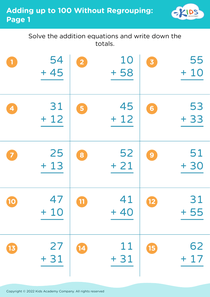
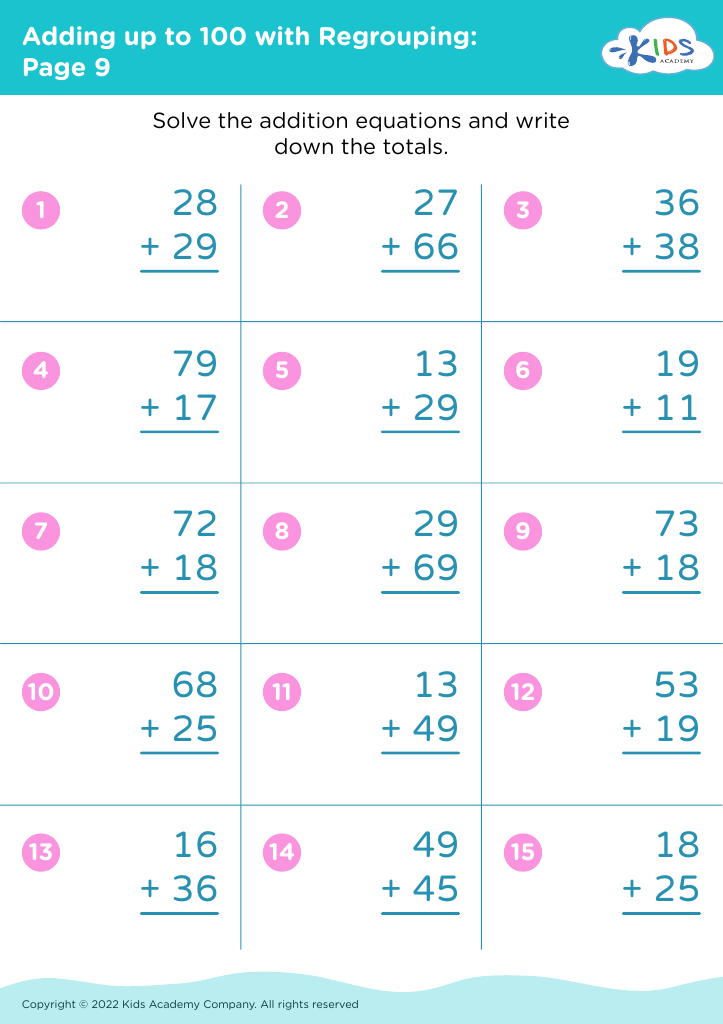
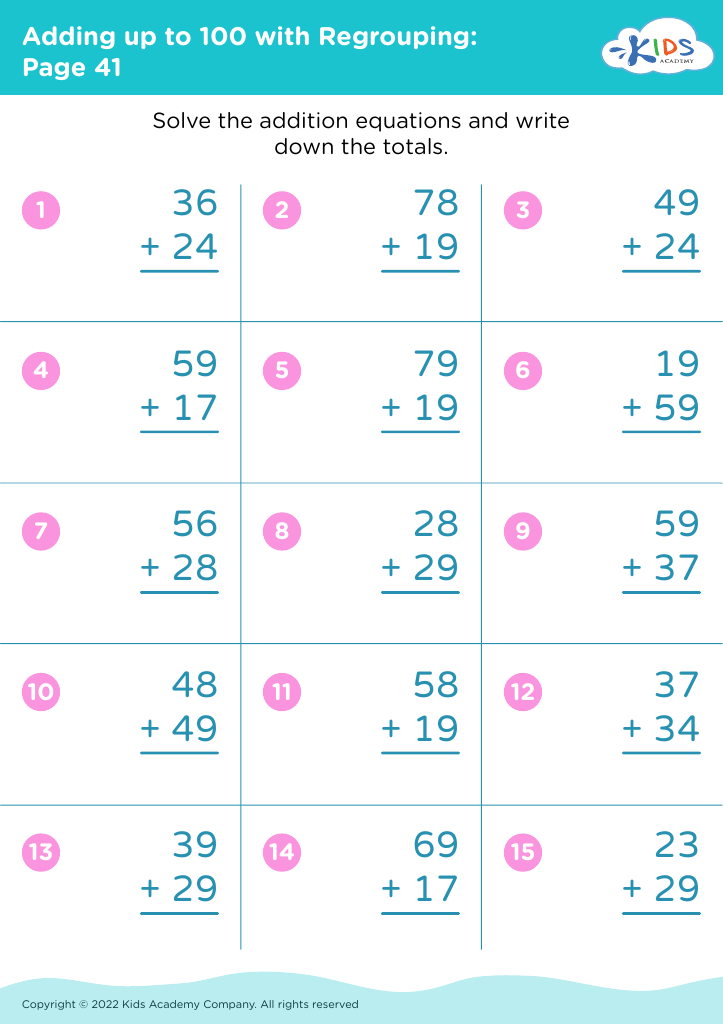
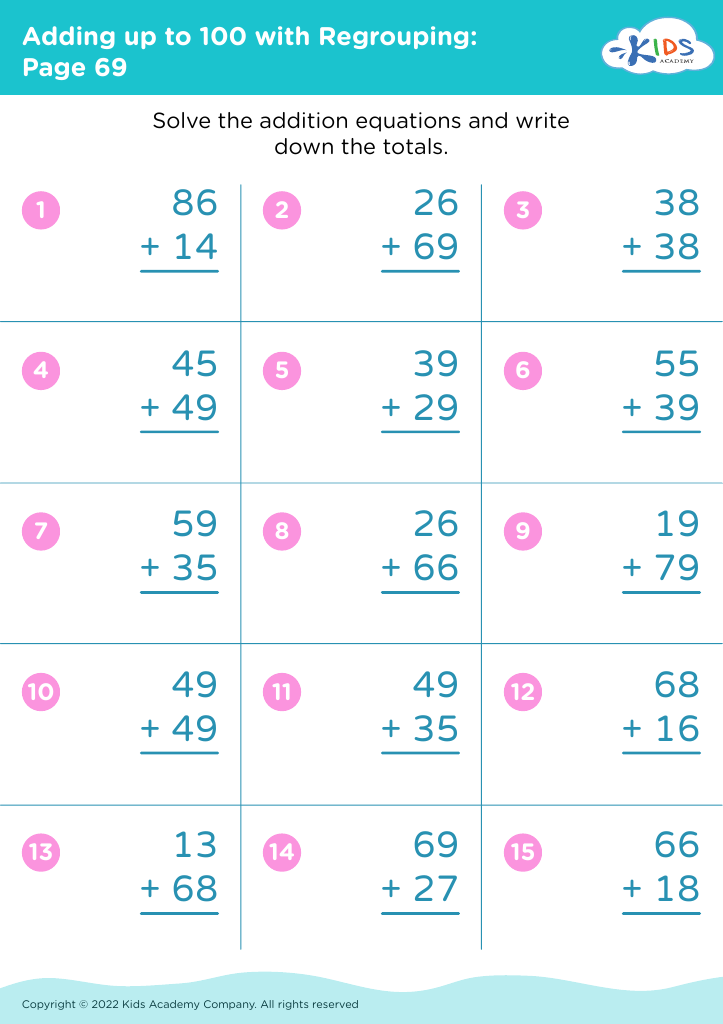
Introduce your child to the world of numbers with our engaging Fraction Comparison Adding up to 100 with Regrouping Worksheets, designed for ages 7-9! Perfect for young learners, these worksheets help improve vital math skills, from comparing fractions to adding numbers up to 100, incorporating regrouping techniques. Each activity is carefully crafted to nurture problem-solving abilities, reinforce understanding of key concepts, and boost confidence in math. Ideal for both classroom and home practice, these worksheets offer a fun and educational way to solidify foundational math knowledge. Cultivate your child's mathematical prowess today with our expertly designed resources!




Parents and teachers should care deeply about teaching fraction comparison and adding up to 100 with regrouping to children aged 7-9 because these skills are foundational to their mathematical development. Understanding fractions and how to compare them equips children with the ability to grasp more advanced mathematical concepts later on, such as probability, ratios, and algebra. At this age, students are at a critical developmental stage where they can begin to comprehend more abstract concepts like fractions, which are essential for everyday tasks and academic success.
Adding up to 100 with regrouping is equally important as it reinforces place value understanding, arithmetic skills, and logical thinking. Children learn how numbers work together and how to handle transitions between units (like from tens to hundreds), which are crucial skills not just in mathematics but in life skills like budgeting and problem-solving.
Additionally, engaging children in these numerical exercises improves their cognitive flexibility and concentration. It prepares them for standardized testing and helps close achievement gaps early, leading to higher academic performance. By emphasizing these skills, parents and teachers foster a positive attitude towards learning mathematics, build confidence in young students, and lay a strong foundation for future educational success.