Fraction simplification Adding up to 100 with Regrouping Worksheets for Ages 7-9
7 filtered results
-
From - To
Introducing our "Fraction Simplification Adding up to 100 with Regrouping Worksheets" designed for ages 7-9! These engaging worksheets promote core mathematical skills through colorful and fun exercises. Children will master the art of simplifying fractions, and adding numbers up to 100 with regrouping, while building a strong foundation in arithmetic. Our expertly crafted resources integrate step-by-step instructions, making learning simpler and more effective. Perfect for both classroom and home use, these worksheets will boost your child's confidence and proficiency in math. Download now to help your child soar in their mathematical journey!
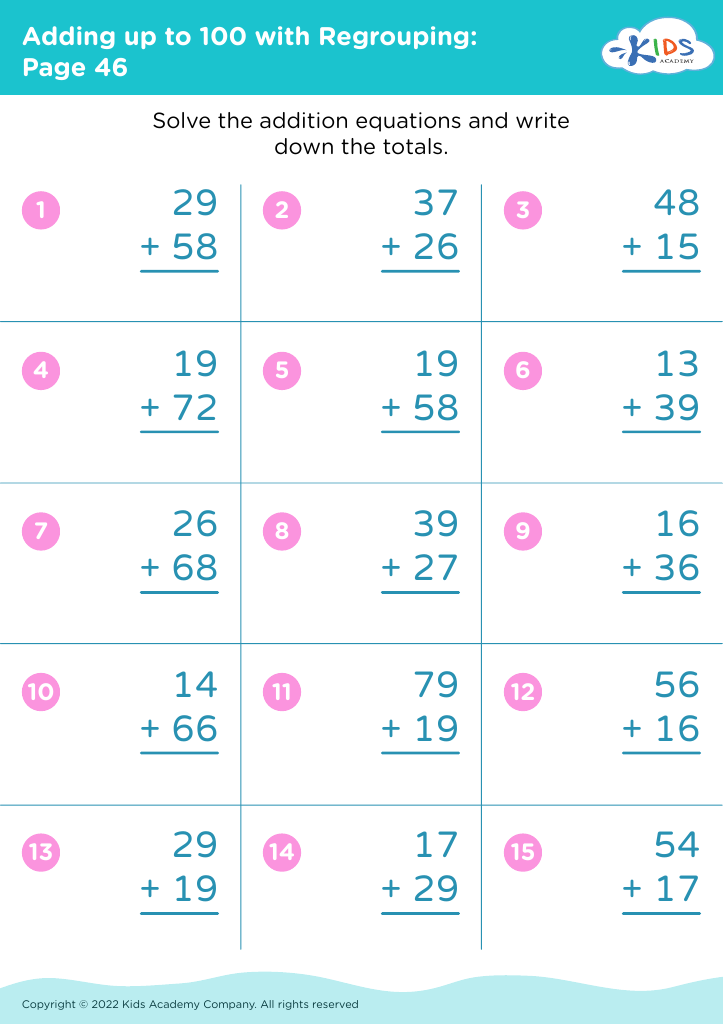
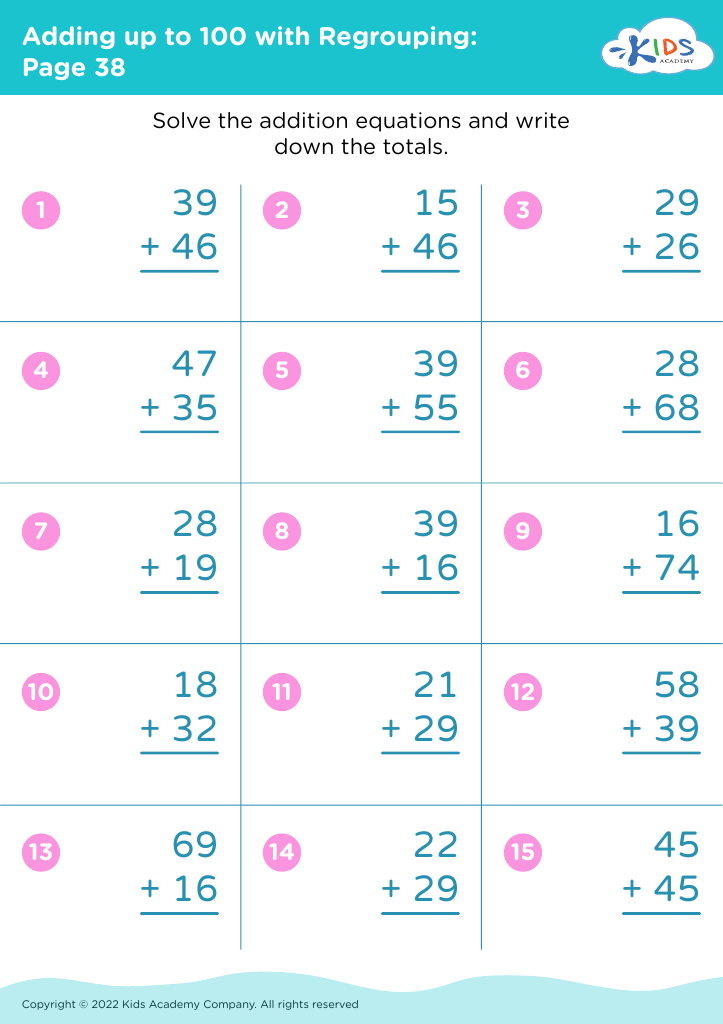
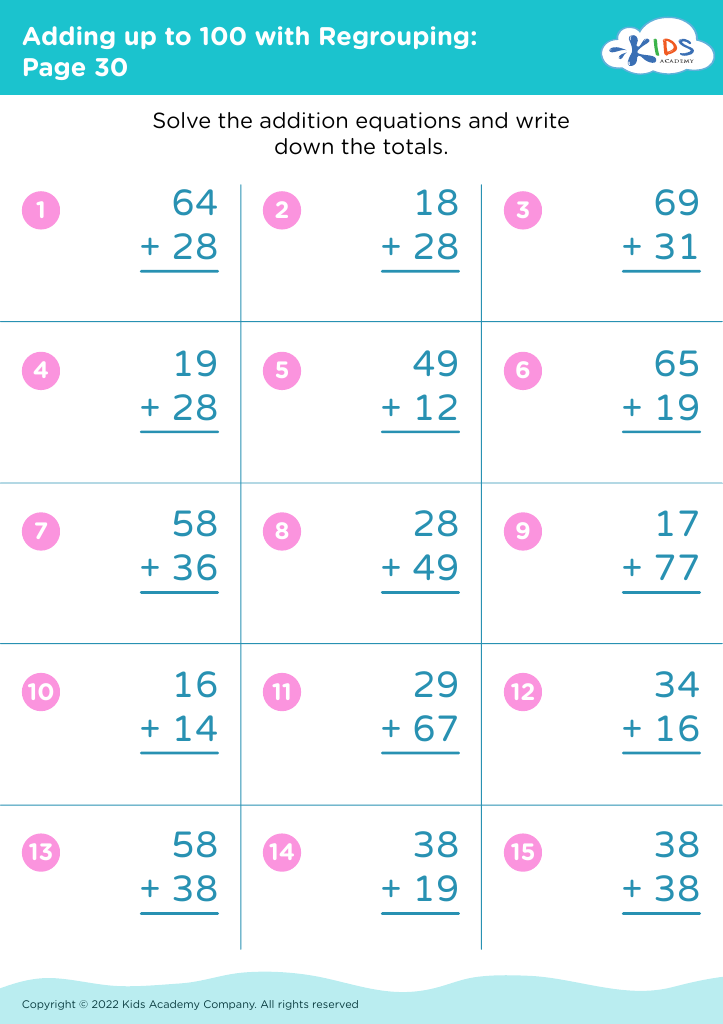
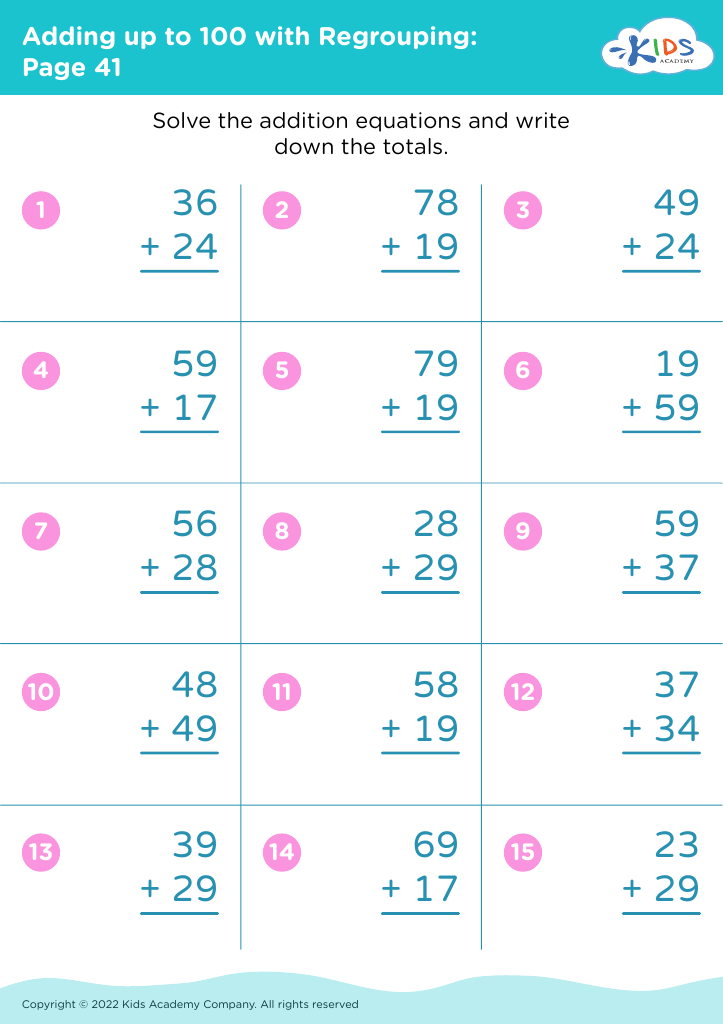
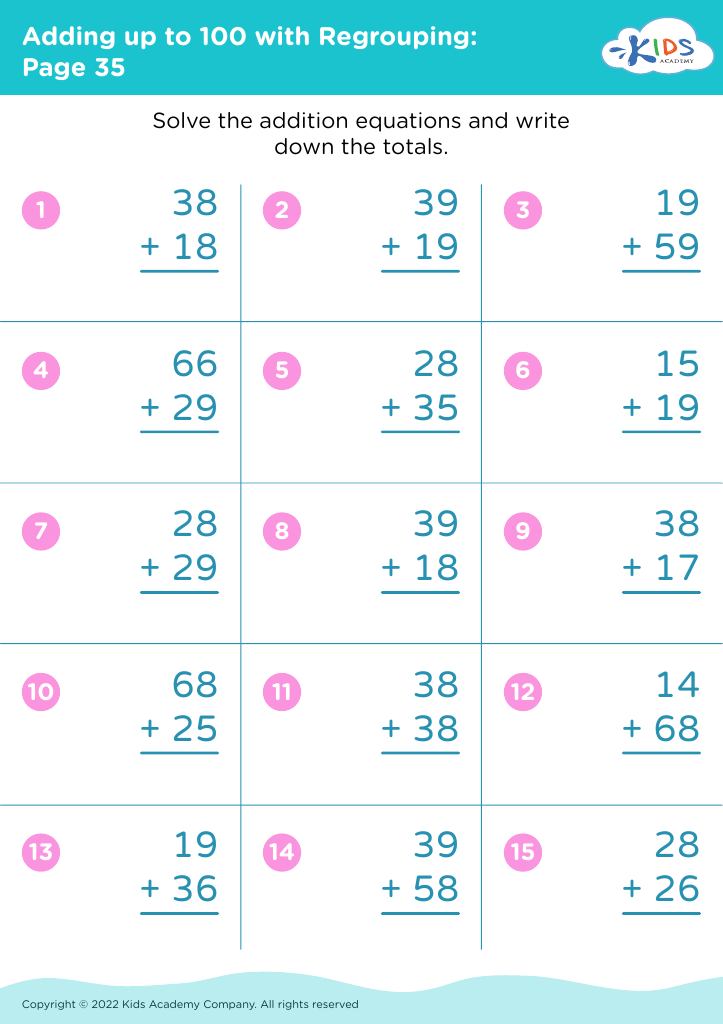
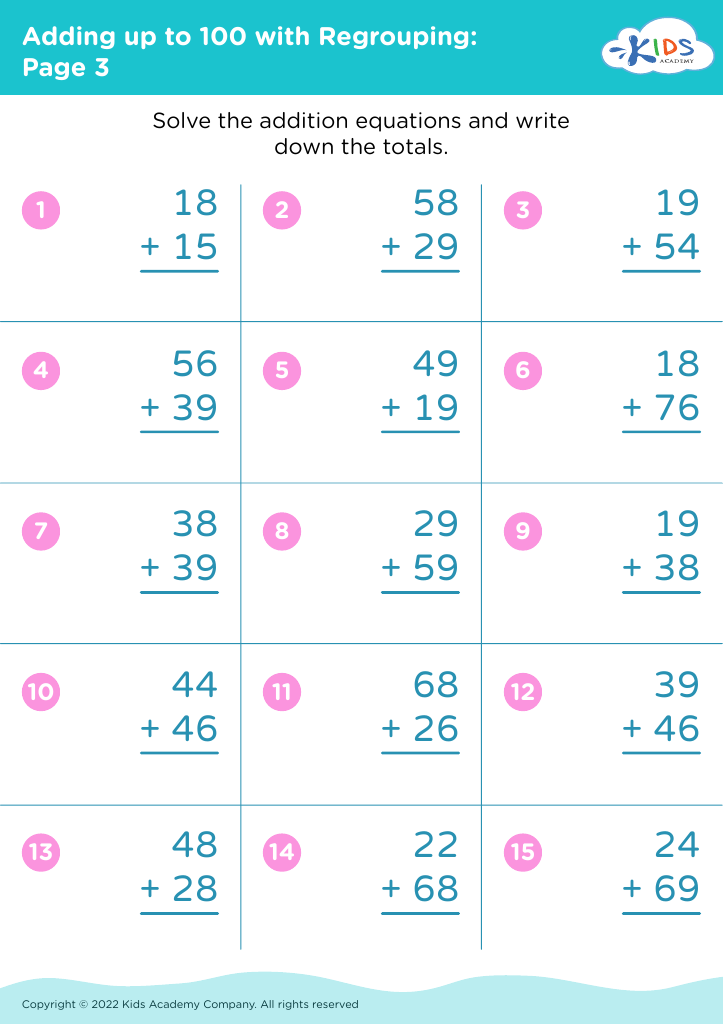
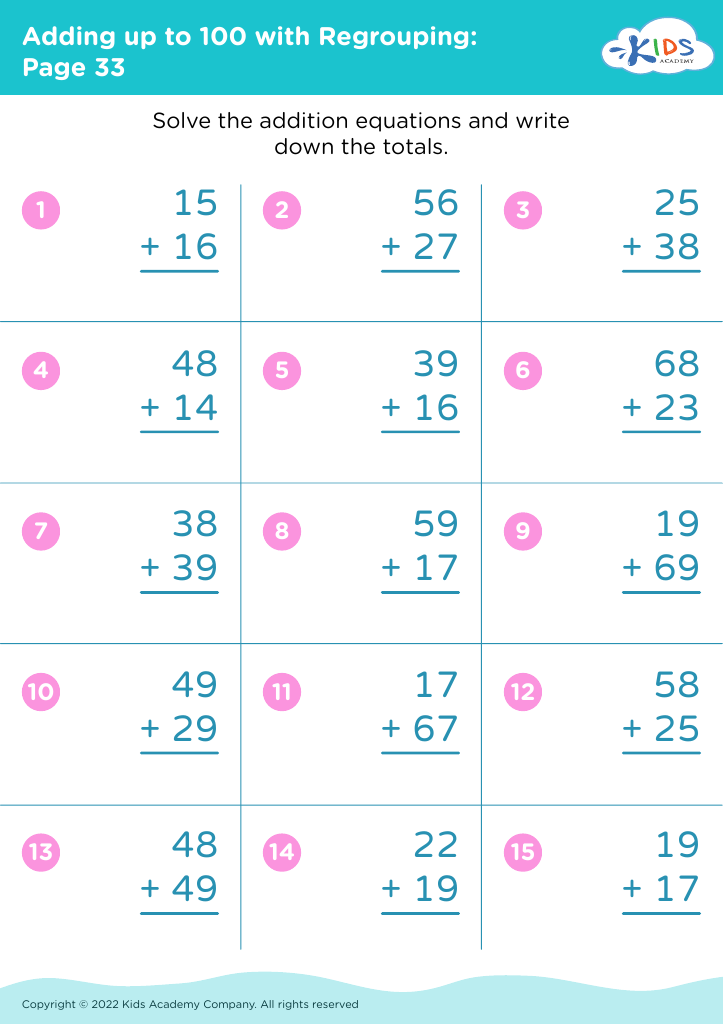




Understanding fraction simplification and adding numbers up to 100 with regrouping are foundational skills for young students, typically between ages 7 and 9. First, grasping fraction simplification is crucial because it empowers students to solve a range of math problems more easily. When fractions are simplified, their relationships are clearer, facilitating comparison and combination, laying the groundwork for more complex mathematical concepts like ratios, proportions, and algebra later on.
Moreover, mastering addition up to 100 with regrouping (carrying over to the next column when sums exceed 10) is equally vital. This arithmetic operation builds number sense and cognitive skills by helping children understand the base-ten system, which is the cornerstone of our decimal system. Efficiently adding large numbers fosters confidence, making them quicker and more accurate in daily problem-solving tasks. It also ensures they are well-prepared for future topics like multi-digit addition and subtraction, multiplication, and even real-world applications like handling money. By prioritizing these skills, parents and teachers ensure children develop logical thinking, precision, and the ability to engage with more abstract mathematical ideas confidently and effectively.