Improve counting skills Adding up to 100 with Regrouping Worksheets for Ages 7-9
5 filtered results
-
From - To
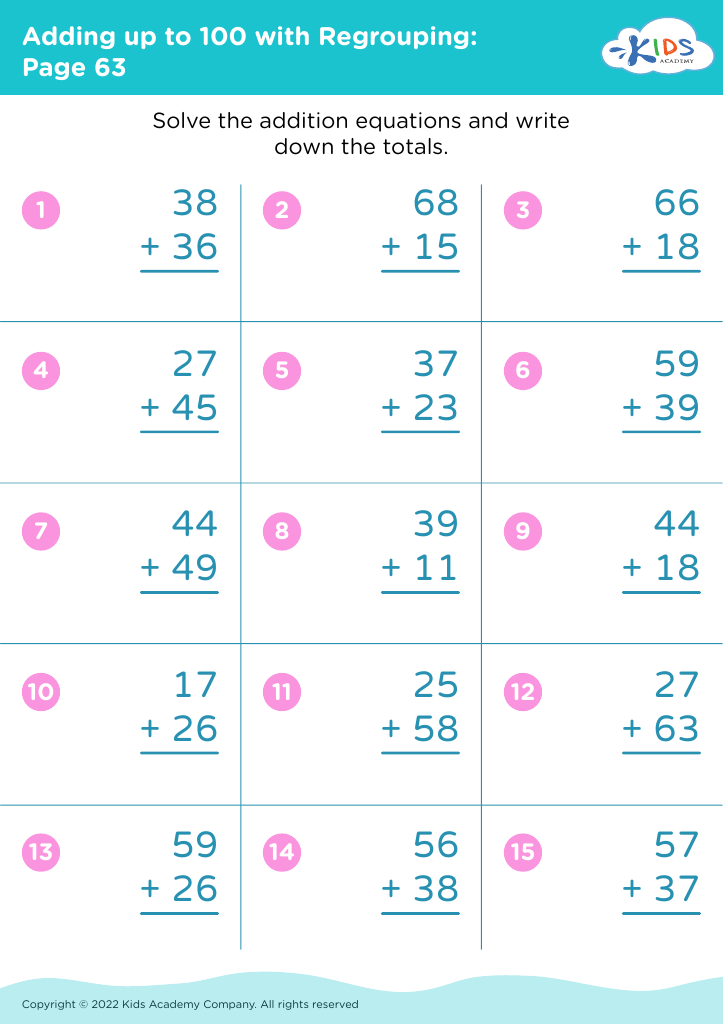
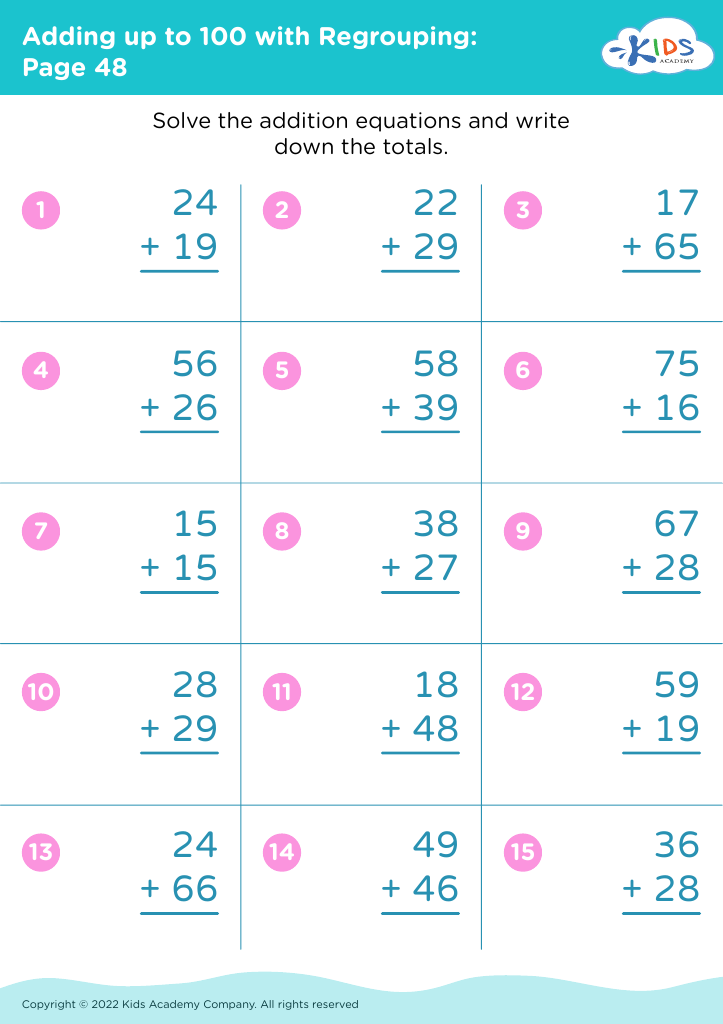
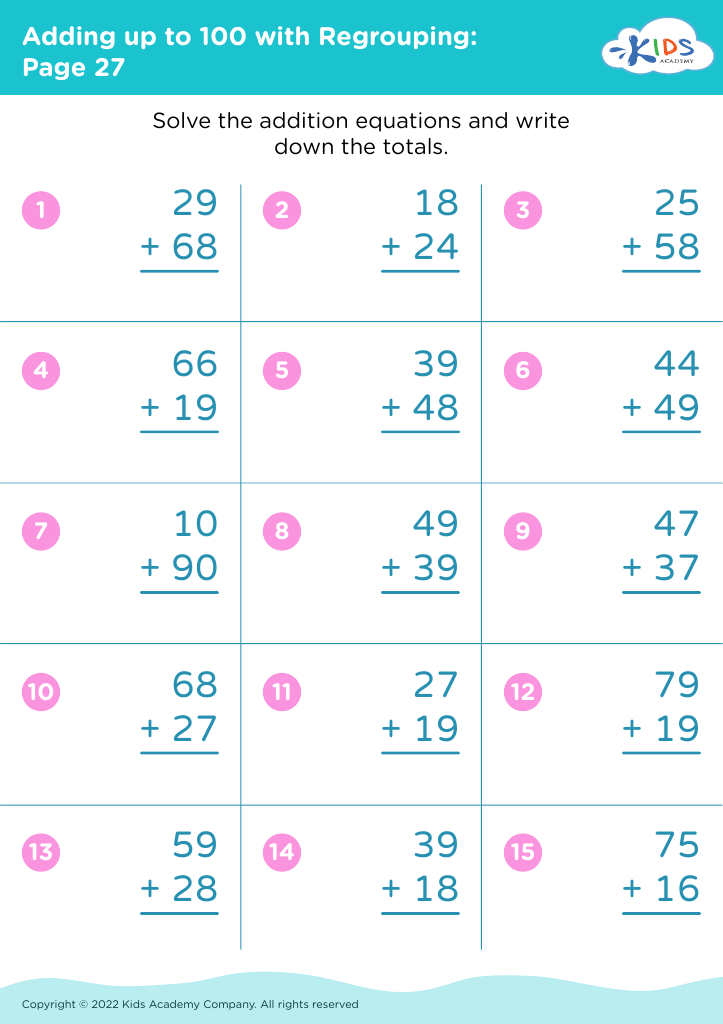
Boost your child's counting skills with our engaging "Adding Up to 100 with Regrouping Worksheets" designed for ages 7-9. These worksheets focus on developing a solid understanding of addition and regrouping, essential for mastering math concepts. With fun, interactive exercises, students will learn to add numbers accurately while building their confidence in problem-solving. Each worksheet is crafted to challenge young learners, helping them practice counting up to 100 seamlessly. Ideal for classroom or at-home learning, these resources foster critical thinking and numerical fluency. Prepare your child for math success with our stimulating and effective learning tools today!
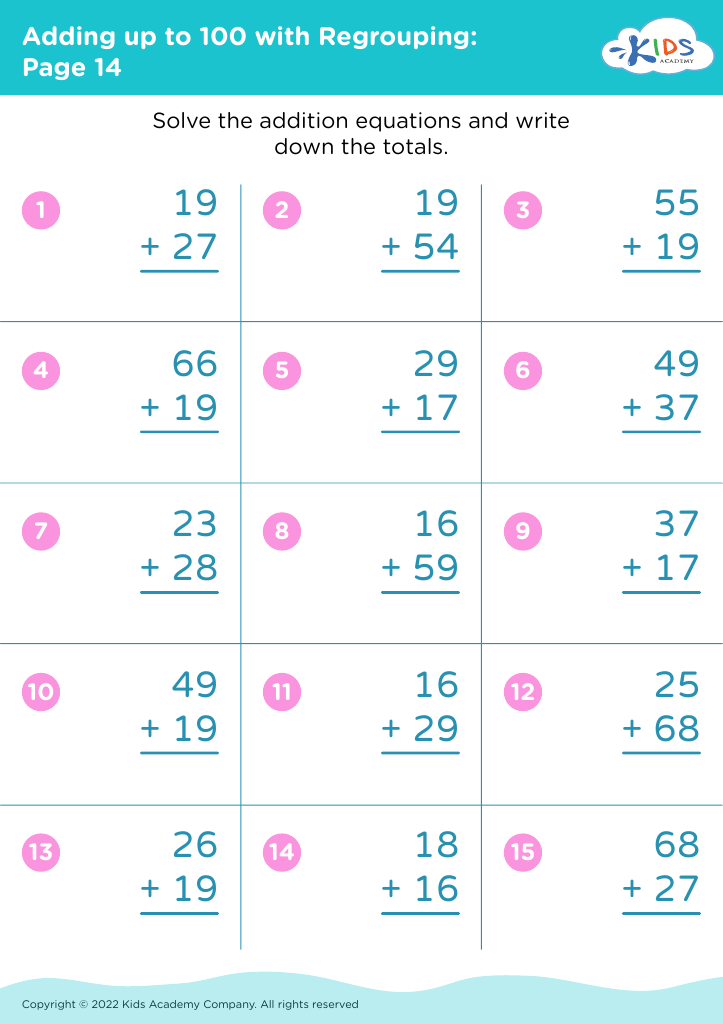
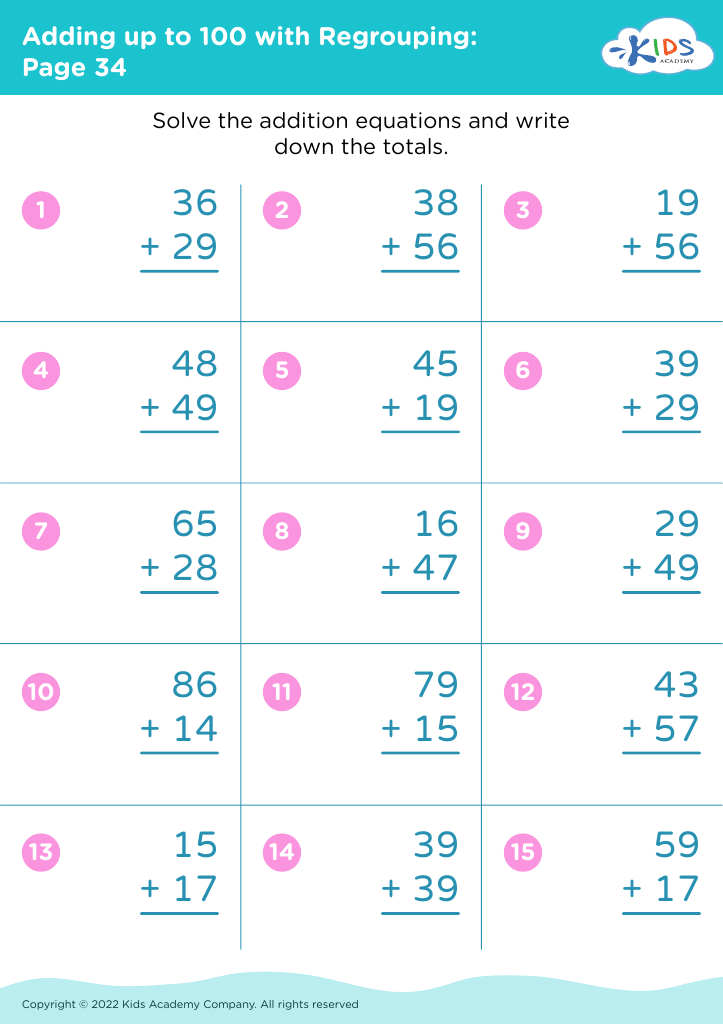




Counting skills are foundational to a child's overall mathematical understanding and cognitive development. For children aged 7-9, improving these skills, especially when it comes to adding up to 100 with regrouping, is crucial for several reasons.
Firstly, mastering regrouping helps children understand the concept of place value and how numbers are structured. This foundational knowledge is essential as they progress to more complex math concepts such as subtraction, multiplication, and eventually, algebra.
Secondly, strong counting skills boost children's confidence in their abilities, making them more willing to engage with challenging math problems. When children can accurately add large numbers, they feel a sense of accomplishment that can motivate them to tackle more difficult tasks.
Moreover, excellent counting skills provide an avenue for critical thinking and problem-solving. Children learn not just to rely on memorization but to apply strategies to arrive at solutions—important skills that are beneficial beyond the classroom.
Lastly, these skills lay the groundwork for real-world applications. Whether it's managing money, measuring ingredients in cooking, or estimating distances, strong counting skills are invaluable for everyday life, emphasizing why both parents and teachers should prioritize this area of learning.