Shape Recognition Adding up to 100 with Regrouping Worksheets for Ages 7-9
5 filtered results
-
From - To
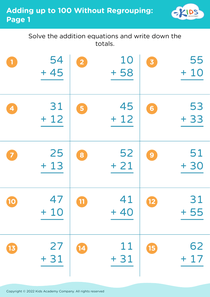
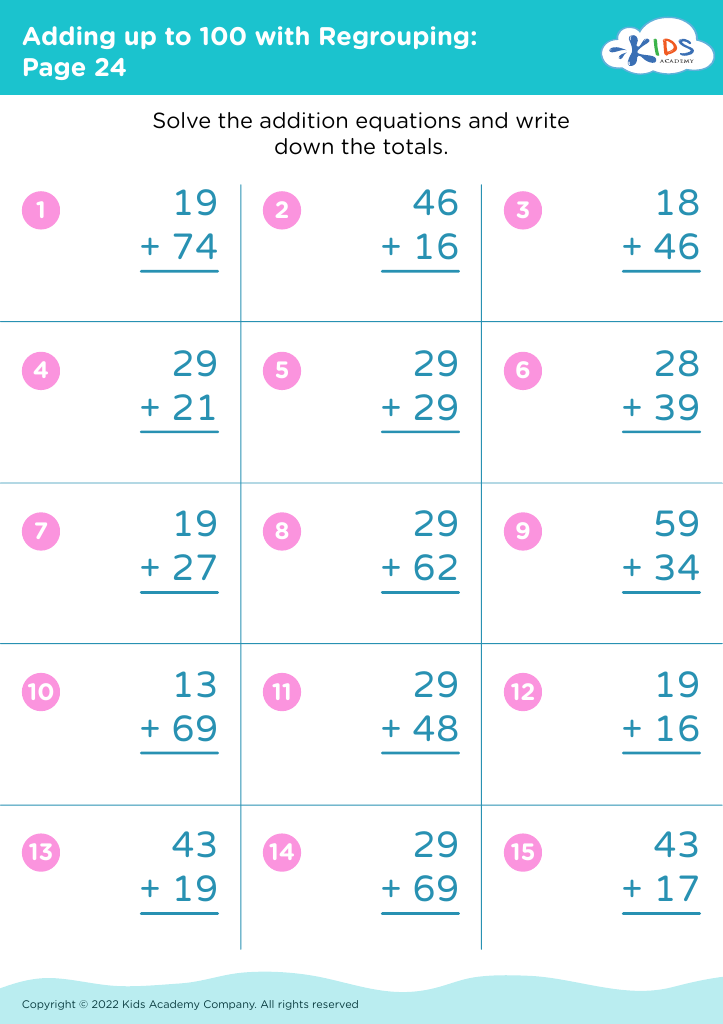
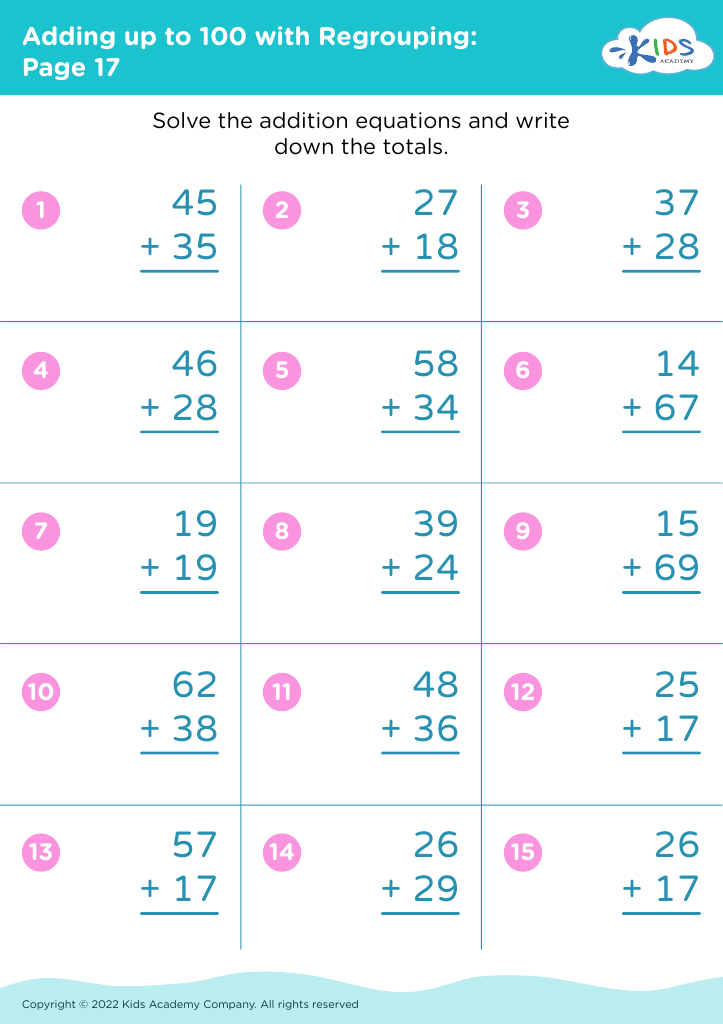
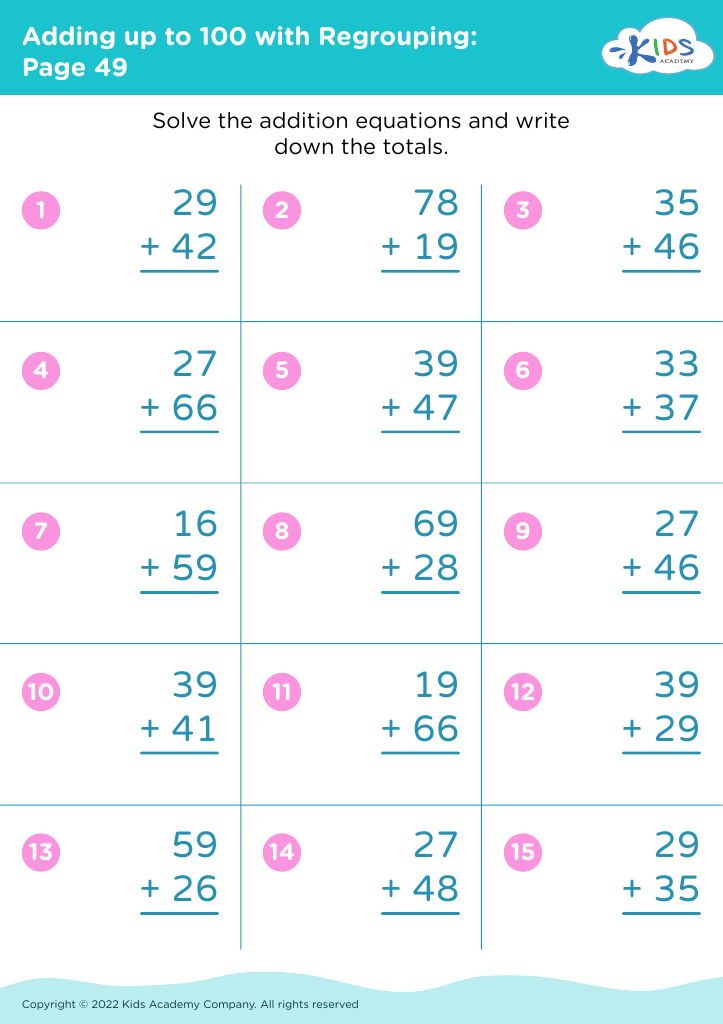
Explore our engaging "Shape Recognition Adding up to 100 with Regrouping Worksheets" designed for children ages 7-9! These worksheets seamlessly combine math skills and geometry, promoting shape recognition while teaching students to add numbers up to 100. With exercises that encourage critical thinking, children will learn how to regroup numbers effectively while identifying and drawing geometric shapes. Perfect for reinforcing classroom concepts or as supplementary home learning, these worksheets make math exciting and accessible. Enhance your child's confidence and proficiency in math; download the worksheets today and watch their skills grow! Ideal for educators and parents alike.
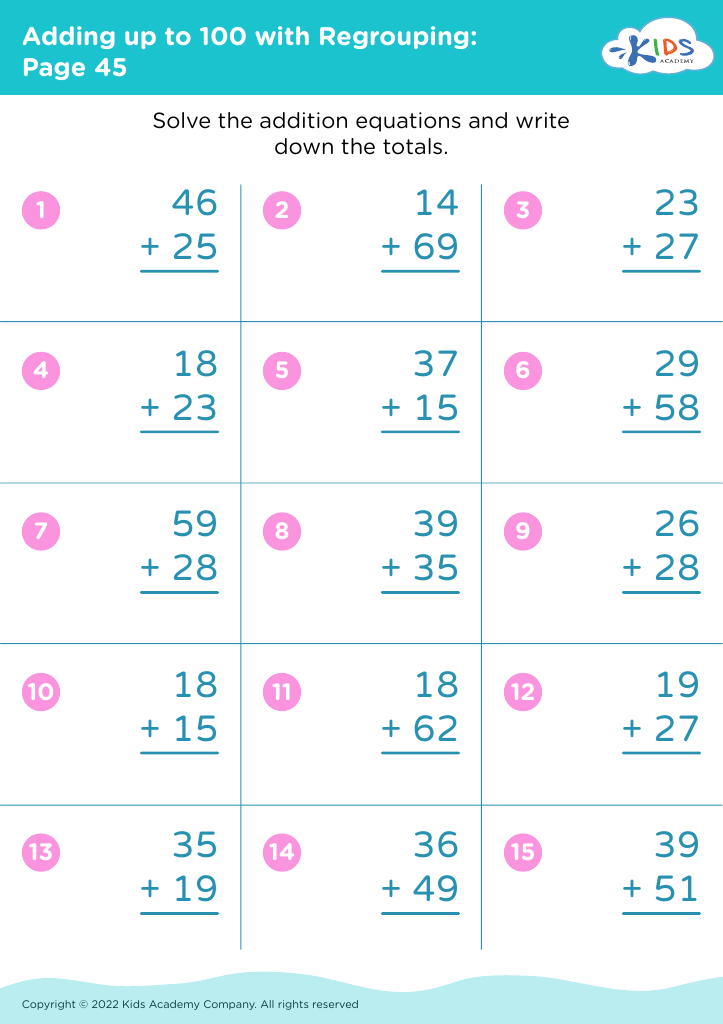
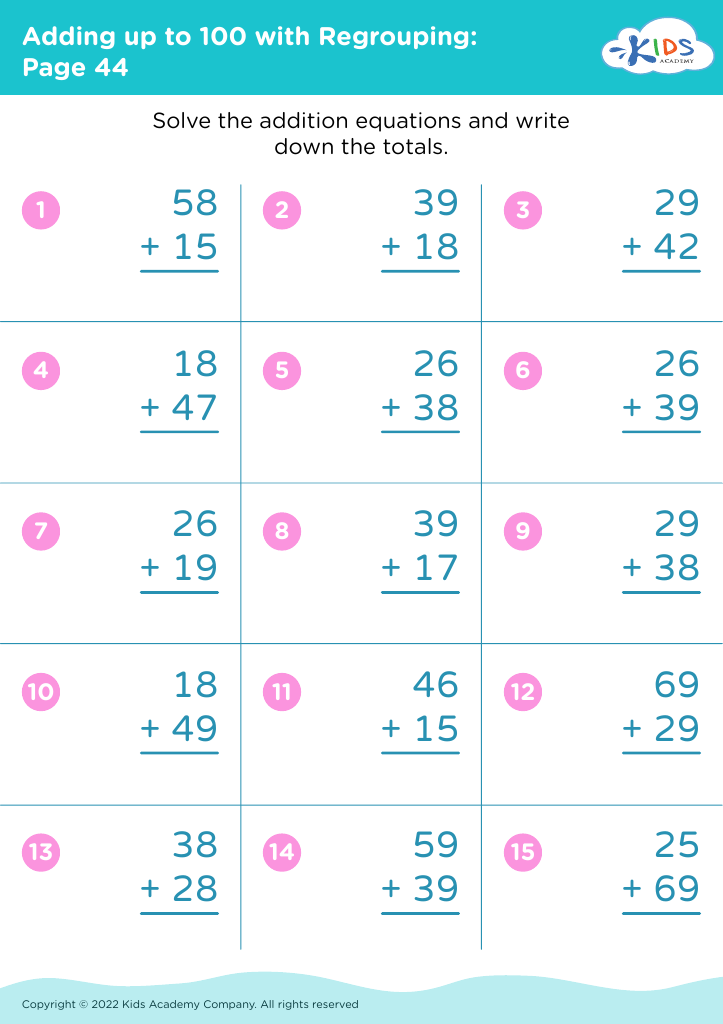




Shape recognition and the ability to add up to 100 with regrouping are essential skills for children aged 7-9, laying a strong foundation for their mathematical understanding and cognitive development. First, shape recognition fosters spatial awareness, critical in geometry and real-world scenarios. Recognizing various shapes helps children understand their properties and relationships, which is vital in subjects like art, engineering, and design.
Moreover, mastering addition with regrouping cultivates fundamental arithmetic skills. At this age, students shift from basic counting to more complex calculations, which enhances their problem-solving abilities. Learning to regroup helps them understand place value deeply, showing how numbers work together, and prepares them for more advanced mathematical concepts, like addition and subtraction of larger numbers, fractions, and multidigit computations down the line.
Emphasizing these skills helps children develop confidence in their abilities and fosters a positive attitude towards math. Engaging with shape recognition and regrouping also promotes logical thinking and perseverance—qualities that are invaluable in education and everyday life. By prioritizing these areas, parents and teachers equip children with essential tools for future academic success and real-life applications. Investing in these foundational skills creates confident learners and problem-solvers.